China claims a major breakthrough in making space babies

Before we colonize Mars, we’d better figure out how to procreate in space.

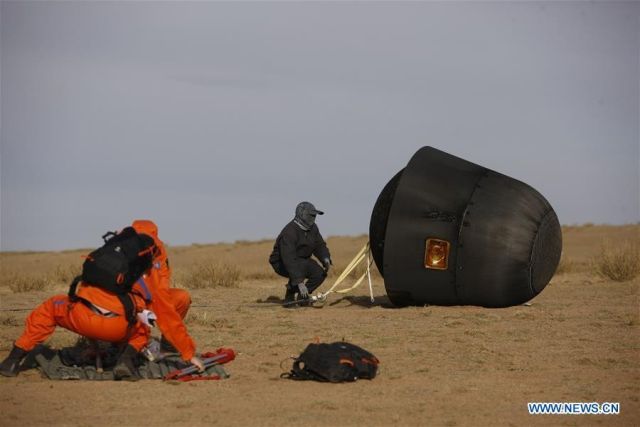
The reentry capsule for the SJ-10 research mission is shown after landing in inner Mongolia on Monday. (credit: Xinhua)

Over the next couple of decades, NASA wants to extend the human presence into the Solar System, including onto the surface of Mars. Elon Musk founded SpaceX expressly to colonize the red planet by the 2020s or 2030s. For now, both the government and private sector have focused on “hardware”: the rockets, spacecraft, and technology needed to keep humans alive en route to Mars and on its surface. And these are not simple or inexpensive problems to solve.

One could argue, however, that the “software” problems may prove even more challenging. That is, can an embryo mature in space, be born, and grow into a healthy human being?

After a 12-day experiment in space this month, Chinese scientists claim they have done so. On April 6, the SJ-10 spacecraft launched from the Jiuquan Satellite Launch Center in Gansu province carrying about 20 different experiments in a retrievable satellite module. It returned to Earth on Monday, landing in inner Mongolia.

Read 15 remaining paragraphs | Comments
Even an embezzled diamond-encrusted Mercedes can’t stop Russian launch

The new Vostochny Cosmodrome is cleared for its inaugural launch next week.

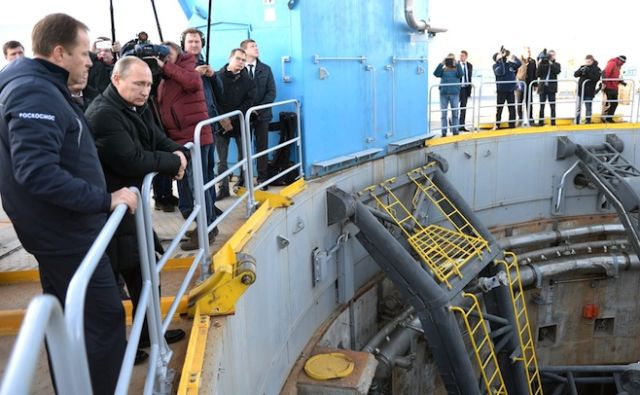
President Vladimir Putin visits the Vostochny Cosmodrome in October 2015. (credit: Kremlin Press Service)

Spaceflight began in 1957, when the Soviet Union launched Sputnik into space. Four years later, Yuri Gagarin launched from the same pad at the Baikonur Cosmodrome in Kazakhstan. However, Kazakhstan declared its independence after the dissolution of the Soviet Union in 1991, and since then Russia has had to lease its launch facilities.

No longer. Russia began working on a new spaceport, the Vostochny Cosmodrome, in 2011. Located in the far east of Russia, the modern, $3 billion facility is one of President Vladimir Putin's signature projects. Yet it has been beset by hunger strikes, claims of unpaid workers, and other challenges. For example, in 2015, Russia’s Prosecutor General reported that $126 million had been stolen during construction. Additionally, a man driving a diamond-encrusted Mercedes was arrested after embezzling $75,000 from the project.

However, after a visit by Putin in October, the project appears to have swiftly progressed. A series of launch tests and checks in March came off without incident. And now, reports the Russian news agency TASS, it is ready for spaceflight. "I wish to inform you that tomorrow we will be ready to launch our space rocket," Deputy Prime Minister Dmitry Rogozin said Tuesday.

Read 1 remaining paragraphs | Comments
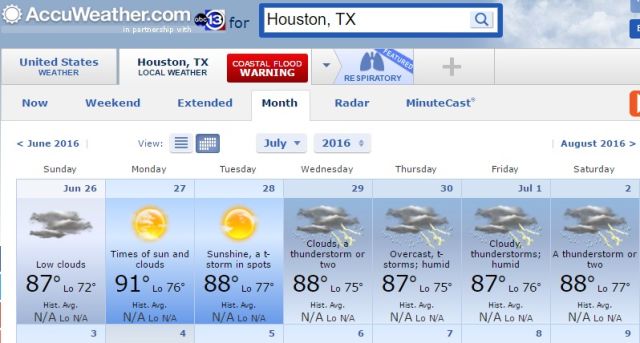
AccuWeather issues 90-day forecasts and meteorologists are not amused

There is no scientific basis to support detailed forecasts beyond 10 days.

If you want a forecast for July, 2016, in Houston AccuWeather has one for you. (credit: AccuWeather)

The ability to throw more computer processing power at forecast models has substantially improved the ability of meteorologists to predict the weather. A recent analysis found that a modern five-day forecast is as accurate as three-day forecast was in 1995. In the last three decades, thanks largely to numerical weather prediction, the useful window of forecasting has moved out from about 7 days to 10 days.

Yet beyond 10 days, most meteorologists will say, there is little predictive skill. This is largely due to the "butterfly effect," in which only a very small change in initial conditions will have huge changes after about 10 days. However, in August of 2013, this basic mathematical principle didn't prevent AccuWeather from beginning to issue 45-day weather forecasts.

According to an analysis by the Capital Weather Gang, a widely respected site that forecasts conditions for around Washington DC, these 45-day forecasts showed no "skill" after about 10 days. "AccuWeather is a for-profit company and they have every right to pass off less-than-accurate forecasts as they wish, but the public deserves to know that these 45-day forecasts are not rooted in any science currently available to meteorologists and have not demonstrated value," the site concluded. "Caveat emptor."

Read 3 remaining paragraphs | Comments

A Disney space station? It no longer seems like such a goofy idea

Bigelow Aerospace, United Launch Alliance plan to deliver large habitats to space.

Two B330s are shown in low-Earth orbit, with a Boeing CST-100 and SpaceX Dragon spacecraft docked. (credit: Bigelow Aerospace)

Throughout our planet’s space-faring history, there have been two major impediments to putting a lot of private citizens into orbit. Only governments have had spacecraft, and there have been only a few government-controlled space stations to visit.  But now that may finally changing in a big way. Within less than two years, both Boeing and SpaceX should complete development of private capsules that will carry people into space. Two other companies, Blue Origin and Sierra Nevada, are also developing orbital spacecraft.

The second part of the problem may soon be addressed as well. Less than a week after the launch of Bigelow Aerospace’s experimental 13-foot habitat to the International Space Station, the company has announced an agreement with United Launch Alliance to deliver two much larger B330 habitats into orbit by 2020. Each of these habitats, which will be fully self-sufficient, has 330 cubic meters of habitable volume—about one-third that of the space station.

Financial details of the agreement were not released, but the move is significant because of its potential to become the first truly commercial human activity in space—people launching aboard private spacecraft and staying in a privately developed habitat. “We are standing on the very threshold of an expanded and permanent human presence beyond our planet, and the foundation for that future will be the commercialization of low-Earth orbit,” said Tory Bruno, president and chief executive of United Launch Alliance, at a news conference this week.

Read 11 remaining paragraphs | Comments

Two new telescopes could help NASA find nearly all threatening asteroids

Study finds that ground-based and space-based approaches complement one another.

A study found that ground-based (LSST) and space-based (NEOCam) telescopes would complement one another in the search for potentially hazardous asteroids. Without them, NASA will still miss about 50 percent of threats by 2030. (credit: Astronomical Journal)

A decade ago, in a strikingly forward-thinking move, the US Congress passed a law requiring NASA to identify 90 percent of asteroids that were 140 meters across or larger and could potentially threaten Earth. Congress gave NASA a deadline of 2020 to meet that goal, but the agency will fall far short of that target. The agency has a valid excuse: it never received funding to meet this goal.

Now, however, there is some hope for finding killer asteroids. The National Science Foundation has backed the Large Synoptic Survey Telescope (LSST) in Chile, and NASA is considering funding NEOCam, a space-based infrared telescope that would specialize in identifying potentially hazardous asteroids. But scientists weren't quite sure how these two instruments would fare in a concerted hunt for large asteroids.

A new pre-print on arXiv offers some clarity, and the answer appears to be that the ground-based and space-based approaches will complement one another nicely. According to a new simulation of near-Earth threats and the capabilities of these two instruments, neither the ground-based telescope nor NEOCam would come close to finding all of the potential hazards on their own. However, when combined, they were projected to find a little more than 90 percent of the threats.

Read 2 remaining paragraphs | Comments

Make Mars great again: Can the 2016 election save NASA’s Journey to Mars?

Under Obama, NASA finds itself in a familiar place: Big goals but inadequate funds.

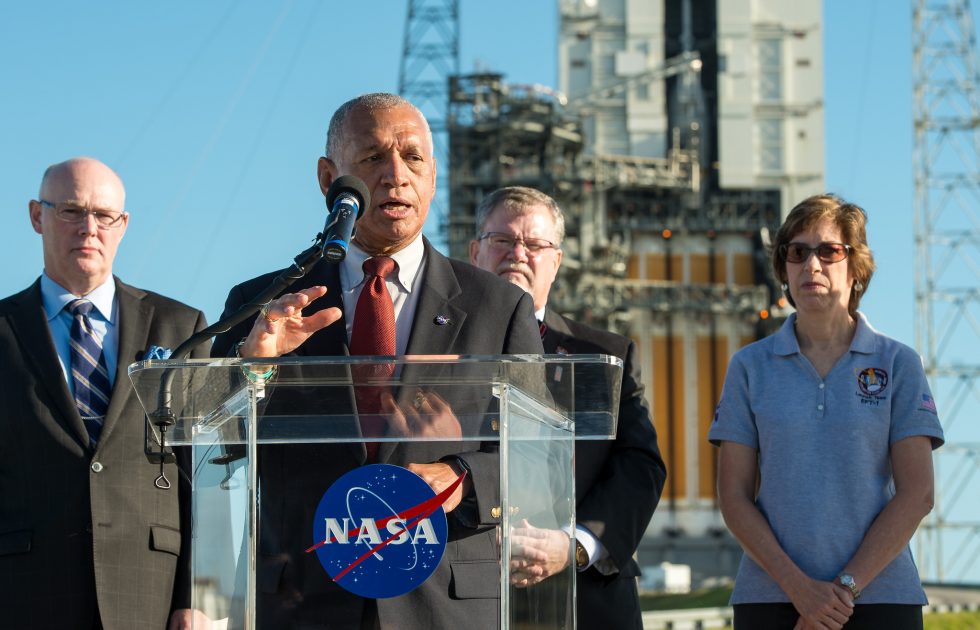
NASA Administrator Charles Bolden speaks to the media two days before Orion's uncrewed flight in December 2014. (credit: NASA)

Charlie Bolden’s moment of triumph finally arrived on a warm December morning about 18 months ago. As he spoke of things to come, the Florida sunshine seemed to rejuvenate the decorated Marine and four-time astronaut. He’d survived five difficult years at NASA’s helm, taking knives from Congress, frustrating his former astronaut colleagues, and perhaps most painfully, watching helplessly as America became reliant on Russia for getting its own people into space.

But those difficulties were past. That morning at Kennedy Space Center, Bolden proudly said NASA was taking its first step on a “Journey to Mars.” As a buttress to these words, the mighty Delta IV rocket loomed behind Bolden with the shiny Orion spacecraft perched at its apex. In just two days, Orion would soar upward, completing a nearly flawless maiden flight. Bolden, 69, acknowledged that he may not live to see it, but his kids and grandkids would watch humans walk on Mars in the 2030s.

This moment captured the essence of Bolden’s leadership of NASA during the presidency of Barack Obama. Aspiration. Emotion. And, at times, a softening of reality. For while Bolden has spoken often about leading NASA to Mars, he rarely talks of the costs. NASA will spend $20 billion alone just to develop the Orion spacecraft. And Orion isn’t going to Mars. It’s a capsule to come back from the Moon.

Read 49 remaining paragraphs | Comments

SpaceX shares photos so we can relive the glory of landing a rocket on a boat

SpaceX releases photos of the dramatic landing taken by cameras on the drone ship.

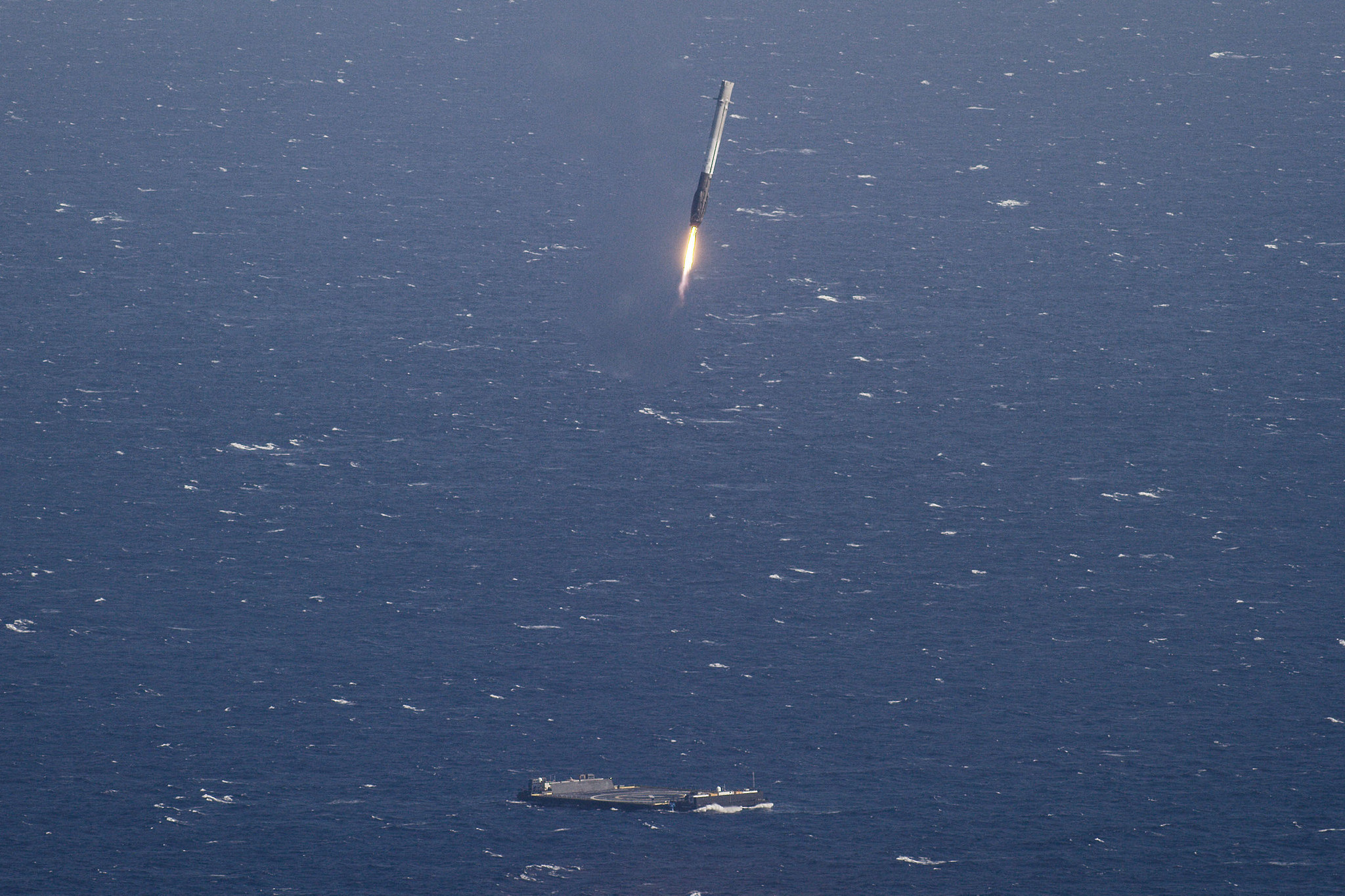
On Friday, the Falcon 9 rocket soared into space and launched its cargo toward the International Space Station. And then for the first time in history, the rocket fired its engines to slow its horizontal velocity and make a guided descent back toward an ocean-based platform where it landed—without toppling over.

After the autonomous drone ship made its return to Port Canaveral early on Tuesday morning, SpaceX collected images from the on-board cameras and released them. They show the dramatic landing up close and in your face.

SpaceX founder Elon Musk said this rocket and its nine engines will be tested 10 times to ensure that everything functions properly. And if that's the case, this rocket could be launched into space as early as June. Luxembourg-based satellite company SES has already indicated that it would be willing to fly on a reused rocket.

Read 1 remaining paragraphs | Comments

Without NASA there would be no SpaceX and its brilliant boat landing

Just before Christmas, in 2008, the space agency saved Musk’s company.

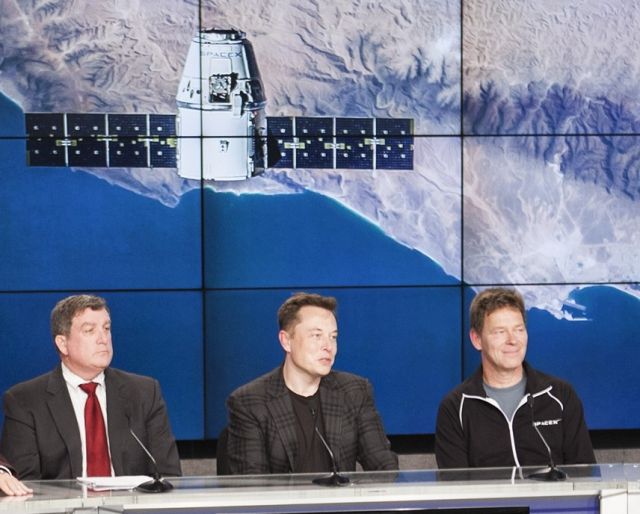
NASA's Kirk Shireman, left, was content to watch as Elon Musk handled all the questions after the dramatic Falcon 9 rocket landing. (credit: NASA)

One almost had to feel sorry for Kirk Shireman on Friday night. The affable, able manager of the International Space Station sat next to Elon Musk during a news conference after a Falcon 9 rocket had just delivered a cargo-supply ship to orbit and then made a stunning landing back on a robotic barge. For most of an hour he waited, patient and silent. Only at the very end of the briefing did a single, solitary question come Shireman's way.

A three-decade veteran of NASA who played pivotal roles in both the shuttle and space station programs, Shireman might have been thinking this: Hey, what about us? NASA is the one with the $100-billion orbiting laboratory where humans have now lived in space for 15 years. While no one anticipated it when NASA and Russia began building the space station 20 years ago, one of its most important functions has become enabling commercial activity in space. With the station, NASA created a market for companies like SpaceX to deliver supplies and, as early as next year, astronauts into space.

Friday afternoon's launch offered a spectacular display of this commercial aspect. As its largest payload, the SpaceX Dragon delivered Bigelow Aerospace's expandable habitat to the station. By connecting this inflatable room to the station later this month, Bigelow can gain invaluable testing experience, including in situ monitoring by astronauts next door. They may also prove to NASA that the technology is safe and perhaps lead to larger habitats for use near the Moon or deeper into space.

Read 9 remaining paragraphs | Comments

The search for exoplanets goes cold as Kepler enters emergency mode

The planet hunting spacecraft has already been a wild success for NASA.

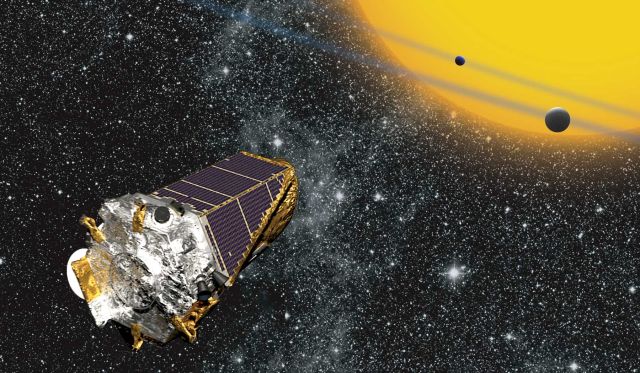
The Kepler spacecraft is in trouble again. (credit: NASA)

Something's gone wrong aboard the planet-hunting Kepler spacecraft. On Friday evening, mission manager Charlie Sobeck announced that Kepler had entered "emergency mode." This is the lowest functioning operation mode and, critically, consumes the most fuel.

The last time NASA contacted Kepler, on April 4th, the spacecraft was in good health. On Thursday, however, Kepler was found to have been in emergency mode for about a day and a half. Even though it takes roughly 13 minutes for messages to travel the 120 million km from Earth to the spacecraft, it is a positive sign that NASA can still communicate with Kepler. This leaves open the possibility of some technical repair.

Since its launch in 2009, Kepler has been a major success for NASA, finding about 5,000 candidate planets, with 1,000 of those already confirmed by ground-based observations. Moreover, it has firmly established the commonality of planets, from Earth-sized worlds to gas giants, throughout the Milky Way Galaxy.

Read 1 remaining paragraphs | Comments

Like a boss: Falcon soars into space and lands in the ocean

SpaceX takes another key step toward “rapid, reusable spaceflight,” Elon Musk says.

A little more than 8 minutes after launch the Falcon 9 rocket landed safely back on Earth. (credit: SpaceX)

A nonchalant Elon Musk met with reporters on Friday evening. “It didn't put a hole in the ship or fall over, so we're pretty excited,” the SpaceX founder said at a news conference.

This is what understatement sounds like. Musk's Falcon 9 rocket had just shot 200km up into space and flown almost horizontal to the planet at six times the speed of sound, before falling back to Earth. Then, somehow, it landed like a feather on a robotic barge in the ocean. The Falcon even found time to put an inflatable space habitat into orbit, too.

“This was a beautiful day, and circumstances were good," Musk continued. "It's quite a tiny target. It's really trying to land on a postage stamp out there.”

Read 12 remaining paragraphs | Comments