Can SpaceX really land on Mars? Absolutely, says an engineer who would know

Company has quietly tested Mars landing techniques with its first stage returns.

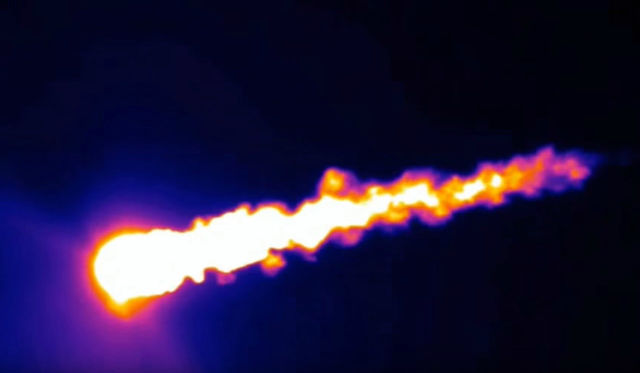
The first stage of the Falcon 9 rocket begins its reentry burn at an altitude of 70km. (credit: NASA)

In September, 2014, a Falcon 9 rocket blasted off from Florida carrying a Dragon spacecraft bound for the International Space Station. The capsule carried some notable cargo, including the first 3D printer to be tested in space as well as 20 mousetronauts to study muscle loss. Yet the most far-reaching part of that mission came after the Falcon 9 deployed its upper stage and began falling back to Earth.

As it descended into the upper levels of Earth's atmosphere, the rocket's engines fired for its "reentry burn." A few minutes later, the first stage splashed down in the Atlantic Ocean, completing one of the last flights before SpaceX began trying to land its rocket on an autonomous drone ship. But even as SpaceX was testing technology needed for terrestrial landings of its reusable Falcon 9 rocket, it was also taking some of its first steps toward landing on Mars.

That's because during that launch—and about 10 others since late 2013—SpaceX has quietly been conducting the first flight tests of a technology known as supersonic retro-propulsion—in Mars-like conditions. It did so by firing the Falcon 9's engines at an altitude of 70km down through 40km, which just happens to be where the Earth's thin upper atmosphere can act as a stand-in for the tenuous Martian atmosphere. Therefore, as the Falcon thundered toward Earth through the atmosphere at supersonic speeds and its engines fired in the opposite direction, the company might as well have been trying to land on Mars.

Read 8 remaining paragraphs | Comments
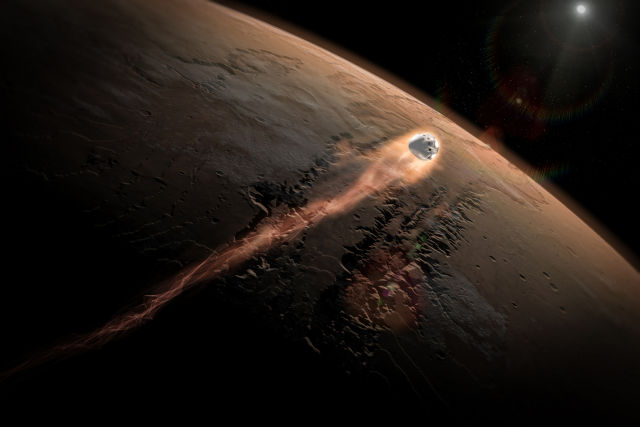
Why landing a flying, fire-breathing Red Dragon on Mars is huge

Putting such a large spacecraft on Mars is unprecedented for a nation or company.

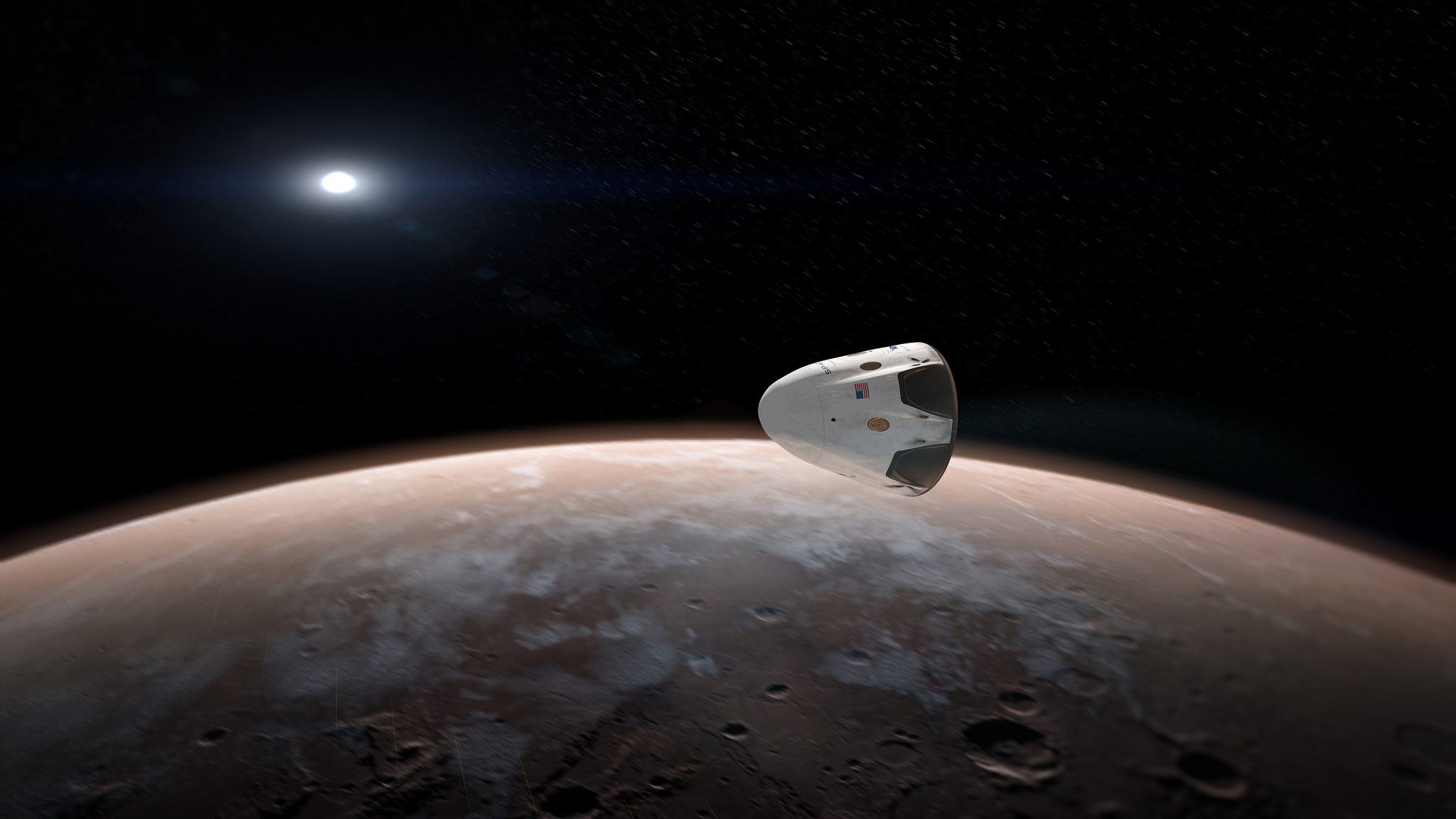
Landing a vehicle as large as a Dragon spacecraft on Mars would be unprecedented. (credit: SpaceX)

SpaceX announced an audacious plan on Wednesday to land an approximately 6,000kg spacecraft on the surface of Mars. This simple declaration from the uber-popular rocket company drew a ton of questions from all quarters, and Ars spoke to a range of people across the space industry to get some answers. How big a milestone would this be? Can SpaceX do it? Is the plan realistic? And why does Rice play Texas, anyway? (OK, we didn't actually try to figure out that last one.)

Is this really a big deal?

Oh, heavens, yes. No private company has ever launched a significant, independently financed expedition into deep space, let alone all the way to Mars. In fact, only two world powers have ever softly landed spacecraft on Mars. The United States has done so half a dozen times, and the Soviet Union did it once with Mars 3 in 1971—although the vehicle failed after sending back just 15 seconds of data. And all previous soft landings have been relatively small and light; SpaceX is talking about landing a Dragon weighing about 6,000kg on the surface of Mars. The previous landing heavyweight was Curiosity, at 900kg. Soft-landing a 6,000kg object on Mars would be a stunning achievement for NASA or any government-backed space agency. For a private company, it's unheard of.

Can they do it?

Why not? In just the last six months, SpaceX has successfully launched and then recovered the first stages of multiple Falcon 9 rockets, first landing them on the ground and then later landing on an autonomous drone ship. SpaceX is known for making bold promises, and—eventually—delivering on them. However, the company has missed deadlines before, and making the 2018 launch window to Mars will be a real challenge.

Read 12 remaining paragraphs | Comments

SpaceX plans to send its Dragon spacecraft to Mars

Elon Musk’s company finally reveals the first details of its Mars architecture.


SpaceX announced Wednesday that it intends to begin sending uncrewed Dragon spacecraft to Mars as early as 2018. This is the first step in the company's plan to one day land humans on Mars, which is the goal founder Elon Musk set for SpaceX when he created the company in 2002.

According to the company, these initial test missions will help demonstrate the technologies needed to land large payloads propulsively on Mars. This series of missions, to be launched on the company's not-yet-completed Falcon Heavy rocket, will provide key data for SpaceX as the company develops an overall plan to send humans to the red planet and colonize Mars.

One of the biggest challenges in landing on Mars is the fact that its atmosphere is so thin it provides little braking capacity. To land the 900kg Curiosity rover on Mars, NASA had to devise the complicated sky crane system that led to its "Seven Minutes of Terror." A Dragon would weigh much more, perhaps about 6,000kg. To solve this problem SpaceX plans to use an upgraded spacecraft, a Dragon2 powered by eight SuperDraco engines, to land using propulsion.

Read 3 remaining paragraphs | Comments

How to land on Mars? Don’t ask NASA—the Senate just cut its test program

Parochial interests trump tech funding when it comes to reaching the Red Planet.

Senator Barbara Mikulski has worked hard to ensure funding for Goddard Space Flight Center. (credit: NASA)

The US Senate talks a good game about sending humans to Mars. The group holds itself up as the protector of NASA and a champion for the space organization's grand exploration aims. For example, as part of this spring's appropriations process, the chairman of the Senate subcommittee with oversight of NASA's budget chided Charlie Bolden, the space agency's administrator, when his budget request didn't amply fund exploration.

"Mr. Administrator, you have traveled around the country in recent months touting NASA’s strong support for the SLS and Orion missions, when in reality this budget will effectively delay any advancement in a NASA-led human mission to Mars, or anywhere at all," Sen. Richard Shelby, a Republican senator from Alabama, told Bolden during a hearing in March.

Shelby was upset with Bolden because the president's budget request did not seek a stratospheric level of funding for the Space Launch System rocket, which is being designed at Marshall Space Flight Center in Alabama. And if there were any doubt about his parochial intent, consider Shelby's own position statement on NASA: "The ability of NASA to achieve our goals for further space exploration has always been and always will be through Marshall Space Flight Center."

Read 6 remaining paragraphs | Comments

Russian leadership reportedly not amused by latest launch delay

Russia planning to try again 24 hours later.

Vladimir Putin, center, and Dmitry Rogozin, far right, tour Vostochny in October, 2015. (credit: Kremlin)

On Wednesday morning, Russian President Vladimir Putin and the country's senior space official, Deputy Prime Minister Dmitry Rogozin, were on hand to see the inaugural launch from the new Vostochny Cosmodrome, located in the far east of Russia. They had to be disappointed after a technical glitch with the rocket delayed the launch for one day.

Based upon an unnamed source, the Russian TASS agency reported the delay came after the rocket's automated launch system "identified a glitch in one of the instruments of the control system responsible for starting and stopping the engines, for the separation of rocket stages, and for the direction of flight." The delay was not due to a problem with the the new launch infrastructure, according to reports.

It is not clear how Putin took the delay, but he will apparently remain at Vostochny for 24 hours to see the launch of the Soyuz-2.1a rocket on Thursday (10:01pm ET Wednesday). However a displeased-looking Rogozin apparently "hastily withdrew" from a launch observation deck after the cancellation and did not respond to questions from reporters.

Read 2 remaining paragraphs | Comments

Titan’s great lakes appear to be filled with clear, colorless methane

Data from Cassini spacecraft suggests that an organic sludge lines the seafloor.

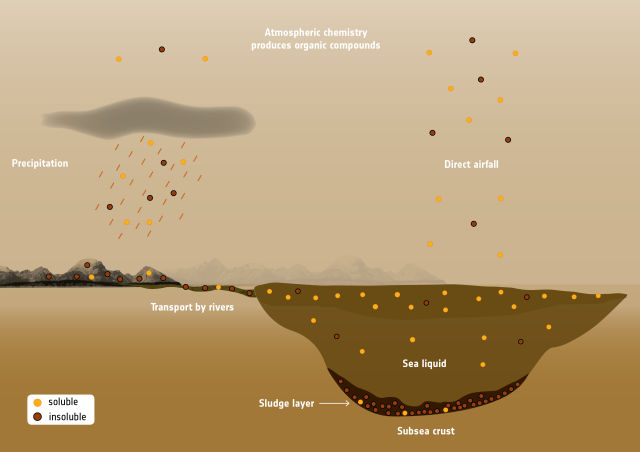
Organic compounds in Titan’s seas and lakes. (credit: ESA)

Liquid seas exist on the surface of just two worlds in the Solar System: Earth and Saturn's moon Titan. Discovered by NASA's Cassini spacecraft about a decade ago, the hydrocarbon seas of Titan are more exotic, of course, as they exist in liquid form at temperatures around -180 degrees Celsius.

Now, after the Cassini spacecraft has made a number of flybys of Titan, scientists assessing light and other radiation emanating from the moon's surface say they have a better handle on exactly what is in one of those seas. And to their surprise, they have found that the second largest lake on Titan, Ligeia Mare, is composed of nearly pure methane.

“We expected to find that Ligeia Mare would be mostly ethane, which is produced in abundance in the atmosphere when sunlight breaks methane molecules apart,” said Alice Le Gall, lead author of the new study. “Instead, this sea is predominantly made of pure methane."

Read 2 remaining paragraphs | Comments

While SpaceX eyes its “BFR,” an early employee now pursues an “SFR”

As micro-satellite market grows, new launch company seeks to service 25kg payloads.

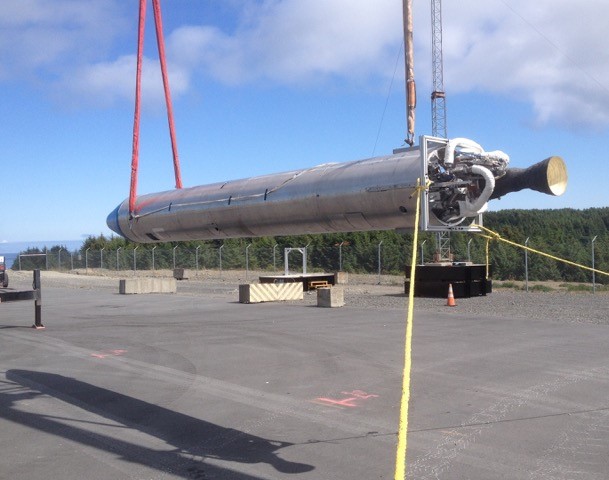
Vector could begin orbital flights of its micro-rocket by 2018. (credit: Vector Space Systems)

Before he founded SpaceX to colonize Mars, Elon Musk turned to long-time aerospace veteran Jim Cantrell in 2001 for advice. The rocket-building bug hadn’t bit Musk yet, but the tech prodigy still wanted to make a grand gesture to get NASA and the rest of the world talking about Mars. Musk had settled upon the idea of sending mice to Mars and back, having them procreate along the way. With about $20 million to burn, Musk sought to buy three old Russian ICBMs and retrofit them as launch vehicles.

It was a crazy plan. But Cantrell, who had worked with the Soviet and then the Russian space program for more than two decades, agreed to help smooth negotiations with the Russians. The scheme fell apart, of course, but that failure led Musk to the epiphany that he should build his own rockets, and he founded SpaceX in June 2002. Cantrell said at the time that the only foreseeable money-making pathway was big payloads: multiton communications and national security satellites.“In those days, you’d look at the market, and the only rational decision you could make was to start small and grow the size of the vehicle,” Cantrell said.

Cantrell left SpaceX in 2002, seeing the venture as too risky and unlikely to turn a profit. (It succeeded, he said, because Musk could not conceive of failure). However, even as SpaceX has become a dominant player in the large satellite launch industry, the small satellite industry has grown rapidly. The miniaturization of communications and imaging satellites has led to a new generation of rocket companies, such as Firefly Space Systems and Rocket Lab, which have built smaller launchers. Their rockets will generally heft payloads larger than 100kg into Sun-synchronous orbits 500km or higher.

Read 7 remaining paragraphs | Comments

No sunset for Dawn at Ceres? Spacecraft may get a new mission

With a little Xenon left in its tanks, Dawn could escape Ceres and fly elsewhere.

Occator crater on Ceres keeps some shiny secrets. (credit: NASA)

NASA's Dawn spacecraft is a success from both a scientific and a technical standpoint. During the nearly nine years since its launch, the probe has orbited both Vesta and Ceres, two of the largest objects in the asteroid belt. For scientists, Dawn's most notable discovery is that it found spectacular craters on Ceres, the Texas-sized dwarf planet dotted with brilliant white specks.

Dawn has also demonstrated the viability of ion propulsion as a means of interplanetary travel. The spacecraft's thrusters ionize its xenon propellant, offering a considerable savings in terms of a propellant-to-thrust ratio. Ion engines get good gas mileage compared to traditional chemical rockets, although on this scale they travel more slowly. NASA may eventually use larger ion thrusters to ship large amounts of cargo to Mars in advance of human landings.

Now thanks to this efficiency, even after getting into orbits around both Vesta and Ceres, Dawn has a little bit of xenon gas left. Originally mission managers had planned to park it in a stable orbit around Ceres later this summer, creating a permanent artificial satellite. They could not crash the spacecraft into Ceres, as is customary with many similar missions, because Dawn has not been sterilized in accord with planetary protection procedures. But the extra xenon has created an additional opportunity.

Read 1 remaining paragraphs | Comments

SpaceX is ready to try another rocket landing

This time the Falcon 9 will be coming hotter, with less fuel to maneuver.

Camera images from the drone ship show the Falcon 9 first stage coming in on target April 8. (credit: SpaceX)

SpaceX launched its Falcon 9 rocket into space on April 8, and after the first stage delivered its payload, the vehicle descended back to Earth and landed on an autonomous drone ship in the Atlantic Ocean.

Now the company hopes to repeat that sea-based feat under more dynamically challenging conditions. The launch earlier this month carried a Dragon spacecraft, destined for the International Space Station about 400km above the surface. With a launch tentatively set for May 3 during the early morning hours, SpaceX plans to deliver a Japanese broadcast satellite into orbit 22,000km above the planet's surface.

This means that the first stage will accelerate to a greater velocity, moving almost parallel to the surface and away from the launch site, before it releases the second stage and the primary payload. This trajectory will leave the vehicle with far less fuel to arrest this horizontal motion, and to control its descent to the barge waiting below.

Read 2 remaining paragraphs | Comments

New NASA budget eats the seed corn of its Journey to Mars

Senate cuts tech budget to speed development of a rocket NASA doesn’t need yet.

An artist's rendering of the Space Launch System rocket. (credit: NASA)

This week, the US Senate's Appropriations subcommittee overseeing spaceflight put forward its blueprint for NASA's FY2017 budget. The top-line number looks promising at $19.306 billion—a $21 million year-over-year increase.

Yet the Senate plan exposes two potentially fatal flaws with NASA's Journey to Mars. Namely, the US Congress continues to place funding for the Space Launch System rocket and Orion space capsule before all other elements of NASA's exploration program. And by raiding other areas of NASA's budget, notably Space Technology, it is hamstringing the agency's ability to carry out the journey.

There is an old-time expression to characterize what is happening here: eating the seed corn. In a different era, a farmer's family might be forced to eat its seed corn for the next growing season to survive a long winter. This few weeks of sustenance would then doom the family during the next planting season, leaving them with no seeds to put into the ground. This sort of budget eats NASA's seed corn for the Journey to Mars.

Read 17 remaining paragraphs | Comments