Amid the vast firmament of NASA’s $19 billion portfolio, with its exploration aims spanning from planet Earth to the edge of the visible universe, $30 million may not seem like all that much money. Yet sometimes principle matters, especially when that principle illustrates the political headwinds buffeting the space agency as it seeks to push humans outward into deep space.
When appropriators were writing a budget for NASA last month, Senator Richard Shelby (R-Ala.) designated $30 million in spending for “small launch technology” for the coming fiscal year. The stipulation was tucked into the space technology program, a relatively new area of NASA’s budget that President Obama created in 2010 to invest in “bold, broadly applicable, disruptive technology that industry cannot tackle today.” The central objective of this program is to bring forward advanced technologies needed to land humans on Mars.
But Congress has disdained the space technology program almost from its inception. During every subsequent budget cycle, the Senate and House have cut the president’s request—the money NASA says it needs that year to ensure Mars technology development is proceeding apace. The last couple of years, however, the US Senate has added a new wrinkle. Appropriators not only cut the space technology budget, they further squeezed the remainder by specifying what NASA must work on rather than leaving those decisions to the agency’s rocket scientists.
“It’s sad, because the whole space technology budget has just became an earmark haven for these guys,” said one aerospace engineer. He was one of a half-dozen engineers and space policy experts familiar with the budgeting process that Ars spoke to for this story. All were granted anonymity because Shelby, who chairs the Appropriations subcommittee over NASA’s budget, has outsized power to punish those who openly oppose him.
Shelby's $30 million stipulation for the coming fiscal year appears to take the insult to NASA’s technology budget a step further. The proposed law directs the agency to fund a specific type of small satellite launch technology, known as the Super Strypi, “to the maximum extent possible.” The problem with that, three separate sources confirmed to Ars, is that two companies in Huntsville, Alabama, are seeking to develop a launch system based on the Super Strypi vehicle.
Instead of developing technology to get humans to Mars, then, NASA is being told to support rocket development to launch small satellites. That is not such a bad thing... except more than half a dozen companies have already invested private capital in such small launchers. “Providing support for any of the small launcher developments has issues,” said one official, noting the commercial interest in this area. “Picking one that has a demonstrated poor track record seems like an even worse choice. Doing so through an earmark is just the lowest approach you can imagine.”
Space technology
NASA’s Space Technology Mission Directorate may perhaps be best thought of as paving the way for the agency's journey to Mars. An example of the kinds of technologies the agency has sought to develop is its Low Density Supersonic Decelerator. This large, flying saucer-shaped disk is helping NASA study ways to land future human and robotic Mars missions, as well as safely return large payloads to Earth.

During these tests, a balloon will lift the huge disk to 120,000 feet, after which rockets will fire to raise the disk further up to 180,000 feet. At that point, as the craft begins to fall back to Earth at 3.5 times the speed of sound, the saucer inflates to test its ability to decelerate. This is just the kind of process NASA must better understand before it contemplates human landings on Mars. Unfortunately, thanks to earmarks in the 2016 space technology budget, this project will only receive a small fraction of its originally planned budget of $20 million.
This is but one of many such technologies NASA needs to fully research, develop, and test for Mars. According to the space agency, there are at least 11 major categories of technology required for deep space exploration, everything from in-space propulsion to radiation mitigation to entry, descent, and landing. Despite the rhetoric, there simply is no “Journey to Mars" without this technology.
When the Obama administration first created the space technology program in 2010, it sought $572 million in fiscal year 2011 to fund it. The president’s proposal envisioned this amount growing to more than $1.2 billion annually by now. But there was no constituency for space technology in Congress because this was a program with, as yet, no jobs to protect back home. As a result, space technology has gotten only about half of the funding it needed to keep NASA on track for Mars. This year, the Senate bill proposes a $687 million budget for space technology. Of that, the bill designates how $189 million, or more than 25 percent of the total budget, should be spent.
A presentation made last year by James Reuther, a deputy administrator in the space technology program, offers a sense of how devastating this has proven for NASA’s exploration efforts. Titled “Historical Consequences of STMD Funding Shortfalls,” the report makes for depressing reading. Solar propulsion and advanced arrays: delayed. Laser communications: not ready for tests until 2019 at the earliest. Deep space communications: delayed and de-scoped. Fuel depots: in-space tests moved to the ground and delayed. The list goes on and on.
Small satellites
There are perfectly good reasons for NASA to invest in small satellite launch technology. Weighing in the neighborhood of 50 to 400kg, small satellites have become one of the hottest areas of aerospace. Demand has increased for launch vehicles that can deliver these payloads to a Sun-synchronous orbit 400km or more above the Earth’s surface. For now, though, these smaller payloads must “ride share” with larger satellites on more powerful rockets. This can often delay their launch for a year or more.
Naturally the market has reacted to this, and more than half a dozen companies have been developing private launch systems to meet the demand. Proposals range from launching traditional rockets from the ground to setting them off from airplanes or balloons high in the atmosphere. It is a marketplace teeming with private capital. This seems like the opposite of what space technology, created to address areas the “industry cannot tackle today,” was intended to support.
more images in gallery
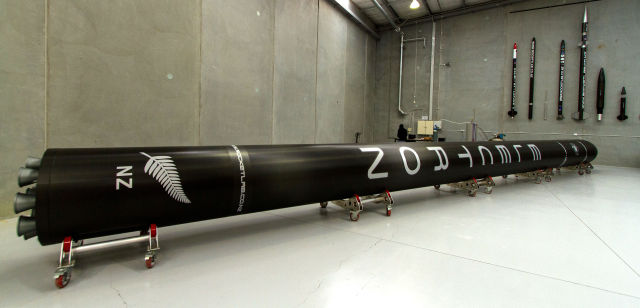
On top of that, NASA has already invested in three of these systems. In October 2015, the agency awarded “Venture Class Launch Services” contracts to improve access to low-Earth orbit for CubeSats, microsats, or nanosatellites. In return for providing launches, Firefly Space Systems received $5.5 million, Rocket Lab USA $6.9 million, and Virgin Galactic $4.7 million. All of these companies are bringing to market launch vehicles capable of delivering 200 to 250kg to a Sun-synchronous orbit—the same capability as the Super Strypi. One or more of these rockets should be ready by 2018, if not sooner. Yet now NASA is being asked to back a fourth, the Super Strypi, it does not want.
A few years ago as it sought similar, on-demand access to these orbits for smaller payloads, the Department of Defense began supporting the Super Strypi program. Developed by engine maker Aerojet Rocketdyne in conjunction with the University of Hawaii and the Sandia National Laboratories, the basic launch technology is based on the Strypi rocket first built by Sandia in the early 1960s. That rocket was part of a nuclear weapons test program, and it was originally designed to carry a nuclear warhead into space for tests there (it never did so). More recently, after multiple delays, the modified vehicle made its debut test flight as the Super Strypi rocket in November 2015. However, once the rocket accelerated away from its rail guide the vehicle tumbled out of control.
When asked about Congress tasking NASA to compete in the growing small launch industry with a Super Strypi-like technology, an official with one of these rocket companies who tracks space policy told Ars: “What do you want me to say? This is Washington. Here is a technology the government has already abandoned because it didn’t seem very promising. And now the government is supposed to intervene with it in a marketplace filled with private investment. I look at it and roll my eyes with vigor.”
The senator
When it comes to NASA’s budget, Richard Shelby is pretty much God on Earth. As chairman of the Senate subcommittee overseeing NASA’s budget, the 82-year-old senator with a deep southern drawl wields enormous power over the space agency by choosing to provide funding—or not—to its programs. And more than anything else, Shelby chooses to fund the big rocket being designed in his home state, the Space Launch System.
For the fiscal year 2017 budget, the Senate added $840 million to NASA’s initial budget request to continue developing the SLS rocket. That staggering 60 percent increase alone would exceed the entire space technology budget by hundreds of millions of dollars.
Shelby does not hide his intent, either. Back in 2011 when the political deal was struck to build the rocket, the senator made it clear why he had so vigorously fought for SLS—and for Marshall Space Flight Center in Alabama to manage it. In a news release titled “Shelby Saves Over 500 Jobs at Marshall Space Flight Center by Commissioning NASA to Build Heavy-Lift Rocket,” the politician stated, “The ability of NASA to achieve our goals for future space exploration has always been and always will be through Marshall Space Flight Center.”

Shelby is also a fiscal conservative, so he hasn't wanted to inordinately increase NASA’s overall budget. As a result, he has looked to cut spending in other areas to pay for additions to the SLS budget. For the first half of this decade, he and other Congressional budget leaders did so by slashing appropriations for SpaceX and Boeing to develop spacecraft that would take US astronauts to the International Space Station. Because of repeated cuts to this commercial crew program, the agency has extended its reliance on Russian launch vehicles for two additional years (from 2015 to 2017). If not for Congress, NASA Administrator Charles Bolden says, US astronauts would be launching from US soil today.
Last year, the optics of paying Russia hundreds of millions of dollars annually to launch Americans had become too warped for even commercial crew critics such as Shelby. Congress finally provided NASA a full appropriation for the first time in the fiscal year 2016 budget. Thus, Shelby and others in Congress have been forced to increasingly rely on cuts to other areas, such as space technology, to balance NASA’s books.
Commercial space
Despite the new Super Strypi budget item, Shelby has not always looked favorably on NASA support for developing private rockets. SpaceX, in particular, has drawn his ire. That is probably because the company has sought, with its own private investment, to develop a heavy lift vehicle nearly as powerful as the Space Launch System. At a price of $90 million per flight, this Falcon Heavy rocket will have launch costs one-tenth that of the NASA vehicle or less. It may also fly before the SLS.
The senator has opposed SpaceX, and other companies, as far back as the late 2000s when they were competing to win contracts to deliver supplies to the International Space Station. During an April 2010 hearing of the Appropriations subcommittee to consider a funding request for NASA’s commercial crew and cargo programs, Shelby essentially said these companies were unworthy of being NASA’s garbage collectors. His statement is worth considering in full:
This request represents nothing more than a commercially-led, faith-based space program. Today, the commercial providers that NASA has contracted with cannot even carry the trash back from the space station much less carry humans to or from space safely. These providers have yet to live up to the promises they have already made to the taxpayer. Not a single rocket or ounce of cargo has been launched since we met last year. Instead of requiring accountability from these companies, the President's budget proposes to reward these failed commercial providers with an additional bailout.
It should be noted that since those remarks, SpaceX has flown seven successful supply missions to the space station (out of eight tries). The most recent supply flight, in April, marked the first time a rocket had ever flown into space and then landed at sea. Moreover, SpaceX has said it intends to land the Dragon spacecraft it built to deliver cargo and crew to the station on Mars in two years. If successful, this Red Dragon would be nearly an order of magnitude larger than anything anyone, including NASA, has ever landed on Mars.
“Not an earmark”
It is not clear that Shelby’s skepticism of commercial launch companies extends to companies doing business in Alabama, especially those outside the gates of the Marshall Space Flight Center.
During an interview with two of his Senate aides knowledgeable of the appropriations process, both denied the $30 million small launch technology budget item was an earmark.
This stands in contrast to three independent sources who confirmed to Ars that the bill's language was written such that any funds spent by NASA would go to Dynetics and Zero Point Frontiers, the two aerospace companies in Huntsville that are part of an effort to revive the Super Strypi launch project. It remains unclear exactly what role Dynetics and Zero Point Frontiers would play in the project, be it propulsion, troubleshooting previous failures, or redesigning Strypi systems.
When asked about its involvement in a Super Strypi-related project, Dynetics spokeswoman Janet Pickens said in an e-mail, “We have a partner that we need to check with on this” before commenting further. A few days later, she added, “The lead company on Super Strypi is not yet in a position to share information publicly about the project, so unfortunately, we have to decline this opportunity.”
Ars also asked a spokesman for Zero Point Frontiers about its involvement in such a venture. The e-mailed response from Bart Leahy was, “Mildly curious: where’d you hear this?”
Again, for now this is just the Senate’s version of the bill. It will be the starting point for negotiations with the House, but typically the House and Senate work pretty well on this type of legislation. It would seem like this stands a good chance of passing.
The Senate aides said Shelby’s language regarding the small launch technology intended for the proposal to be competitively bid. However, one of the aides did acknowledge that he anticipated Dynetics and Zero Point Frontiers to be among the bidders: “Would I expect these companies to compete? Sure.”
Despite these assurances that the $30 million small launch contract will be competitively bid, the specificity of the language in the appropriations bill seems to favor certain bidders. As the bill calls for the launch technology to leverage the Super Strypi platform to the “maximum extent possible,” and two Alabama companies are working with this technology, it might stand to reason the bill was written exactly as intended.
Not so, one of the aides explained. “The Super Strypi was just an example of a launch vehicle,” he said. “We were just trying to put an example out there. If we hadn’t put an example out there, you wouldn’t be running around trying to chase down an earmark that is not an earmark in there. So I’m sorry about that.”