Blue Origin may destroy its historic New Shepard rocket next month

Escape test should bring New Shepard capsule closer to passenger flights.

Dynamic video of a pad test of Blue Origin's escape system.

In a new e-mail update from company founder Jeff Bezos on Thursday morning, Blue Origin detailed plans for the next flight of its reusable New Shepard propulsion module and capsule—a dramatic, in-flight test of the escape system. Such an escape system is added to the spacecraft so that, in the event of a rocket failure, the capsule can get away quickly to protect the passengers inside.

For the New Shepard system, this escape motor is mounted underneath the capsule and will fire in case of emergency to push the spacecraft away from the rocket. Traditionally, such launch abort systems have been mounted above the capsule in the "stack," meaning they are expended during each flight, whether used or not. But Blue Origin is seeking a fully reusable launch system, so it is embedding the escape motor below the capsule so that it is not thrown off during the flight.

Blue Origin is not the first to try this "beneath" mounting. NASA, for example, experimented with it in the Max Launch Abort System nearly a decade ago, but the space agency ultimately stuck with a more traditional launch abort system for its Orion spacecraft. Blue Origin, therefore, is the first company or space agency to bring such an escape system this far into development and through multiple tests.

Read 5 remaining paragraphs | Comments

Live: Watch the launch of an asymmetric rocket (and an asteroid mission)

An Atlas V rocket with a single solid rocket booster has a unique launch profile.

Live coverage of the launch of OSIRIS-REx.

The Atlas V rocket is the "workhorse" that will get NASA's OSIRIS-REx spacecraft into space this evening, and on the way to the distant asteroid Bennu. But for aerospace aficionados, tonight's launch vehicle is of great interest in and of itself. That's because the 7:05pm ET (12:05pm BST) launch from Cape Canaveral’s Complex 41 launch pad offers the rare opportunity to see the 411 configuration of the Atlas V rocket in action.

The Atlas V 411 variant, with just a single strap-on solid booster, has flown only three times previously, and just once from Cape Canaveral back in 2006. The other two launches, in 2008 and 2011, were national security payloads that flew from Vandenberg Air Force Base near Los Angeles. Up to five strap-on boosters can be added to an Atlas V launch vehicle, but it makes sense to only pay for the power you need. For the Bennu-bound spacecraft, which will get a gravity assist from Earth in one year, just one booster is required.

As there is only poor quality video of the non-classified 2006 launch, tonight offers a viewing opportunity for people to see an Atlas V 411 fly with unprecedented clarity. And it should be quite a show. With just a single strap-on booster, the rocket will have to gimbal its main engine, the RD-180, during the initial ascent to account for the lack of symmetry. Fortunately the RD-180 engine, with its two nozzles, can gimbal (or pivot) up to 8 degrees during full thrust. You will be able see this skewed thrust during liftoff, which should look quite awkward but is nonetheless well grounded in rocket science.

Read 1 remaining paragraphs | Comments
Citing Farmer’s Almanac, United Airlines CEO is preparing for a harsh winter

The company’s “operating team” is apparently concerned about Old Man Winter’s return.

Enlarge / Old Man Winter returns. Be very, very afraid. (credit: Farmer's Almanac)

United Airlines may rank last among traditional carriers in customer satisfaction studies, but the company wants you to know that it's looking at ways to improve passenger service. That includes offering better options to customers during the stressful time of inclement weather.

During an interview with David Brancaccio of the public radio program Martketplace, United Chief Executive Officer Oscar Munoz offered an example of how the company is using Farmer's Almanac to put better plans in place during weather disruptions this winter:

Q. We get that you can't control the weather, but when flights do get canceled or they run late, passengers can see if an airline responds in an orderly way, or in a haphazard way. Are you making progress there?

A. Oh, absolutely. I think the hardest thing that historically the industry may have relied upon is the fact that we can't control weather, we can't control air traffic control and use that at the end of the day as an excuse. Things do happen. We know they happen. We don't know exactly when they're going to happen. But we should definitely be prepared. A very quick example: Farmer's Almanac is calling for a very nasty winter. Particularly in Chicago, one of our main hubs. So as we speak, our operating team is hard at work as to how are we going to accommodate passengers. Not our aircraft, not the operations behind it, but the humans that fly us. That's what the important difference is at United.

It should go without saying, but Farmer's Almanac has no credibility in the meteorological science community. Its seasonal forecasts are made by "Caleb Weatherbee," who is described on the publication's website as the official forecaster for the Farmers' Almanac. The site explains: "His name is actually a pseudonym that has been passed down through generations of Almanac prognosticators and has been used to conceal the true identity of the men and women behind our predictions."

Read 2 remaining paragraphs | Comments

China firm reportedly invests $1.5 billion in a space balloon

Concept appears to be similar to that of an American company, World View Enterprises.

Until now, space tourism has been largely a venture based in the United States. Virgin Galactic, XCOR, Blue Origin, and World View have all announced various plans to fly would-be astronauts into space—or to the edge of space—from American soil. But now a Chinese-based company, KuangChi Science, wants to get into the game by launching balloons from Hangzhou, in eastern China.

China Daily reports that KuangChi will invest about $1.5 billion (~£1.1 billion) into development of futuristic experiences, including a "deep space tour that offers the experience of flying up to 24 kilometers above the ground, which is just beyond the border of outer space." Technically, this might overstate the flight, as the generally accepted boundary between Earth’s atmosphere and outer space is 100km, known as the Kármán line. Moreover "deep space" is generally considered by experts to lie beyond Earth orbit.

But pay no mind to the details. According to KuangChi's website, the balloon experience aboard the "Traveller" capsule will "bring you on a comfortable near-space trip you have never experienced!" The Traveller vehicle is based on the same "airtight cabin design" as the Shenzhou V capsule (China's first crewed mission, launched in 2003) to block cosmic rays. Moreover, the company says the design of the vehicle will ensure the comfort of passengers, "enabling them to feel like sitting in a limousine car."

Read 2 remaining paragraphs | Comments
Long-lost comet lander Philae finally found by scientists

To be honest, it looks a bit like the Loch Ness Monster to us.

The European Space Agency has found its long-lost Philae lander. After making a rough, bouncing landing on Comet 67P/Churyumov-Gerasimenko in November, 2014, the spacecraft was unable to deploy its solar panels in a proper configuration to capture enough energy. Its batteries ran out within a few days of landing.

Although scientists have made a few more fleeting contacts with the dying spacecraft since then, Philae's fate—was it stuck in a ditch, or nudged up against a cliff wall?—has remained largely a mystery.

Until now. The high resolution camera aboard the orbiting Rosetta spacecraft—which has remained near the comet since deploying Philae two years ago—flew within 2.7km of the comet's surface on September 2, and spied the missing lander. At such a distance from the comet, the resolution of the OSIRIS narrow-angle camera is about 5 cm/pixel, high enough to reveal Philae’s distinctive 1 m-sized body, and two of its three legs.

Read 2 remaining paragraphs | Comments

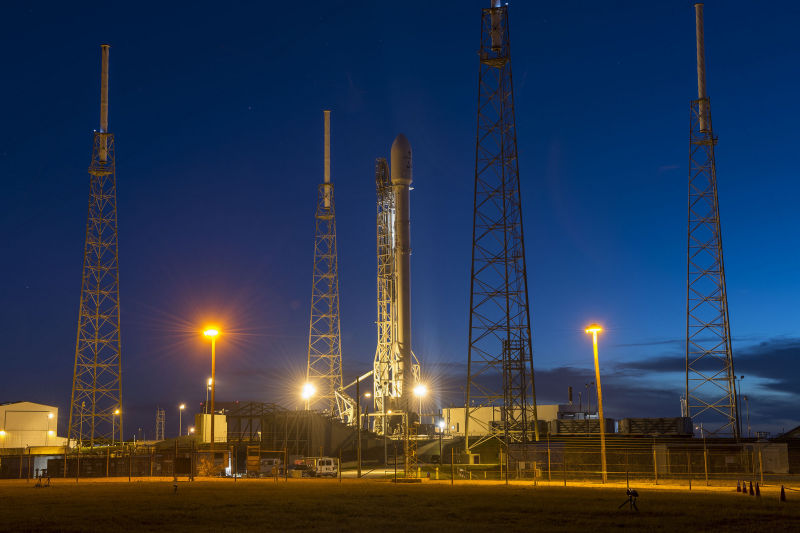
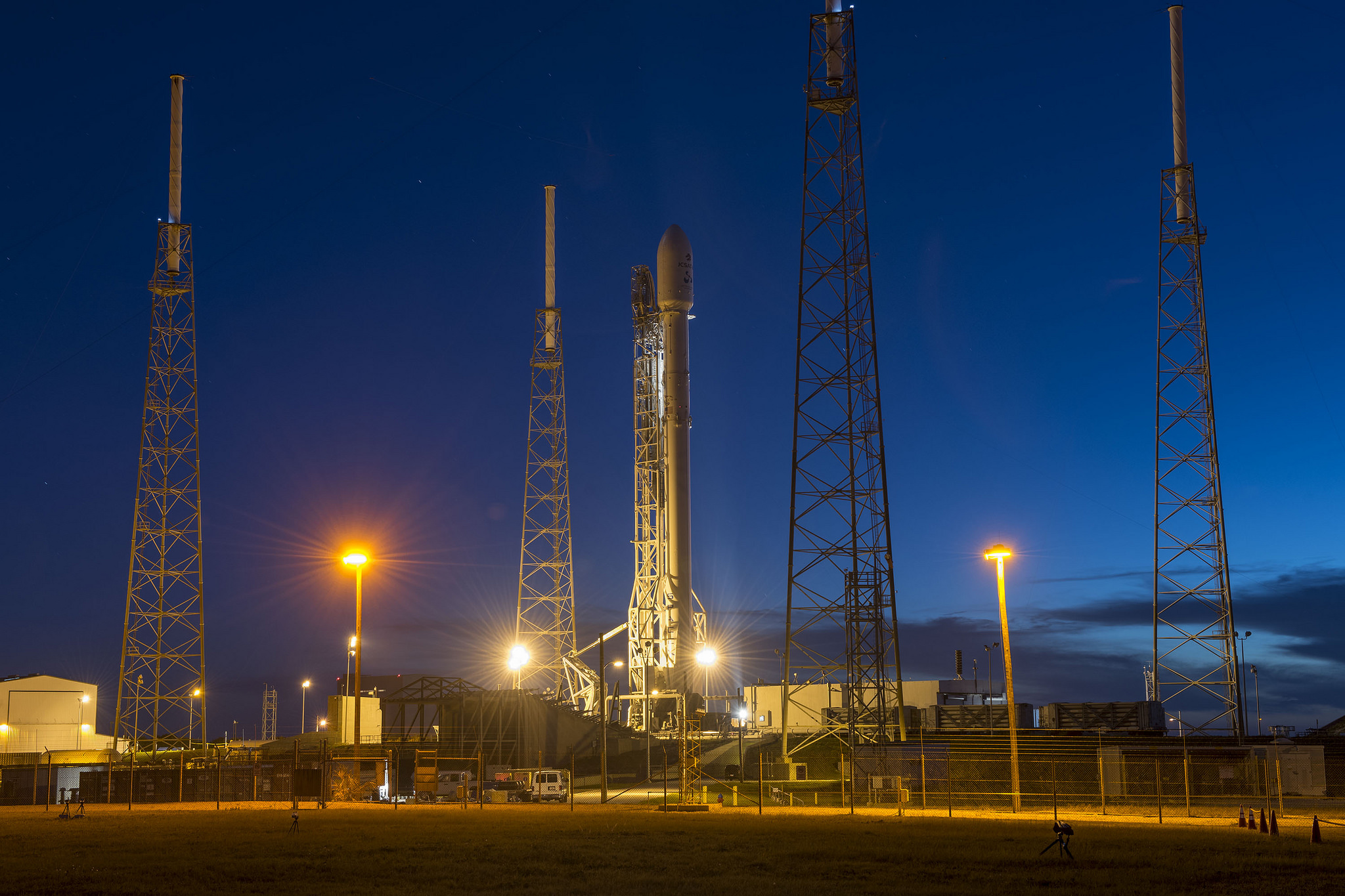
SpaceX reviewing 3,000 channels of data to find cause of accident

Company also updates status of its alternative launch pads in Florida and California.

Enlarge (credit: SpaceX)

SpaceX said Friday evening that its number one priority after Thursday's accident at Florida's Cape Canaveral Air Force Station "is to safely and reliably return to flight for our customers, as well as to take all the necessary steps to ensure the highest possible levels of safety for future crewed missions with the Falcon 9."

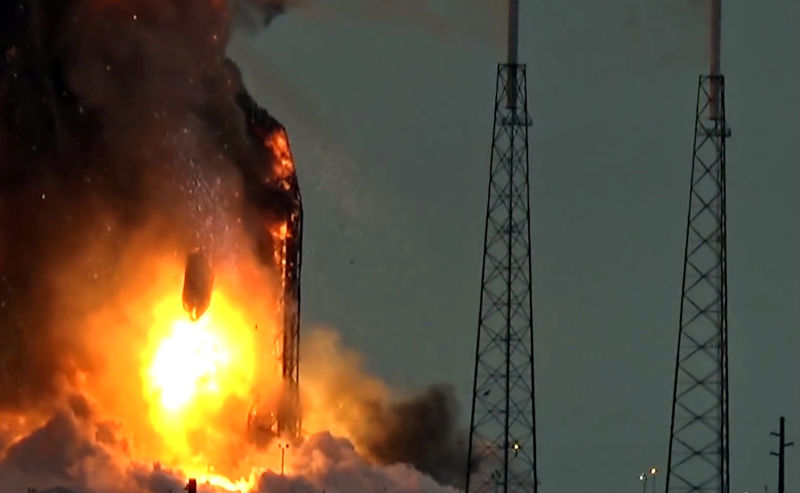
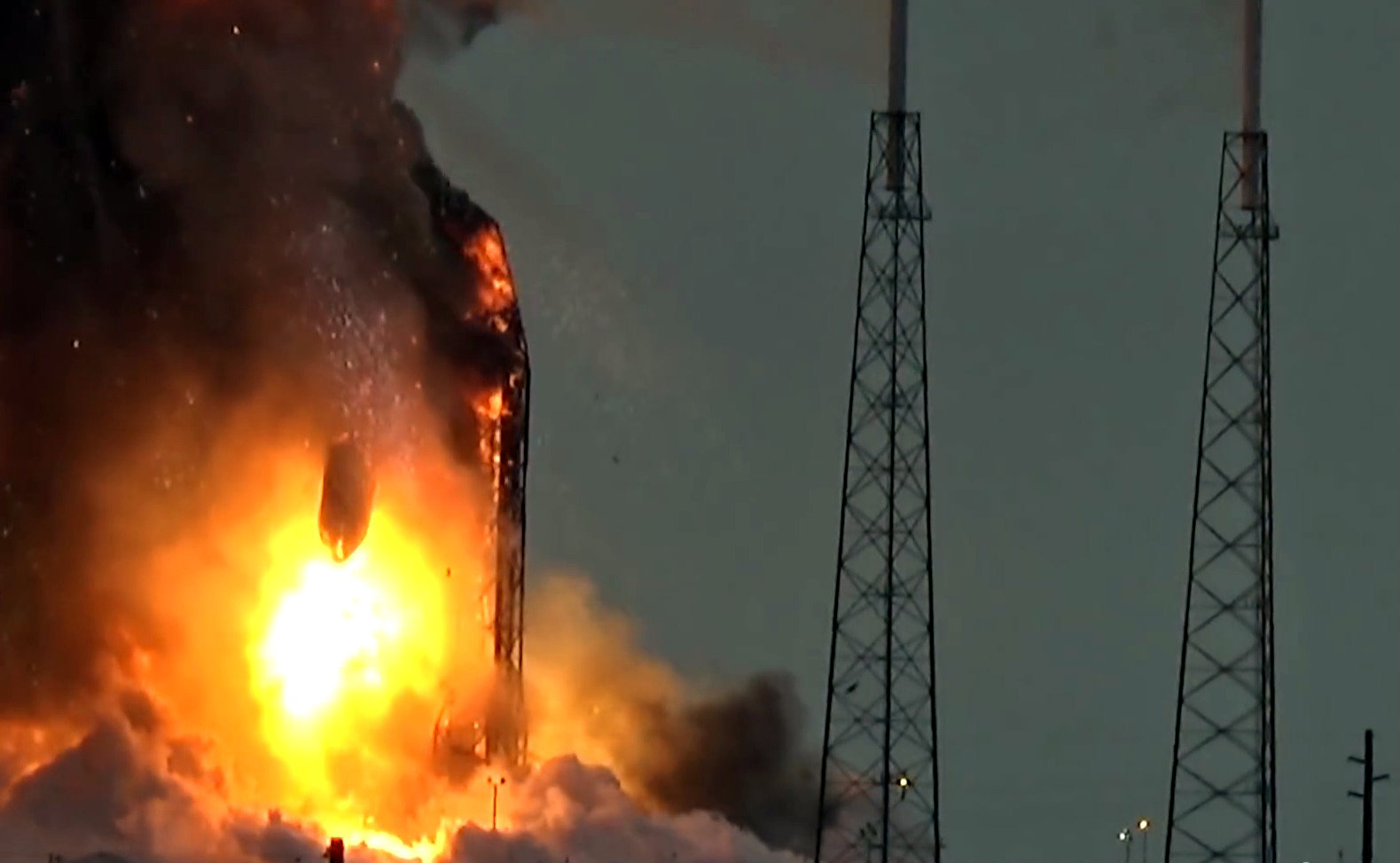
The company said it has begun a full investigation of Thursday morning's explosion, which involved the loss of its Falcon 9 rocket and AMOS-6 satellite payload during preparations for a static fire test. SpaceX's "Accident Investigation Team," along with oversight from the Federal Aviation Administration and assistance from NASA and the US Air Force, is in the "early" stages of reviewing 3,000 channels of telemetry and video data covering a brief time period of 35 to 55 milliseconds.

The statement from SpaceX provided no additional information about the cause of the accident. It only repeated that the incident occurred during fueling of the launch vehicle before a static fire test, rather than during the test itself, and that the "anomaly" originated around the upper stage liquid oxygen tank. Whether the issue was related to a ground systems problem or occurred because of a defect with rocket itself remains unclear.

Read 3 remaining paragraphs | Comments

First look at Jupiter’s north pole—bluer and “hardly recognizable”

So far the $1.1 billion NASA mission to Jupiter is delivering on a grand scale.

This week, scientists got their first look at images and data from the Juno spacecraft's initial flyby of Jupiter's polar regions, and they were thrilled to find an entirely different world than the familiar one which exists around the equator.

"It looks like nothing we have seen or imagined before," said Scott Bolton, principal investigator of Juno from the Southwest Research Institute in San Antonio. "It's bluer in color up there than other parts of the planet, and there are a lot of storms. There is no sign of the latitudinal bands or zone and belts that we are used to—this image is hardly recognizable as Jupiter. We're seeing signs that the clouds have shadows, possibly indicating that the clouds are at a higher altitude than other features."

Planetary scientists also weren't sure whether they'd find a hexagon like the one that exists at Saturn's north pole, but the spacecraft did not observe one (nor a square, pentagon, or other delightful geometric figures). Fortunately the mission has 36 more orbits around Jupiter to understand why one gas giant in the Solar System has a hexagon, and its neighbor does not.

Read 2 remaining paragraphs | Comments

We love SpaceX and we hope it reaches Mars. But we need SpaceX to focus

Analysis: Thursday’s accident confirms that SpaceX should double down on commercial crew.

Enlarge / Screen grab of SpaceX static fire anomaly from YouTube video. (credit: USLaunchReport.com)

During eight years on Twitter and more than 21,500 tweets, I have used the F-word just one time, on the afternoon of April 8, 2016. Watching a Falcon 9 rocket fall out of the sky and somehow, miraculously, come to fiery stop on a drone ship in the Atlantic Ocean—the moment overcame me. That first sea-based landing may be the coolest thing I've ever seen in my life.

It is unprofessional to simultaneously report on, and be a huge fan of, subjects journalists cover. But there are very few space reporters who don’t marvel at the kinds of things SpaceX has done and is trying to do. I count myself among them. That doesn’t mean the company can do no wrong, nor should it be free from criticism. And having talked to myriad people in the space industry after Thursday’s accident, from new space zealots to big aerospace barons, one thing has become crystal clear. The booster that two NASA astronauts might climb on top of in two years—or less—has just suffered two failures in 15 months.

SpaceX is an amazing company, doing amazing things. But right now there’s really just one thing the company should focus on, and that’s meeting the needs of its biggest customer. That is not a satellite company. It is not Red Dragon. It is not the hordes of adoring fans eager to hear about the Mars Colonial Transporter. It is, rather, NASA, America’s stodgy space agency that has stood by the company for the better part of a decade.

Read 12 remaining paragraphs | Comments

Commercial crew now delayed until at least 2018, report finds

The space agency is criticized for “significant delays” in its safety reviews.

Enlarge / Paul K. Martin, nominee for inspector general at NASA, answers questions during his confirmation hearing in front of the Senate Committee on Commerce, Science, and Transportation in 2009. (credit: NASA)

Lots of rumors have swirled about further delays to NASA's commercial crew program, and now the agency's own inspector general has confirmed these setbacks in a new, critical report on progress toward first flights of Boeing's Starliner and SpaceX's Dragon crew capsules.

In the new review, Inspector General Paul Martin writes, "The Commercial Crew Program continues to face multiple challenges that will likely delay the first routine flight carrying NASA astronauts to the ISS until late 2018—more than 3 years after NASA’s original 2015 goal."

Officially, NASA has maintained that it expects to have at least one test launch of a crew vehicle from US soil by the end of 2017 and regular flights by early 2018.

Read 7 remaining paragraphs | Comments

Major explosion occurs during a test firing of SpaceX’s rocket on Thursday

The test was part of the run-up to a planned launch for Saturday of a satellite.

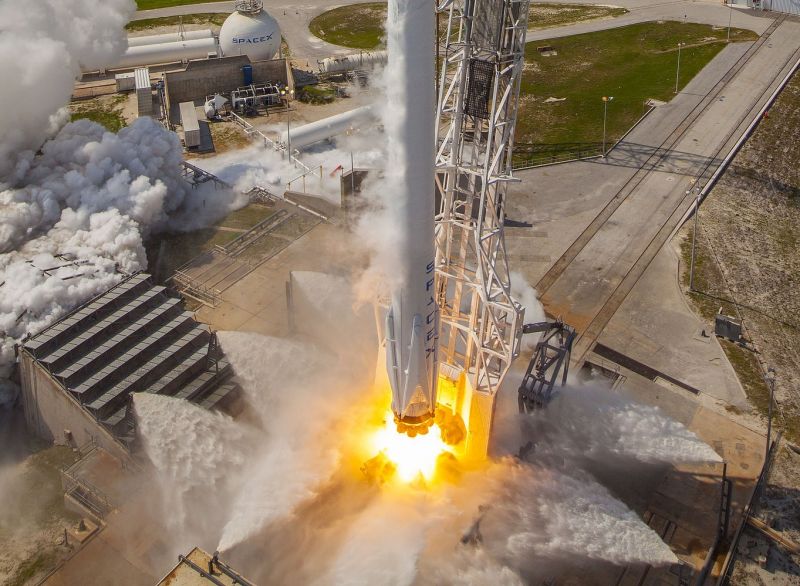
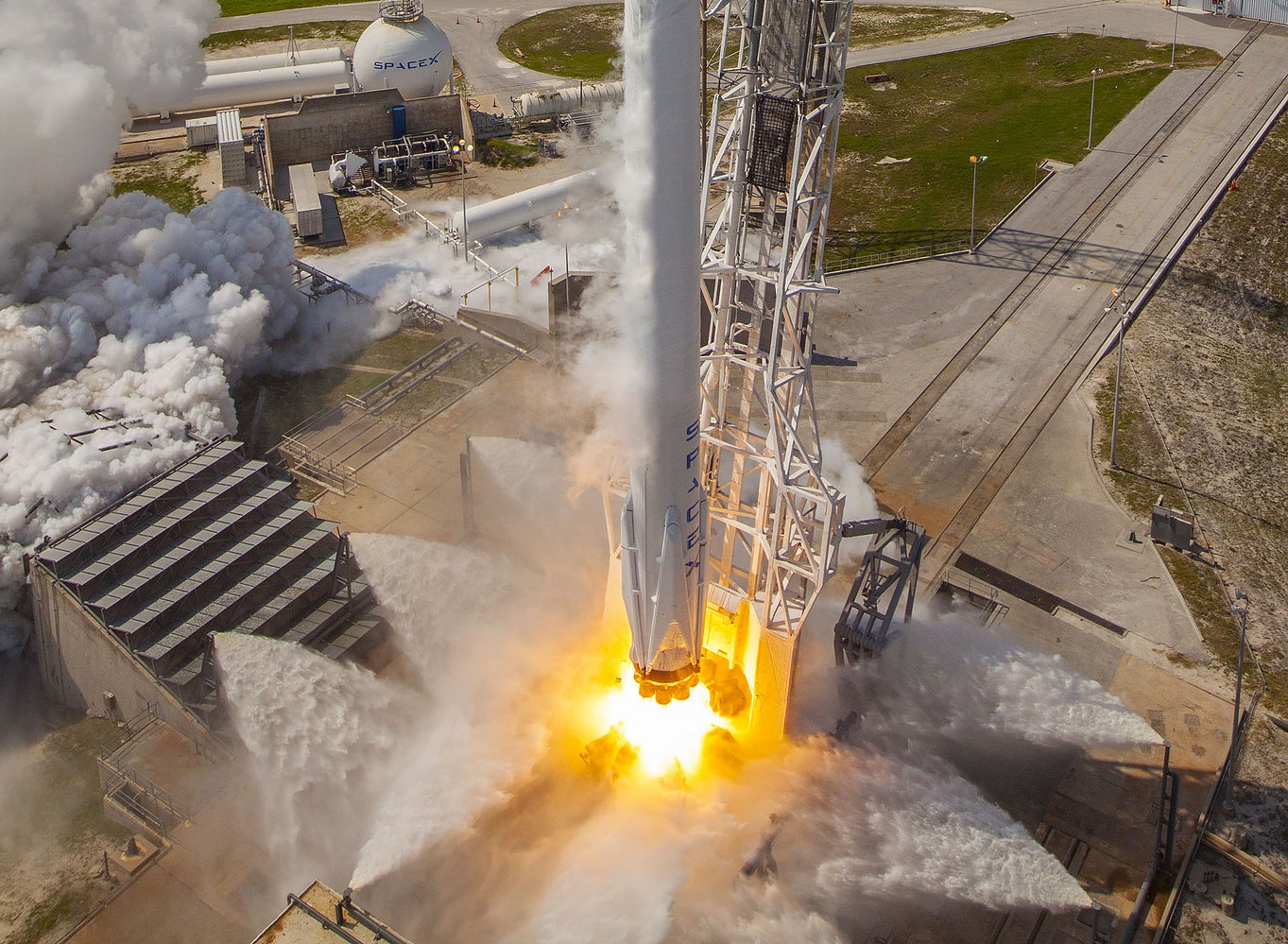
Enlarge / What the business end of a Falcon 9 rocket looks like during a launch. (credit: SpaceX)

10:20am ET Update: SpaceX released the following statement to Ars regarding today's accident:

"SpaceX can confirm that in preparation for today's static fire, there was an anomaly on the pad resulting in the loss of the vehicle and its payload. Per standard procedure, the pad was clear and there were no injuries."

It is notable that the issue appears to have been with the pad and ground systems, and not the rocket. But it is highly unfortunate that the Amos 6 satellite was lost as part of the test.

Read 5 remaining paragraphs | Comments