Evidence of gang ties does not include music on cell phones, court says

Use caution “when drawing conclusions from a defendant’s musical preferences.”

Music from the band Los Tigres Del Norte the authorities found on an assault defendant's mobile phone was wrongly used to prove gang affiliation, Washington state's top court ruled. (credit: Knight Foundation)

Washington state's top court is tossing the assault convictions of three men, in part because prosecutors told jurors that Latin music on one of the defendant's mobile phones highlighted a gang affiliation.

The issue was tangential to why the state Supreme Court ordered a new trial for Ricardo Juarez DeLeon, brother Anthony DeLeon, and Octavio Robledo. The trio was convicted of first-degree assault in connection to a 2009 non-deadly drive-by shooting in Yakima County. The court demanded a retrial because the men told jail officials they were gang members and could not be placed in a cell with rival gang members. But ultimately the admission was wrongly used against them at trial before the jury, the top court found.

"In this case, the defendants made self-incriminating statements to avoid a credible risk of physical violence," the top court ruled. (PDF) "By their very nature, such statements cannot be considered voluntary, and they should not have been admitted."

Read 7 remaining paragraphs | Comments

Piracy site for academic journals playing game of domain-name Whac-A-Mole

Just like The Pirate Bay, Sci-Hub is domain hopping to beat takedown court orders.

Alexandra Elbakyan won't let her Sci-Hub pirate site of academic journals die— despite publisher Elsevier's lawsuit. (credit: Courtesy of Alexandra Elbakyan)

We reported a few weeks ago on a popular pirate site for science journals whose oversees admin was being sued by one of the world's leading academic publishers, Elsevier. Elsevier is the same New York publisher that the late Aaron Swartz had noted in his "Guerilla Open Access Manifesto" that told academics and researchers they had a "duty" to free the knowledge they were privileged to read behind Elsevier's paywall.

Because of the lawsuit, which Sci-Hub founder Alexandra Elbakyan has refused to participate in, she's been engaged in a game of domain-name Whac-A-Mole in response to Elsevier winning court orders demanding the shuttering of the popular site's domain name. The site allows anybody, not just academics, to access tens of millions of scholastic research articles for free.

When Ars interviewed Elbakyan and learned that she had a similar philosophy to Swartz, she had already altered the site's domain from sci-hub.org to sci-hub.io and changed others because of a court order blocking the .org domain. Now that domain, registered with Chinese registrar Now.cn, has also been killed. That has forced the site to move to sci-hub.bz and sci-hub.cc. This cat-and-mouse domain game is reminiscent of the decade-long game the admins of The Pirate Bay have been playing. When one domain gets lost to a court order, the site springs up on another.

Read 3 remaining paragraphs | Comments

State chemist was high daily, thousands of drug prosecutions jeopardized

“All told, she estimated that she was smoking crack ten to twelve times a day.”

(credit: ibbl)

A former Massachusetts drug-lab chemist was high on the job nearly every day for eight years, according to a report from the state's attorney general. The report said that the chemist, Sonja Farak, was under the influence of drugs like crack, meth, LSD, and ketamine as she testified in court in drug cases and while examining drug samples in a crime lab between 2004 and 2013.

The report from AG Maura Healey also said the chemist cooked crack cocaine in a crime lab at night while working overtime.

Anthony Benedetti of the Committee for Public Counsel Services said that "thousands" of drug prosecutions were imperiled. "Anything that went through that lab while she was there is in question," he told the Boston Globe.

Read 5 remaining paragraphs | Comments

Legal quirk enabling surveillance state expansion absent Congressional vote

Analysis: “Substantive policy changes like these are clearly a job for Congress.”

The old adage, "it's best not to ask how laws and sausages are made," doesn't apply here. Consider that the US surveillance state was greatly expanded, and yet not a single member of Congress voted for the Justice Department's proposal last week.

That's because of a quirk in US law that allows so-called "procedural rules" of court to be written by unelected advisory committees under the umbrella of the Administrative Office of the US Courts. From there, they are generally rubber stamped by the Supreme Court. The only way these rules don't become law is if Congress takes action to thwart them.

So what happened here? The Federal Rule of Criminal Procedure was amended to allow judges to sign warrants to allow the authorities to hack into computers outside a judge's jurisdiction as part of a criminal investigation. What's more, Rule 41 would allow judges to use one warrant to search multiple computers anywhere instead of having to get warrants for each computer. Without Rule 41, judges could authorize electronic searches only within their own judicial district. Although this is an amendment to courthouse procedure rules, it has a huge impact in practice and on the Fourth Amendment. The Justice Department even said so as early as last week.

Read 10 remaining paragraphs | Comments

Secret US spy court approved every surveillance request in 2015

Perfect batting average continues with the FISA Court two years in a row now.

(credit: Mike Licht)

The Foreign Intelligence Surveillance Court, the one that NSA whistleblower Edward Snowden revealed is allowing the government to obtain the metadata of every phone call to and from the United States, approved every surveillance request from US authorities in 2015.

Reuters news service, which reviewed a secret document outlining the figures, reported that the FISA Court granted every one of the 1,457 surveillance applications last year. The scope of the surveillance is unknown but vast. A single application is all it takes for the FISA Court to require the nation's telcos to scoop up and retain the telephone metadata on all phone calls. The court, based in the District of Columbia and whose members are appointed by the Supreme Court's chief justice, approved every one of the 1,379 applications for the year 2014 as well, according to the memo.

The memo said the FISA Court, which was created in 1978 with the stated goal of acquiring intelligence on foreign suspects, had modified 80 warrant applications last year, up from 19 the year before.

Read 2 remaining paragraphs | Comments

Senators play terror card to lobby public for backdoor crypto legislation

Quest for the decryption “Golden Key” resumes. Trust us, we’ll get a court order.

(credit: Christiaan Colen)

The two US lawmakers behind legislation requiring the tech sector to build backdoors in encrypted products are playing the terrorism card. In an editorial Thursday in the Wall Street Journal, Sen. Richard Burr (R-N.C.) and Sen. Dianne Feinstein (D-Calif.) stoke fears that our personal safety is tied to their proposed legislation.

The pair cite what they called an "islamic State-inspired attack last year in Garland, Texas" and the non terror-related murder of a Louisiana pregnant woman named Brittney Mills.

"These are two of the many cases where law enforcement is unable to fully investigate terrorism or criminal activities. In fact, today the FBI is unable to gain access to data on many of the mobile devices they obtain that are password protected," the lawmakers write.

Read 6 remaining paragraphs | Comments

US House unanimously passed bill requiring warrants for e-mail

It remains to be seen whether Senate has the wherewithal to approve House version.

(credit: Dennis Skley)

The US House unanimously approved legislation Wednesday requiring the authorities to obtain a court warrant to acquire e-mail and stored cloud data.

The Email Privacy Act unwinds a President Ronald Reagan-era law that allows the authorities to access e-mail and data from service providers without a warrant if the message or data is at least 180 days old. The 1986 e-mail privacy law, adopted when CompuServe was king, considered cloud-stored e-mail and other documents older than six months to be abandoned and ripe for the taking.

The measure now goes to the Senate, where its passage is unknown. The Senate Judiciary Committee for years has debated, and even passed similar legislation, which has gone nowhere. President Obama must also sign the bill, and it's unlikely yet hopeful it would reach his desk before his term expires in January.

Read 7 remaining paragraphs | Comments

Child porn suspect jailed indefinitely for refusing to decrypt hard drives

Man to remain locked up “until such time that he fully complies” with court order.

(credit: Yuri Samoilov)

A Philadelphia man suspected of possessing child pornography has been in jail for seven months and counting after being found in contempt of a court order demanding that he decrypt two password-protected hard drives.

The suspect, a former Philadelphia Police Department sergeant, has not been charged with any child porn crimes. Instead, he remains indefinitely imprisoned in Philadelphia's Federal Detention Center for refusing to unlock two drives encrypted with Apple's FileVault software in a case that once again highlights the extent to which the authorities are going to crack encrypted devices. The man is to remain jailed "until such time that he fully complies" with the decryption order.

The suspect's attorney, Federal Public Defender Keith Donoghue, urged a federal appeals court on Tuesday to release his client immediately, pending the outcome of appeals. "Not only is he presently being held without charges, but he has never in his life been charged with a crime," Donoghue wrote (PDF) in his brief to the 3rd US Circuit Court of Appeals.

Read 7 remaining paragraphs | Comments
Jurors caught using social media could be fined up to $1,500

Proposal gives new weapon to judges to stop tweeting, Facebooking jurors.

(credit: Renzo Stanley)

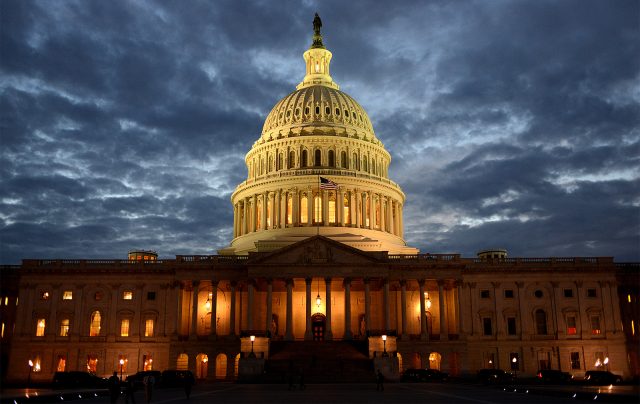
Jurors who don't obey a judge's admonition to refrain from researching the Internet about a case or using social media during trial could be dinged up to $1,500 under proposed California legislation.

The first-of-its-kind measure, now before the California Assembly, would give a new weapon to judges in the Golden State, who can already hold misbehaving jurors in contempt. But under the new law, designed to combat mistrials, a judge would have an easier time issuing a rank-and-file citation under the proposed law instead of having to go through all of the legal fuss to charge somebody with contempt.

Judges routinely warn jurors not to research their case or discuss it on social media. Normally, errant jurors are dismissed without any penalty, and sometimes a mistrial ensues. Under the new law, levying a fine would be as easy as issuing a traffic ticket.

Read 4 remaining paragraphs | Comments

Lawsuit accuses PACER of milking the public for cash in exchange for access

Lawsuit says PACER revenue increased to $145M after 2012 price hike to $0.10/page.

The federally run online court document access system known as PACER now finds itself listed on a federal docket. Its overseer, the US government, is a defendant in a proposed class-action lawsuit accusing the service of overcharging the public.

The suit, brought by three nonprofits on Thursday, claims millions of dollars generated from a recent 25-percent increase in page fees are being illegally spent by the Administrative Office of the Courts (AO). The cost for access is 10 cents per page and up to $3 a document. Judicial opinions are free. This isn't likely to break the bank for some, but to others it adds up and can preclude access to public records. The National Consumer Law Center, the Alliance for Justice, and the National Veterans Legal Services Program also claim in the lawsuit that these fees are illegal because the government is charging more than necessary to keep the PACER system afloat (as is required by Congress).

The groups cite the E-Government Act of 2002, which authorizes PACER fees necessary "to reimburse expenses in providing these services." The suit says that millions of dollars in PACER online access fees have been diverted to other courthouse projects instead. The system was once a dial-in phone service and became an Internet portal in 1998. Fees began at 7 cents per page, rose to 8 cents, and now sit at 10 cents.

Read 4 remaining paragraphs | Comments