
Website for models can be sued for not warning users about rapists

Communications Decency Act doesn’t immunize Modelmayhem.com from legal liability.

(credit: Dennis Skley)

A federal appeals court is reviving a lawsuit targeting a website for models because the site did not warn users that there were rapists reading the site in search of their next victim. The Communications Decency Act (CDA), the 9th US Circuit Court of Appeals ruled Tuesday, did not immunize the website Modelmayhem.com from a suit brought by an aspiring model who said she was drugged, raped, and filmed by two men during a phony 2011 audition.

Craigslist, eBay, Facebook, and other online companies had told the court (PDF) that such a ruling would have a chilling effect on the Web. In a court filing, they said that the CDA shields website operators "from the risks, burdens, and uncertainty of lawsuits that would hold them liable for hosting or facilitating online exchanges of third-party information that may result in harm."

But the federal appeals court, which issued a similar ruling in 2014 but set it aside to rehear the case again, wasn't buying the argument. The CDA, one of the foundational laws that has allowed the Internet to flourish, protects online outlets from legal liability for the content that third parties publish on it, the court noted. But here, the owner of the website, Internet Brands, had obtained knowledge that there were rapists who trolled the site for women, pretended they were agents, and raped and filmed the women who thought they were going for a job interview, the court ruled.

Read 5 remaining paragraphs | Comments

Sex with 17-year-old girl is legal in Texas—sexted pics of her are kid porn

Man faces kid porn charges for having nude pics of lover who is of consenting age.

(credit: Pro Juventute)

Try to follow along. In Texas, it's legal to have sex with somebody as young as 17 years old. But it's considered child pornography to have nude pictures of somebody under 18, even if he or she is 17.

Aldo Leiva, 51. (credit: Harris County Sheriff's Office)

This means a 51-year-old Houston math tutor is facing 20 years in prison and may have to register as a sex offender for life in connection to accusations that his mobile phone contained child pornography—which were the nude photos that his 17-year-old student-girlfriend had texted him. The case against Aldo Leiva came to light after the girl's mother found explicit pictures on her daughter's mobile phone. The Houston Independent School District Police Department opened an investigation, which led to the charges against the Houston High tutor, according to court records.

Leiva posted $20,000 bond last week, and a local judge issued a no-contact order between the girl and the tutor. According to court records (PDF), the tutor gave police his phone and unlocked it for them, and nude images of the girl were allegedly recovered.

Read 5 remaining paragraphs | Comments

All your disk image are belong to us, says appeals court

Court says your files are ripe for seizure—Fourth Amendment doesn’t apply.

(credit: Magnus Hagdorn)

The government can prosecute and imprison people for crimes based on evidence obtained from their computers—even evidence retained for years that was outside the scope of an original probable-cause search warrant, a US federal appeals court has said in a 100-page opinion paired with a blistering dissent.

The 2nd US Circuit Court of Appeals ruled that there was no constitutional violation because the authorities acted in good faith when they initially obtained a search warrant, held on to the files for years, and built a case unrelated to the original search.

The case posed a vexing question—how long may the authorities keep somebody's computer files that were obtained during a search but were not germane to that search? The convicted accountant said that only the computer files pertaining to his client—who was being investigated as part of an Army overbilling scandal—should have been retained by the government during a 2003 search. All of his personal files, which eventually led to his own tax-evasion conviction, should have been purged, he argued.

Read 7 remaining paragraphs | Comments

California mayors demand surveillance cams on crime-ridden highways

“Evidence suggests these shooting appear to be gang related,” CHP says.

(credit: CBS SF Bay Area)

The 28 shootings along a 10-mile stretch of San Francisco-area highway over the past six months have led mayors of the adjacent cities to declare that these "murderous activities" have reached "crisis proportions." Four people have been killed and dozens injured, including a pregnant mother of four children who was shot to death earlier this month.

These five mayors want California Gov. Jerry Brown to fund surveillance cameras along all the on and off ramps of Interstate 80 and Highway 4 along the cities of El Cerrito, Hercules, Richmond, San Pablo, and Pinole.

According to their letter (PDF) to the governor:

Read 4 remaining paragraphs | Comments
FaceTime, iMessages hang in the balance after Apple loss to patent troll

Kill these services because of “lost sales and reputational harm,” VirnetX says.

Apple's popular iMessages as used on an iPad. (credit: Robert S. Donovan)

Patent troll VirnetX, fresh on the heels of a $626 million FaceTime and iMessages patent victory over Apple, now wants a federal judge to permanently turn off those popular features.

VirnetX on Wednesday also asked the judge presiding over the litigation to increase the damages the East Texas jury awarded in February by another $190 million or more. Apple wants a retrial, claiming that VirnetX's lawyers misrepresented evidence to the jury and that the evidence presented at trial didn't support infringement. The gadget maker said it also should not have to pay royalties, according to Law360 (subscription required), which attended Wednesday's hearing (PDF).

Apple "argued that VirnetX is improperly trying to secure an overly broad injunction so that it can be used to extract a massive licensing fee," Law360 reported. Apple's documents connected to the issue are lodged under seal. However, VirnetX's post-trial demands (PDF) are in the public record.

Read 3 remaining paragraphs | Comments

Billionaire Peter Thiel funded Hulk Hogan lawsuit to take down Gawker [Updated]

“It’s less about revenge and more about specific deterrence,” Thiel says.

Peter Thiel takes Gawker Media down to the mat. (credit: JD Lasica)

UPDATE: Gawker responded Thursday afternoon, saying Silicon Valley needs a watchdog, and Gawker Media was the right outlet for the job.

"The refusal to engage in public relations or access journalism—the refusal to lubricate the flow of venture capital—is usually the mark of an outlet’s credibility. For Thiel and his peers in Silicon Valley, such a refusal amounts to repudiating their way of life," Gawker wrote.

END UPDATE:

Read 7 remaining paragraphs | Comments

Hillary Clinton ripped by State Department inspector over e-mail flap

She would have been denied use of private mail server because of “security risks.”

(credit: Lorie Shaull)

The Republican Party and Donald Trump just got some fresh campaign fodder. A State Department inspector general report released Wednesday concludes that Hillary Clinton sidestepped security by running a private e-mail server when she was Secretary of State.

The 83-page report by Inspector General Steve Linick noted that the Office of the Secretary has had "longstanding, systemic weaknesses related to electronic records." What's more, the report (PDF) concludes the office hasn't addressed these issues fast enough.

"The Department generally and the Office of the Secretary in particular have been slow to recognize and to manage effectively the legal requirements and cybersecurity risks associated with electronic data communications, particularly as those risks pertain to its most senior leadership," the report states. In particular, the document says Clinton did not request permission to create her private server and she would have been denied because of "security risks." Using private e-mail to conduct public business was "not an appropriate" move, the report added.

Read 9 remaining paragraphs | Comments

TSA official got $90K bonus despite long airport lines, security bungles

An inspector general report on TSA had highlighted “pitiful” security operations.

(credit: frankieleon)

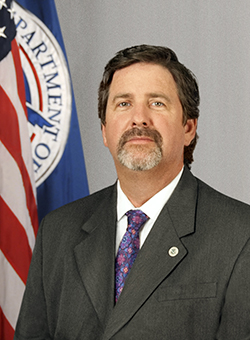
Kelly Hoggan. (credit: TSA)

Kelly Hoggan, the embattled head of security for the Transportation Security Administration, has been stripped of his duties, the House Oversight Committee announced Monday evening. The move comes nearly two weeks after a contentious committee hearing and as lawmakers learned that Hoggan had received $90,000 in bonuses despite security snafus and long lines at US airports.

TSA administrator Peter Neffenger said, "These adjustments will enable more focused leadership and screening operations at critical airports in the national transportation system."

As passengers have been confronted by massive security lines at US airports, lawmakers found Hoggan had been awarded the bonus despite a Department of Homeland Security Inspector General report highlighting “pitiful” security operations. The bonus was paid out in roughly $10,000 increments, prompting accusations of “smurfing.”

Read 3 remaining paragraphs | Comments

Cop sued for drawing gun on man filming him

“Hey. You gotta take your hand out of your pocket.”—”No. I haven’t done anything.”

July 29 confrontation between Rohnert Park officer David Rodriguez and resident Don McComas. (credit: YouTube)

It's been months since Ars reported about a Northern California police officer who unholstered his gun and looked ready to shoot a man whose crime appeared to be nothing more than filming that officer scouring the neighborhood.

Officer David Rodriguez was placed on paid administrative leave pending an investigation by officials from Rohnert Park, a city about 50 miles north of San Francisco. But his job was restored after the police department said the law enforcement official did nothing wrong. The video of the incident went viral and has been seen nearly half a million times on YouTube alone. The incident, in which Rohnert Park resident Don McComas and the officer were both filming each other, underscores that we are indeed living in a YouTube society—one in which there is distrust between the public and citizenry and one where footage speaks louder than words.

McComas is now suing the officer and the city of Rohnert Park for unspecified damages over the July 29 incident, among other things claiming a breach of his constitutional right of assembly and speech. McComas claims he was in front of his own residence putting a trailer to his vehicle when Rodriguez, who the department said was searching for parking scofflaws, drove up. McComas began filming with a mobile phone.

Read 2 remaining paragraphs | Comments

Google’s 1st Amendment defense to search censorship fails in court

“Plaintiff has adequately alleged that it did not violate any of Google’s policies.”

It's not the first time that Google has been sued for its search rankings, but it's among the first in which the company's First Amendment defense is failing.

For the moment, a federal judge in Florida is allowing a search-censorship lawsuit to proceed against Google. Search engine optimization company E-ventures Worldwide claims (PDF) that Google wrongfully removed hundreds of its websites from Google search. E-ventures claims that it did not breach any of Google's terms of service but instead was hit in September 2014 because of "economic" and "anti-competitive" reasons. According to the ruling (PDF) by US District Judge John Steele of Florida:

While a claim based upon Google’s PageRanks or order of websites on Google’s search results may be barred by the First Amendment, plaintiff has not based its claims on the PageRanks or order assigned to its websites. Rather, plaintiff is alleging that as a result of its pages being removed from Google’s search results, Google falsely stated that e-ventures’ websites failed to comply with Google’s policies. Google is in fact defending on the basis that e-ventures’ websites were removed due to e-ventures’ failure to comply with Google’s policies. The Court finds that this speech is capable of being proven true or false since one can determine whether e-ventures did in fact violate Google’s policies. This makes this case distinguishable from the PageRanks situation. Therefore, this case does not involve protected pure opinion speech, and the First Amendment does not bar the claims as pled in the Second Amended Complaint.

Essentially, E-ventures is claiming that because its business focuses on getting websites higher rankings in Google's unpaid search listings, Google removed it and its affiliates so that companies will instead pay Google for higher rankings. "Google hopes that third parties read Google's publications and pay Google to be ranked higher in Google's search results," E-ventures said. "E-ventures hopes that third parties read E-ventures' publications and pay a SEO provider instead of Google to achieve the same result. In sum, Google has an anti-competitive, economic motivation to eliminate the visibility of E-ventures' websites on its search engine."

Read 5 remaining paragraphs | Comments