Attention US-bound tourists: Social media accounts subject to inspection

“Collecting social media data will enhance the existing investigative process.”

(credit: Jayson Trevino)

The federal government is taking another step it says would make the US homeland safer from terrorism. US border authorities are proposing that millions of tourists entering the country each year reveal their social media identities.

The proposal from US Customs and Border Protection, announced last week in the Federal Register, would add a line to the online or paper form that US-bound visitors must fill out if they don't have a visa and plan on staying for up to 90 days for vacation, business, or other affairs. The agency says travelers coming to the US under the Visa Waiver Program won't be forced to disclose their social media handles, but leaving it blank obviously could raise red flags.

Here's what will be asked: "Please enter information associated with your online presence—Provider/Platform—Social media identifier." This field doesn't call for additional information such as passwords, but it's likely to yield many if applicants aren't paying attention and overshare.

Read 4 remaining paragraphs | Comments

Man beats murder rap because DNA expert illegally testified via Skype

Court says defendant has “constitutional right” to confront witnesses at trial.

(credit: Jorge Correa)

There's this pesky thing called the US Constitution, and sometimes there's a price to be paid when it's subverted.

That's what is happening in New Mexico, where a convicted murderer serving a life term won a new trial because a DNA prosecution expert in the prosecution's case testified via Skype, denying the defendant Truett Thomas' Sixth Amendment rights to confront witnesses in court, according to the New Mexico Supreme Court.

The case against Thomas began in 2010 when Albuquerque police discovered Guadalupe Ashford's body behind a trash can in a small parking lot. The woman was assaulted, and sustained significant head injuries, "including lacerations, skull fractures and a dislodged tooth." Police found blood on the scene that didn't match the woman's and ran it through the Combined DNA Index System (CODIS) database, which matched the defendant. The defendant denied he knew the woman.

Read 8 remaining paragraphs | Comments

Jury says Led Zeppelin did not rip off “Stairway to Heaven”

And she’s not infringing a stairway…. to heavennnnnnn.

(credit: vinylmeister)

A federal jury in Los Angeles on Thursday cleared Led Zeppelin of allegations that the band infringed the opening of the classic rock song "Stairway to Heaven."

The jury deliberated for less than a day after a trial that began June 14. The trial was based on claims that the famous intro to the 1971 song infringed the 1968 instrumental song "Taurus" from the band Spirit.

The case, in which tens of millions of dollars were at stake, including Led Zeppelin's reputation, was brought by the trust of Randy Wolfe, aka Randy California. The suit claimed Zep's opening to "Stairway to Heaven"—an acoustic guitar arpeggiating chords in a descending pattern—was a complete ripoff of California's "Taurus," which he wrote for the band Spirit. Zeppelin toured with Spirit in 1968, and California's complaint alleges that Zep guitarist/songwriter Jimmy Page had heard "Taurus" before the debut of "Stairway to Heaven," which appeared on Led Zeppelin IV in 1971.

Read 12 remaining paragraphs | Comments

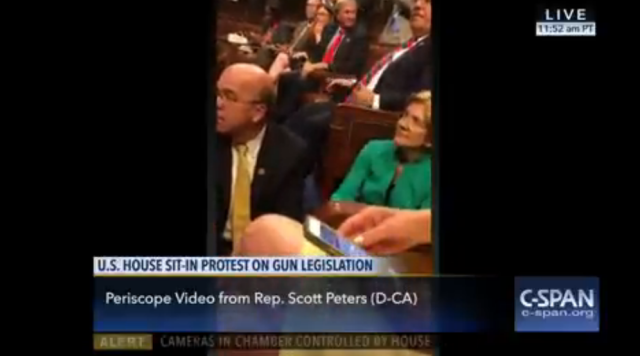
GOP cuts off US House cameras, so Democrats Periscope gun control sit-in

Rep. Scott Peters turns to social media to broadcast protest.

(credit: C-SPAN)

If there's anything that members of Congress can agree on, it's that they can't agree on anything. So on Wednesday, Democrats took to the House floor to stage a sit-in and protest their GOP counterparts' refusal to consider gun control legislation in the wake of the recent Orlando mass shooting.

The GOP's response was to cut the C-SPAN feed of the floor protest. House Speaker Paul Ryan, who controls the House C-SPAN feed, decided censorship was the proper route. But the C-Span feed was quickly restored via Twitter-owned Periscope from Rep. Scott Peters, a Democrat from California. Here is Peters' feed. The video is spotty.

The Democrats are urging gun legislation to land on the House floor. Hopefully Peters' mobile phone has a big battery, as about 40 House Democrats vowed "to occupy the floor of the House until there is action."

Read 2 remaining paragraphs | Comments

Reddit users help feds nab graffiti vandal who defaced US national parks

Online outrage leads to woman’s prosecution. She is barred from US federal land.

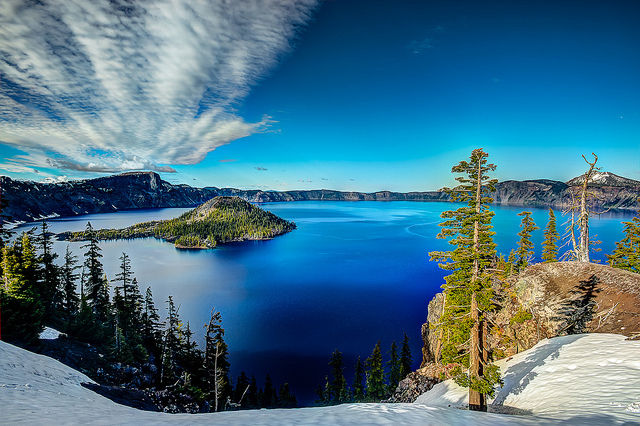
Crater Lake National Park, Oregon, the site of some of Casey Nocket's vandalism. Story below includes links to some of the defacements. (credit: Howard Ignatius)

A woman who defaced national parks with graffiti was nabbed with the assistance of online outrage and, ultimately, the Reddit community.

The defendant, 23-year-old Casey Nocket from San Diego, was handed two years of probation and 200 hours of community service for using magic markers and acrylic paint (PDF) to deface rock formations in several national parks—from Death Valley in California to Zion National Park in Utah. The woman was also barred from all national parks and federal lands—which amounts to about one-fifth of the US.

Reddit users helped track down the woman who left the message "Creepytings" with her vandalism that occurred in 2014. What got her into trouble was her cavalier attitude about the vandalism on an Instagram post, which spread across the Internet and eventually to a hiking site and Reddit.

Read 2 remaining paragraphs | Comments

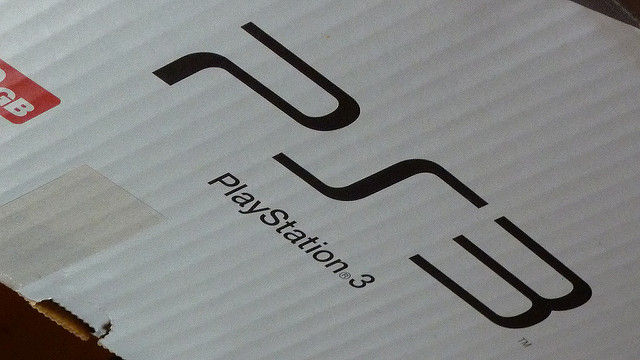
Sony agrees to pay millions to gamers to settle PS3 Linux debacle

As many as 10 million PS3 console owners will be eligible for payment.

(credit: Sean MacEntee)

After six years of litigation, Sony is now agreeing to pay the price for its 2010 firmware update that removed support for the Linux operating system in the PlayStation 3.

Sony and lawyers representing as many as 10 million console owners reached the deal on Friday. Under the terms of the accord, (PDF) which has not been approved by a California federal judge yet, gamers are eligible to receive $55 if they used Linux on the console. The proposed settlement, which will be vetted by a judge next month, also provides $9 to each console owner that bought a PS3 based on Sony's claims about "Other OS" functionality.

The deal also provides up to $2.25 million in attorneys' fees for the lawyers who brought suit. Under the plan, gamers eligible for a cash payment are "all persons in the United States who purchased a Fat PS3 model in the United States between November 1, 2006, and April 1, 2010." The accord did not say how much it would cost Sony, but the entertainment company is expected to pay out millions.

Read 8 remaining paragraphs | Comments

Meet the surveillance sedan: Cadillac’s CT6 and its 360-degree videocam

It’s a new source for capturing YouTube vids, scenic drives, or even police stops.

Integrated into the front grille of the Cadillac CT6 is a surveillance camera the driver can secretly activate. There's one on the rear trunk lid, too. If the alarm system is triggered, these two cameras activate, and two others on the door-mounted rearview mirrors do too. Footage is stored on a removable SD card in the trunk. (credit: Cadillac)

When Ars first saw the new Cadillac CT6 at the New York International Auto Show last year, we remarked that it "may well be the company’s most convincing home-grown rival to the mighty German super-sedans like Audi’s A8, BMW’s 7-Series, and Mercedes-Benz’s S-Class." But one feature we missed was that the $53,000-plus machine doubles as surround-view, gas-powered camcorder on wheels.

Sure, vehicles like police cars have dash cams, and there was even a valet cam in the 2015 Corvette. But the Cadillac CT6 has four cameras secretly offering surround-view video-recording outside the vehicle. It's an industry first and a new source for capturing YouTube moments, scenic drives, or even other affairs like police stops.

"Cadillac expects the surround-vision video recording system to be used by CT6 owners to record events such as a memorable drive, for security in the case of a vehicle being tampered with, or to record an incident," General Motors said of the feature.

Read 4 remaining paragraphs | Comments

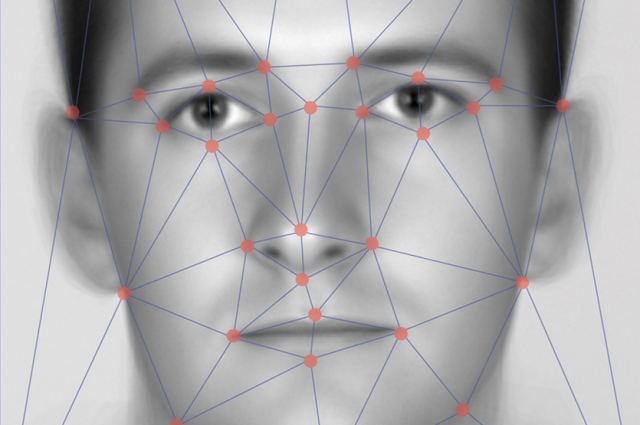
Smile, you’re in the FBI face-recognition database

Driver license, passport, visa pics in database—despite no criminal affiliation.

The Federal Bureau of Investigation has access to as many as 411.9 million images as part of its face-recognition database. The bulk of those images are photographs of people who have committed no crime, according to a new report from the Government Accountability Office (GAO).

The report says the bureau's Facial Analysis, Comparison, and Evaluation Services Unit contains not only 30 million mug shots, but also has access to driver license photos from 16 states, the State Department's visa and passport database, and the biometric database maintained by the Defense Department.

The GAO report, titled "FACE RECOGNITION TECHNOLOGY: FBI Should Better Ensure Privacy and Accuracy," comes nearly two years after the bureau said its facial recognition project graduated from a pilot project to "full operational capability." The facial recognition project is combined with a fingerprint database. Here's how the GAO report summarized the program:

Read 6 remaining paragraphs | Comments

DMCA wins big in record label lawsuit against Vimeo

Case questioned if DMCA gave immunity to ISPs for their users’ infringement.

(credit: Dennis Skley)

A federal appeals court ruled Thursday that ISP's such as video-sharing sites like Vimeo are protected by the Digital Millennium Copyright Act for pre-1972 musical recordings uploaded by their users.

The record labels had sued the YouTube-like site and successfully convinced a district court judge that, because pre-1972 recordings fell under state laws and not federal copyright law, the DMCA didn't apply. The 2nd US Circuit Court of Appeals reversed that decision, and also overturned the lower court that ruled the DMCA didn't grant so-called safe-harbor passage to ISPs whose employees saw infringements on their platforms uploaded by their users.

The decision once again affirms that the DMCA extends immunity to Internet Service Providers for the infringement of their customers if an ISP removes material at the request of the right holder. The decision was akin to an earlier and popular decision called Viacom v. YouTube, which the record labels said was off base in the case against Vimeo.

Read 5 remaining paragraphs | Comments
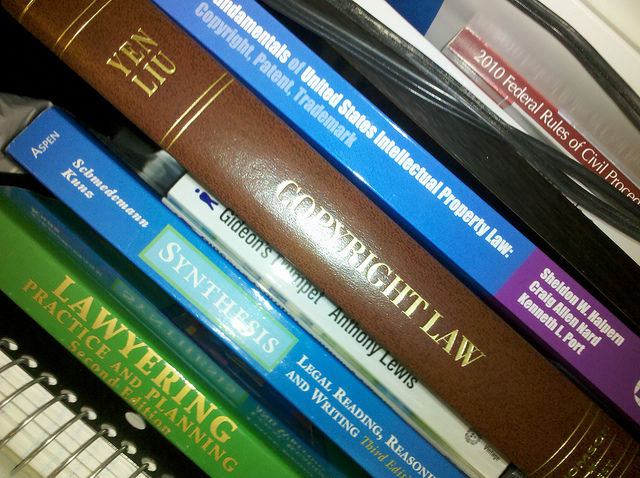
Supreme Court revives $2M fees dispute in copyright case over resold textbooks

Attorneys fees are a key factor in whether lawsuits are brought or even defended.

(credit: sparkle-motion)

On Thursday, the Supreme Court provided nuanced guidance to lower courts in determining whether the prevailing party in a copyright lawsuit should be awarded attorney fees. The decision by the unanimous eight-member court revives a $2 million fee dispute in one of the court's most important copyright cases in the digital era.

The issue is significant because attorneys fees play a huge role in US litigation, and they are among the top considerations of whether a lawsuit would be brought or even defended.

The case the justices decided Thursday (PDF) concerns the fallout from Kirtsaeng v. Wiley, the court's 2013 decision involving the rights of those who buy copyrighted works. In that closely watched case, the justices had ruled that the first-sale doctrine allowed a US university student to buy textbooks overseas and resell them on eBay while undercutting textbook publisher John Wiley & Sons. The publisher sued on copyright infringement allegations and lost in a case in which the justices certified the reselling rights of those who buy copyrighted works. At the same time, the ruling put companies on notice that they don't have unlimited control of their products once they hit the stream of commerce.

Read 6 remaining paragraphs | Comments