Blackberry CEO says Apple has gone to a “dark place” with pro-privacy stance

John Chen blasts Apple in a blog post citing Ars Technica.

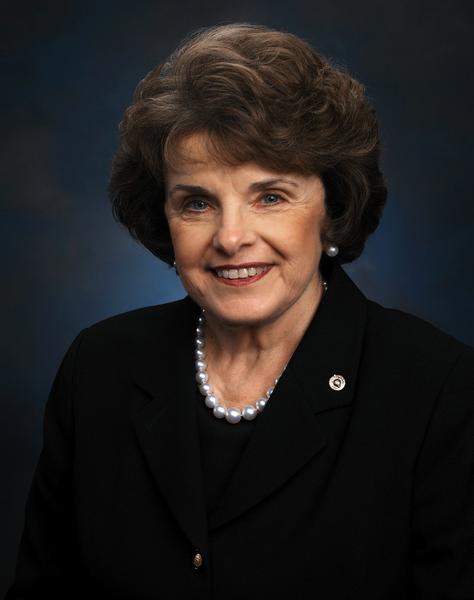
Blackberry Priv (credit: Ron Amadeo)

John Chen, the Blackberry chairman and CEO, is ripping Apple's position that granting the authorities access to a suspected criminal's mobile device would "tarnish" the iPhone maker's image.

"We are indeed in a dark place when companies put their reputations above the greater good. At BlackBerry, we understand, arguably more than any other large tech company, the importance of our privacy commitment to product success and brand value: privacy and security form the crux of everything we do. However, our privacy commitment does not extend to criminals," Chen wrote in a blog post titled "The encryption Debate: a Way Forward."

Chen links to a recent Ars story in which Apple is fighting the authorities on whether it should give them access to an iPhone running iOS 7. Among other things, Apple argues in the criminal case that "forcing Apple to extract data in this case, absent clear legal authority to do so, could threaten the trust between Apple and its customers and substantially tarnish the Apple brand. This reputational harm could have a longer term economic impact beyond the mere cost of performing the single extraction at issue."

Read 3 remaining paragraphs | Comments

Senate probing whether Cruz leaked classified surveillance data during debate

Did the USA Freedom Act secretly expand the bulk telephone metadata snooping program?

GOP presidential candidate Texas Sen. Ted Cruz. (credit: Wikipedia)

Senate Intelligence Committee Chairman Richard Burr said Wednesday he was investigating if Texas Senator Ted Cruz released classified surveillance data at Tuesday's GOP presidential debate.

The probe concerns what Cruz said during a back-and-forth talk with Florida Senator Marco Rubio about the USA Freedom Act, which President Barack Obama signed in June. Cruz said that, under that law, "nearly 100 percent" of phone calling metadata can be surveilled with the new spy program compared with "20 percent to 30 percent" under the Patriot Act provisions that the USA Freedom Act replaced.

Burr, a Republican from North Carolina, said the committee's staff is looking into the statements.

Read 6 remaining paragraphs | Comments

Cop who wanted to photograph teen’s erection in sexting case commits suicide

Cop accused of unrelated pedophilia charges but lauded for his “contributions.”

Detective David Edward Abbott.

The Virginia police officer who wanted to photograph a 17-year-old boy's erect penis in connection to a juvenile sexting case committed suicide Tuesday as authorities went to arrest him on pedophilia-related charges. Those charges were not connected to last year's sexting case that received global media coverage.

Detective David Edward Abbott, a member of the Northern Virginia-Washington DC Internet Crimes Against Children Task Force, last year had obtained a warrant to inject a young boy with a drug that would cause an erection. Abbott wanted to photograph that erection and compare it with photos found on a 15-year-old girl's phone. Amid a public outcry, the Manassas City police eventually decided against doing that. The 17-year-old boy got a year of probation for sexting his teen girlfriend.

Abbott then sued the boy's attorney. He claimed Jessica Foster caused him "severe emotional distress" when The Washington Post reported that "Foster said Detective Abbott told her that after obtaining photos of the teen's erect penis he would use 'special software to compare pictures of this penis to this penis. Who does this? It's just crazy.'"

Read 4 remaining paragraphs | Comments

RIAA lawsuit kills Popcorn Time-like free music streaming site

Settlement demands US team behind the Aurous site cough up $3 million to RIAA.

Piracy site Aurous is disabled forever, according to lawsuit settlement. (credit: Aurous)

A music piracy site for the truly lazy that debuted two months ago agreed Wednesday to shut down and to forfeit its domain to the Recording Industry Association of America, which brought a lawsuit that is now being settled. The deal also calls for the Aurous site's developer, Florida resident Andrew Sampson, and others associated with the site to pay the RIAA $3 million in damages. Although it's a sum that likely won't ever be paid, it's a judgement hanging over their heads and a sum that the RIAA believes sends a message of deterrence.

"Aurous appropriately agreed to shut down," Cary Sherman, the RIAA chairman, said in an e-mailed statement. "It was the right thing to do. We hope this sends a strong signal that unlicensed services cannot expect to build unlawful businesses on the backs of music creators."

The law is clearly on Sherman's side, too. Under the US Copyright Act, the site's backers faced monetary damages of up to $150,000 per track.

Read 3 remaining paragraphs | Comments
Senators revive bill requiring tech sector to report online terror activity

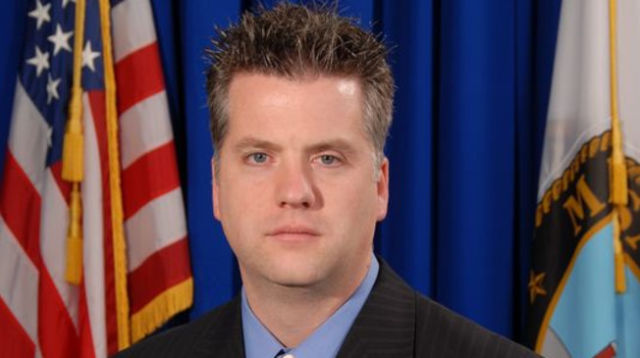
Feinstein says bill will help authorities “identify and prevent terrorist attacks.”

(credit: US Senate)

One of the shooters in last week's deadly attack pledged her allegiance to ISIS on Facebook the same day she and her husband went on a shooting rampage, killing 14 people in a San Bernardino County government building. In response, high-ranking Senators revived legislation Tuesday requiring the tech sector, like Facebook and Twitter, to report to the authorities suspected online terror activity.

"We’re in a new age where terrorist groups like ISIL are using social media to reinvent how they recruit and plot attacks," Sen. Dianne Feinstein, a Democrat from California, said in a statement about the legislation she is sponsoring with Sen. Richard Burr, a Republican of North Carolina. "That information can be the key to identifying and stopping terrorist recruitment or a terrorist attack, but we need help from technology companies. This bill doesn’t require companies to take any additional actions to discover terrorist activity, it merely requires them to report such activity to law enforcement when they come across it. Congress needs to do everything we can to help intelligence and law enforcement agencies identify and prevent terrorist attacks, and this bill is a step in the right direction."

The development comes nearly three months after Feinstein and Burr tabled the legislation because of a dispute with Sen. Ron Wyden, the Oregon Democrat who had placed a procedural hold on the bill. Wyden again took issue with the reintroduction of the "Requiring Reporting of Online Terrorist Activity Act."

Read 4 remaining paragraphs | Comments

Florida newspaper fighting judge’s order to unpublish online news

Palm Beach Post also ordered not to publish transcripts of informant’s phone calls.

Judge Cox (credit: Palm Beach County Bar Association)

The Palm Beach Post is fighting a Florida judge's order that it remove from its news site transcripts of recorded calls of a jailhouse snitch to protect the inmate's "right to privacy." (PDF) Last week's decision from Palm Beach County Circuit Judge Jack Schramm Cox also prohibited the news outlet, or "any other person currently in possession of the recorded calls," from publishing transcripts of the informant's taped jailhouse phone conversations.

"The U.S. Supreme Court has never upheld a prior restraint on pure speech, nor has (the newspaper’s) counsel found a Florida appellate decision upholding such a restraint," the Post wrote (PDF) a Florida state appeals court. The Post said that Cox was erroneously putting the rights of jailhouse informant Frederick Cobia above those of the newspaper and that inmates have no expectation of privacy when speaking on jailhouse phones. Jail signs caution inmates that their calls are being recorded, the newspaper's appeal said.

The Fourth District Court of Appeal declined to immediately block Cox's order but on Friday expedited (PDF) briefing on the matter.

Read 5 remaining paragraphs | Comments

With gun control off-limits, politicians want tech sector to fight terror

Obama wants Silicon Valley “to make it harder for terrorists to use technology.”

(credit: Whitehouse.gov)

Last week, a San Bernardino couple armed with two .223-caliber assault rifles and two 9-millimeter semiautomatic pistols killed 14 people. And the very next day, the Senate voted against a measure that would have barred gun sales to people on federal terror watchlists. Another gun-control measure to expand background checks at gun shows and for online purchases also failed that same afternoon.

It was political theater at its finest, as the votes came as part of GOP legislation to repeal Obamacare and gut Planned Parenthood funding. So with gun control clearly off-limits, lawmakers are directing their attention to social media as a method to combat domestic terrorism.

The House Foreign Affairs Committee on Wednesday will debate legislation (PDF) called the "Combat Terrorist Use of Social Media Act." Among other things, the measure requires a White House "policy that enhances the exchange of information and dialogue between the Federal Government and social media companies as it relates to the use of social media platforms by terrorists." What's more, the bill demands "a comprehensive strategy to counter terrorists' and terrorist organizations' use of social media."

Read 6 remaining paragraphs | Comments

PETA: Your Honor, Naruto really did take those monkey selfies

A federal judge is being asked to grant intellectual property rights to a monkey.

People for the Ethical Treatment of Animals isn't monkeying around. The animal rights group told a federal judge Friday that a monkey wrench is wrongly being thrown into its lawsuit claiming that a macaque monkey named Naruto is the rightful owner of the selfies the monkey allegedly snapped in the Tangkoko reserve on the Indonesian island of Sulawesi in 2011.

In response to allegations that PETA is representing the wrong monkey, the animal rights group wrote in a court filing (PDF) to US District Judge William Orrick that "there is no doubt that, as stated in the complaint, Naruto is the macaque in the Monkey Selfies."

The legal filing comes ahead of a January hearing on PETA's lawsuit in which it is suing a publisher and David Slater, the British nature photographer whose camera was swiped by a monkey while the photographer was on a jungle shoot. Slater has published a book with the pictures a monkey took of himself. Now the monkey—via PETA—is seeking monetary damages for copyright infringement from Slater and his publisher.

Read 3 remaining paragraphs | Comments

“Repugnant” online discussions are not illegal thoughtcrime, court rules

Judges also rule prosecutors abused the anti-hacking Computer Fraud and Abuse Act.

Fantasizing online about kidnapping, sexually abusing, and eating women does not amount to unlawful conduct or thoughtcrime, a federal appeals court ruled. A person's "inclinations and fantasies are his own and beyond the reach of the government," 2nd US Circuit Court of Appeals Judge Barrington Parker wrote Thursday in the criminal case of Gilberto Valle, dubbed the New York City "cannibal cop."

"We are loath to give the government power to punish us for our thoughts and not our actions," Barrington ruled. "That includes the power to criminalize an individual’s expression of sexual fantasies, no matter how perverse or disturbing."

The 2-1 decision by the New York-based federal appeals court sides with a trial judge who dismissed a jury's verdict that the former police officer was guilty of conspiracy to kidnap because of his online discussions with members of the Dark Fetish Network (DFN). The government, on the other hand, argued that the online communications "taken at face value, were fully sufficient to establish his intent to join a kidnapping conspiracy."

Read 10 remaining paragraphs | Comments
Authors side with Apple in e-book price-fixing Supreme Court appeal

Case undermines “the very objective of antitrust law—to ensure robust competition.”

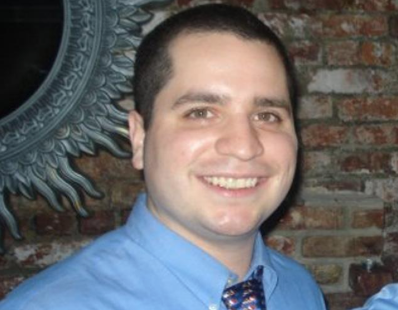
(credit: David Kravets)

Apple picked up a major ally in its battle against the Justice Department's e-book price-fixing case against the gadget maker. The Authors Guild and several other writers groups told the Supreme Court on Wednesday that Apple didn't illegally conspire with major publishers to fix and raise the prices of e-books, as an appeals court ruled. Instead, Apple enhanced competition, the guild claimed in a friend-of-the-court brief.

The authors were challenging a June federal appeals court decision that found Apple liable for engaging in e-book price-fixing in an antitrust lawsuit brought by the Justice Department and 33 states. The government also sued publishers Penguin, HarperCollins, Hachette, Simon & Schuster, and Macmillan.

The publishers agreed to settle the 2012 suit for $164 million. Apple fought the charges and lost, and it appealed the decision to the Supreme Court, where it is pending high court action. Apple argued that at the time of its 2010 entry into the e-book business, Amazon was its only real competitor, and Amazon was selling e-books for $9.99, which Apple said was well below a competitive price. Apple claimed it worked with publishers to hit a price point that would help Apple be profitable enough to enter the e-book market and compete with Amazon.

Read 6 remaining paragraphs | Comments