Online legal publishers squabble over the right to copyright the law

Do private online publishers own the law, or does it belong to the people?

(credit: Mr.TinDC)

Two big-name legal research companies are battling in federal court over the right to exclusively publish the law—in this case, the Georgia Administrative Rules and Regulations.

The lawsuit (PDF) comes as states across the nation partner with legal research companies to offer exclusive publishing and licensing deals for digitizing and making available online the states' reams of laws and regulations. The only problem is that the law is not copyrightable—or so says one of the publishers involved in the Georgia litigation. In this instance, District of Columbia-based legal publisher Fastcase wants a judge to fend off a cease-and-desist demand from rival Virginia-based Lawriter, which has been designated as the exclusive publisher (PDF) of Georgia's compilation (PDF) of the rules and regulations of its state agencies. The lawsuit says:

The Georgia Regulations are binding law—a broad-ranging collection of rules and regulations governing areas from consumer protection to banking to elections. The Georgia Regulations are promulgated by public agencies of the State of Georgia, and published for the benefit of the public by the Georgia Secretary of State, as required by O.C.G.A. § 50-13-7. Defendant Lawriter purports to have exclusive rights to publish the Georgia Regulations. Consistent with this claim of exclusive rights, Lawriter has sent Plaintiff Fastcase a demand that Fastcase remove the Georgia Regulations from its legal research service, which is provided as a free member benefit to members of the State Bar of Georgia. The Georgia Regulations are public law published under statutory mandate and are in the public domain. Defendant cannot claim any exclusive right in, to, or in connection with, the Georgia Regulations. Thus, Fastcase seeks declaratory judgment that Lawriter has no basis from which to prohibit Fastcase from publishing the Georgia Regulations in its subscription legal research service.

Fastcase also says Lawriter "cannot claim a valid copyright or an exclusive license to a valid copyright. It is well established in American law that state laws, including administrative rules and regulations, are not copyrightable, and must remain public as a matter of due process."

Read 5 remaining paragraphs | Comments
Feds nail webcam on utility pole for 10 weeks to spy on suspect

Court says warrants not needed. Footage revealed what passersby could see.

(credit: Maëlick)

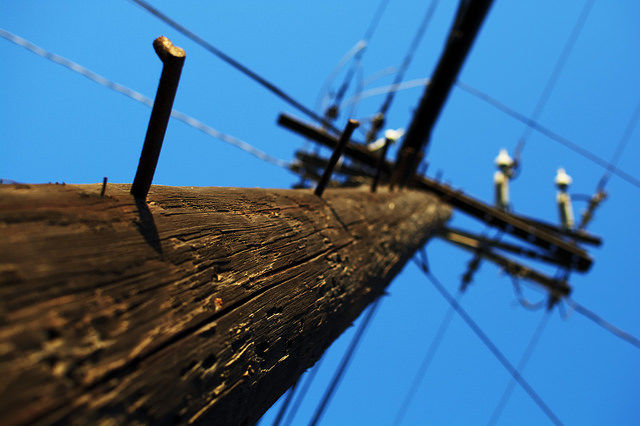
A federal appeals court is upholding the firearms conviction of a Tennessee man whose brother's rural farm was monitored for 10 weeks straight by a remote-controlled camera the authorities installed on a utility pole 200 yards away—without a warrant.

The decision (PDF) by the 6th US Circuit Court of Appeals affirms the nine-year sentence of a man named Rocky Houston, who was caught by the camera as being a felon in possession of a gun. The man was on a Roane County Sheriff's Office watch list after he was cleared of murder charges following a gun battle that left a Roane County law enforcement official dead in 2006.

"There is no Fourth Amendment violation, because Houston had no reasonable expectation of privacy in video footage recorded by a camera that was located on top of a public utility pole and that captured the same views enjoyed by passersby on public roads," Judge John Rogers wrote for the unanimous court, which ruled 3-0 to uphold Houston's 2014 conviction. "The ATF agents only observed what Houston made public to any person traveling on the roads surrounding the farm. Additionally, the length of the surveillance did not render the use of the pole camera unconstitutional, because the Fourth Amendment does not punish law enforcement for using technology to more efficiently conduct their investigations. While the ATF agents could have stationed agents round-the-clock to observe Houston’s farm in person, the fact that they instead used a camera to conduct the surveillance does not make the surveillance unconstitutional."

Read 9 remaining paragraphs | Comments

Internet of Things to be used as spy tool by governments: US intel chief

Clapper says spy agencies “might” use IoT for surveillance, location tracking.

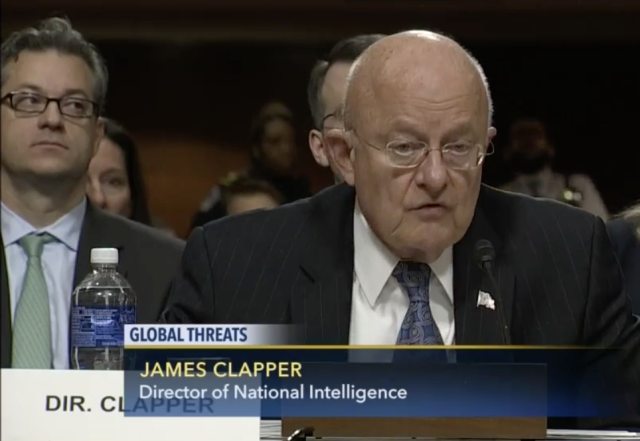
Director of National Intelligence James Clapper testifies Tuesday before the Senate Armed Services Committee. (credit: CSPAN)

James Clapper, the US director of national intelligence, told lawmakers Tuesday that governments across the globe are likely to employ the Internet of Things as a spy tool, which will add to global instability already being caused by infectious disease, hunger, climate change, and artificial intelligence.

Clapper addressed two different committees on Tuesday—the Senate Armed Services Committee and the Senate Select Committee on Intelligence Committee—and for the first time suggested that the Internet of Things could be weaponized by governments. He did not name any countries or agencies in regard to the IoT, but a recent Harvard study suggested US authorities could harvest the IoT for spying purposes.

"Smart devices incorporated into the electric grid, vehicles—including autonomous vehicles—and household appliances are improving efficiency, energy conservation, and convenience. However, security industry analysts have demonstrated that many of these new systems can threaten data privacy, data integrity, or continuity of services. In the future, intelligence services might use the loT for identification, surveillance, monitoring, location tracking, and targeting for recruitment, or to gain access to networks or user credentials," Clapper said (PDF), according to his prepared testimony before the Senate Select Committee on Intelligence.

Read 7 remaining paragraphs | Comments

Supreme Court halts Obama’s climate-change initiative

Carbon emissions regs shelved until legal wrangling is over—which could take years.

(credit: Robert S. Donovan)

The US Supreme Court on Tuesday blocked (PDF) the Obama administration's climate change initiative in response to a petition by more than two dozen states and other energy companies suing the Environmental Protection Agency over the carbon-emissions cutting regulations.

The high court's move comes two weeks after a federal appeals court said that the plan, which impacts hundreds of power plants across the nation and is one of the president's centerpiece accomplishments, could proceed even as a legal challenge is pending. That appeals court, the US Court of Appeals for the District of Columbia Circuit, will hear oral arguments June 2 on the carbon plan Obama announced in October.

The justices sided with the states on a 5-4 vote and said the regulations are shelved until the legal wrangling is concluded—which could take years.

Read 2 remaining paragraphs | Comments

Martin Shkreli’s troubles deepen—from allegations of fraud to IP infringement

Plot thickens for former pharma CEO, now accused of copyright violations.

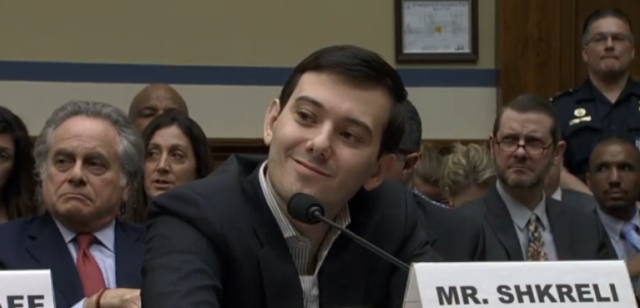
Martin Shkreli, former CEO of Turing, mocks his way through a congressional hearing last week on drug pricing and later called lawmakers imbeciles. (credit: CPSAN)

Embattled former pharma CEO Martin Shkreli's legal troubles deepened Tuesday when the poster child for greed was sued for copyright infringement in connection to the $2 million Wu-Tang Clan hip-hop album he bought last year.

Shkreli is the founder and former CEO of Turing Pharmaceuticals who became reviled for increasing the price of a life-saving drug by more than 5,000 percent last year. He also faces unrelated federal criminal charges that he allegedly defrauded investors, and he has invoked his Fifth Amendment right against compelled self-incrimination before congressional panels probing the price of pharmaceuticals.

The latest brouhaha concerns his exclusive $2 million purchase of the "Once Upon a Time in Shaolin" album, the only copy Wu-Tang Clan produced. The 32 year old said he bought the album to "keep it from the people." Packaging for the album includes a 174-page book with all sorts of writings, pictures, and drawings. In that book are portraits of band members created by a New York artist named Jason Koza, who claims in a new federal lawsuit that he never authorized their reproduction.

Read 6 remaining paragraphs | Comments

Judge tosses proposed class action accusing Google of CAPTCHA fraud

“Google stole a small amount of time and attention from a large number of people.”

A federal judge has dismissed a proposed class-action lawsuit against Google that alleges fraud because the media giant sometimes requires people wanting a free Gmail account to spend seconds filling out a two-word CAPTCHA—the second word of which is not for security purposes and instead provides an economic gain to Google unbeknownst to the user.

As we all know, CAPTCHA stands for "Completely Automated Public Turing test to tell Computers and Humans Apart." They're everywhere online, and are designed to do what they say. They usually ask online surfers to type in a word that appears on the screen to enable deeper access into a website and hopefully keep out bots.

Read 7 remaining paragraphs | Comments

Client’s scathing Yelp reviews net divorce attorney $350,000 in damages

Online reviewers take heed: You cannot say whatever you want online, court says.

(credit: Chris Potter)

A Florida appeals court has upheld a $350,000 damages award to a divorce attorney whose client posted defamatory reviews about the lawyer on Yelp and online legal site Avvo.

The divorcing couple, Copia Blake and Peter Birzon, strangely teamed up to write the reviews about the wife's attorney, Ann-Marie Giustibelli, according to the appellate opinion. In a lesson that all online reviewers should heed, the appeals panel said that the Internet is not a forum with carte blanche freedom to say whatever irks you. In this instance, the divorcing couple accused the wife's attorney of dramatically inflating fees.

Florida's Fourth District Court of Appeal, in a ruling noted Friday by Law.com, upheld a trial court's award of $350,000 in punitive damages for the couple's online falsehoods. The court wrote:

Read 6 remaining paragraphs | Comments

Study: Suspects shocked by Taser “more likely” to waive Miranda Rights

17,000 US police departments stunned more than 2 million people in the past decade.

(credit: Christopher Paul)

A new study says the obvious: suspects' brains are briefly scrambled when they are on the receiving end of a Taser stun gun and its 50,000-volt delivery. But the study, "TASER Exposure and Cognitive Impairment: Implications for Valid Miranda Waivers and the Timing of Police Custodial Interrogations," (PDF) questions whether suspects who were just shocked have the mental capacity to validly waive their Miranda rights and submit to police questioning.

"TASER-exposed participants resembled patients with mild cognitive impairment, which suggests that not only might our participants be more likely to waive their Miranda rights directly after TASER exposure, but also they would be more likely to give inaccurate information to investigators," reads the study, which appears in the journal Criminology & Public Policy. "Thus, part of our findings implicates a suspect’s ability to issue a valid waiver, whereas another part implicates the accuracy of information he or she might give investigators during a custodial interrogation (e.g., false confessions or statements)."

The paper said that police departments might want to wait to question a suspect for about an hour, the amount of time for brain functioning to return to normal after a suspect is shocked. The Drexel University and Arizona State University researchers said innocent suspects may not appear so innocent right after being shocked:

Read 5 remaining paragraphs | Comments
Take-Two Interactive accused of infringing tattoos in NBA 2K video games

Lawsuit says game maker rejected licensing demand of $1.1 million.

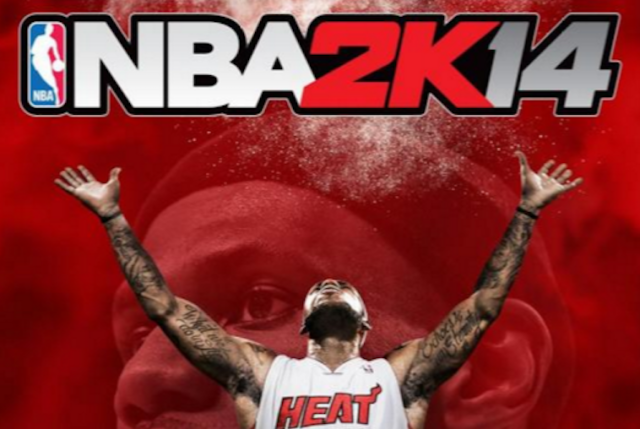
LeBron James in full tattoo glory on the cover of NBA2K14.

The rights holders of tattoos on NBA superstars Kobe Bryant, LeBron James, and other professional basketball players are suing Take-Two Interactive, alleging that the maker of the NBA 2K video game series and other titles is infringing their artwork. The federal copyright infringement lawsuit accuses the video game maker of copyright violations because it has not licensed the tattoos from Solid Oak Sketches.

The suit is a maximalist approach to intellectual property. But it's not the first to assert copyright infringement of tattoos in a video game or on the silver screen. That said, all the cases concerning tattoo copyright infringement have settled out of court, and none have come to an ultimate in-court resolution. That's a legal fact that even Solid Oak Sketches notes in its lawsuit.

"The issue of tattoo copyrightability has yet to be decided upon in court due to numerous settlements preventing a final judicial opinion," the rights holder noted in its filing.

Read 7 remaining paragraphs | Comments

Judge pleads guilty to ordering defendant to be shocked with 50,000 volts

Judge told court deputy: “Do it. Use it.”

A real life demonstration of stun cuffs at a National Sheriffs' Association meeting.

A Maryland judge who ordered a deputy to remotely shock a defendant with a 50,000-volt charge pleaded guilty (PDF) to a misdemeanor civil rights violation in federal court Monday, and he faces a maximum of 1 year in prison when sentenced later this year.

The incident happened in July 2014 during jury selection of case concerning a man accused of carrying a loaded handgun during a police stop the year before, according to a plea agreement with former Charles County Circuit Court Judge Robert Nalley.

Robert Nalley.

Before jurors were brought in, the judge was asking the defendant if he had questions to submit to prospective jurors, who were not yet in the courtroom. Delvon King, the 25-year-old defendant acting as his own attorney, refused to answer several times.

Read 4 remaining paragraphs | Comments