FBI says it might be able to break into seized iPhone, wants hearing canceled

“If the method is viable, it should eliminate the need for the assistance of Apple.”

The Federal Bureau of Investigation said Monday that it might be able to break into the seized iPhone at the center of an encryption battle with Apple. That is why it wants a federal judge overseeing the litigation to vacate Tuesday's hearing on whether Apple should assist the authorities in bypassing the four-digit passcode on the iPhone used by San Bernardino terrorist Syed Farook, according to court documents filed Monday.

"On Sunday, March 20, 2016, an outside party demonstrated to the FBI a possible method for unlocking Farook’s iPhone. Testing is required to determine whether it is a viable method that will not compromise data on Farook’s iPhone," the government said.

US Magistrate Judge Sheri Pym has not yet ruled on the government's motion.

Read 8 remaining paragraphs | Comments
Supreme Court weighing whether 2nd Amendment covers stun guns

Fight comes as weapons are being constructed at home via 3D printing technology.

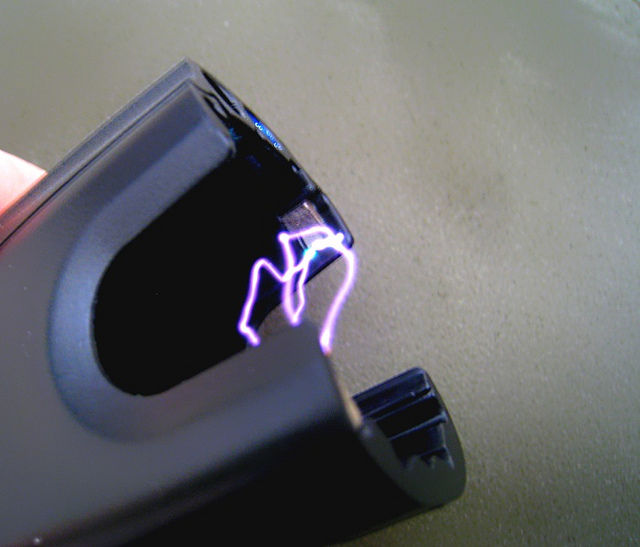
The Supreme Court on Monday questioned the rationale behind a Massachusetts law barring stun guns. In an unsigned order, the eight-member court ruled that the Second Amendment and the high court's precedent on the topic were enough to question the legal reasoning behind the top court of Massachusetts backing the prosecution of a woman that they said unlawfully possessed the electric weapon for self-defense.

The decision, for the moment, sets aside last year's ruling from the Judicial Court of Massachusetts, which upheld the law that carries up to 2.5 years in prison. The state's top court had ruled that the US Constitution's framers never envisioned the modern stun-gun device, first patented in 1972. The state court also said that stun guns are not suitable for military use and that it did not matter that state lawmakers had approved the possession of handguns outside the home.

For the moment, the US Supreme Court didn't go so far as to throw out the Massachusetts stun gun law. Nor did the court outright say stun guns are "arms" for Second Amendment purposes. But the decision is a major threat to the five states and the District of Columbia that ban them outright for civilians, and it comes at a time when all types of weapons are being constructed at home via 3D printing technology.

Read 4 remaining paragraphs | Comments
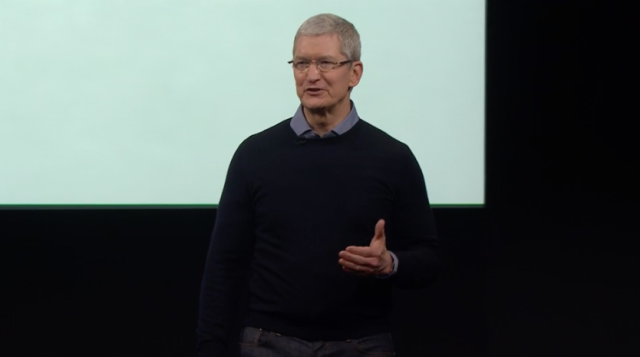
Apple defends crypto fight against government during launch event

Cook: “We did not expect to be in this position at odds with our own government.”

Just a month ago, the Federal Bureau of Investigation accused Apple of a public relations marketing stunt when the company refused to comply with a court order to help the bureau unlock an iPhone used by one of the San Bernardino shooters.

"Apple’s current refusal to comply with the Court’s Order, despite the technical feasibility of doing so, instead appears to be based on its concern for its business model and public brand marketing strategy,” Justice Department attorneys wrote in a court filing. Those remarks came days after Apple CEO Tim Cook published a message on the gadget maker's website telling consumers that the government's "overreach" would "undermine the very freedoms and liberty our government is meant to protect." In Cook's eyes, Apple was being asked to implement a backdoor of sorts to its mobile phone's encryption.

But would Cook take his biggest stage, during the latest product launch of new shiny gadgets on Monday, and again rail against the government's demands? Would Cook, or anybody from Apple, take a swipe at the government and play into its hands while unveiling a new iPad, iPhone, or other product during a live-streamed event from company headquarters? Would that happen just one day before the much-anticipated court hearing?

Read 9 remaining paragraphs | Comments

Supreme Court punts in 1st Amendment Madden NFL legal fight

EA said it was being wrongly punished because its virtual gridiron looked too real.

(credit: Electronic Arts)

Without comment, the Supreme Court on Monday declined to side with Electronic Arts' contention that it had a First Amendment right to use professional football players likenesses without their permission in one of the world's most popular video games, Madden NFL.

EA's petition to the Supreme Court had attracted widespread interest from academics, digital rights groups, (PDF) and others. The dispute was at the intersection of the right-of-publicity claims balanced against modern technology allowing for virtual, realistic portrayals of people—in this case, professional athletes who want a piece of the financial pie.

In its petition to the justices, the game maker claimed it should not be allowed to be sued simply because it made a game that looks too real that it nearly mirrored reality. The company wanted the high court to accept its assertion that its life-like depiction of the virtual gridiron was covered by the First Amendment.

Read 5 remaining paragraphs | Comments

FBI cautions motorists to “maintain awareness” of automobile hacks

Bulletin speaks to the Internet of Things’ continued impact on the auto sector.

The National Highway Traffic Safety Administration and the Federal Bureau of Investigation are warning motorists to watch for signs that their vehicles may have been hacked.

"While not all hacking incidents may result in a risk to safety—such as an attacker taking control of a vehicle—it is important that consumers take appropriate steps to minimize risk," a bulletin from the agencies said. The announcement said the agencies "are warning the general public and manufacturers—of vehicles, vehicle components, and aftermarket devices—to maintain awareness of potential issues and cybersecurity threats related to connected vehicle technologies in modern vehicles."

The bulletin comes as the so-called "Internet of Things" is taking hold of the automotive sector. What's more, researchers are exposing remote vehicle exploits, and there's been high-profile vehicle recalls directly connected to hacking vulnerabilities. A video of a jeep Cherokee exploit that could affect more than a million vehicles triggered a large-scale recall of Jeep and Dodge vehicles last year. General Motors sent out an emergency update to its smartphone app that could allow hackers to unlock and start the engine of the Chevrolet Volt. BMW fixed a vulnerability where hackers could unlock doors on some 2.2 million vehicles.

Read 4 remaining paragraphs | Comments

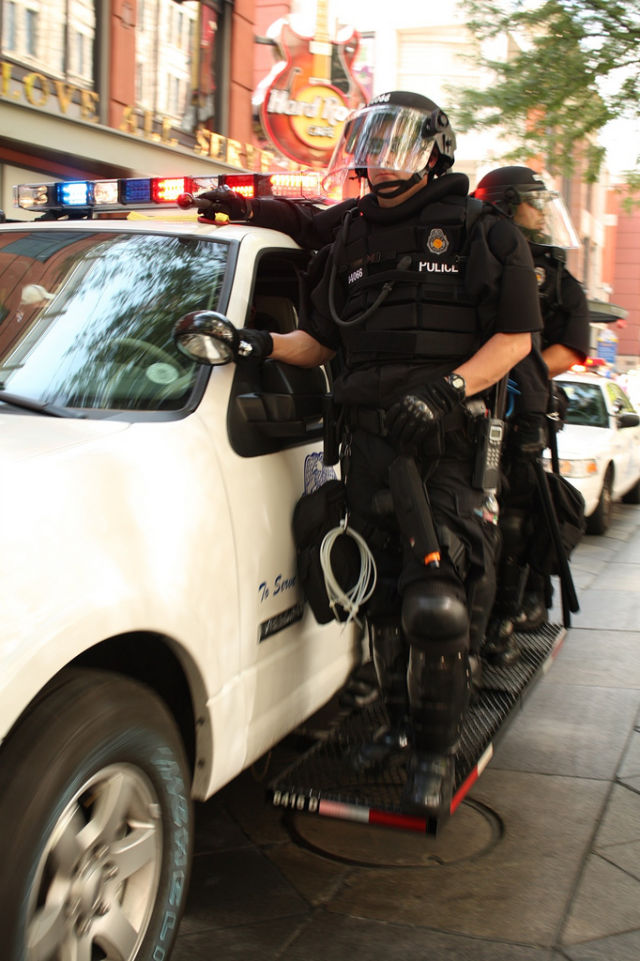
Fearing no punishment, Denver cops abuse crime databases for personal gain

A nurse complained she got a phone call from an officer at a hospital crime scene.

(credit: Noel Hidalgo)

Denver police officers performed searches on state and federal criminal justice databases that were not work-related and instead were made to help officers' in the romance department and to assist friends, according to an independent department monitor. The report said that punishment, usually a written reprimand instead of being charged criminally, is not enough to deter future abuse of the National Crime information Center (NCIC) and the Colorado Crime Information Center (CCIC) databases.

"When used appropriately, they can be powerful tools to investigate crime," the report stated. "But the misuse of these databases for personal, non-law enforcement purposes may compromise public trust and result in harm to community members. We believe that the reprimands that are generally imposed on DPD (Denver Police Department) officers who misuse the databases do not reflect the seriousness of that violation, and may not sufficiently deter future misuse."

The report by Independent Monitor Nicholas Mitchell listed a host of wrongful searches, including an officer getting a phone number of a woman he met on assignment, and an officer running the license plate of a man for a friend who then stalked that person. None of the 25 Denver officers found to have abused the crime databases was ever charged with any access crime. The harshest penalty was a three-day suspension. Civilians who accessed the databases without authorization, however, most likely would be charged with hacking.

Read 7 remaining paragraphs | Comments

Hoax: Uber driver accused of murder spree didn’t sue Uber for $10 million

Authorities said handwritten lawsuit targeting ride-sharing service was a fake.

Days ago, we reported on the Uber driver who said that he killed six people and tried to kill two others in Michigan because a "devil figure" in the Uber app made him do it.

Jason Dalton.

Then it appeared that 45-year-old defendant Jason Dalton was singing a different tune, instead blaming the murder spree on Uber management. At least that's what a federal lawsuit lodged under his name would have us believe. But on Thursday, Michigan authorities said the lawsuit—which touched on key complaints from Uber drivers who don't get overtime, sick pay, or health benefits—was a cruel hoax.

The suit, lodged in Michigan federal court, was handwritten, named Dalton as the plaintiff, and listed the Kalamazoo County Jail as the return address. But what tipped off the authorities was that the suit, mailed to the Eastern District Of Michigan court in Detroit, was postmarked in Philadelphia.

Read 5 remaining paragraphs | Comments

Congressman wants to declare magic a “national treasure”

Resolution name-checks Houdini, Copperfield, and futurist Arthur C. Clarke.

(credit: JD Hancock)

Rep. Pete Sessions, (R-Tex.), wants Congress to adopt a resolution recognizing magic "as a rare and valuable art form and national treasure."

The conservative's proposal drops names like Harry Houdini, David Copperfield, futurist Arthur C. Clarke, and even artist Leonardo da Vinci.

Getting Congress to agree on anything usually takes a little magic (maybe a magic bag of cash?). So why should lawmakers approve this non-binding resolution known as H.RES.642.? The resolution's text says it all:

Read 2 remaining paragraphs | Comments

FBI v. Apple is a security and privacy issue. What about civil rights?

Jesse Jackson: “Activities of civil rights organizations and activists” at stake.

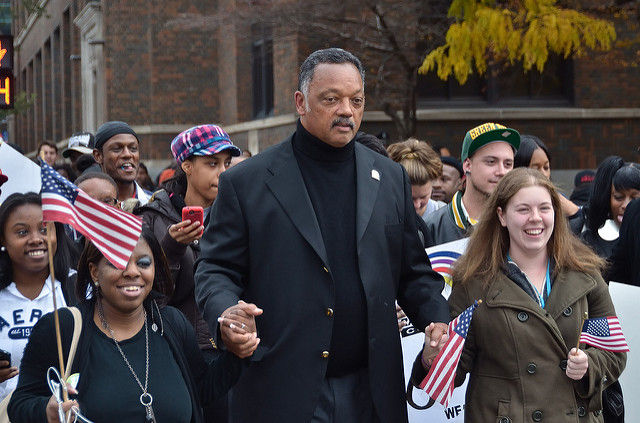
The Rev. Jesse Jackson. (credit: Susan Ruggles)

The ongoing legal drama between Apple and the Federal Bureau of investigation has largely been characterized as an Internet privacy and security issue—and a constitutional one, too. It's also been characterized as a human rights issue. Now, the Rev. Jesse Jackson says it's about civil rights.

Clearly, the security, privacy, and human rights aspects of the fight are all somewhat connected to civil rights. But Jackson's letter to the judge overseeing the legal battle between the tech giant and the federal government has put his own spin on the hot-button topic. Jackson, the president and founder of the Rainbow PUSH Coalition, wrote (PDF) Magistrate Judge Sheri Pym of Riverside Federal Court, urging her to side against the government:

Dr. Martin Luther King would often say, "Where we stand in times of controversy is a measure of our character. Some leaders follow opinion polls. Others stand up for their principles, refuse to compromise and mold opinion."

In these difficult times, the government, courts and private companies must stand up and uphold—however unpopular—our First Amendment rights, our right to privacy and basic individual freedoms guaranteed to us under the US Constitution.

Other writers will weigh in on the intricacies of technology and privacy rights. What I want to bring to the forefront of this legal debate is the impact and implications this case has on civil rights and our historic civil rights movement.

This case cuts right to the heart of our right to live free from unwarranted government surveillance. It is a matter of deep personal concern to me—given the past and present illegal and unwarranted spying and surveillance of civil rights organizations, much conducted under the guise of national security.

Jackson spoke of the FBI infiltrating the Southern Christian Leadership Conference, the wiretapping of King, and how the FBI's COINTELPRO "campaign spied on, infiltrated, and disrupted domestic civil rights and political groups. Rainbow PUSH Coalition and I personally have been subject to spying and surveillance, and more recently, there have been accounts of surveillance of the Black Lives Matter movement and activists."

Read 3 remaining paragraphs | Comments

Cops charged after pot shop’s hidden cameras show them eating snacks

Officers tried to block video as evidence. They said it violated their privacy.

Three Southern California police officers were charged Monday with theft of protein bars and cookies eaten at a medical marijuana dispensary last year. The alleged crimes by the Santa Ana Police Department (SAPD) officers were captured by secret video during a May raid of the Sky High Holistic dispensary in Santa Ana, just southeast of Los Angeles.

"The Orange County District Attorney’s Bureau of Investigation conducted a thorough investigation, including interviewing multiple witnesses and reviewing over 16 hours of unedited video surveillance footage with the cooperation of SAPD," the Orange County District Attorney's Office said in a statement. "While other SAPD personnel ate some protein bars, there is insufficient evidence that they knew the food items belonged to the dispensary and not their fellow officers. There was also no evidence that any SAPD personnel consumed any edible marijuana items available at the dispensary."

Charged with misdemeanor theft were Brandon Matthew Sontag, 31, Nicole Lynn Quijas, 37, and Jorge Arroyo, 32. Sontag was also charged with vandalism, and he is accused of smashing five of the dispensary's security cameras, prosecutors said.

Read 5 remaining paragraphs | Comments