
National Security Letters are now constitutional, judge rules

The law’s change “cures the deficiencies previously identified by this Court.”

(credit: EFF)

A judge who in 2013 declared that National Security Letters (NSLs) were unconstitutional has now changed her mind in an unsealed ruling made public Thursday.

Federal investigators issue tens of thousands of NSLs each year to banks, ISPs, car dealers, insurance companies, doctors, and others. The letters, which demand personal information, don't need a judge's signature and come with a gag to the recipient that forbids the disclosure of the NSL to the public or the target.

Read 8 remaining paragraphs | Comments

Man fired after posting violent Lego videos featuring his coworkers

Says videos on Facebook were of celebrities and fictional characters, not colleagues.

(credit: pengrin)

A New York nursing home food-service worker who lost his job after posting allegedly violent videos depicting his coworkers to Facebook is ineligible for unemployment benefits, a state appeals court is ruling.

The dispute concerns Shawn Roy, who worked at the Albany County Nursing Home for 16 years. Among other things leading to his 2013 discharge, coworkers complained that Facebook videos he posted depicted them in violent and sexual ways. A New York court said that the videos made him ineligible for unemployment benefits.

"Substantial evidence supports the Unemployment Insurance Board's determination that claimant was discharged from his position as a food service worker in a nursing home due to disqualifying misconduct. Claimant was obligated 'even during his off-duty hours, to honor the standards of behavior which his employer has a right to expect of him and...he may be denied unemployment benefits as a result of misconduct in connection with his work if he fails to live up to this obligation,'" the three-member court ruled last week. (PDF)

Read 4 remaining paragraphs | Comments

Defendant claims she live-streamed rape to record evidence of assault

Prosecutor: “Technology has moved us into an area that is sometimes beyond belief.”

The attorney of an Ohio woman accused of live-streaming the rape of her 17-year-old friend claims she Periscoped the assault to gather evidence of a crime.

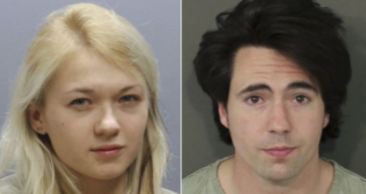
Lonina and Gates. (credit: Franklin County Sheriff)

The defendant, 18-year-old Marina Lonina, pleaded not guilty Friday to charges that include rape, kidnapping, and pandering. Her lawyer, Sam Shamansky, said his client broadcast the February rape in Columbus, Ohio to help convict the alleged rapist, 29-year-old Raymond Gates, according to CBS.

"She does everything possible to contain the situation even to the point of asking while it's being filmed to these Periscope followers, 'What should I do now? What should I do now?'" Shamansky said of Lonina, whose bond was set at $125,000 following her arrest last week. He said his client and the unidentified victim, who attend the same high school, were "preyed upon by this pervert. That's all I can say." (The classmates are naturalized US citizens from Russia, and Lonina's live-streamed comments were in Russian.)

Read 3 remaining paragraphs | Comments

Want to sue Ashley Madison over data breach? You must use your real name

Judge weighing if data hacked from the cheating site may be used at trial.

(credit: The LAMP)

We all remember last year's hype surrounding the Ashley Madison dating site's data breach. Hackers exposed identifying information about millions of users of the site that has the tagline, "Life is short. Have an affair."

Then came the lawyers smelling blood in the water—filing proposed class-action suits targeting the cheating site's not-so-perfect "Full Delete" option that was supposed to, and didn't, remove all identifying information from the service for a $19 fee per user. Then it surfaced that the site perhaps made phony profiles of women to attract more men to the site.

The massive litigation has been co-mingled in Missouri, and there are some interesting elements at play. For starters, the judge presiding over the case says that if you want to be a named plaintiff in the litigation, you can't use a pseudonym like "John Doe," and instead you have to use your real name. The judge, in agreeing with Ashley Madison's owners, ruled that only in extraordinary circumstances may civil litigation proceed under fake names, like in cases such as sex crimes and suits about juveniles.

Read 5 remaining paragraphs | Comments

Fair use prevails as Supreme Court rejects Google Books copyright case

Fair use is a defense to copyright infringement in US intellectual property law.

(credit: Roman Boed)

The Supreme Court on Monday declined (PDF) to hear a challenge from the Authors Guild and other writers claiming Google's scanning of their books amounts to wanton copyright infringement and not fair use.

The guild urged the high court to review a lower court decision in favor of Google that the writers said amounted to an "unprecedented judicial expansion of the fair-use doctrine." (PDF)

At issue is a June decision (PDF) by the 2nd US Circuit Court of Appeals that essentially said it's legal to scan books if you don't own the copyright. The Authors' Guild originally sued Google, saying that serving up search results from scanned books infringes on publishers' copyrights even though the search giant shows only restricted snippets of the work. The writers also claimed that Google's book search snippets provide an illegal free substitute for their work and that Google Books infringes their "derivative rights" in revenue they could gain from a "licensed search" market.

Read 5 remaining paragraphs | Comments

Worshipping the Flying Spaghetti Monster is not a real religion, court rules

Believing in the Flying Spaghetti Monster is not a constitutional right.

(credit: aaditya sood)

Inmate Stephen Cavanaugh

A Nebraska inmate who has professed his allegiance to the divine Flying Spaghetti Monster lost his bid demanding that prison officials accommodate his Pastafarianism faith.

A federal judge dismissed the suit (PDF) Tuesday brought by Stephen Cavanaugh, who is serving a 4- to 8-year term on assault and weapons charges at the Nebraska State Penitentiary. US District Judge John Gerrard ruled that "FSMism" isn't a religion like the ones protected under the Constitution.

"The Court finds that FSMism is not a 'religion' within the meaning of the relevant federal statutes and constitutional jurisprudence. It is, rather, a parody, intended to advance an argument about science, the evolution of life, and the place of religion in public education. Those are important issues, and FSMism contains a serious argument—but that does not mean that the trappings of the satire used to make that argument are entitled to protection as a 'religion,'" the judge ruled. (PDF)

Read 4 remaining paragraphs | Comments

US court agrees with feds: Warrants aren’t needed for cell-site location data

Data placed suspects near a string of Radio Shack and T-Mobile store robberies.

(credit: Jeff Kubina)

Another federal appeals court is siding with the Obama administration's position that court warrants are not required to track a suspect's cell-site location. The Wednesday decision (PDF) by the 6th US Circuit Court of Appeals adds to the growing number of federal appeals court rulings siding with the government, likely meaning the US Supreme Court won't weigh into the legal thicket any time soon. Only one federal circuit has sided against the government, but that ruling was set aside, (PDF) and a new decision is pending after the court accepted the government's petition to rehear the dispute.

In the case decided Wednesday by the Cincinnati-based appeals court, a three-judge panel unanimously upheld the location data evidence of two men convicted of aiding and abetting a string of robberies. The data placed the men near the robberies of Radio Shack and T-Mobile stores in and around Detroit. The men believed that a probable-cause warrant under the Fourth Amendment was required for the government to access their location data. The appeals court disagreed, and it accepted the legal standard requiring a judge to sign off on the tracking if the government asserts the data is "relevant and material to an ongoing criminal investigation."

The decision sides with the other circuit courts, namely the 5th and 11th, that have ruled the same. The 4th US Circuit Court of Appeals' decision that went against the government was re-argued last month and a decision is pending. Without a circuit split, the Supreme Court is likely to stay away from the dispute.

Read 4 remaining paragraphs | Comments

Woman charged with live-streaming sexual assault on Periscope

Defendant’s friend viewed online assault and called the cops, prosecutors said.

Marina Lonina was indicted on accusations that she Periscoped her boyfriend, Raymond Gates, raping a minor girl. (credit: Franklin County Sheriff)

An Ohio woman has been indicted on accusations that she live-streamed the rape of a 17-year-old girl on Periscope, prosecutors said Wednesday.

Marina Alexeevna Lonina, 18, is accused of initiating the broadcast while her boyfriend, 29-year-old Raymond Boyd Gates, sexually assaulted the girl in February in Columbus, Ohio, according to Franklin County Prosecuting Attorney Ron O'Brien.

"The victim and the two defendants were socializing and at some point in the evening it is alleged that Gates forced sexual intercourse with the victim and Lonina started Periscoping (live-streaming in real time) the sexual assault," the prosecutor said. "Lonina had also photographed the victim in a state of nudity the night before at Lonina’s house located at 4146 Nafzger Drive in Columbus. A friend of Lonina’s in another state watched the Periscope live stream of the rape on the 27th and authorities were contacted."

Read 3 remaining paragraphs | Comments

US House Committee approves bill requiring warrants for e-mail

Will Congress ultimately approve a bill granting Americans more privacy?

Video of the House Judiciary Committee’s hearing on Wednesday.

The US House Judiciary Committee on Wednesday approved legislation requiring that the authorities get a court warrant to obtain e-mail stored in the cloud.

There was no immediate date set for a floor vote on the Email Privacy Act, which would unwind a President Ronald Reagan-era law that allows the authorities to access e-mail from service providers without a warrant if the message is at least 180 days old. The 1986 e-mail privacy law, adopted when CompuServe was king, considered cloud-stored e-mail and other documents older than six months to be abandoned and ripe for the taking.

House Judiciary Committee Chairman Bob Goodlatte (R-Va.) said, "Reforming this outdated law has been a priority for me as chairman of the House Judiciary Committee and I have worked with members and stakeholders for years to bring this law into the 21st century."

Read 8 remaining paragraphs | Comments
FBI paid “gray hats” for zero-day exploit that unlocked seized iPhone

Washington Post says feds likely bought hack from “ethically murky” researchers.

(credit: zodman)

Everybody and their brother has been reporting for weeks that the Israel-based firm Cellebrite assisted the Federal Bureau of Investigation with unlocking the iPhone used by Syed Farook, one of two shooters who killed 14 people in San Bernardino County in December. But the Washington Post says otherwise: the bureau paid so-called "gray hat" hackers for the undisclosed zero-day software exploit.

The Post cites anonymous sources and Ars could not immediately verify the report. The outlet says the undisclosed hackers who assisted the FBI are "ethically murky" because they are somewhere in between "white hats" who disclose their exploits to companies so they can be fixed, and "black hats" who are in the business of stealing private data.

"The individuals who helped the FBI in the San Bernardino, California, case fall into a third category, often considered ethically murky: researchers who sell flaws to governments, companies that make surveillance tools, or groups on the black market," the Post reported Wednesday.

Read 3 remaining paragraphs | Comments