The “plain hearing” doctrine now dictates when cops must hang up on wiretaps

US appeals court decides “novel question” of electronic surveillance law.

(credit: Francois Proulx)

The use of US court-sanctioned wiretaps is on the rise. According to the most recent figures available, the number of taps increased 17 percent last year over the previous year.

The latest federal Wiretap Report shows there were 4,148 non national security related wiretaps authorized in 2015. Not a single application was denied, the report notes. Of that total, 3,297 were granted an extension over the original time period authorized by the warrant.

Given all the access, just when should the cops hang up on the call they're bugging? A federal appeals court recently provided the answer—introducing the "plain hearing" principle.

Read 12 remaining paragraphs | Comments

Sorry Tesla, you can’t issue yourself a dealer franchise, court rules

Car lobby defeats Tesla’s bid to sell vehicles outside an independent dealership.

Enlarge / The Tesla Model S. (credit: Tesla)

A state court has ruled that Tesla cannot issue itself a franchise to sell vehicles directly to consumers in Missouri, a blow to the electric carmaker that wanted to comport with the state's franchise requirement without having to sell cars through an independent dealership.

In a suit brought by the Missouri Automobile Dealers Association, a judge ruled that carmakers cannot issue themselves franchises, which means Tesla will have to stick to selling the vehicles online in Missouri if it wishes to continue its practice of not using a man-in-the-middle car dealership.

The dealers' suit said the state broke the law when it issued a dealer's license to Tesla of Palo Alto, California. That position was supported last week by Cole County Judge Daniel Green. The decision means Tesla can now only showcase its vehicles at its Kansas City and St. Louis locations. Under the ruling, buyers can't purchase them there. They have to go online.

Read 4 remaining paragraphs | Comments

Supreme Court blocks Senate Backpage sex ad subpoena

Case weighs 1st Amendment protections for online publishers of third-party content.

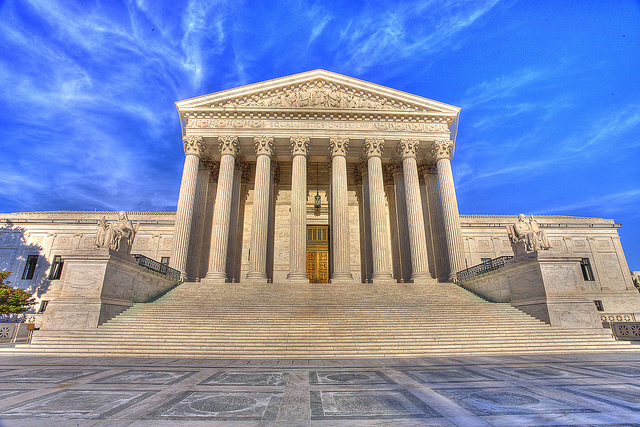
US Supreme Court building. (credit: MitchellShapiroPhotography)

The US Supreme Court is giving Backpage.com a victory over the US Senate, at least in the short term. Chief Justice John Roberts says the online classified ad portal, for now, does not have to comply with a Senate subpoena investigating how Backpage conducts its business. The investigation demands documents about the ins and outs of the site's editorial practices.

The Permanent Subcommittee on Investigations contends that the site is littered with ads that amount to offering sex services by women and children forced into prostitution, and it wants to know how it screens ads posted to its site by third parties.

The chief justice's decision Tuesday comes days after a federal appeals court upheld a ruling by a lower court judge and said (PDF) Backpage must comply with the subpoena. The Senate and Backpage have been deadlocked in a legal battle for more than a year. Backpage said the First Amendment shields it from having to comply with the subpoena, (PDF) while the Senate maintains that the First Amendment implications are secondary (PDF) to cutting down on sex trafficking ads on the site.

Read 4 remaining paragraphs | Comments

Sorry Lindsay Lohan, Grand Theft Auto V is satirizing you, court rules

Satirical representation is protected under the Constitution, court says.

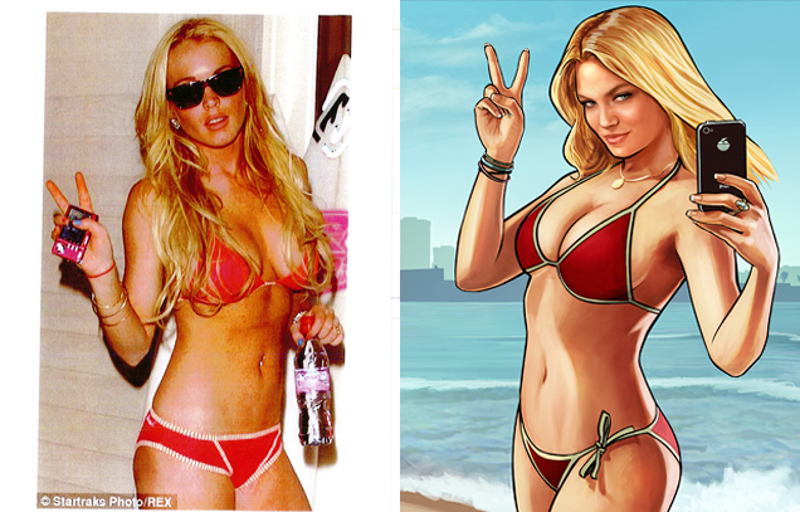
A New York appeals court is putting the brakes on actress Lindsay Lohan's lawsuit against the makers of Grand Theft Auto V. The appellate court concluded Thursday that the game is riddled with satire and, hence, Take-Two Interactive Software is shielded by the First Amendment from allegations of misappropriation of likeness.

Lohan claimed that elements of the video game—which features washed out celebrities, criminals, and paparazzi—were too close to her in real life. Among other things, she alleged that a minor character named Lacey Jonas in the game was a "look-alike" and that the game violated her "privacy rights under New York law." She also alleged that the game unlawfully exploited her "signature peace sign pose."

Mob Wives star Karen Gravano, another plaintiff in the case, similarly alleged that the game unlawfully used her likeness with the character Andrea Bottino.

Read 2 remaining paragraphs | Comments

Hacker Guccifer, who exposed Clinton’s use of private e-mail, gets 52 months

Feds wanted harsh term to underscore that hacking is not “a crime to be celebrated.”

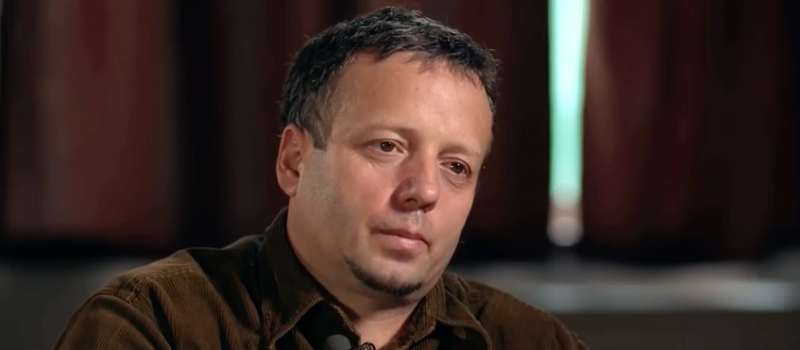
Enlarge / Marcel Lehel Lazar, 44, known online as "Guccifer," was sentenced to 52 months in prison on Thursday. (credit: NBC News/YouTube)

The Romanian hacker who helped expose Democratic presidential candidate Hillary Clinton's use of private e-mail as secretary of state was sentenced Thursday to 52 months in prison in connection to an admission that he broke into about 100 Americans' e-mail accounts. The compromised accounts included celebrities, former Secretary of State Colin Powell, and family members of former Presidents George W. Bush and George H.W. Bush, and Sidney Blumenthal, a political advisor whom Clinton corresponded with using her private e-mail account.

Marcel Lehel Lazar, a 44-year-old cab driver known by the handle Guccifer, conducted his crimes at home and was extradited to the US this year. He pleaded guilty to identity theft and federal hacking charges.

Guccifer had claimed he hacked into Clinton's private e-mail server at her New York residence. But he has never been charged for that, and he has never divulged the contents of the alleged hack. However, the hacker did reveal private documents from other hacks, including self portraits painted by George W. Bush. He also leaked memos Blumenthal sent Clinton to her private e-mail account. This eventually exposed the fact that Clinton used that account as secretary of state for personal and private businesses instead of using her government account for official business.

Read 5 remaining paragraphs | Comments

Judge tosses lawsuit over 1-star Yelp review for overfeeding pet fish

Fish owner: We have a right to express “opinions without the fear of a lawsuit.”

Enlarge (credit: CCAC North Library)

A local Texas judge is tossing a $1 million lawsuit brought by a Dallas pet-sitting business that sued the owners of a pet fish for giving the company a 1-star Yelp review that complained that "Gordy" was overfed.

Among other allegations, Prestigious Pets claimed (PDF) that a Plano couple violated its non-disparagement clause and defamed it on Yelp in last year's review. The Dallas County suit alleged that Michelle and Robert Duchouquette's review about the overfeeding of the tiny betta fish amounted to libel because overfeeding is akin to animal cruelty and a crime.

"I am thankful to have a ruling that supports our right to free speech. We should all have the opportunity to express our opinions without the fear of a lawsuit," Michelle Duchouquette said in a statement.

Read 9 remaining paragraphs | Comments

The most absurd Internet privacy class-action settlement ever

Lawyers get millions. Consumers get nothing. E-mail snooping continues unabated.

(credit: Neon Tommy)

In 2013, Yahoo announced that it would begin scanning its users' e-mail for targeted advertising purposes—just as Google does. As is par for the course, class-action lawsuits were filed. The Silicon Valley media giant, according to one of the lawsuits, was violating the "personal liberties" of non-Yahoo Mail users. That's because non-Yahoo Mail users, who have sent mail to Yahoo mail users, were having their e-mail scanned without their permission.

"Plaintiff and the Class are among the multitude of U.S. residents who have sent electronic communications or emails to a Yahoo Mail user or users, and whose personal liberties have been, and continue to be, intruded upon when these private communications are read or, in the alternative, eavesdropped upon by Yahoo," the lawsuit read. (PDF) The suit said that Yahoo's new scanning policies adopted under Yahoo chief Marissa Mayer violated federal and state privacy laws, and that Yahoo's e-mail scanning regime "seriously threatens the free exercise of personal liberties, and is of the type of behavior that the U.S. Congress and the California Legislature has declared should not be tolerated in a free and civilized society."

The suit, which was one of six that were co-mingled as a single class action, demanded that a judge halt the scanning and award each victim "$5,000 or three times actual damages" in addition to "reasonable attorneys' fees and costs."

Read 12 remaining paragraphs | Comments
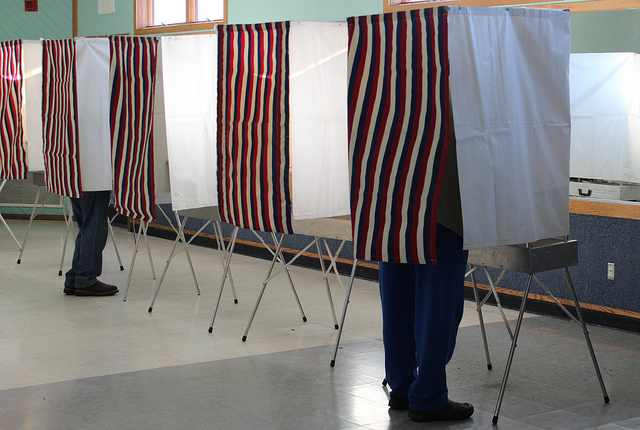
Selfies in voting booths: Depending on where you live, they may be illegal

A New Hampshire law says selfie ban is needed to curtail vote buying and coercion.

(credit: NicoleKlauss)

"Dude, check out who I voted for!"

We soon could be seeing a lot more selfies with that caption. That's because legislation legalizing ballot selfies in voting booths landed on California Gov. Jerry Brown's desk on Friday.

Assembly Bill 1494 amends California law that, for now, says "a voter shall not show" a ballot "to any person in such a way as to reveal its contents." The new law awaiting the governor's signature says "a voter may voluntarily disclose how he or she voted if that voluntary act does not violate any other law." The measure passed the state Senate earlier this year and the state Assembly last week on a 63-15 vote.

Read 13 remaining paragraphs | Comments
Enhanced DMV facial recognition technology helps NY nab 100 ID thieves

The new system doubles number of facial measurement points from 64 to 128.

Enlarge (credit: New York State Department of Motor Vehicles)

In January, the New York State DMV enhanced its facial recognition technology by doubling the number of measurement points on a driver's photograph, a move the state's governor says has led to the arrest of 100 suspected identity thieves and opened 900 unsolved cases. In all, since New York implemented facial recognition technology in 2010, more than 14,000 people have been hampered trying to get multiple licenses.

The newly upgraded system increases the measurement points of a driver's license picture from 64 to 128. The DMV said this vastly improves its chances of matching new photographs with one already in a database of 16 million photos. As many as 8,000 new pictures are added each day.

"Facial recognition plays a critical role in keeping our communities safer by cracking down on individuals who break the law," Gov. Andrew M. Cuomo said in a statement. "New York is leading the nation with this technology, and the results from our use of this enhanced technology are proof positive that its use is vital in making our roads safer and holding fraudsters accountable.”

Read 5 remaining paragraphs | Comments

DOJ lawyer who leaked Bush spy program is censured for ethics failure

Whistleblower thought program was “probably illegal as it was not court-supervised.”

Enlarge / Disclosing the warrantless surveillance program won Thomas Tamm the "Ridenhour Prize for Truth-Telling." (credit: War on Whistleblowers/YouTube)

The Justice Department lawyer who disclosed the secret and warrantless surveillance program then-President George W. Bush adopted in the immediate aftermath of the Sept. 11 terror attacks was publicly censured Thursday by a federal appeals court for breaching legal ethics. As a Lawyer for the Justice Department's Intelligence Policy and Review unit, Thomas Tamm violated professional conduct rules for disclosing to The New York Times "confidences" and "secrets," the US Court of Appeals for the District of Columbia Circuit concluded. (PDF)

As part of his Justice Department duties, Tamm was tasked with requesting electronic surveillance warrants from the secret Foreign Intelligence Surveillance Court. The District of Columbia Court of Appeals Board of Professional Responsibility said Tamm became aware in 2004 that certain applications to that FISA Court for national security surveillance authority "were given special treatment" and he leaked details of the program to the newspaper.

Tamm, who could have been disbarred, but now can continue practicing law as a Maryland state public defender (he resigned from the Justice Department in 2006), said he learned that "these applications derived from special intelligence obtained not pursuant to prior applications to the Court, but from an extra-judicial source referred to as 'the program.'" After digging into it, he "concluded that it was probably illegal as it was not court-supervised."

Read 7 remaining paragraphs | Comments