Convicted of hacking-related crimes, reporter will stay out of prison for now

Matthew Keys’ legal team filed emergency motion to 9th Circuit late Tuesday.

Matthew Keys talks to reporters after he was sentenced to two years in prison. (credit: Cyrus Farivar)

Reporter Matthew Keys will not be going to federal prison today as he was scheduled to. His attorney, Jay Leiderman, tweeted the news today after he and the other lawyers on Keys’ legal team filed an emergency motion with the 9th Circuit Court of Appeals last night.

The Tuesday filing automatically triggers a temporary stay, according to the 9th Circuit’s Federal Rules of Appellate Procedure. So the California journalist convicted in 2015 of hacking-related crimes will remain out of custody for now.

Keys was convicted at trial under the Computer Fraud and Abuse Act (CFAA), the notorious anti-hacking federal law that dates back to the 1980s. An effort to reform that law has languished in Congress. The 29-year-old was scheduled to begin serving his two-year sentence beginning Wednesday at 2pm Pacific Time at a federal prison camp in Atwater, California, about 120 miles east of San Francisco.

Read 7 remaining paragraphs | Comments

AMC threatens spoiler site over what Walking Dead comics already say

EFF: “Copyright probably doesn’t cover revealing a single fictional detail.”

A Walking Dead spoiler website has acquiesced to a threatened copyright lawsuit from AMC, the television studio behind the hit series. The Spoiling Dead will not publish who the character "Negan" killed at the end of Season 6, which aired in early April 2016. During that episode it was not revealed who in fact was killed in that particular episode.

According to a demand letter that The Spoiling Dead received on June 7, 2016, the production company behind the hit television show threatened to sue if The Spoiling Dead did not halt its planned reveal, citing trade secrets and potential copyright infringement.

This demand doesn’t take into account the fact that the "victim" here [SPOILER ALERT] was already revealed in the comics upon which the TV show is based.

Read 8 remaining paragraphs | Comments

Apple updates Apple TV, tvOS with Sling, sports, apps, and more

Eddy Cue debuts Siri: “Now, I can just say ‘Find high school comedies from the ’80s.'”

Eddy Cue is an Apple senior vice president. (credit: Apple)

Apple Senior Vice President Eddy Cue announced Monday that there will be new content available for the Apple TV platform.

At the company's WWDC 2016 conference in San Francisco, Cue showed off new support for Sling and Siri. Apple TV will also now allow "single sign-on" to cable networks, but Cue did not explain exactly how that feature would work.

Apple's new "Live Tune-In" uses Siri to allow users to simply say aloud what channel they want to watch; for example, Cue quickly popped into a soccer game on ESPN 2. That voice search feature also includes searching YouTube as well, so you can watch Steph Curry sink threes all day.

Read 2 remaining paragraphs | Comments

Uber hired investigators to impersonate journalists to target lawsuit plaintiff

In order, judge notes use of private investigator may be “perverting the processes.”

(credit: Uber)

In a judicial order filed earlier this week, a federal judge eviscerated Uber in an ongoing antitrust proposed class-action lawsuit.

According to the Tuesday order, Uber is now required to produce documents to a New York-based federal judge to aid in the determination as to whether Uber has engaged in price-fixing behavior.

The suit, known as Meyer v. Kalanick, pits New Yorker and former Uber customer Spencer Meyer against Travis Kalanick, the founder and CEO of Uber. As a corporation, Uber is not a party to the lawsuit, although it has argued that it should be made party to the case.

Read 6 remaining paragraphs | Comments

Gawker to declare bankruptcy, auction itself off in wake of Hulk Hogan lawsuit

Chapter 11 filing would help shield the company from Hogan payment (for now).

(credit: Miguel Discart)

Gawker Media is set to formally declare bankruptcy, and owner Nick Denton plans to put the company up for auction, according to numerous media outlets.

"[Gawker Media] is also now formally entertaining offers to buy the company and says it has a firm bid from publisher Ziff Davis to buy the entire operation for less than $100 million," Recode reported.

Weeks ago, it came out that Peter Thiel, a billionaire investor, was bankrolling the Hulk Hogan defamation lawsuit, who seemingly sought revenge over being "outed" as "totally gay" a decade ago by Gawker's now-defunct Valleywag site.

Read 5 remaining paragraphs | Comments

It’s not a Fourth Amendment search if a cop swipes your credit card, court finds

Mag stripe simply contains same info that’s clearly visible, so no warrant needed.

(credit: frankieleon)

A federal appeals court ruled Wednesday that law enforcement can legally scan or swipe a seized credit card—in fact, it is not a Fourth Amendment search at all, so it doesn’t require a warrant.

In the 8th Circuit Court of Appeals’ 15-page opinion, swiping a card does not constitute a physical search, as the magnetic stripe simply contains the same information obviously visible on the front of the card. Plus, the defendant, Eric-Arnaud Benjamin Briere De L'Isle, couldn’t have had a reasonable privacy interest in the card, the court concluded, because he would have tried to use it when he tried to buy something, thereby giving up privacy interests to a third party (the issuing bank).

According to court records in United States v. De L’Isle, the case began in June 2014 when Eric-Arnaud Benjamin Briere De L'Isle was driving westbound on I-80 and was pulled over by a Seward County, Nebraska, sheriff’s deputy.

Read 7 remaining paragraphs | Comments

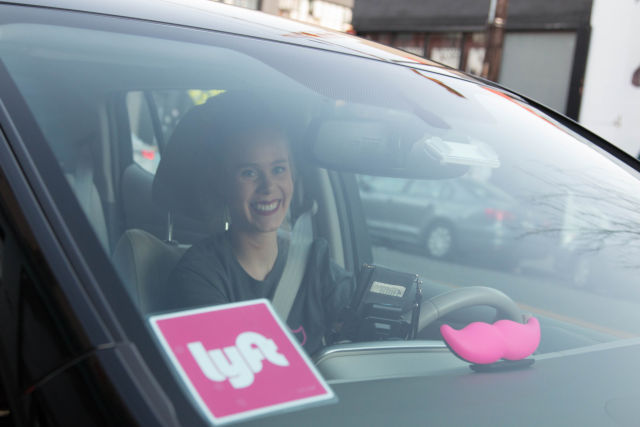
Ex-drivers sue Uber, Lyft after ridesharers left Austin over fingerprint law

Represents a new case for an old, unresolved question—are these drivers employees or not?

(credit: SDOT)

Two former Uber and Lyft drivers based in Austin, Texas have filed two new proposed class-action lawsuits against those ridesharing companies on Thursday. The drivers allege that they are owed up to 60 days of back pay and other benefits that would be afforded to them as ex-employees under a federal labor law. One case involved driver Todd Johnston taking on Uber; the other involves driver David Thornton taking on Lyft.

These cases, like so many others before it, boil down to whether the drivers are employees or simply independent contractors. If a court were to find that the drivers are employees, Uber’s and Lyft's bottom line would be significantly impacted as the companies would have to provide health care and many other benefits.

The Austin plaintiffs' cases, which were filed by the same law firm, center on a federal law known as the Worker Adjustment and Retraining Notification (WARN) Act of 1988, which requires companies with more than 100 employees to provide written 60 day notice of any mass layoffs.

Read 7 remaining paragraphs | Comments

Man who built gun drone, flamethrower drone argues FAA can’t regulate him

Austin Haughwout racked up 4+ million views on YouTube, and drew FAA’s ire.

This is a still from the December 2015 flamethrower drone video. (credit: Hogwit)

The outcome of new drone lawsuit out of Connecticut turns on what seems to be a simple question: does the Federal Aviation Administration have the authority to regulate consumer drones? More specifically, can the FAA come after a student who rigged up a gun to a drone and fired it in his backyard, with no one else around?

The FAA clearly thinks that it does and can. But some drone enthusiasts disagree, and believe that the FAA has exceeded its regulatory power—at least for now.

On July 6, FAA lawyers will face off in a New Haven courtroom against attorneys representing a Connecticut student who produced two provocative drone-related videos, one involving a handgun mounted on a drone, and another with a flamethrower.

Read 23 remaining paragraphs | Comments

Journalist convicted on hacking charges tries to stay out of prison during appeal

Keys convicted of passing CMS login that resulted in brief defacement at LA Times.

(credit: Cyrus Farivar)

Lawyers for journalist Matthew Keys are set to appear before a federal judge in Sacramento, California, on Wednesday morning to ask that his upcoming self-surrender date be pushed back pending his appeal. During the same hearing, the judge is also likely to set how much money Keys must pay in restitution to his former employer, Fox 40 and Tribune Media.

The 29-year-old was convicted in 2015 of three counts of conspiracy and criminal hacking under the Computer Fraud and Abuse Act (CFAA) and was sentenced earlier this year to two years in prison. For now, Keys is due to report to federal prison in Lompoc, California, next week.

In a motion filed with the court on Tuesday, Tor Ekeland, one of Keys’ attorneys, noted that his client has consistently shown that "he is not a flight risk nor a dangerous threat to the community" and as such should be allowed to stay out of custody while his appeal is pending.

Read 4 remaining paragraphs | Comments

Silicon Valley county passes new law requiring approval before cops buy spy kit

“The question is whether or not we have the wisdom to use the technology appropriately?”

(credit: Dawn Endico)

A Silicon Valley county has become the first in the United States to vote in a new law that requires "continued oversight and regular evaluation" for law enforcement agencies starting prior to the acquisition of surveillance technology.

The ordinance, which was unanimously approved by the Santa Clara County Board of Supervisors on Tuesday, requires that the county sheriff and the district attorney’s office seek board approval before those agencies even begin the process of obtaining new snooping gear. The agencies are not required to immediately notify the board in exigent circumstances, but must do so generally within 90 days.

Agencies must also submit a usage policy to the county government, and notably, an "Annual Surveillance Report," which should describe what data the device captures, how the agency deals with information collected about people not suspected of any wrongdoing, and whether the gear has been effective, among other requirements.

Read 10 remaining paragraphs | Comments