“Dumb” man gets six months for aiming laser at police helicopter

Officers responding to laser-strike call sustained serious injuries in crash.

Prosecutors say that Johnny Quenga had a laser mounted to an airsoft rifle like this. (credit: Eastern District of California)

A man who pleaded guilty last year to pointing an airsoft rifle-mounted laser at a Fresno, California Police Department helicopter was sentenced Tuesday to six months in prison and three years of supervised release.

Johnny Quenga’s saga began on March 5, 2015, when FPD helicopter pilot Ken Schneider was on routine patrol at 500 feet in the air. (Ars flew with Schneider as part of our 2014 feature on laser strikes.)

According to an FBI affidavit, both Schneider and Tactical Flight Officer Jeffrey Logue were struck several times by Quenga’s laser. Logue then used the on-board Forward Looking Infrared (FLIR) camera to determine that the laser emanated from a particular intersection in the Pinedale neighborhood of Fresno. Logue radioed down to officers on the ground, who attempted to find the suspect.

Read 6 remaining paragraphs | Comments

GM buys Uber rival Sidecar, which shut down in December

Deal comes shortly after $500M investment into Lyft, Uber’s last-standing rival.

(credit: Photo illustration by Aurich Lawson)

General Motors has acquired the technology and most of the employees behind the now-defunct ride-hailing startup Sidecar, according to Bloomberg. Sidecar Co-founder and CEO Sunil Paul will apparently not be joining the company, but no explanation was given as to why.

The deal bolsters GM’s move into the driverless quasi-taxi space—earlier this month, it invested $500 million in Lyft to "leverage GM’s deep knowledge of autonomous technology."

Over the last four years, Uber has rapidly expanded to become the dominant force in the industry. Just last month, it was valued at $62.5 billion, making it the world’s most valuable startup.

Read 3 remaining paragraphs | Comments

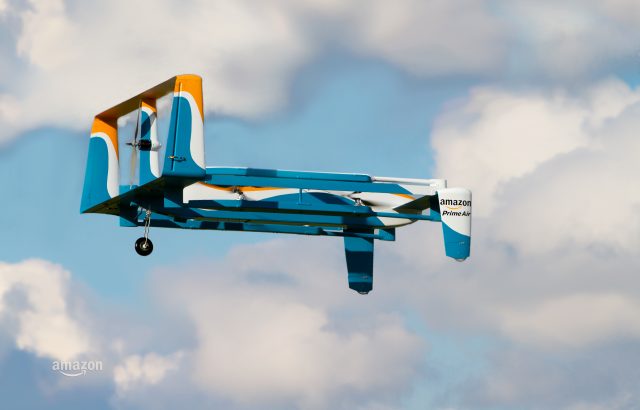
Amazon Prime Air: Drones to carry 5lb packages over 10 miles in 30 minutes

Such drones will soon be “as normal as seeing a delivery truck.”

(credit: Amazon)

In an interview with Yahoo News, Amazon has revealed a little more about its forthcoming drone-based delivery system. Paul Misener, Amazon’s vice president for global public policy, said that the company has very specific targets for "Prime Air."

"So Prime Air is a future delivery service that will get packages to customers within 30 minutes of them ordering it online at Amazon.com," he told Yahoo News. "The goals we’ve set for ourselves are: The range has to be over 10 miles. These things will weigh about 55 pounds each, but they’ll be able to deliver parcels that weigh up to five pounds. It turns out that the vast majority of the things we sell at Amazon weigh less than five pounds."

And how will Amazon deal with drone haters with shotguns? Misener isn't worried. "I suppose they could shoot at trucks, too," he said. "We want to make the deliveries. And we believe that these Prime Air drones will be as normal as seeing a delivery truck driving down the street someday. So the novelty will wear off."

Read 3 remaining paragraphs | Comments

Rogue dentist who allegedly hit patients now targets anonymous YouTube user

Gordon Trent Austin apparently has “no understanding of the Streisand effect.”

A well-known First Amendment lawyer has leapt to the defense of an anonymous YouTube user who re-published a Georgia TV station’s 2009 news story (see above) about a dentist outside of Atlanta who was accused of beating his patients.

The dentist, Gordon Trent Austin, was indicted in 2009 on multiple counts of assault and battery—including against children. He was also indicted on charges of Medicaid fraud, to which he pleaded guilty in exchange for the other charges being dropped. The Georgia State Board of Dentistry revoked Austin's license later that same year.

In late 2015, the Carrollton, Georgia, man sued the YouTube user and has attempted to lift this person's anonymity by subpoenaing Google.

Read 9 remaining paragraphs | Comments

Court: With a warrant, cops can search basically anywhere on your phone

3 Mass. Supreme Judicial Court justices dissent: Searches must be better defined.

(credit: Martin Abegglen)

In a 4-3 decision, Massachusetts’ highest court ruled Friday that with a warrant, it's ok for police to search anywhere on a seized phone that may reasonably turn up evidence of the crime under investigation.

In the case of Commonwealth v. Dorelas, the Massachusetts Supreme Judicial Court (MSJC) found that because the Boston Police Department (BPD) had a warrant to search a criminal suspect’s seized iPhone, it could access his photos as well.

As the majority opinion found:

Read 10 remaining paragraphs | Comments

Cock.li server seized again by German prosecutor, service moves to Iceland

Vincent Canfield: “I will definitely never host anything in Germany ever again.”

(video link)

The administrator of the cock.li e-mail hosting service told Ars on Friday that a second hard drive had been seized from his Bavarian data center by the district attorney for the City of Zwickau in eastern Germany. As a result, he has now moved the service out of Germany and is in the process of restoring it.

cock.li's Vincent Canfield said that he had initially chosen a German data host because the country has a reputation for "good data privacy laws."

Read 10 remaining paragraphs | Comments

Drone pilots beware: You may have to get insurance, leave info after accident

Two bills pending in California legislature aim to make drones safer for all.

(credit: Erin Bennett)

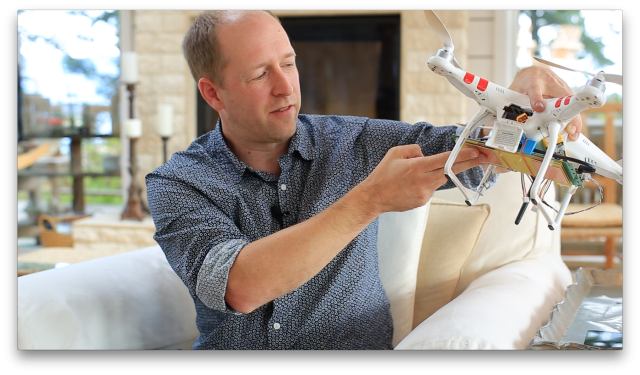
Two California lawmakers have introduced two separate bills this week that would further regulate drones in America’s most populous state.

If passed, one of the new state laws would require "tiny physical or electronic license plates" and inexpensive insurance, among other requirements. A second bill would compel drone pilots who are involved in incidents that damage property or injure people to leave their contact information—similar to what drivers must do following auto accidents.

The proposed laws are in response to a series of unfortunate mishaps involving drones across the Golden State in 2015: there were some unmanned aerial vehicles that got in the way of firefighting efforts, while another crashed into power lines in Hollywood, and yet another hit a baby in Pasadena.

Read 14 remaining paragraphs | Comments

Bill aims to thwart strong crypto, demands smartphone makers be able to decrypt

NY assemblyman: “Terrorists will use these encrypted devices” to plan attacks.

(credit: japanexperterna.se)

A New York assemblyman has reintroduced a new bill that aims to essentially disable strong encryption on all smartphones sold in the Empire State.

Among other restrictions, the proposed law states that "any smartphone that is manufactured on or after January 1, 2016 and sold or least in New York, shall be capable of being decrypted and unlocked by its manufacturer or its operating system provider."

If it passes both houses of the state legislature and is signed by the governor, the bill would likely be the first state law that would impose new restrictions on mobile-based cryptography. Undoubtedly, if it makes it that far, the law would likely face legal challenges from Apple and Google, among others.

Read 8 remaining paragraphs | Comments

With new deal in place, Sweden asks to question Assange at embassy

WikiLeaks founder still facing possible sex offense charges.

(credit: thierry ehrmann)

Swedish prosecutors said (Google Translate) Wednesday that they have sent a formal request to question Julian Assange at the Ecuadorian embassy in London. "It is not possible to judge when a reply is expected," the Swedish Prosecution Authority wrote.

The two countries signed an agreement last month in Quito to clarify the conditions of the questioning. The questioning has been delayed for nearly a year after Ecuador required such an agreement once Swedish authorities finally agreed to question the WikiLeaks founder at the embassy.

Assange remains wanted in Sweden for questioning relating to alleged sex offenses dating back to 2010. In Assange’s September 2013 affidavit, he stated that the women he slept with specifically said they were not accusing him of rape and that police "made up the charges." The statute of limitations on other alleged sex crimes expired in August 2015, but the rape accusation can stand until 2020. He has yet to be formally charged with a crime in Sweden.

Read 1 remaining paragraphs | Comments

See a horrible accident? Bill would bar you from posting about it for an hour

People need to be “more respectful” about online postings, says lawmaker.

(credit: frankieleon)

A new bill pending in the Kentucky state legislature would impose a ban of "at least one hour" on the online publication of "any information identifying the potential victims" of serious physical injury.

The legislation, which was proposed by State Rep. John "Bam" Carney (R) earlier this month, would impose a fine of $20 to $100 for such publication. The text of the bill includes exemptions for "the injured individual," journalists, and emergency responders.

"It’s purely my intent to get a discussion going out there, asking people to be more respectful about what they put on social media," Carney told the Lexington Herald-Leader. "We’ve had some incidents, including one in my community, and I’d hate for anyone to learn about the loss of a loved one through social media."

Read 2 remaining paragraphs | Comments