Former, current students sue Google over university-issued Gmail scanning

Plaintiffs’ attorney: “Google has refused to delete previously-collected data.”

(credit: Cairo)

Four former and current University of California, Berkeley students have sued Google in federal court in San Jose, California, claiming that the company scanned their academic-affiliated Gmail accounts.

The plaintiffs allege that their Gmail accounts were scooped up, processed, and retained by the company for analytics, advertising, and tracking purposes from November 2010 until March 2014—in directly contrast to what their universities had told them previously. In April 2014, Google announced that it had ended the practice of scanning Google Apps for Education accounts.

The new proposed class action lawsuit, known as Corley et al v. Google, alleges similar behavior across Gmail users at several universities nationwide, including San Diego State University and Yale University. Potentially, the case could affect tens of millions of students and former students nationwide.

Read 4 remaining paragraphs | Comments
Redflex: We know Australian authorities are investigating dirty Chicago deal

Australian Federal Police scrutinizing decade-long period in Redflex’s recent history.

(credit: Intel Free Press)

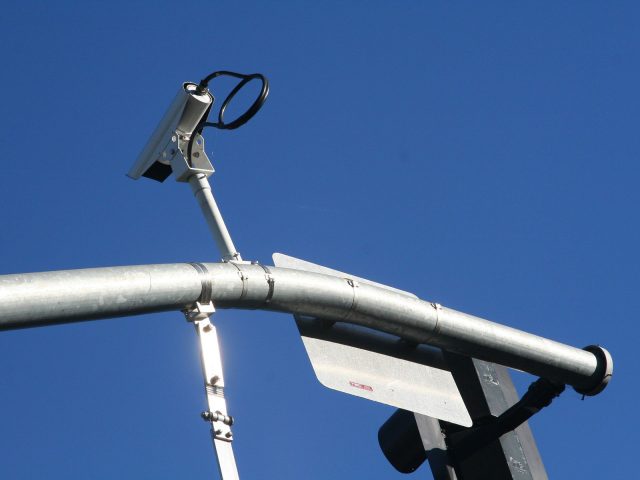
Things keep getting worse for Redflex, the embattled Australian red-light camera vendor.

On Monday, the company told its investors that it is “aware” that the Australian Federal Police (AFP) has begun an investigation into its activities related to the former botched contract with the City of Chicago.

As Redflex wrote in its brief statement:

Read 2 remaining paragraphs | Comments

Calling all Bay Area Belters: come hang out with fellow fans of The Expanse!

Come raise a glass with Nick Farmer, the creator of the Belter language.

Anderson Dawes runs the OPA on Ceres Station. His belter accent—multilingual slang delivered by Jared Harris with an accent that wouldn't sound out-of-place in Attack the Block—is a joy to listen to. (credit: SyFy)

Attention all would-be OPA members: Du sif wang wit milowda fo yam seng unte revelushang! (Translation—join us for drinks and revolution!)

This Wednesday, February 3, 2016, come join Ars’ Tech Culture Editor Annalee Newitz and me at Longitude bar in downtown Oakland, California. Not only will you be among friends and fellow fans of The Expanse, but you’ll be able to hang out and learn Belter from the man who created it—Nick Farmer, the language consultant for the show.

Farmer is well-trained in many languages, including Swedish, Spanish, and a smattering of others to various degrees. At Longitude, he'll give all of us a basic lesson in Belter 101—a fascinating and poorly-understood (at least by us Earthers) creole.

Read 3 remaining paragraphs | Comments

How the Smithsonian is restoring the original USS Enterprise to full 1967 glory

If you’re in Washington, DC on Saturday, go see it in person! (We’re jealous.)

2016 is a big year for Star Trek fans—it's the 50th anniversary of the debut of the series! To mark the occasion, there will be a new film (Star Trek Beyond) and likely initial glimpses of the forthcoming new television series. But the Smithsonian National Air and Space Museum is doing its part, too.

The organization is currently carrying out important restoration work on the original Enterprise model, the one that was used in the filming of all 79 episodes of the original series. The model was donated to the Smithsonian in 1974, but it was taken out of public display in September 2015 since it was in dire need of conservation.

"We're working to both stabilize it and bring it to an appearance as people saw it in the show," Nicholas Partridge, a Smithsonian spokesman, told Ars.

Read 2 remaining paragraphs | Comments

Former Silk Road staffer and “victim” in murder-for-hire to serve no prison time

Curtis Green was key in an investigation of corrupt federal agents looking into Silk Road.

(credit: BTC Keychain)

Curtis Green, a former Silk Road lieutenant, was sentenced Friday to time served and four years of supervised release by a federal judge in Baltimore. As one of the top employees of the underground drug marketplace, Green faced felony drug charges in 2013 after being arrested. Soon after, he took a plea deal.

Green was also known as “chronicpain” in the Silk Road community. Famously, Ross Ulbricht (as Dread Pirate Roberts) believed he killed Green. Ulbricht was under the impression that Green had stolen money from Silk Road, when in fact that money was stolen by two corrupt Baltimore-based federal agents. Drug Enforcement Administration agent Carl Mark Force played the part of the fictitious hitman who “killed” Green and sent a photo to Ulbricht.

When it turned out that Force was one of two law enforcement officials who were involved in a conspiracy to steal from Silk Road for their own benefit, Green became a cooperating witness in the investigations of those agents. He testified in the sentencing hearing of Shaun Bridges, the corrupt Secret Service agent.

Read 2 remaining paragraphs | Comments

Warrantless stingray case finally arrives before federal appellate judges

“Cell-site simulators raise especially serious questions under the Fourth Amendment.”

(credit: vincent desjardins)

A criminal case examining the Fourth Amendment implications of cell-site simulators, also known as stingrays, has finally reached the 7th Circuit for the first time. Now one step below the Supreme Court, this case also likely marks the first time that warrantless use of stingrays has reached any federal appellate court.

Stingrays determine a phone’s location by spoofing a cell tower. In some cases, they can intercept calls and text messages. Once deployed, the devices intercept data from a target phone along with information from other phones within the vicinity. At times, police have falsely claimed the use of a confidential informant while in fact deploying this particularly sweeping and intrusive surveillance tool.

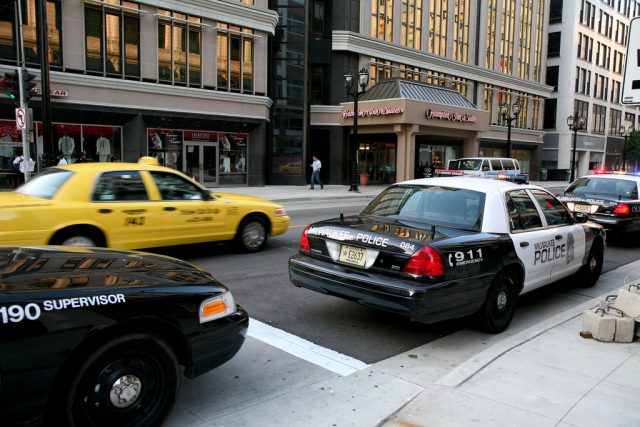
The 7th Circuit will now consider a 2013 case known as United States v. Patrick. It involves a Milwaukee man wanted on a probation violation who was suddenly located and arrested by local police with help from the FBI. There is very strong evidence to suggest that he was apprehended through the warrantless use of a stingray.

Read 29 remaining paragraphs | Comments

Xerox to split into 2 companies

Carl Icahn’s new 8 percent stake now affords him 3 board seats, too.

(credit: Ken Bosma)

Xerox is set to split into two companies, with one focusing on its hardware business ("Document Technology") and another specializing in its outsourcing service business, according to the Wall Street Journal, citing anonymous sources.

The move is set to be formally announced as part of the company’s quarterly earnings on Friday.

The schism comes just two months after Carl Icahn, a noted billionaire investor, announced that he had acquired an eight percent stake in the company. Consequently, he will now control three seats on the company’s board.

Read 2 remaining paragraphs | Comments

Berkeley’s cell phone radiation warning law can go into effect, judge rules

All city had to do was delete: “This potential risk is greater for children.”

(credit: Daniel Parks)

After complying with a federal judge’s order on Wednesday, the City of Berkeley, California will now be allowed to go forward with its cell phone radiation warning law, as it has cut out one controversial line. It is not clear when the new notice will go into effect.

Last year, the city passed a municipal ordinance requiring that a retailer provide, either in the form of a mounted poster, or as a printed handout, this message:

The City of Berkeley requires that you be provided the following notice:

To assure safety, the Federal Government requires that cell phones meet radio frequency (RF) exposure guidelines. If you carry or use your phone in a pants or shirt pocket or tucked into a bra when the phone is ON and connected to a wireless network, you may exceed the federal guidelines for exposure to RF radiation. This potential risk is greater for children. Refer to the instructions in your phone or user manual for information about how to use your phone safely.

Berkeley Municipal Code § 9.96.030(A)

Shortly thereafter, the city was sued by CTIA, the wireless trade group, in an attempt to halt the law on the grounds that it was in violation of the First Amendment—the government was compelling speech by requiring retailers to display the notice. That language was based on warnings and notices already provided by the Federal Communications Commission.

Read 7 remaining paragraphs | Comments

City cops in Disneyland’s backyard have had “stingray on steroids” for years

Pentagon: DRTBox can usually nab phone’s crypto session keys in under a second.

(credit: NoHoDamon)

New documents released (PDF) on Wednesday by the American Civil Liberties Union (ACLU) of California show that for the last several years, police in the city of Anaheim, California—home of Disneyland—have been using an invasive cell phone surveillance device, known as a "dirtbox."

The ACLU obtained the 464 pages of documents recently after it sued the Anaheim Police Department (APD) last year over the agency’s failure to respond to its public records request concerning such surveillance-related documents.

The DRTBox has been described by one Chicago privacy activist as a "stingray on steroids," referring to the controversial cell-site simulator that spoofs cell towers to locate phones and intercept calls and texts.

Read 16 remaining paragraphs | Comments

Lyft, drivers settle labor lawsuit with $12.25M payment, new work agreement

Lawyer who filed suit against Lyft still has class-action suit pending against Uber.

(credit: Lyft)

California drivers who sued Lyft in 2013 over whether they should be treated as employees or contractors have settled their closely watched lawsuit, court documents show.

According to a Tuesday proposed settlement, which is likely to be finalized by the San Francisco federal judge overseeing the case next, Lyft will pay $12.25 million and will re-word its labor agreement with its workers, making it harder for the company to fire drivers at any time. The plaintiffs’ lawyers will take 30 percent of that amount; the remainder will be divided among California-based drivers and go toward covering court fees. The changes to the terms of service will be applied nationwide.

The settlement in Cotter v. Lyft has no immediate legal impact on other cases brought by the same plaintiffs' lawyer, Shannon Liss-Riordan, who has introduced a slew of similar labor suits against GrubHub, DoorDash, Caviar, and Uber.

Read 13 remaining paragraphs | Comments