Apple: Dear judge, please tell us if gov’t can compel us to unlock an iPhone

Lawyers: Federal prosecutors told us they will continue to invoke 18th-century law.

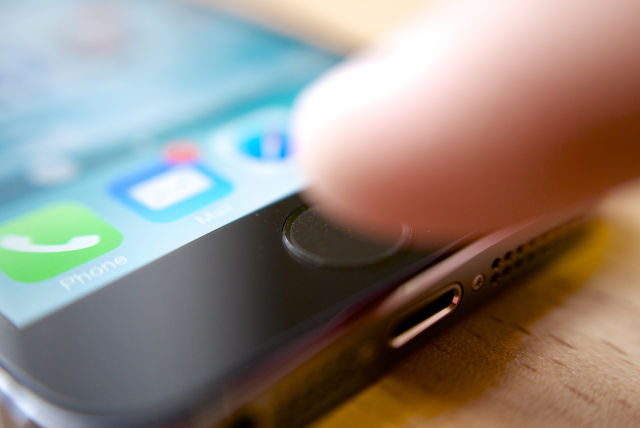
In a new letter, Apple has asked a judge to finally rule in a case where the government is trying to force the company to unlock a seized iPhone 5S running iOS 7. Currently, United States Magistrate Judge James Orenstein has been sitting on the case for nearly three months.

In the Friday letter, Apple attorney Marc Zwillinger says that ruling now is important, as the government plans to make similar requests of Apple in the future. Prosecutors have invoked the All Writs Act, an 18th-century federal law that simply allows courts to issue a writ (or order) that compels a person or company to do something. For some time now, prosecutors have turned to courts to try to force companies to help in situations where authorities are otherwise stymied.

As Zwillinger wrote:

Read 5 remaining paragraphs | Comments
Uber settles “industry-leading background check” class-action for $28.5M

Plaintiffs: Uber didn’t require fingerprints from drivers, so it wasn’t top-notch.

(credit: Uber)

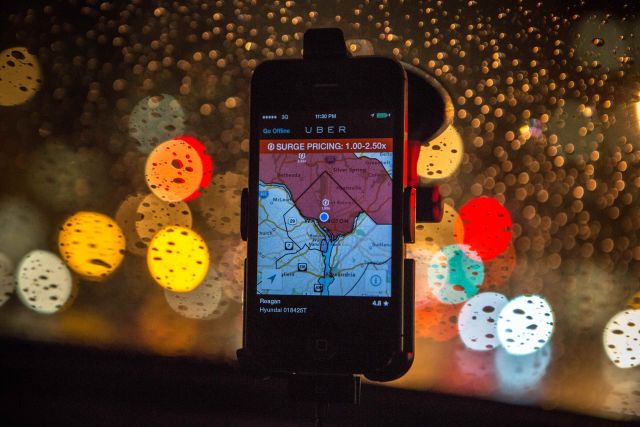
Uber has agreed to pay $28.5 million to settle a federal class-action lawsuit originally filed in late December 2014 by six men who argued that the startup’s claim of running "industry-leading background checks" was false and misleading. Passengers paid a "safe ride fee," usually $1 to $2 on top of each fare, as a way to offset those costs.

Under the terms of the deal, which was filed on Thursday, Uber will now rename this charge as a “booking fee,” and will alter its language accordingly. The settlement also states that Uber and its subsidiary “expressly deny the allegations” and admit no wrongdoing.

Specifically, the consolidated complaint, which combined other similar lawsuits, alleged:

Read 2 remaining paragraphs | Comments

SoundCloud has lost over $70M in 2 years, board cites “material uncertainties”

It’s hard to make money when the average revenue per user is just 11 cents.

(credit: Juannomore)

New financial records released by SoundCloud show that the company has nearly doubled its losses from 2013 to 2014—those two years combined account for a total of €62.1 million ($70.3 million) in losses.

The Berlin-based audio social network has been the darling of independent producers and DJs worldwide who use it to share and comment on each other’s work. But like some startups, it has struggled to turn its massive user base into meaningful revenue. As a "freemium" service, most people use the site without paying.

With mounting losses, the company’s board of directors wrote that there are "material uncertainties facing the business."

Read 5 remaining paragraphs | Comments
NYPD used stingrays over 1,000 times without warrants since 2008

New York Civil Liberties Union: “The privacy of nearly all New Yorkers is at risk.”

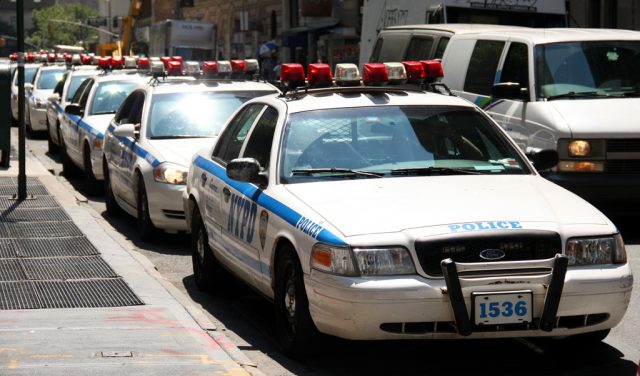
The New York Police Department used cell-site simulators, better known as stingrays, over 1,000 times between 2008 and May 2015 without first acquiring a warrant, according to new public records obtained by the New York Civil Liberties Union (NYCLU).

According to the NYCLU, this marks the first time that the nation’s largest police department has admitted to using the notorious surveillance technology. The NYPD does not have a written policy for stingray use. Police records show that while stingrays were mostly used in investigations of serious felonies—homicide, assault, kidnapping, drug trafficking, rape—they were also used for investigating money laundering and ID theft.

Stingrays are in use by both local and federal law enforcement agencies nationwide. The devices determine a target phone’s location by spoofing or simulating a cell tower, and mobile phones in range of the stingray connect to it and exchange data with it as they would with a real cell tower. Once deployed, the devices intercept data from the target phone along with information from other phones within the vicinity—up to and including full calls and text messages. At times, police have falsely claimed that information gathered from a stingray has instead come from a confidential informant.

Read 8 remaining paragraphs | Comments

More Uber drivers file labor lawsuits: One claims he makes only $80 per week

Plaintiffs’ lawyer: “The laws need to keep pace with the technology.”

The Uber driver app on the windshield of UberX driver. (credit: The Washington Post / Getty Images)

Back in September 2015, a federal judge certified a class-action lawsuit against Uber—if the plaintiffs are successful, former and current California drivers would be declared as employees rather than contractors. If Uber loses, it would represent a sea change for the company and for the entire so-called "sharing economy."

Uber’s newfound employees would be entitled to a number of benefits under federal law. Those perks would include, among others, unemployment benefits, workers’ compensation, the right to unionize, and most importantly, the right to seek reimbursement for mileage and tips. Those added expenses would certainly factor into Uber’s estimated valuation of $63 billion.

Since the case, O’Connor v. Uber, was certified, the startup has been hit with an additional 13 federal proposed class-action lawsuits nationwide—most of which have been filed by one New York-based firm. One case in Philadelphia was filed as recently as this month. These cases appear to be interested in riding the coattails of one successful suit, which could mean big bucks for attorneys and expanded benefits for Uber drivers.

Read 15 remaining paragraphs | Comments

House bill would kill state, local bills that aim to weaken smartphone crypto

Bi-partisan legislation likely to be thorn in law enforcement’s “Going Dark” side.

On Wednesday, Rep. Ted Lieu (D-Calif.) and Rep. Blake Farenthold (R-Texas) introduced a new bill in Congress that attempts to halt state-level efforts that would weaken encryption.

The federal bill comes just weeks after two nearly-identical state bills in New York state and California proposed to ban the sale of modern smartphones equipped with strong crypto that cannot be unlocked by the manufacturer. If the state bills are signed into law, current iPhone and Android phones would need to be substantially redesigned for those two states.

Lieu and Farenthold’s federal bill would need to pass both the House of Representatives and the Senate as well as be signed by the president in order to take effect. If that happens before the state bills are enacted, it would pre-empt them.

Read 23 remaining paragraphs | Comments
Verizon reportedly in the market to buy Yahoo for large user base

Bloomberg: Largest US phone carrier seeks expanded mobile ad revenue.

(credit: Scott Schiller)

Verizon, which acquired AOL last year, is now reportedly interested in taking on Yahoo as well.

According to Bloomberg, the wireless telecom giant has tasked AOL CEO Tim Armstrong with figuring out how to make it happen.

As Ars reported late last year, Yahoo announced that it would reverse course and not sell its Alibaba investment. Rather, the board of directors said Yahoo would now work to spin off its core businesses, keeping the original company as a holding entity for the Alibaba shares. The company explained that the tax climate for spinning off Alibaba holdings was simply unfavorable for investors. CEO Marissa Mayer also noted that the move would give more "transparency" to the operations of Yahoo’s core businesses, and analysts believed that implied Yahoo would be selling itself off bit by bit.

Read 3 remaining paragraphs | Comments

Teen sues TV station for $1M over unauthorized broadcast of his genitals

Family asked KOAA to report on issue, story ended up showing the boy’s name and his penis.

(credit: NURV.com)

A South Carolina teenager has sued a Colorado television station over allegations the station broadcasted a picture of his erect penis taken from a cell phone video uploaded to YouTube.

The case, known as Holden v. KOAA, asks for $1 million in damages and accuses the station, its reporter, its parent companies (NBC and Comcast), and other defendants of violating federal child pornography laws, invasion of privacy and negligence, and other allegations.

According to the lawsuit, the teen was 14 years old and living in Colorado at the time of the incident. (The incident occurred two years ago, but Ars will not name the individual as he is still a minor.) The cell phone video had been taken of the teen and put online as a way to blackmail him. His father’s girlfriend, Heather Richardson, soon contacted the KOAA TV station to let them know about the situation. KOAA sent a local reporter, Matthew Prichard, to the family’s home in Pueblo, Colorado, where Prichard interviewed the boy and filmed the offending material. The suit claims that the boy’s father specifically told Prichard to keep his son’s name out of the report.

Read 7 remaining paragraphs | Comments

UC Berkeley profs lambast new “black box” network monitoring hardware

University of California administration says it’s just going after “bad actors.”

(credit: Ethan Ligon)

BERKELEY, CALIF.—Days after a group of concerned professors raised alarm bells over a new network monitoring system installed at the University of California, Berkeley and the other nine campuses of the University of California system, a separate committee of system-wide faculty has now given its blessing. Some Berkeley faculty remain concerned that their academic freedom has been threatened by the new full packet capture system that sits on each campus network’s edge, however. They say that retaining such information could be used as a way to constrain legitimate discussion or research on controversial topics.

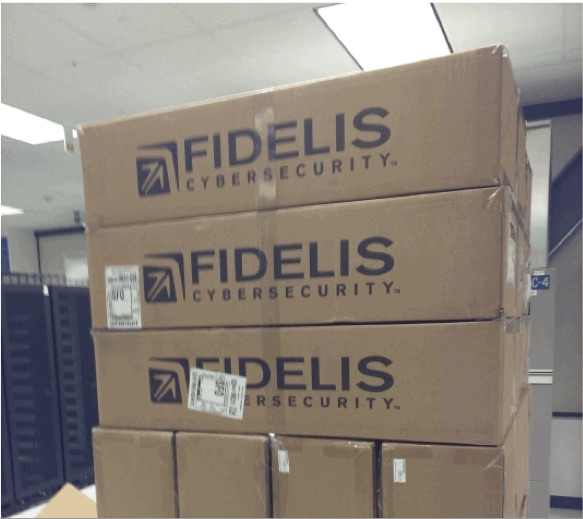
Last summer, the University of California Office of the President ordered that a Fidelis XPS system be installed at all 10 campuses at a total estimated cost of at least a few million dollars. The Fidelis hardware and software is designed to "detect attacks" and analyze "every single packet that traverses the network."

The move came in response to a July 2015 attack against the University of California Los Angeles Health System, which resulted in 4.5 million records being stolen. Following that attack, University of California President Janet Napolitano, the former Secretary of Homeland Security, moved quickly to bring more digital monitoring onto the campuses, which stretch from Berkeley to San Diego. The UC Regents, the governing board of the entire UC system, now face 17 separate lawsuits as a result of the breach at UCLA. Similar network monitoring hardware has also been installed at other universities nationwide.

Read 10 remaining paragraphs | Comments

New 3D-printed 9mm semi-automatic pistol debuts

“The goal was to keep it simple so that anyone could build it. It is now to that point.”

On Sunday, a West Virginia carpenter who goes by the name "Derwood" released a new video (above) of his "Shuty-MP1" firearm, a small semi-automatic 9mm weapon that is almost entirely 3D-printed with inexpensive PLA plastic. The only parts of the gun that are metal are the steel barrel and springs.

Derwood's gun illustrates the evolution of 3D-printed firearms, which have rapidly evolved in nearly three years since the debut of the simple Liberator and the printed AR-15 lower receiver.

"This gun has been a work in process for about a year now," Derwood told Ars. He posted a video of its assembly last week.

Read 5 remaining paragraphs | Comments