Men behind Diffie-Hellman key exchange receive top computer science prize

Pioneering work 40 years ago lead to PGP, TLS, and all your fav crypto protocols.

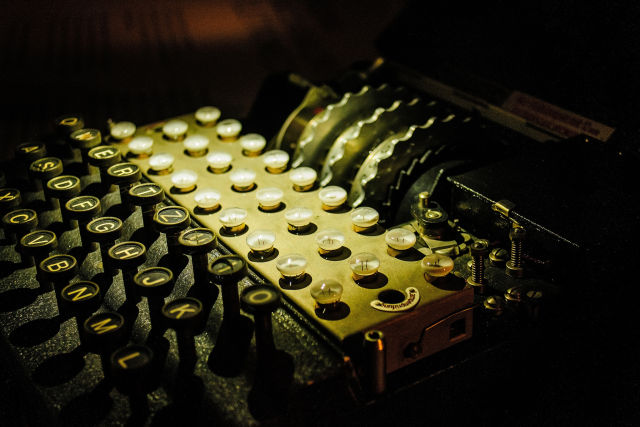
Before Diffie-Hellman, symmetric cryptography—as exemplified by this Nazi-era Enigma machine—was the norm. (credit: Michele M. F.)

On Tuesday, the Association for Computing Machinery, the nation’s leading organization for computer science, awarded its annual top prize of $1 million to two men whose name will forever be immortalized in cryptography: Whitfield Diffie and Martin Hellman.

The 2015 ACM Turing Award, which is sometimes referred to as the "Nobel Prize of Computing," was awarded to a former chief security officer at Sun Microsystems and a professor at Stanford University, respectively.

In their landmark 1976 paper, the Diffie-Hellman key exchange was the first to explore ideas of "public-key cryptography." That concept underpins much of modern cryptography, including PGP encrypted e-mail, TLS, and more. Public-key cryptography, also known as asymmetric cryptography, relies on two keys, one a freely shareable public key, the other a secret private key, thus eliminating the historic key management problem of the same key being kept by both the recipient and sender.

Read 3 remaining paragraphs | Comments
Apple prevails in forced iPhone unlock case in New York court

Ruling: All Writs Act can’t be used to achieve goal that Congress hasn’t granted.

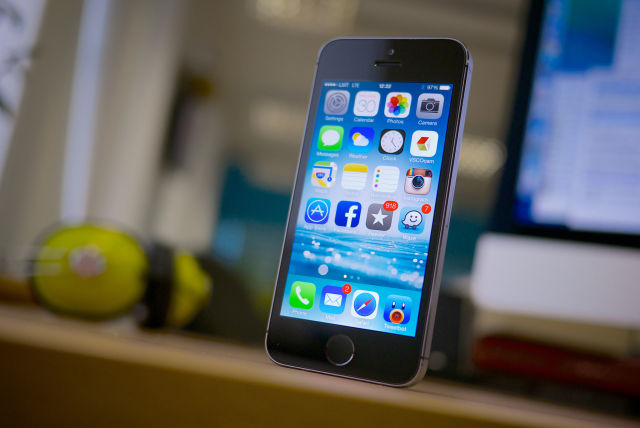
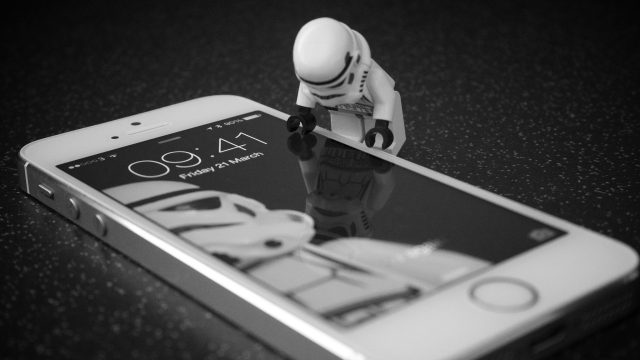
(credit: Kārlis Dambrāns)

A judge in New York ruled Monday in favor of Apple in a case where investigators wanted the court to compel the company to unlock a seized iPhone 5S running iOS 7, which the company does have the ability to unlock.

This case involves a drug dealer who has already pleaded guilty. It pre-dates Apple's current battle with the government over a locked iPhone 5C that belonged to one of the shooters in the December 2015 terrorist attack in San Bernardino—that case is due to be heard in court next month in nearby Riverside, California. (By contrast, the San Bernardino case involves an iPhone 5c, running iOS 9, which Apple says it cannot unlock. In the California case, federal investigators asked for and received an unprecedented court order compelling Apple to create a new firmware to unlock the device. Last week, Apple formally challenged that order, and the outcome is pending.)

However, on both coasts, Apple is fighting the government's attempt to use the same law, known as the All Writs Act—an obscure catchall statute that dates back to the 18th Century. There are several related AWA cases involving unlocking Apple devices that remain pending nationwide.

Read 13 remaining paragraphs | Comments

Police chief: there’s a “reasonably good chance” not much is on seized iPhone

Top San Bernardino cop tells NPR there’s “low probability” unlocking it will reveal more.

(credit: Chris Yarzab)

In a short interview on NPR's Morning Edition on Friday, San Bernardino Police Chief Jarrod Burguan said there is a "reasonably good chance that there is nothing of any value on the phone."

Last week, Apple CEO Tim Cook reiterated the company’s firm commitment to privacy and its resolve to fight a new court order issued earlier this month. If the order stands up to legal challenges, Apple would be forced to create a new customized iOS firmware that would remove the passcode lockout on a seized iPhone as part of the ongoing San Bernardino terrorism investigation. On Thursday, Apple filed its formal legal response and set the stage for an important court hearing in nearby Riverside next month.

However, this morning Burguan articulated the general law enforcement perspective that it is "not fair to the victims and their families," and the government should "leave no stone unturned in the investigation."

Read 3 remaining paragraphs | Comments

Apple tells court it would have to create “GovtOS” to comply with ruling

Claims in 65-page motion to vacate that it would have to build on-site FBI forensic lab.

(credit: Paul)

On Thursday, Apple filed its formal legal response to the standoff between it and the Department of Justice.

Last week, Apple CEO Tim Cook again reiterated the company’s firm commitment to privacy and its resolve to fight a new court order issued earlier this month. If the order stands up to legal challenges, Apple would be forced to create a new customized iOS firmware that would remove the passcode lockout on a seized iPhone as part of the ongoing San Bernardino terrorism investigation.

In a call with reporters on Thursday, Apple executives dubbed this customized iOS firmware a "government OS" and added that it would have to make an "FBI forensics lab" at its Cupertino headquarters.

Read 7 remaining paragraphs | Comments

Arizona prosecutor: We’re not buying any more iPhones over Apple and DOJ dispute

Maricopa Co.: Apple is “on side of terrorists instead of on the side of public safety.”

Bill Montgomery is the Maricopa County Attorney. (credit: Gage Skidmore)

On Wednesday, an Arizona county attorney's office announced that it will immediately halt "providing iPhones as an option for replacement or upgrades for existing employees," citing the current legal battle between Apple and the Department of Justice.

Last week, Apple CEO Tim Cook again reiterated the company’s firm commitment to privacy and its resolve to fight a new court order issued earlier this month. If the order stands up to legal challenges, Apple would be forced to create a new customized iOS firmware that would remove the passcode lockout on a seized iPhone as part of the ongoing San Bernardino terrorism investigation.

Maricopa County, the nation’s fourth most populous county, which encompasses Phoenix and the surrounding area, is also well-known for its very conservative sheriff, Joe Arpaio.

Read 3 remaining paragraphs | Comments
Judge confirms what many suspected: Feds hired CMU to break Tor

A 1992 case about paper shredders may also shed some light on Tor privacy question.

(credit: Tor Project)

A federal judge in Washington has now confirmed what has been strongly suspected: that Carnegie Mellon University (CMU) researchers at its Software Engineering Institute were hired by the federal government to do research into breaking Tor in 2014. The judge also made a notable statement in his court order that "Tor users clearly lack a reasonable expectation of privacy in their IP addresses while using the Tor network."

However, some of the details that Tor alleged previously seem to be wrong: the research was funded by the Department of Defense, not the FBI. Tor Project Director Shari Steele told Ars earlier this year that the organization still couldn't get straight answers from CMU. According to the judge, that research was then subpoenaed by federal investigators.

The Tor Project did not immediately respond to Ars’ request for comment. Meanwhile, Kenneth Walters, a CMU spokesman, refused to answer Ars' questions, referring us only to the university's last statement, from November 2015, which hinted that the university was served with a subpoena.

Read 14 remaining paragraphs | Comments

Snowden lawyer: Bill of Rights was meant to make government’s job “more difficult”

Ars Q&A: We sit down with Ben Wizner of the American Civil Liberties Union.

Ben Wizner is an ACLU attorney who we're sure the government views as a "worthy fuckin' adversary." (credit: Cyrus Farivar)

DAVIS, Calif.—Ben Wizner, a top attorney at the American Civil Liberties Union, is probably best known for being one of the lawyers representing Ed Snowden, the former National Security Agency contractor.

On Tuesday, he told Ars that representing the world's most famous whistleblower has consumed a substantial portion of his professional life over the last 2.5 years. But he framed his passion for civil liberties and fighting surveillance as part of a larger struggle that continues to play out as to the proper balance between not only surveillance and privacy but also between surveillance and democracy itself.

Wizner was in this college town outside Sacramento to speak at the University of California, Davis law school as part of an ongoing public lecture series on surveillance. (Full disclosure: yours truly spoke as part of the same series last year.) In a 30-minute talk followed by questions from an audience primarily made up of law students, Wizner outlined a history of surveillance in America, going back to the 1971 Citizens' Commission to Investigate the FBI and extending through to the Snowden-era NSA.

Read 73 remaining paragraphs | Comments
Chelsea Manning denied EFF articles because US Army cares about copyright

“It is tremendously important to EFF that [prisoners] have access to our materials.”

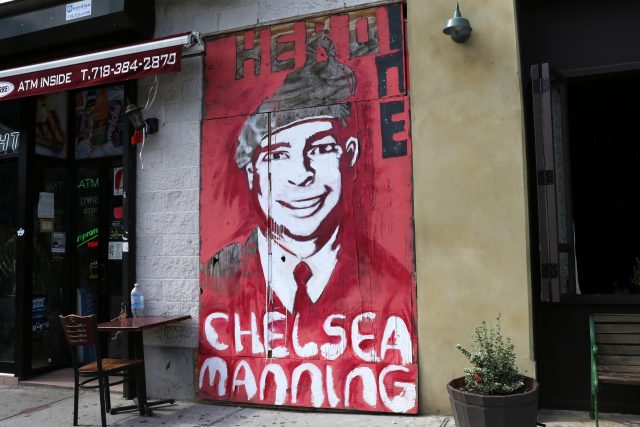
(credit: Timothy Krause)

Apparently the US Army is interested in a zealous interpretation of copyright protection, too.

According to the Electronic Frontier Foundation, a Chelsea Manning supporter recently attempted to mail Manning a series of printed EFF articles about prisoner rights. Those materials were withheld and not delivered to her because, according to the EFF, the correspondence contained “printed Internet materials, including email, of a volume exceeding five pages per day or the distribution of which may violate U.S. copyright laws.”

Other materials, including lengthy Bureau of Prisons documents, were allowed through, and so the EFF concludes that "it was potentially copyright concerns that resulted in Manning’s mail being censored."

Read 4 remaining paragraphs | Comments

Want to support Apple in its fight against DOJ? Show up at an Apple Store Tuesday

Events planned all over the world, from Hong Kong to Houston, Munich to Minneapolis.

(credit: Soraya Okuda/EFF)

If you are in favor of Apple’s staunch resistance to the government, you may be interested to join a rally on Tuesday, February 23 at 5:30pm local time at an Apple Store near you.

Last Tuesday, Fight for the Future, an advocacy group, quickly organized a pro-Apple rally at the Apple Store on Stockton Street in downtown San Francisco. Representatives from the Electronic Frontier Foundation and a few dozen people showed up on short notice, so the groups are expanding their efforts.

The new rallies promise events in Hong Kong, Munich, London, and many cities around the United States, including Anchorage, San Diego, New York, and Minneapolis.

Read 2 remaining paragraphs | Comments
Apple CEO Tim Cook: Complying with court order is “too dangerous to do”

Internal letter, Q&A lay out Apple’s rationale for fighting court order.

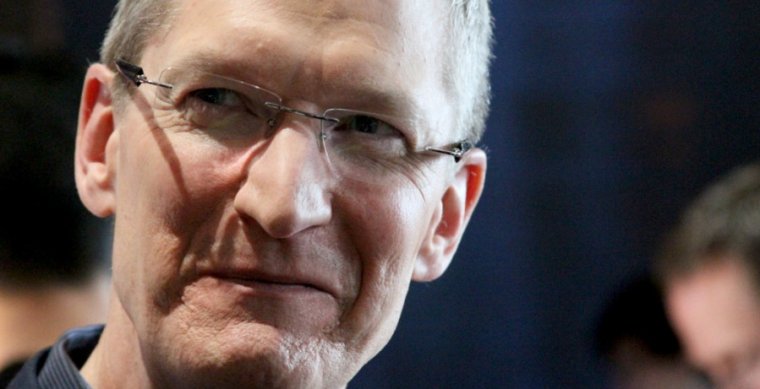
Enlarge / Apple CEO Tim Cook. (credit: Chris Foresman)

Apple CEO Tim Cook has again reiterated the company’s firm commitment to privacy and its resolve to fight a new court order issued last week. If the order stands up to legal challenges, Apple would be forced to create a new customized iOS firmware that would remove the passcode lockout on a seized iPhone as part of the ongoing San Bernardino terrorism investigation.

Early Monday morning, Cook released a letter sent to employees and published a Q&A on the issue.

In the letter, which Apple provided to Ars, the CEO wrote:

Read 3 remaining paragraphs | Comments