Appeals Court: No stingrays without a warrant, explanation to judge

Police also barred from shrouding stingray use in ridiculous NDAs.

(credit: Josh Koonce)

On Wednesday, the Maryland Court of Special Appeals published a legal opinion finding that state police must not only obtain a warrant before deploying a cell-site simulator, but are required to also fully explain to the court what exactly the device does and how it is used.

As Ars has long reported, cell-site simulators—known colloquially as stingrays, can be used to determine a mobile phone’s location by spoofing a cell tower. In some cases, stingrays can intercept calls and text messages. Once deployed, the devices intercept data from a target phone along with information from other phones within the vicinity. At times, police have falsely claimed the use of a confidential informant when they have actually deployed these particularly sweeping and intrusive surveillance tools.

In recent years, stingray use has come under increasing scrutiny, with several states including California, Washington, Virginia, Minnesota, and Utah now mandating a warrant be issued for their use. Last year, the Department of Homeland Security and the Department of Justice also imposed new policies that require a warrant for stingray use in most cases.

Read 11 remaining paragraphs | Comments
Fisherman who has kept USGS buoy for 10 weeks: All I want is compensation

Daniel Sherer: “You don’t even know how much stress this has put me under.”

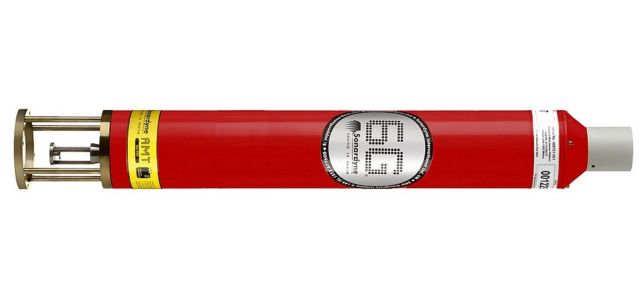
An autonomous monitoring transponder of the type used in the Coordinated Canyon Experiment.

All Daniel Sherer has ever wanted was for the government to pay him for a few days of lost work as a commercial fisherman after a scientific buoy suddenly popped into the path of his fishing boat in Monterey Bay on Saturday, January 15, 2016. As he tells it, his aim isn't to bilk the United States; he simply wants to be paid a fair amount for his lost earnings after the buoy took his boat out of commission. "I don't need a million dollars—I just want to be compensated for my days lost," he told Ars. "I want to be compensated for a diver going under the boat, I want to be compensated for cleaning the whole thing up, that's it."

As Ars reported on Monday, Sherer is the first named defendant in a lawsuit filed last week by federal prosecutors in California. The way the government sees it, Sherer and his fishing business partner are essentially hostage-takers, as they recovered a loose United States Geological Survey buoy, claimed ownership of it, and now demand $13,000 for its return.

Department of Justice lawyers have still not responded to Ars' request for comment.

Read 25 remaining paragraphs | Comments

Foxconn agrees to acquire controlling interest in Sharp for $3.5 billion

Sharp still has billions in liabilities, so Foxconn took time to do due diligence.

(credit: Fang Hsieh)

On Wednesday morning, Bloomberg and Reuters reported that the struggling Japanese giant Sharp had sold a two-thirds stake to Foxconn, the world’s largest electronics contractor manufacturer, for 389 billion Japanese yen ($3.5 billion, £2.4 billion).

The offer is about $1 billion less than what Foxconn had been expected to offer last month.

The deal, if it is formally approved by both corporate boards, is expected to represent a crowning achievement for Foxconn Chairman Terry Gou, who hopes that his newly enlarged firm can become a major supplier of smartphone screens. At the moment, Sharp is one of just three screen suppliers to Apple.

Read 2 remaining paragraphs | Comments

2 men take US gov’t ocean science buoy, now want to “sell” it back for $13,000

“If you lose something in the ocean, it doesn’t stay yours forever.”

This aerial view of Monterey Bay from the south was created by combining computer-generated topographic and bathymetric data. Vertical relief has been exaggerated to better show the Monterey Canyon and mountains on either side of the bay. (credit: Monterey Bay Acquarium Research Institute)

Turns out, the government doesn’t take too kindly to the theft of one of its scientific buoys.

According to a lawsuit filed last week by federal prosecutors in California, two commercial fishermen are essentially hostage-takers, as they recovered a loose United States Geological Survey buoy in January 2016 and are now demanding money for its return.

By contrast, the fishermen’s lawyer said on Monday that his clients (one of which is his son) recovered the offshore buoy, which had come loose from its moorings due to a storm. Therefore, because they took possession of the buoy, they became in fact, its rightful owners. The fishermen are not asking for a ransom—now $13,000—but merely a sticker price.

Read 17 remaining paragraphs | Comments

Feds break through seized iPhone, stand down in legal battle with Apple

Apparently, the FBI’s mysterious new method to break through the iPhone 5C worked.

(credit: Wikipedia)

According to a new court filing, government prosecutors have formally asked a federal judge to cancel her prior order that would have compelled Apple to assist efforts to unlock a seized iPhone linked to the San Bernardino attacks in late 2015.

Apple had publicly said in court that it would resist all efforts to force its compliance. Last week, however, the hearing between prosecutors and Apple was postponed less than 24 hours before it was set to take place, because the Department of Justice said it was evaluating a new method to access the phone's data.

"The government has now successfully accessed the data stored on [terrorist Syed Rizwan] Farook’s iPhone and therefore no longer requires the assistance from Apple Inc.," prosecutors wrote in the Monday filing, which does not explain precisely what was done.

Read 3 remaining paragraphs | Comments

Court: Essentially none of cryptocurrency firm’s assets “actually exist”

Gemcoin videos claimed that “trusted” cryptocurrency was “backed” by amber mines.

In a new report, the court-appointed receiver assigned to investigate an alleged cryptocurrency scam has found no evidence of "any legitimate Gemcoin or other viable business."

In October 2015, the Securities and Exchange Commission announced that it had sued a Southern California company over an alleged Ponzi scheme resulting in a loss to investors of at least $32 million. If the government’s accusations are correct, that would make Gemcoin one of the largest digital-currency-based financial schemes ever.

The lawsuit came days after the United States Marshals Service and the Arcadia Police Department froze assets and raided corporate offices in Arcadia, north of downtown Los Angeles. Alliance Finance Group and its assets were promptly put into the hands of a court-appointed receiver, whose job it remains to examine what went wrong.

Read 5 remaining paragraphs | Comments

Record companies made $2.4B last year from streaming, but it’s not enough

RIAA: Vinyl sales made more money than streaming on ad-supported services.

Last year, Ford added Spotify support to its SYNC infotainment system. (credit: Ford)

New figures released Tuesday by the Recording Industry Association of America show that streaming sites overtook downloads for the first time as the music industry’s single largest revenue stream.

In its earnings statement, the RIAA noted that when all types of streaming are combined (subscription, ad-supported on-demand and SoundExchange), it constitutes $2.4 billion in revenue for 2015—a rise of 29 percent over the previous year.

Still, despite the rapid rise in digital revenue, the RIAA says that's not nearly sufficient.

Read 4 remaining paragraphs | Comments

Idaho mom who sued Obama over illegal surveillance loses at appellate court

Due to 2015’s USA Freedom Act, claims of “ongoing collection of metadata are moot.”

(credit: Wikimedia Commons)

The Idaho mother who sued President Barack Obama over alleged unconstitutional telephone metadata collection has lost again in court. Anna Smith had her initial case dismissed in 2014, and this week her appeal met a similar fate.

On Tuesday, the 9th Circuit Court of Appeals ruled against Smith, finding that her case was now moot in light of the new changes to the now-expired Section 215 of the Patriot Act.

Within the past year, Congress voted to end Section 215 but then substituted it with a similar law (called the USA Freedom Act) that leaves the phone metadata surveillance apparatus largely in place. The government no longer collects the data directly, but even former NSA Director Michael Hayden admitted in June 2015 that this legal change was pretty minor.

Read 5 remaining paragraphs | Comments

Former US Embassy staffer sentenced to nearly five years for sextortion

Michael C. Ford even began targeting young women as early as 2009.

(credit: meesh)

A former US Embassy staffer was sentenced Monday to four years and nine months in prison after pleading guilty last year to stalking, extortion, and computer fraud.

According to prosecutors, Michael C. Ford primarily conducted his sextortion activities from his desk at the United States Embassy in London despite his heavily monitored, government-owned work computer. Even though Ford ran his scheme for at least two years, the State Department’s own network security protocol apparently failed to flag the man’s behavior.

In a sentencing memorandum filed by prosecutors prior to the Monday hearing, they expressed shock at the scale of Ford's scheme. "The sheer number of phishing e-mails that Ford sent is astounding," the memorandum stated. As an example, prosecutors noted that on one day in April 2015 alone, Ford sent approximately 800 e-mails to potential victims.

Read 3 remaining paragraphs | Comments

Apple gets short-term win, but new mysterious FBI unlocking method looms

Law professor: “The issue probably has been deferred, not resolved.”

(credit: John Karakatsanis)

RIVERSIDE, Calif.—Less than 24 hours before a highly anticipated Tuesday court session where prosecutors and Apple lawyers would have squared off here in federal court, government attorneys suddenly got a judge to vacate that hearing and stay an unprecedented court order that would have forced Apple to aid investigators' efforts to unlock and decrypt an iPhone linked to a 2015 terrorist attack. In a court filing Monday, federal authorities cited a newly discovered "unlocking method" that it hopes won't require Apple's help.

The sudden and unexpected postponement essentially means an immediate victory for Apple—the company doesn’t have to comply with the government’s demands to create a customized version of iOS. But the new government filing also raises more questions than it answers, such as the reach of the government's decryption capabilities.

Melanie Newman, a spokeswoman for the Department of Justice, said in a statement sent to Ars that the government only learned of this new unlock technique this weekend.

Read 13 remaining paragraphs | Comments