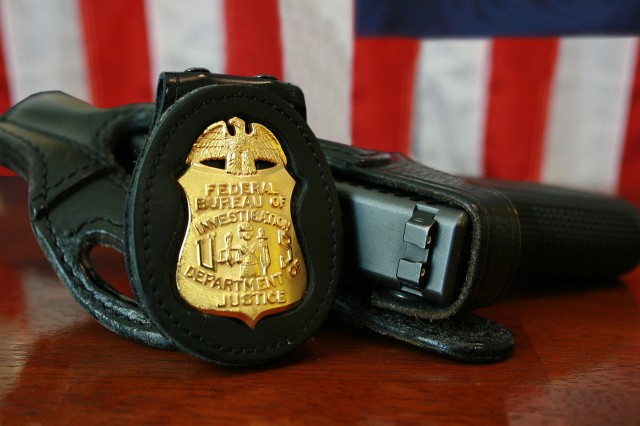
Judge invalidates warrant that let feds hack Tor-using child porn suspect

Massachusetts judge finds warrant issued by magistrate in Virginia was improper.

(credit: Wikipedia)

A federal judge in Massachusetts ruled Wednesday in favor of a man accused of accessing child pornography through Tor, finding that the warrant issued by a Virginia-based judge was invalid. The evidence of child pornography the government claims it found on the man's computers is suppressed, which likely makes continuing prosecution of this case significantly more difficult.

That warrant, which was issued in early 2015, allowed federal investigators to use a "network investigative technique" (NIT), government-speak for a piece of malware typically used to penetrate the digital security of Tor users. That malware then led authorities to the computer of defendant Alex Levin, of Norwood, Massachusetts, and they criminally charged him with possession of child pornography.

Earlier this year, Levin’s lawyers challenged the judicial authorization to deploy the NIT.

Read 8 remaining paragraphs | Comments

“Dr. Death” pleads guilty to making, selling AR-15 rifle components

You can’t pay someone who’s unlicensed to mill a lower into a firearm.

This is a stripped (and fully-milled) AR-15 lower. (credit: Madison Scott-Clary)

A man in Sacramento, California has pleaded guilty to one count of unlawful manufacture of a firearm and one count of dealing firearms.

According to federal prosecutors, Daniel Crowninshield, known online as "Dr. Death," would sell AR-15 blanks, which customers would then pay for him to transform into fully-machined lower receivers using a computer-numerically-controlled (CNC) mill. (In October 2014, Cody Wilson, of Austin, Texas, who has pioneered 3D-printed guns, began selling a CNC mill called "Ghost Gunner," designed to work specifically on the AR-15 lower.)

"In order to create the pretext that the individual in such a scenario was building his or her own firearm, the skilled machinist would often have the individual press a button or put his or her hands on a piece of machinery so that the individual could claim that the individual, rather than the machinist, made the firearm," the government claimed in its April 14 plea agreement.

Read 11 remaining paragraphs | Comments

Man sentenced to 18 months in prison for firing laser at county sheriff

So far in 2016, more than 22 laser strikes have been reported in the US every day.

The FBI's new "laser strikes" poster. (credit: FBI)

With yet another prison sentence, a federal prosecutor in Fresno, California, has continued her aggressive campaign against people who fire laser pointers at airplanes.

On Monday, Pablo Cesar Sahagun was sentenced to 18 months in prison after pleading guilty to firing a one-watt laser at a Kern County Sheriff’s helicopter, known as Air-1, on February 26, 2015. That laser claims to produce a beam approximately 2,000 times more powerful than what is legally allowed.

US District Judge Dale A. Drozd said during sentencing, “This is an egregious case of a laser strike…The circumstances are inexplicable.”

Read 4 remaining paragraphs | Comments
Judge: If feds find drugs on your car, pics of cash on your phone, you’re suspicious

Sergio Caballero was found with over 33 pounds of methamphetamine on his car.

(credit: Omar Bárcena)

A judge in southern California has ruled that a recent federal agents’ search of a man’s cellphone as he was crossing into the United States was entirely lawful.

The case, known as United States v. Caballero, involves a man who was driving into the US from Mexico and attempted to cross the border at Calexico (Imperial County) on September 28, 2015. While at the checkpoint, a dog alerted agents to the presence of narcotics on the man’s car. The government is now accusing Sergio Caballero with importation of over 33 pounds of methamphetamine, and 2.75 pounds of heroin inside the gas tank.

The government brought the criminal case that same day. However, approximately two months later, Caballero’s public defender attempted to suppress the search of the phone, which revealed a photograph of a large amount of cash. The defense attorney, Nathan Feneis, argued that the search of his client’s phone was illegal under the Supreme Court decision, Riley v. California. That 2014 decision found that law enforcement generally does not have the right to search a phone belonging to someone who is arrested without a warrant.

Read 5 remaining paragraphs | Comments

San Francisco wants to collect over $3.3M each year from Uber, Lyft drivers

City: If drivers are independent contractors, they should pay registration fees.

(credit: Sergio Ruiz)

Attention, Uber and Lyft drivers! San Francisco wants to rake in money from you.

On Friday, the treasurer for the City and County of San Francisco announced that he had begun mailing out business registration notices to the "nearly 37,000" people who drive for "Transportation Network Companies," the formal name in California for such on-demand companies.

The city says that these drivers are required to pay an annual business registration fee of $91 per year for operating a business in the city—which includes being a driver for a company like Uber or Lyft. Assuming full compliance, the new fee collection would result in new annual revenue of over $3.3 million per year.

Read 10 remaining paragraphs | Comments

Apple holds steadfast, refuses to help feds unlock seized iPhone in NY drug case

Apple: Feds have not shown they have “exhausted other potential repositories.”

(credit: Ptigarstheone)

On Friday, Apple formally responded to the government’s demand that the company help unlock a seized iPhone in New York, which pre-dates the debacle that played out earlier this year in San Bernardino.

As Ars reported last month, federal prosecutors have asked a more senior judge, known as a district judge, to countermand a magistrate judge who earlier ruled in Apple’s favor, which is why Apple had to file now. In that ruling, US Magistrate Judge James Orenstein concluded that what the government was asking for went too far. In his ruling, he worried about a "virtually limitless expansion of the government's legal authority to surreptitiously intrude on personal privacy."

The case involves Jun Feng, a drug dealer who has already pleaded guilty, and his seized iPhone 5S running iOS 7. Prosecutors have said previously that the investigation was not over and that it still needed data from Feng's phone. As the government has reminded the court, Apple does have the ability to unlock this phone. Moreover, as Department of Justice lawyers note, Apple has complied numerous times previously.

Read 5 remaining paragraphs | Comments

Mysterious, unverifiable new letter surfaces: “Matthew Keys is innocent”

Lawyer: Confession very likely insufficient to overturn journalist’s conviction.

Matthew Keys spoke to reporters on April 13, 2016 after his sentencing hearing in federal court in Sacramento, California. (credit: Cyrus Farivar)

On Wednesday morning, less than two hours before journalist Matthew Keys’ sentencing hearing in federal court, Ars received an e-mail with an attached nine-page letter making a shocking claim, which for now is impossible to confirm: "Matthew Keys is innocent." Absent further information, it's impossible to say with certainty that this letter is not a hoax.

The message, which was authored by someone under the pseudonym "Sam Snow," was also sent earlier in the year to Keys' defense team, government prosecutors, and the judge. It will likely have no material impact on the forthcoming appeal in Keys' conviction. Keys' lawyer, Jay Leiderman, told Ars that the letter was essentially too little, too late.

When Ars asked Keys if he was Snow, he answered flatly: "No." Keys declined further comment. He also declined to explain why he is protecting Snow, who may or may not be a real person. In the letter, Snow also claims that Keys promised him off-the-record protections as a source in his earlier reporting into Anonymous, adding, "I also know Matthew well enough to know that he will go to jail if it means protecting a source, because that's what good journalists do." (Snow claims he taught Keys how to use IRC and how to communicate with Anonymous.)

Read 27 remaining paragraphs | Comments

After “pepper spray incident,” UC Davis spent $175,000 to boost image online

Chancellor Linda P.B. Katehi, meet the Streisand Effect.

(credit: Doctor Popular)

The University of California, Davis has spent at least $175,000 to hire companies that would try to “expedite the eradication of references to the pepper spray incident in search results,” and to counter “venomous rhetoric about UC Davis and the chancellor,” according to new documents obtained by the Sacramento Bee.

The pepper spray incident occurred at the Sacramento, California-area university on November 18, 2011, during a demonstration that was part of the broader “Occupy movement.” After asking seated protesters to leave, UC Davis police officer Lt. John Pike pepper sprayed several of them at close range. Video of his actions were widely distributed and ridiculed.

In October 2013, a judge awarded Pike over $38,000 in worker’s compensation benefits from UC Davis itself to compensate for his apparently psychological pain and suffering stemming from the incident. Pike was fired from the university police force.

Read 5 remaining paragraphs | Comments

Journalist sentenced to 24 months in prison after hacking-related conviction

Even after being found guilty, Matthew Keys still denies he gave up CMS login.

Matthew Keys is accused of giving up the CMS login information that ultimately resulted in this short-lived defacement of the LA Times' website. (credit: US DOJ)

SACRAMENTO, Calif.—A federal judge sentenced journalist Matthew Keys to two years in prison Wednesday after he was convicted last year of three counts of conspiracy and criminal hacking.

Prosecutors had asked the judge to impose a sentence of five years, while Keys’ attorneys asked for no prison time.

As Ars reported earlier, Keys was accused of handing over a username and password for former employer KTXL Fox 40's content management system (CMS) to members of Anonymous and instructing people there to “fuck some shit up.” Ultimately, that December 2010 incident resulted in someone else using those credentials to alter a headline and sub-headline on a Los Angeles Times article. The changes lasted for 40 minutes before editors reversed them. (At the time, the two media companies were both owned by Tribune Company.)

Read 6 remaining paragraphs | Comments

After being convicted under hacking law, Anonymous-linked man says he didn’t do it

DOJ has asked judge to sentence Matthew Keys to 5 years in prison.

(credit: Cyrus Farivar)

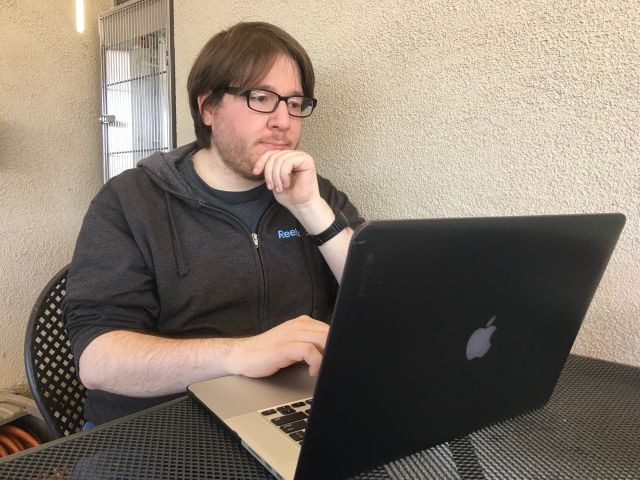
VACAVILLE, Calif.—Matthew Keys just can’t stop working, even when he’s about to face a federal judge who could put him away in prison for years.

On a recent afternoon, the 29-year-old journalist sat outside at a Boudin restaurant in his hometown, reading various news stories on his laptop. Keys, who is currently unemployed, most recently held a job at Grasswire before the company terminated all of its paid employees in January 2016 after failing to secure new investment. Keys has continued to interview for other journalism jobs.

"I’m trying to do as much work as I can now," he said.

Read 42 remaining paragraphs | Comments