Man takes drone out for maiden voyage, other man shoots at it

Reminder: shooting at drones, or any aircraft, is totes illegal.

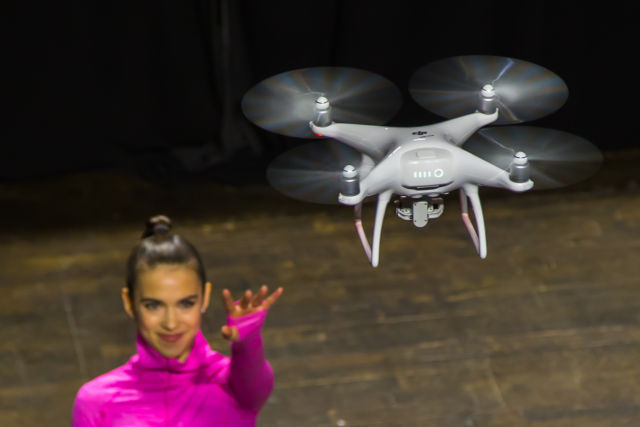
The DJI Phantom 4 tracks a person. (credit: Ron Amadeo)

The owner of a drone store outside Nashville told Ars on Friday that two of his customers have had their unmanned aerial vehicles shot at in recent weeks.

The incident is reminiscent of last year’s similar incident in California and another in Kentucky, which resulted in the shooter being cleared on local firearms charges. As drones become more pervasive, it seems that drones, perceived privacy violations, and firearms are increasingly becoming a dangerous combination.

According to Byron Brock, the owner of Vivid Aerial in Whites Creek, a man named Gary Sammons was flying his new DJI Phantom 4 above his home in Rutherford County last Saturday.

Read 12 remaining paragraphs | Comments
Once more, a judge rules against gov’t in Tor-enabled child porn case

DOJ may appeal: “We are disappointed with the ruling and considering our options.”

(credit: Tristan Schnurr)

On Wednesday, a federal judge in Washington state tossed all the evidence in a child pornography case that was obtained via an FBI-deployed Tor exploit. Absent a successful government appeal, it seems extremely difficult for prosecutors going forward in United States v. Michaud, suggesting that judges are continuing to push back on the FBI’s deployment of hacking tools.

"It's hard to see how the government can secure a conviction without this key evidence," Ahmed Ghappour, a law professor at the University of California, Hastings, told Ars.

Judges in at least two related cases in other states have also ruled in favor of defendants, on the grounds that the Virginia-issued warrant to deploy the NIT (network investigative technique) malware was invalid from the start. Those judges found that the warrant to search their computers in other parts of the country couldn’t have had force of law in other states as issued by the Virginia magistrate judge. Other judges, meanwhile, have said that the warrants were also invalid, but they did not go so far as to suppress evidence.

Read 7 remaining paragraphs | Comments

Twitter relaxes 140-character limit, just a bit

Amongst other changes, @-replies don’t count anymore either.

(credit: Scott Beale)

While brevity is oft considered the soul of wit, Twitter has finally come through on the rumored character limit increase.

On Tuesday, Twitter formally announced that @-replies and media attachments (you know, those GIFs that the kids are crazy about these days) will no longer count against the 140-character limit. The San Francisco company also announced that users will soon be able to retweet and quote their own tweets. Links aside from those to other tweets will still count against the character limit, however.

“We’ll be enabling the Retweet button on your own Tweets, so you can easily Retweet or Quote Tweet yourself when you want to share a new reflection or feel like a really good one went unnoticed,” Todd Sherman, a senior product manager, wrote in the blog post.

Read 1 remaining paragraphs | Comments

City goes after council candidate over logo use in campaign flyers

An attempt to restrict political speech using intellectual property laws.

The City of Mesa is upset that Whittaker is using its three-tiered logo. (credit: Jeremy Whittaker for Mesa)

A well-known First Amendment lawyer has formally responded on behalf of a city council candidate in Mesa, Arizona, who is accused of abusing the city’s trademarked logo in his campaign literature.

In his Monday response letter, lawyer Paul Alan Levy informs the City of Mesa’s lawyer that “not every use of a trademark constitutes infringement, and the First Amendment protects Whittaker’s use of these logos for purposes of noncommercial political expression.” Levy represents political hopeful Jeremy Whittaker.

The dispute represents yet another seemingly overzealous attempt at restricting speech using intellectual property laws. Levy has proven successful at halting such cases: earlier this year he defended an anonymous YouTube user whose identity was attempted to be revealed by the rogue Georgia dentist who was the subject of this user’s video.

Read 5 remaining paragraphs | Comments

DOJ ends lawsuit against fisherman who took gov’t science buoy “hostage”

The buoy reportedly has been returned to the United States Geological Survey.

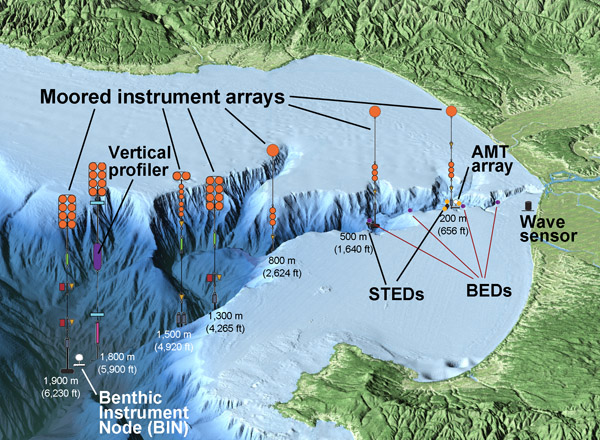
This aerial view of Monterey Bay from the south was created by combining computer-generated topographic and bathymetric data. Vertical relief has been exaggerated to better show the Monterey Canyon and mountains on either side of the bay. (credit: Monterey Bay Acquarium Research Institute)

Prosecutors have dropped their lawsuit against a California fisherman who they alleged took a government-owned scientific buoy "hostage" after it nearly struck his fishing vessel earlier this year in Monterey Bay.

Daniel Sherer, the fisherman, had kept the buoy in his possession for at least 10 weeks after the January 15 incident where it came loose and nearly struck his vessel. He demanded that the United States Geological Survey compensate him.

According to Courthouse News Service, the buoy has been returned to authorities, but it is not clear when or how the handover took place.

Read 4 remaining paragraphs | Comments

From drone racers to pinball: Maker Faire Bay Area 2016 doesn’t disappoint

Gallery: An enlarged Monopoly board, gorgeous pottery and cool art stole our hearts.

SAN MATEO, Calif.—Maker Faire never gets old. While we only scratched the surface after a 90 minute walk through the fairgrounds, the drone racing was the coolest thing that we saw on Friday afternoon. Every 10 minutes, a few drone pilots would sit with headsets and zoom their aircraft through a netted raceway, replete with an illuminated track. (Check the video below!)

We also liked some of the clothing and craft wares, like cool kids' hoodies, and these gorgeous earthenware. If you're at all interested and you're anywhere near the Bay Area, the event continues Saturday and Sunday—it's well worth the price of admission.

The MegaBots in action. (video link)

Read on Ars Technica | Comments

Senators put forward new bill to halt expansion of gov’t hacking powers

Rule 41 change will let feds search “millions of computers” from just one warrant.

Sen. Ron Wyden (D-Ore.) and other like-minded senators have come out forcefully against the pending change to federal judicial rules that would expand judges’ ability to authorize remote access hacking of criminal suspects’ devices.

On Thursday, Wyden submitted a bill that aims to stop the proposed amendments to Rule 41 dead in its tracks. The entire bill is one sentence long: “The proposed amendments to rule 41 of the Federal Rules of Criminal Procedure, which are set forth in the order entered by the Supreme Court of the United States on April 28, 2016, shall not take effect.”

For now, the bill is co-sponsored by two other Democrats, Sen. Rand Paul (R-Ky.), and Sen. Steve Daines (R-Mont.). A companion bill is expected in the House of Representatives.

Read 5 remaining paragraphs | Comments

Judge says suspect has right to review code that FBI has right to keep secret

At issue is Tor malware that enabled the FBI to bust child porn ring.

(credit: Eric Norris)

A federal judge in Tacoma, Washington has put himself in a Catch 22: ruling a man charged with possessing child pornography has the right to review malware source code while also acknowledging that the government has a right to keep it secret.

"The resolution of Defendant’s Third Motion to Compel Discovery places this matter in an unusual position: the defendant has the right to review the full NIT code, but the government does not have to produce it," US District Judge Robert Bryan wrote on Wednesday. "Thus, we reach the question of sanctions: What should be done about it when, under these facts, the defense has a justifiable need for information in the hands of the government, but the government has a justifiable right not to turn the information over to the defense?"

In this case, the defense wants prosecutors to disclose the full source code of the NIT, or network investigative technique—a piece of government-created malware that compromised Tor and exposed users of a Tor-only child porn site. The Department of Justice did so in a related case in Nebraska, United States v. Cottom, but a DOJ spokesman now says this case, United States v. Michaud, and Cottom are entirely different cases and have no bearing on one another.

Read 6 remaining paragraphs | Comments

Uber wants denizens of this fancy SF living complex to use Uber, transit more

The catch: You must spend at least $30/month on Uber, rest can be for transit.

(credit: Parkmerced)

Uber has announced a partnership with Parkmerced, an expanding townhome and apartment complex adjacent to San Francisco State University, which gives new residents who don't have cars a monthly $100 stipend as a way to encourage “car-free living.”

Residents must use at least $30 of the subsidy toward Uber rides, and they’ll pay a flat fee of $5 to travel from the residence to the nearby BART and MUNI stops. The remaining $70 will be auto-loaded to a Clipper Card, which can be used on nearly all of the Bay Area’s transit systems. The subsidy will last for the duration of the lease, up to two years.

“The immediate benefits to residents will be to decrease or eliminate the need for private car ownership, facilitate a more efficient commute, reduce transportation costs, and minimize the need for parking,” Rob Rosania, founder of Maximus Real Estate Partners, the developer of Parkmerced, said in a statement. Parkmerced is paying for the subsidy, not Uber.

Read 2 remaining paragraphs | Comments

RunKeeper acknowledges location data leak to ad service, pushes updates

CEO: “We take our responsibility for the privacy of user data very seriously.”

(credit: RunKeeper)

RunKeeper announced Tuesday that it had found a bug in its Android code that resulted in the leaking of users’ location data to an unnamed third-party advertising service. The blog post came four days after the Norwegian Consumer Council filed a complaint against the Boston company.

In the blog post, CEO Jason Jacobs wrote:

Like other Android apps, when the Runkeeper app is in the background, it can be awakened by the device when certain events occur (like when the device receives a Runkeeper push notification). When such events awakened the app, the bug inadvertently caused the app to send location data to the third-party service.

Today we are releasing a new version of our app that eliminates this bug and removes the third-party service involved. Although the bug affected only our Android app, we have decided to remove this service from our iOS product too out of an abundance of caution. The iOS release will be made available once approved by Apple.

We take our responsibility for the privacy of user data very seriously, and we are thankful to the Runkeeper user community for your continued trust and support.

In an e-mail sent to Ars, Jacobs declined further questions, noting the statement "will be our only comment at this time."

Read 2 remaining paragraphs | Comments