Chinese company just got Nevada’s permission to test a person-carrying drone

Nevada Institute for Autonomous Systems wants to bring EHang 184 to life.

(credit: EHang)

A Chinese drone company has just been granted permission to test its on-demand, passenger-carrying autonomous aerial vehicle in Nevada, making it the first such drone to be tested anywhere in the United States.

According to the Las Vegas Review-Journal, state authorities from the Nevada Institute for Autonomous Systems granted permission Monday for EHang to fly its EHang 184 in the Silver State. EHang already makes a consumer model, the "Ghost Drone."

EHang debuted its drone at CES in Las Vegas earlier this year.

Read 4 remaining paragraphs | Comments

FBI seeks expanded National Security Letter to include browser history and more

Activists oppose adding “Electronic Communication Transactional Records” to law.

(credit: Dave Newman)

Major tech companies, advocacy groups, and at least one senator have publicly proclaimed their opposition to two bills currently working their way through Congress. The two pieces of proposed legislation would each significantly expand use of National Security Letters to include "Electronic Communication Transactional Records"—better known as metadata.

As Ars has reported previously, federal investigators issue tens of thousands of NSLs each year to banks, ISPs, car dealers, insurance companies, doctors, and others in terrorism and espionage investigations. The letters demand personal information, and they don't need a judge's signature, much less a showing of probable cause. They also come with a default gag to the recipient that forbids the disclosure of the NSL to the public or the target.

On Thursday, the Senate Judiciary Committee is set to vote on one of those provisions as an amendment to a bill called the Electronic Communications Privacy Act Amendments Act of 2015 (S. 356). The provision would allow NSLs to target "account number, login history, length of service (including start date)…Internet Protocol address…routing, or transmission information…" and more.

Read 6 remaining paragraphs | Comments

Breaking silence, ex-Tor developer decries “vicious and spurious allegations”

After Appelbaum left, public accusations of sexual misconduct ensued.

Jacob Appelbaum in Berlin in 2014. (credit: re:publica)

Former Tor Project "Core Team" member Jacob Appelbaum took to Twitter on Monday morning to slam sex-related accusations against him that developed over the weekend. He also denounced the matter as a "calculated and targeted attack has been launched to spread vicious and spurious allegations against me."

"I want to be clear: the accusations of criminal sexual misconduct against me are entirely false," he wrote.

The Tor Project is the Massachusetts-based nonprofit that maintains Tor, the well-known open-source online anonymity tool.

Read 5 remaining paragraphs | Comments

Tor developer Jacob Appelbaum quits after “sexual mistreatment” allegations

Tor: new claims “consistent with rumors some of us had been hearing for some time.”

Jacob Appelbaum, as seen in this 2013 photo. (credit: Tobias Klenze)

Tor Project officials say that one of their most public-facing developers and a member of the "Core Team," Jacob Appelbaum, left the organization on May 25 after "public allegations of sexual mistreatment."

In a statement published Saturday on the Tor Project's website, the organization wrote:

These types of allegations were not entirely new to everybody at Tor; they were consistent with rumors some of us had been hearing for some time. That said, the most recent allegations are much more serious and concrete than anything we had heard previously.

We are deeply troubled by these accounts.

We do not know exactly what happened here. We don't have all the facts, and we are undertaking several actions to determine them as best as possible. We're also not an investigatory body, and we are uncomfortable making judgments about people's private behaviors.

The statement continued, saying that Tor is "working with a legal firm" specializing in sexual misconduct. The statement added:

Read 4 remaining paragraphs | Comments

FBI: Exploit that revealed Tor-enabled child porn users wasn’t malware

Edward Matish, one of 135 defendants, is set to go to trial in Virginia soon.

(credit: Jack)

A federal judge in Virginia has ruled that a case against Edward Matish, a man accused of downloading child pornography, should stand—preserving the defendant’s upcoming trial date. Also on Wednesday, an FBI agent explicitly denied that the "network investigative technique" (NIT) used to locate Matish and break through his Tor-enabled defenses is malware.

In two separate orders handed down on Thursday, US District Judge Henry Coke Morgan, Jr. denied Matish’s two attempts to have the charges dismissed. Matish’s federal public defender had argued that his client was coerced into signing a statement confessing to his alleged crimes. Judge Morgan disagreed with the arguments presented by Matish's legal team.

"There is no evidence to support Defendant's claim that he made his statement involuntarily," he wrote in his orders. "Defendant put on no evidence during the hearing to support the allegations made in his brief. The evidence before the Court shows that the agents never threatened to prosecute Defendant or his family if he did not provide a statement."

Read 11 remaining paragraphs | Comments
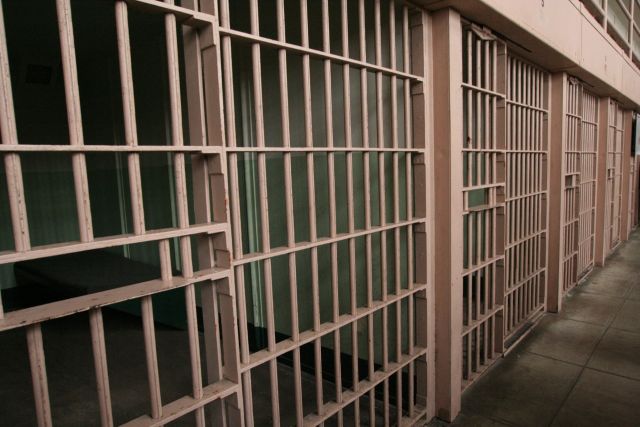
Second-in-command at Silk Road 2.0 sentenced to 8 years in prison

DOJ: “The Silk Road model presents a new threat to public safety and health.”

The second-highest administrator on Silk Road 2, the copycat site that followed the shuttered underground drug website Silk Road, was sentenced Friday to eight years in prison—the same term that government prosecutors asked the judge to impose.

The sentencing came months after Brian Farrell, known online as "DoctorClu," pleaded guilty to one count of distribution of heroin, cocaine, and methamphetamine. Such crimes carry a minimum sentence of five years in prison.

Federal agents searched Farrell’s home on January 2, 2015 after they got information that he was closely involved in SR2. There, they "seized three handguns, various computer media, various prescription medications, drug paraphernalia, 20 silver bullion bars valued at $3,900.00, and approximately $35,000 in US currency." In addition to the prison sentence, the cash and silver bullion will be forfeited to the government.

Read 2 remaining paragraphs | Comments

Most drivers in Uber labor case would get “under $25,” so some protest settlement

Uber, plaintiffs push for approval, while other lawyers bring vociferous protest.

(credit: Uber)

SAN FRANCISCO—Lawyers newly representing dozens of Uber drivers who feel that the lead attorney did not represent their interests in a proposed class action settlement forcefully argued for a federal judge to halt the deal on Thursday.

Several weeks ago, the two sides came to a proposed agreement of $100 million and other benefits, which would end the class-action lawsuit known as O’Connor v. Uber, which covers 385,000 current and former drivers in California and Massachusetts. For the settlement to take effect, it requires a sign-off by the judge.

However, some Uber drivers, including the lead plaintiff, Douglas O’Connor, feel that the settlement was grossly insufficient, and that the underlying issue as to whether drivers should be treated as employees rather than contractors remains unresolved.

Read 18 remaining paragraphs | Comments

Cops can easily get hundreds of days of location data, appeals court rules

Relying on third-party doctrine, Fourth Circuit finds for gov’t in US v. Graham.

(credit: Julian Carvajal)

A full panel of judges at the Fourth US Circuit Court of Appeals has now overturned last summer’s notable decision by the standard trio of appellate judges, which had found that police needed a warrant to obtain more than 200 days' worth of cell-site location information (CSLI) for two criminal suspects.

In the Tuesday en banc decision, the Fourth Circuit relied heavily upon the third-party doctrine, the 1970s-era Supreme Court case holding that there is no privacy interest in data voluntarily given up to a third party like a cell phone provider. That case, known as Smith v. Maryland, is what has provided the legal underpinning for lots of surveillance programs, ranging from local police all the way up to the National Security Agency.

The Fourth Circuit concluded in US v. Graham:

Read 12 remaining paragraphs | Comments

Why can’t the Estonian president buy a song off iTunes for his Latvian wife?

Toomas Hendrik Ilves really, really wants a much more digitally-integrated Europe.

President Toomas Hendrik Ilves, in conversation with Cyrus Farivar. Filmed by Chris Schodt/Edited by Jennifer Hahn. (video link)

PALO ALTO, Calif.—I don’t usually dress up for interviews, but I also don’t usually interview heads of state, either.

On a recent afternoon, I waited patiently in a generic conference room with yellow-tinted walls at the Westin Hotel, dressed in a grey suit and a tie, eagerly anticipating the arrival of Estonian President Toomas Hendrik Ilves. My videographer, Chris Schodt, busily set up his camera and light rig.

Read 20 remaining paragraphs | Comments

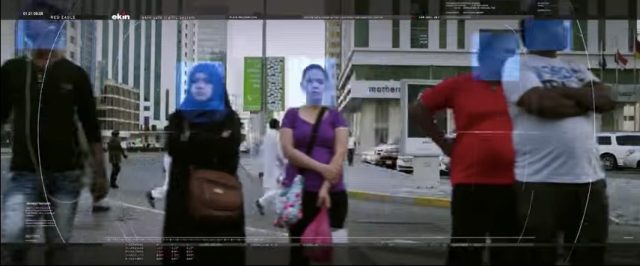
Triple threat: The all-in-one LPR, speedometer, and facial recognition scanner

Tech currently being tested in Europe and the Middle East could come to US.

(credit: Ekin Technology)

Call it the next generation of light bars. Ekin Technology, a Turkish law enforcement technology company, was recently granted an American patent for what just might be the surveillance trifecta: a light bar with an integrated license plate reader (LPR), speedometer, and facial recognition capability.

If the "Ekin Patrol" catches on in the United States, it will facilitate a notable acceleration in the advancement of spy tech. While speedometers are relatively old and LPRs are increasingly catching on, facial recognition technology is not yet widespread in America. Agencies ranging from the FBI to the California attorney general's office have expressed their interest in the technology.

"The facial recognition equivalent of license plate reader scanning has always been a civil liberties nightmare," Jay Stanley, an analyst at the American Civil Liberties Union, told Ars. "We’ve definitely seen baby steps in that direction, but this technology, if widely deployed, would mean it’s arrived."

Read 13 remaining paragraphs | Comments