Why Star Trek’s Prime Directive could never be enforced

We asked lawyers to explain how the show’s most famous rule would really work.

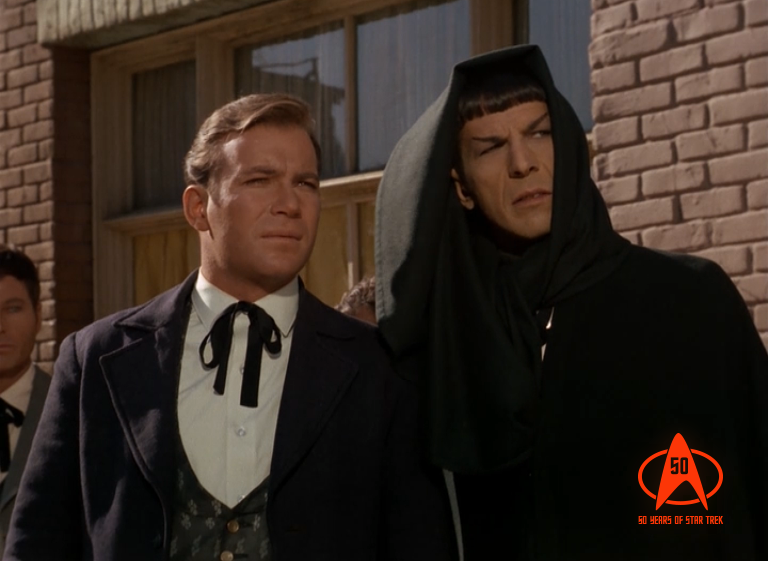
Enlarge / Kirk and Spock wear nifty outfits in order to contemplate the concept of the Prime Directive, which was first introduced in the episode "Return of the Archons." (credit: Paramount)

Asking lawyers about Star Trek is a bit like asking bike mechanics what their favorite beer is. Even if it’s not their area of professional expertise, they have lots of clear, well thought-out opinions on the subject. One day last month, I put out a quick call for Trek-minded attorneys, and they flooded in. Within minutes, this actual e-mail message landed in my inbox.

Sir:

I suddenly had five people e-mailing me saying I had to chat with you! I aver that I am a lawyer who defines himself first and foremost as a Starfleet officer. May I help?

CWW
Christian W. Waugh
Waugh Law, P.A.

Sent from my Starfleet Communicator

I should add that this guy goes by the handle @AdmiralWaugh on Twitter. I knew I had hit on something great.

As a Trek fan—I'm a child of the 1980s, TNG was my first foray into the universe—and someone who reports frequently about legal issues, I wanted to honor the 50th anniversary of the series with a look at the legal issues at play across Star Trek. Sure, entire books have already been written on this subject, but this was boldly going into terra nullis for yours truly.

Read 21 remaining paragraphs | Comments

Meet Visual Labs, a body camera startup that doesn’t sell body cameras

Dos Palos, Calif. is one of a handful of cities trying out chest-worn Androids.

(video link)

DOS PALOS, Calif.—The streets of this agricultural town in Merced County almost feel like a John Steinbeck novel.

The day Ars was in Dos Palos was hot, bright, and quiet. Walking downtown on a weekday, the only people out looked like high schoolers milling around on their lunch break. Banners on the street proclaimed support for the “Broncos,” the school’s football team. Other signs tried to hype up the annual “Cotton Festival,” named after the primary crop in the area.

Read 26 remaining paragraphs | Comments

Apple could bring home billions in taxes if US passes a tax holiday

Law prof: “For the most part, companies like Apple don’t need to repatriate money.”

Enlarge (credit: frankieleon)

In an interview with Irish public broadcaster RTÉ, Apple CEO Tim Cook said Thursday that the company planned on bringing billions of dollars held overseas back to the United States to be subject to American taxes.

"We provisioned several billion dollars for the US for payment as soon as we repatriate it, and right now I would forecast that repatriation to occur next year," Cook said.

The interview came two days after the European Commission ordered Ireland to collect €13 billion (£11.1 billion/$14.5 billion) in back taxes from Apple, after the company benefitted from years of a sweetheart deal and dubious, but legal, tax shenanigans.

Read 11 remaining paragraphs | Comments

Chicago official gets 10 years for role in dirty red light camera deal

John Bills will also have to pay $2 million in restitution.

Enlarge / A Redflex red light camera at the intersection of Sylvan and Coffee in Modesto, California as seen in 2013. (credit: Cyrus Farivar)

A former Chicago transportation official has been sentenced to a decade in prison. He was found guilty in January on 20 counts of mail and wire fraud, bribery, extortion, and many other charges stemming from a corrupt contract involving Redflex, a major red light camera company. During the Monday hearing, US District Judge Virginia M. Kendall also ordered John Bills to pay over $2 million in restitution.

According to the Chicago Tribune, "Bills’ voice broke with emotion as he acknowledged ‘ethical and moral’ mistakes, but he denied masterminding the massive bribery scheme in exchange for growing the city’s controversial network of red light cameras into the largest in the nation."

As Ars has reported previously, Bills, who was the managing deputy commissioner at the Department of Transportation, helped steer a lucrative city contract to Redflex. After Bills urged his colleagues to approve the deal, the city hired the embattled Australian firm to provide automated enforcement cameras, known formally as its Digital Automated Red Light Enforcement Program (DARLEP), from October 2003 until February 2013.

Read 4 remaining paragraphs | Comments

Woman shoots drone: “It hovered for a second and I blasted it to smithereens.”

Woman used a .410 shotgun against trespassing aircraft thought to be paparazzi.

Enlarge / Jennifer Youngman, 65, used a .410 gauge shotgun like this to take out a drone. (credit: Big Swede Guy)

With a single shotgun blast, a 65-year-old woman in rural northern Virginia recently shot down a drone flying over her property.

The woman, Jennifer Youngman, has lived in The Plains, Virginia, since 1990. The Fauquier Times first reported the June 2016 incident late last week. It marks the third such shooting that Ars has reported on in the last 15 months—last year, similar drone shootings took place in Kentucky and California.

Youngman told Ars that she had just returned from church one Sunday morning and was cleaning her two shotguns—a .410 and a .20 gauge—on her porch. She had a clear view of the Blue Ridge Mountains and neighbor Robert Duvall’s property (yes, the same Robert Duvall from The Godfather). Youngman had seen two men set up a card table on what she described as a “turnaround place” on a country road adjacent to her house.

Read 13 remaining paragraphs | Comments

On appeal in LA Times defacement case, lawyers say there was no “damage”

“For there to be CFAA Damage, there must be actual harm to a computer system.”

(credit: Cyrus Farivar)

Attorneys representing Matthew Keys have filed their formal appeal to the 9th Circuit. Keys is the California journalist who was convicted of hacking-related crimes in 2015.

As Keys told Ars before he was sentenced, the appeal largely focuses on the argument that the government “constructively amended” the second count that he was charged with: 18 U.S. Code § 1030 (a) (5) (A). That law declares a crime has been committed if someone “knowingly causes the transmission of a program, information, code, or command, and, as a result of such conduct, intentionally causes damage without authorization, to a protected computer.”

During closing arguments at trial, one of Keys’ lawyers, Jay Leiderman, said that Keys’ December 2010 defacement of one Los Angeles Times article lasted only 40 minutes and therefore caused no damage.

Read 7 remaining paragraphs | Comments

FBI’s stingray quickly found suspect after local cops’ device couldn’t

New court filings in US v. Ellis show the lengths that Oakland police, FBI went to.

Enlarge (credit: nereocystis)

OAKLAND, Calif.—According to new government affidavits filed earlier this week, the Oakland Police Department (OPD) used its stingray without a warrant in 2013 for several hours overnight as a way to locate a man accused of being involved in shooting a local police officer. When that effort was unsuccessful, the OPD called in the FBI, which was somehow able to locate the suspect in under an hour, and he surrendered to OPD officers.

That suspect, Purvis Ellis, is the lead defendant in the case of United States v. Ellis et al. The case involves four men who are charged with the January 21, 2013 attempted murder of local police officer Eric Karsseboom in the parking area in front of a Seminary Avenue apartment complex in East Oakland. The men are also charged with running an alleged local gang, centered around Seminary Avenue (known as "SemCity").

While these new filings fill out the timeline a bit more, they also raise new questions in Ellis, which has provided a rare insight into how this surveillance device, also known as a cell-site simulator, is used in practice to find suspects, and the seeming lengths the government is willing to go to keep it quiet. The tool has come under increasing scrutiny by lawmakers and activists in recent years. Since this case began, the Department of Justice, which oversees the FBI, and the State of California now require a warrant when a stingray is used in most circumstances.

Read 30 remaining paragraphs | Comments

“Silicon Valley is hostile to diversity,” says Slack engineering director Leslie Miley

Ars Live #5: How an engineer who’s worked at 7 big-name companies thinks hiring should happen.

Ars Technica Live #5. Filmed by Chris Schodt, edited by Jennifer Hahn. (video link)

Leslie Miley, the director of engineering at Slack, challenged an audience who historically have benefited from white privilege (including yours truly) to extend it to others, like women and minorities.

“Extending is not making room at the table—it’s giving up your place at the table,” he said, speaking at the taping of the fifth episode of Ars Technica Live, held on August 17 at Longitude in downtown Oakland.

Read 17 remaining paragraphs | Comments

Persistent Surveillance Systems has been watching Baltimore for months

Police charity that normally funds sports team trophies instead helped airborne snooping.

(credit: Persistent Surveillance Systems)

A company that sends Cessna aircraft to surveil cities from 25,000 feet up in an effort to fight crime has been watching Baltimore for months now with zero public notification, according to a new report from Bloomberg Businessweek.

The firm, Persistent Surveillance Systems (PSS), has been actively trying to get new contracts with large cities nationwide. When Ars profiled the company in 2014, company CEO Ross McNutt said PSS was trying to work with Chicago after having controversially flown for nine days over Compton, California—adjacent to Los Angeles—in 2012.

PSS has evidently now succeeded in Baltimore. As Businessweek reported, the Baltimore project was funded by two Texan philanthropists, John and Laura Arnold, who said that if the company could find a city to partner with, they would fund it.

Read 6 remaining paragraphs | Comments

Univision buys Gawker Media for $135 million

Gawker still has an outstanding judgment of $140M from Hulk Hogan libel case.

(credit: Scott Beale / Laughing Squid)

Multiple media outlets reported Tuesday that Gawker Media, the embattled online media company that has been the target of multiple lawsuits, announced that it had been acquired by Univision for $135 million. Univision beat out a lower bid by Ziff Davis.

The deal must formally be approved by the federal judge overseeing Gawker’s bankruptcy case.

Univision, which owns the largest Spanish-language television network in the United States, has recently been expanding its online holdings. Earlier this year it bought out Disney’s stake in the Fusion network and website. Univision also expanded investments in The Onion, a humor site, and The Root, a site that focuses on African-American news.

Read 4 remaining paragraphs | Comments