Getting babies to stop crying and not die may have made humans smarter

Savvy parents and big-headed infants created evolutionary feedback loop, scientists say.

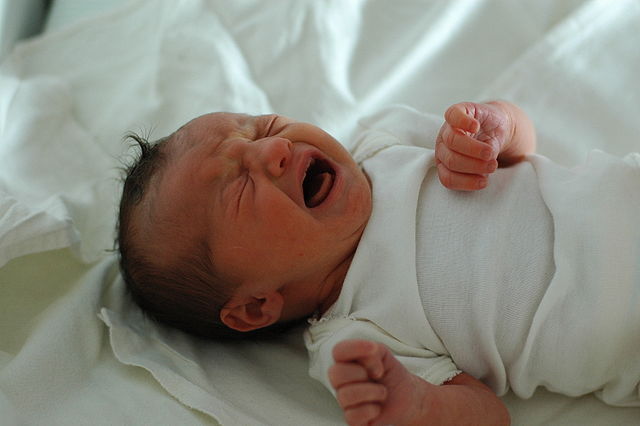
(credit: Melimama)

With sleepless nights and puzzling crying spells, caring for a newborn may seem like a mind numbing endeavor. But the mental abilities needed to keep a helpless, fussy infant alive may actually be the source of our smarts.

Humans’ extraordinary intellectual abilities may have arisen, in part, in an evolutionary feedback loop involving the care of helpless infants, researchers hypothesize in a study published in the Proceedings of the National Academy of Sciences. In the loop, big-headed babies are born relatively early in their development to ensure that they fit through the human vaginal canal. The underdeveloped newborns then rely heavily on the savviness of their parents for survival. Through generations, this selects for brainy parents, which pushes kids to have ever fatter noggins and, thus, earlier births.

“Human infants are born far more immature than the infants of other species,” study author Celeste Kidd, a brain and cognitive science researcher at the University of Rochester, said. “For example, giraffe calves are able to stand-up, walk around, and even flee from predators within hours of their births. By comparison, human infants cannot even support their own heads.”

Read 5 remaining paragraphs | Comments
Scientists find cure for type 2 diabetes in rodents, don’t know how it works

Despite unexplained mechanism, the new treatment will be easy to try in humans.

The cure for type 2 diabetes may be all in your head, a new study in rats and mice suggests.

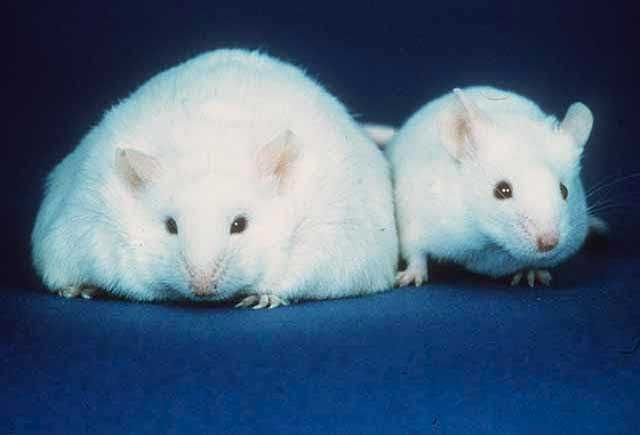
With a single shot to the brain, researchers can rid rodents of all symptoms of the disease for months. The injection, a relatively low dose of a tissue growth factor protein called fibroblast growth factor 1 (FGF1), appears to reset powerful neural networks that can control the amount of sugar in the blood.

So far, it’s not completely clear how exactly FGF1 does that, researchers report in Nature Medicine. Early experiments found that FGF1 didn’t appear to lower blood sugar levels in some of the most obvious ways, such as curbing the rodents’ appetite and spurring sustained weight loss. Nevertheless, because FGF1 is naturally present in human brains, as well as those of rodents, researchers are hopeful that the lucky shot may translate into a useful treatment.

Read 9 remaining paragraphs | Comments

Antibiotics’ side-effects include immune disease and fewer brain cells

Killing gut microbes that keep immune system in line may have far reaching effects.

(credit: Val Altounian / Science Translational Medicine (2016)])

In some situations, antibiotics are lifesavers. In others, however, they do more harm than good. For instance, when antibiotics are used too much or for the wrong illnesses, the drugs only end up killing helpful microbes and spawning drug-resistant superbugs. To figure out the proper times to use antibiotics, doctors need to carefully weigh the risks and benefits of each situation. But, sadly, that calculation is extremely tricky—if not impossible—because scientists still aren’t sure what all of the risks are.

With two new studies, researchers added to the tally. In general, both studies found that when antibiotics kill off microbes in the gut, the immune system gets thrown out of balance and can cause unexpected health problems. In one of the studies, certain types of antibiotics appeared to spur an inflammatory condition in humans that can sabotage life-saving transplants. In the second study, a long course of antibiotics seemed to stymy the birth of brain cells in adult mice, which led to memory problems.

While the studies focus on disparate treatment situations, the studies both serve to highlight the unexpected risks of blasting the body’s complex microbial communities—and how careful doctors should be when using weapons of mass microbial destruction, such as antibiotics.

Read 10 remaining paragraphs | Comments

Vermont on the cusp of enacting the country’s first anti-Shkreli law

Several other states also have legislation aimed at price gouging on medication.

(credit: CSPAN)

In a matter of weeks, Vermont could be the first state to require drug makers to justify steep price increases for medications.

The bill that would set that requirement has already passed through both houses of the state’s legislature and now only requires the final sign off from Governor Peter Shumlin, who the AP reports is likely to sign the bill. Shumlin is expected to decide on whether to sign by early next month.

The bill was inspired by the recent rage-inducing trend among pharmaceutical companies to dramatically up the price of drugs without clear reasoning—beside price gouging. The most notable case was that of Martin Shkreli, who as the CEO of Turing Pharmaceuticals decided last fall to increase the price of a decades-old anti-parasitic drug from $13.50 a pill to $750 overnight. Shkreli has since stepped down from Turing and currently faces several criminal charges unrelated to drug pricing, but he became a poster-child for the greed of the pharmaceutical industry.

Read 3 remaining paragraphs | Comments

Giant pandas may be nearing extinction because of messed up microbiomes

Sexy times and pregnancy are difficult when you have gastrointestinal distress.

(credit: Adrien Sifre)

For giant pandas, there’s nothing like having friends in low places. The bears rely on chummy relations with their gut microbes to extract nutrients from their vegetarian diet, but an annual switch from noshing bamboo stalks to leaves can plunge the pandas' gut microbes into disarray. According to a study of panda poop, this switch potentially causes one grizzly problem.

The authors of the study suggest that the microbial mayhem explains why the bears occasionally poop out their intestinal mucosal linings amid that seasonal shift. The slimy dumps likely expunge broken microbiomes, clearing the way for the bears to forge fresh microbial alliances. Based on the numbers of gooey poops in captive bears, however, that yearly bowel reboot often doesn’t go well, leaving many pandas suffering from chronic inflammation, intestinal ulcers, and unpleasant gastrointestinal symptoms. And those gut troubles often coincide with mating season and pregnancies, the researchers report in Frontiers in Microbiology.

If the hypotheses hold up in further studies, the findings may help explain why pandas are notoriously bad breeders—it’s likely hard to get in the mood if you’re battling stomach cramps, bloating, and mucus poops. Currently, there are only a couple thousand giant pandas in the wild.

Read 10 remaining paragraphs | Comments

In 2050, superbugs may kill 1 person every 3 seconds, report warns

UK report outlines global action plan to avert disastrous post-antibiotics world.

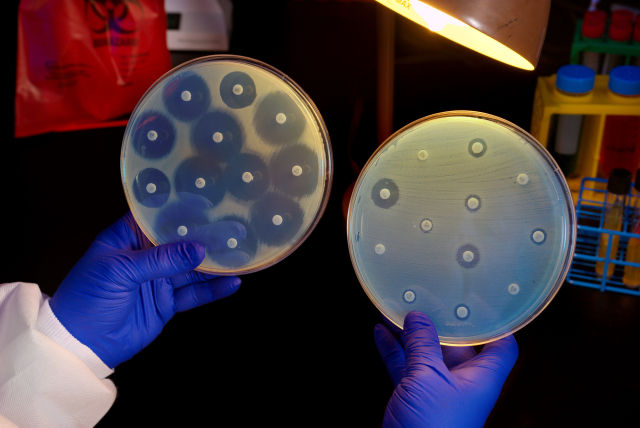
CDC staff show two plates growing bacteria in the presence of discs containing various antibiotics. The isolate on the left plate is susceptible to the antibiotics on the discs and is therefore unable to grow around the discs. The one on the right has a CRE that is resistant to all of the antibiotics tested and is able to grow near the disks. (credit: CDC)

Without new drugs and drastic changes to the way we use antimicrobials, the future may have a lot in common with the dark ages, warns a new report commissioned by the UK government and released Thursday.

In an ominous description, the report suggests that by 2050, antimicrobial-resistant infections could sop up $100 trillion from the global economy while killing off 10 million people per year—about a death every three seconds. In addition, common procedures, such as gut surgeries, C sections, hip replacements, and therapies that suppress the immune system, including cancer chemotherapies, may be ditched for fear of sparking resistant, life-threatening infections. Thus, childbirth could once again be widely considered a deadly endeavor, joint injuries could go untreated, and curable diseases could revert to incurable.

This grim view stems from modeled scenarios carried out by two consulting groups, auditors KPMG and Rand Europe, for the report. But those numbers are likely an underestimate, the authors note. The report only accounts for a handful of types of antimicrobial infections, and it is limited by poor infection records. Currently, experts estimate that drug-resistant microbes cause 700,000 deaths per year globally, but that number may also be an underestimate. The new report also didn’t account for all indirect healthcare costs.

Read 5 remaining paragraphs | Comments
Theranos corrects tens of thousands of blood tests, voids 2 years of Edison results

As regulators decide on sanctions, Theranos faces criminal charges, COO departs.

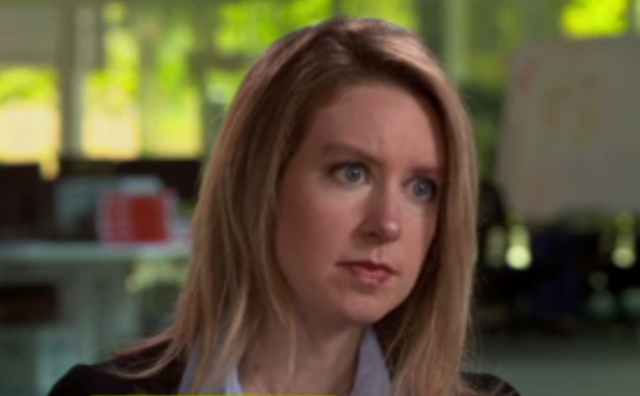
Theranos CEO and founder, Elizabeth Holmes (credit: NBC Today)

After federal regulators threatened to revoke Theranos’ license to perform blood tests and ban its CEO and COO from the industry altogether, the company reportedly issued tens of thousands of corrections to blood tests it performed. Theranos has also voided all of the 2014 and 2015 results reported from its once-famed Edison blood testing machines, according to the Wall Street Journal.

The Edison machines, which were said to be able to perform more than 200 medical tests with just a few drops of blood, were key to the young biotech company earning a whopping $9 billion valuation in 2014. Yet, in the wake of reports that the machines were inaccurate and unreliable and that employees were unqualified and failing to follow proper protocols and fix problems, the company acknowledged that it had completely stopped using the devices in June 2015. Instead, the company performed its blood tests—890,000 blood tests a year, according to records—on standard lab equipment.

The corrections and voided results mean that clinics and doctor’s offices are receiving stacks of notifications. One such doctor’s office, a family practitioner in a suburb of Phoenix, told the WSJ that it received 20 corrected reports a few weeks ago. One of those corrected reports was for a patient who the doctor had sent straight to the emergency room upon receiving her Theranos results in late 2014. The corrected report shows the patient had normal results.

Read 4 remaining paragraphs | Comments

Think you’re an ethical person? You may just have a selective memory

To reconcile our moral values and cheating ways, our minds actively muddle memories.

(credit: vozach1234)

Proud and happy moments in our lives become cherished memories, kept in relatively crisp condition in our noggins for the occasional uplifting retrieval. But memories of not so pleasant events, such as a moment of weakness when we cheated on a math test or snuck a candy bar from a store, may get roughed up in our brains, perhaps to the point where we can’t clearly recall them anymore, according to a new study.

Collecting data from a series of nine experiments involving 2,109 participants, researchers suggest that our brains actively blur and junk memories of our own misdeeds to help avoid dissonance between our actions and moral values. This mental hazing, the researchers hypothesize in the Proceedings of the National Academy of Sciences, helps us maintain a positive moral self-image and sidestep distress.

“Because morality is such a fundamental part of human existence, people have a strong incentive to view themselves and be viewed by others as moral individuals,” the authors write. But with lying, cheating, and stealing being common occurrences, the use of unethical amnesia "can explain why ordinary, good people repeatedly engage in unethical behavior and also how they distance themselves from such behavior over time.”

Read 10 remaining paragraphs | Comments

For treatment-resistant depression, magic mushroom drug holds promise

In 12-person pilot study to test safety, psilocybin reduced depression in eight.

(credit: Alan Rockefeller)

Psilocybin, the psychedelic compound in ‘magic’ mushrooms, may be an effective way to treat depression in patients that have seen no benefit from other, standard forms of treatment, early results suggest.

In a pilot study involving just 12 people with treatment-resistant depression, two doses of the mushroom compound cleared symptoms in eight participants—67 percent—after one week. After three months and no other doses, seven participants still reported reduced depressive symptoms, including five—42 percent—who reported complete remission of their depression.

But the finding, published Tuesday in the Lancet Psychiatry, is just a first step to assess safety of using the hallucinogenic drug. With such a small study, no controls, and non-randomized participants, it is not possible to determine if the promising efficacy results will stand.

Read 8 remaining paragraphs | Comments

Vaccine against stress and anxiety made using dead gut microbes of yore

Shots of bacteria kept mice calm and collected in stressful conditions.

(credit: David K)

Cleanliness may be next to godliness. But, it turns out, being a deity is pretty nerve-wracking.

Growing up in meticulously sanitized conditions, devoid of the “old friends” germs and parasites that have coevolved with us and help train our immune systems, leaves us more prone to a host of health issues. These include inflammatory bowel disease, allergies, asthma, and autoimmune disorders, scientists have found. Prevalence of these health issues has soared in the squeaky-clean developed world. But that’s not all. This well-established hypothesis—the hygiene hypothesis—may also explain rises in certain mental health issues, according to a growing number of studies.

The same inflammation and haywire immune responses that may be explained by the hygiene hypothesis have also been linked to depression, anxiety, and stress disorders, such as post-traumatic stress disorder (PTSD). Studies have found that high levels of inflammation increase the risk of developing depression, for instance, and PTSD is associated with pro-inflammatory signals and reduced regulatory T cells—cells that quell immune responses, including inflammation.

Read 10 remaining paragraphs | Comments