Tarantula venom points scientists to a new way to cause—and maybe cure—pain

Two toxins from venom target an ion channel that had not been previously linked to pain.

(credit: Lucas Foglia)

Generally, spidey senses hint at brewing trouble. But if those spidey senses come from a certain African species of tarantula, they may hint at a whole new way of brewing pain.

Two venom toxins from the tarantula species Heteroscodra maculate cause piercing pain sensations by targeting an ion channel in neurons not previously linked to pain, researchers report in Nature. In further experiments in mice, researchers found that these specific ion channels may underlie chronic abdominal pain in patients suffering from irritable bowel syndrome.

The finding—if validated in human studies—may help scientists unravel the complexity of pain perceptions and point to new ways to block the debilitating sensation. More specifically, the data suggests that finding a drug that could block this ion channel “represents a novel therapeutic strategy for diminishing the chronic pain in IBS and perhaps other pain conditions associated with mechanical sensitization, including migraine headache,” the authors conclude.

Read 9 remaining paragraphs | Comments
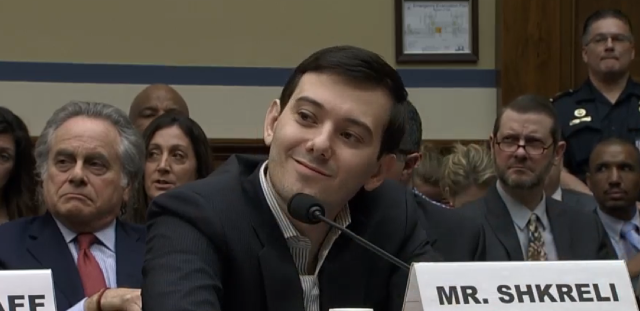
Shkreli smirks through eighth “not guilty” as lawyer successfully delays trial

Unbothered by new criminal charge, the former CEO periscopes his way out of court.

Martin Shkreli, the infamous ex-pharmaceutical executive known for hiking the price of a life-saving drug, pled not guilty Monday to yet another criminal charge. The charge stems from an alleged Ponzi-like scheme in which he swindled his former pharmaceutical company, Retrophin, out of millions to cover losses of two failing hedge funds he managed.

Specifically, federal prosecutors allege with the new charge that Shkreli and his former counsel, Evan Greebel, conspired to conceal Shkreli’s ownership of some Retrophin shares from the Securities and Exchange Commission. The charge is Shkreli’s eighth and Greebel’s second in connection with the alleged scheme. Both men were first indicted in December and have pleaded not guilty to all of the charges.

In a statement, Shkreli’s current lawyer, Benjamin Brafman, said: “There is nothing in the new indictment that impacts in any way on the flawed theory of the case as applied to Mr. Shkreli.”

Read 3 remaining paragraphs | Comments
FDA’s plan to cut excess salt draws sharp criticism, unlikely supporters

New voluntary federal guideline aims to cut high sodium content from processed food.

(credit: Leonid Mamchenkov)

On Wednesday, the Food and Drug Administration released a draft voluntary guidance for the food industry aimed at phasing out excess salt in processed and commercially prepared food over a span of 10 years. The move, which health experts say could save thousands of lives, has drawn mixed reactions from the food industry.

Leading food companies, such as Mars, Nestlé, PepsiCo, and Unilever, joined the American Heart Association, Academy of Nutrition and Dietetics, American Public Health Association, and the Centers for Disease Control and Prevention in support of the FDA’s efforts to reduce sodium intake, while the Grocery Manufacturer’s Association (GMA) and the Salt Institute, a trade association, balked at the new guidance.

The GMA hinted at future squabbles with the FDA over nutrition data. In a statement, the association wrote that it would “look forward to working with the agency to ensure the best and most recent science is taken into account when determining sodium intake levels for optimal health for all Americans.”

Read 5 remaining paragraphs | Comments

Forbes downgrades Theranos from $9B to $800M, says CEO Holmes worth “nothing”

Firing back, Theranos claims it has confidential information that boosts its value.

Theranos CEO and founder Elizabeth Holmes. (credit: Max Morse for TechCrunch)

With bunk blood tests and medical equipment, possible federal sanctions, a criminal probe, voided patient reports, and possible class action lawsuits, Theranos has taken quite the hit.

On Wednesday, Forbes put dollar values to that hit. The business magazine reported that the company’s valuation—based on “a dozen venture capitalists, analysts and industry experts”—has been downgraded from its $9 billion estimate 2014 to just $800 million now. And because Forbes’ valuation of Theranos CEO and founder, Elizabeth Holmes, was based solely on her 50 percent stake in the company, their estimate of her net worth dropped from $4.5 billion to “nothing.”

In 2015, Forbes ranked Holmes the number one self-made women in America.

Read 3 remaining paragraphs | Comments

Tumor-killing virus nearly doubles survival time of brain cancer patients

In early clinical trial, one-two punch of virus and drugs was safe and effective.

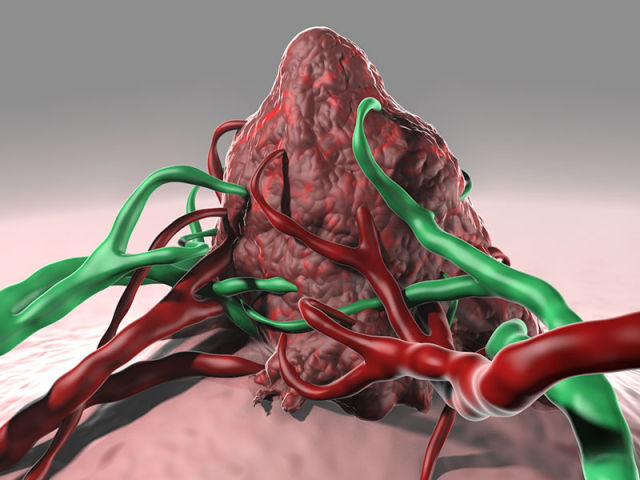
An artist's rendering of a brain tumor that can be killed off with the help of a virus. (credit: C. Bickel / Science Translational Medicine (2016))

To defeat the deadliest of cancers, it's time to unleash the viruses.

In a small clinical trial with brain cancer patients, a tumor-seeking virus successfully invaded cancer cells and smuggled in molecular detonators, allowing doctors to selectively blast the deadly growths with a toxic drug. In the trial’s 45 participants, who were fighting the most aggressive forms of brain cancer known, the virus-drug combo nearly doubled their average survival time while showing no dangerous side effects. The finding, published Wednesday in the journal Science Translational Medicine, demonstrates the utility of such viruses and also provides a green light for the treatment strategy to move on to more trials.

These brain cancers usually have few treatment options and lead to “dismal clinical outcomes,” the authors wrote. However, this new viral therapy has “the potential to fill this medical need,” they concluded.

Read 7 remaining paragraphs | Comments

Study that found cell phones cause cancer in rats is riddled with red flags

Researchers strangely release partial results without formal review, cause alarm.

(credit: kaboompics)

Late last week, headlines blared that a new, $25 million, years-long government study had finally found a clear connection between cellphone radiation and tumors in rats—striking fear in the hearts of gadget lovers worldwide. The finding—if true—would suggest we’re headed for an upsetting uptick in cancer incidence and death. Mobile phones, after all, are ubiquitous and many among us have a near religious devotion to them if not an unhealthy codependence.

Luckily for us, the study does not provide that clear link.

The study, which was not properly peer reviewed—despite what some outlets have reported—is chock full of red flags: small sample sizes, partially reported results, control oddities, statistical stretches, and a slim conclusion. In short: “there is nothing in this report that can be regarded to be statistically significant,” Donald Berry, a biostatistics professor at the University of Texas MD Anderson Cancer Center, told Ars. “The authors should have used the “black box warning.”

Read 12 remaining paragraphs | Comments

Brain infections may spark Alzheimer’s, new study suggests

While still speculative, new hypothesis offers some sensible explanations to the disease.

Strands of beta amyloid fibrils form around yeast in culture media. (credit: Credit: D.K.V. Kumar et al. / Science Translational Medicine (2016)])

The protein globs that jam brain circuits in people with Alzheimer’s disease may not result from a sloppy surplus, but rather a bacterial battle, a new study suggests.

Previously, researchers assumed that the protein—beta amyloid—was just a junk molecule that piled up. And efforts to cure Alzheimer’s focused on clearing out clogs and banishing beta amyloid from the brain. But a new study conducted using mice and worms suggests that the protein clumps are actually microbial booby traps, sturdy proteinaceous snares intended to confine invading microbes and protect the brain.

The findings, published in the journal Science Translational Medicine, suggest that Alzheimer’s may result from the brain’s effort to fight off infections. While that hypothesis is controversial and highly speculative at this point, it could dramatically alter the way researchers and doctors work to treat and prevent the degenerative disease.

Read 6 remaining paragraphs | Comments

Experts call Olympics “unethical,” want them moved/postponed—CDC disagrees

Amid Zika crisis in Brazil, the Olympics are not “too big to fail,” experts write.

With Brazil already swarming with Zika-loaded mosquitoes, hosting 500,000 foreign athletes and spectators for the 2016 Olympic games there in August poses unnecessary health risks and is downright “unethical,” according to an international group of 150 health experts.

In an open letter to Margaret Chan, the Director-General of the World Health Organization, the group strongly urged that the games be moved or postponed.

The health experts appealed to WHO, a specialized agency within the United Nations, because it has a well-established partnership with the International Olympic Committee. The partnership, which was affirmed most recently in 2010, is primarily aimed at coordinating the two groups’s efforts to promote healthy lifestyles, such as through physical activity campaigns and making Olympic games tobacco-free.

Read 7 remaining paragraphs | Comments

No, this isn’t the start of the antibiotic apocalypse, just bad reporting

New drug resistant infection is cause for measured concern, but let’s get the facts straight.

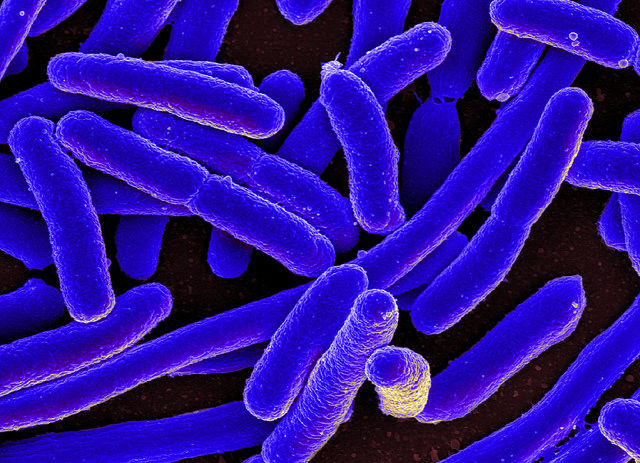
(credit: NIAID)

Over the next day or so, you may see headlines and reports about a “nightmare” “superbug” that has been detected for the first time in the US.

So far, the Washington Post reports:
“The superbug that doctors have been dreading just reached the U.S.”
And the article starts with: “For the first time, researchers have found a person in the United States carrying bacteria resistant to antibiotics of last resort.”

CNN had a similarly alarming, but distinct headline:
“'Nightmare' drug-resistant bacteria CRE found in U.S. woman”

Read 18 remaining paragraphs | Comments

Patients pile lawsuits on Theranos as Walgreen’s laments not vetting tests

Two suits seeking class-action status filed by patients who say they got scammed.

Theranos CEO and founder Elizabeth Holmes. (credit: Max Morse for TechCrunch)

Amid the looming possibility of federal sanctions and criminal charges, Theranos is now facing two lawsuits by patients who say they were duped into using the company’s blood testing services. Apparently, Walgreens also feels hoodwinked.

The pharmacy chain, which signed a blood testing deal with Theranos back in 2013, failed to vet claims about the company’s proprietary testing devices prior to getting into bed with the unproven startup, according to a report in The Wall Street Journal.

Walgreens made moves to try to get out of the deal after quality and accuracy problems at Theranos came to light last October. But, fearing breach-of-contract litigation that could open the door to Theranos getting billions in damages, Walgreens has yet to nix the partnership. They have, however, shelved plans to expand Theranos testing in Walgreens pharmacies. Currently, Theranos runs 45 “wellness centers” in Arizona and California, including 40 in Walgreens stores.

Read 5 remaining paragraphs | Comments