Probiotics on the brain: One gut microbe reverses autism-like symptoms in mice

Proving strength of the gut-brain axis, bacteria-laced drinks improve mouse behavior.

When making up your mind, going with your gut can be a safe bet. And according to a new study, leaving your gut in charge all the time might not be a bad idea—it may actually help dodge neurodevelopmental disorders.

While microbial mind control might sound far-fetched, one common gut microbe can singlehandedly reverse autism-like social behaviors in mice, researchers report in the journal Cell. Though the study is not yet applicable to human health, it highlights the strength of connections that can build between the gut and the brain—known as the gut-brain axis.

If the findings do hold up in more animal studies and human trials, it could mean that treatments as simple and unfussy as probiotic foods could relieve some symptoms of neurodevelopmental disorders, including autism spectrum disorder, the authors conclude.

Read 9 remaining paragraphs | Comments

Here’s what might be happening to your feet when you run in shoes

Study tracking runners’ steps found sneakers make certain muscles work harder.

(credit: Pauleon Tan)

For decades, avid runners and casual joggers have had their ups and downs with the running shoe. Some argue that the shoes’ spongy soles help us bound comfortably across our unforgiving urban landscapes covered in concrete and asphalt. Others, however, think the shoes simply run off with our body’s natural spring-like steps. During the last 40 years, skeptics are quick to point out that the rate of running injuries hasn’t stumbled.

Now, with a new study on the mechanics of running, researchers suggest that running shoes actually do a little of both—cushioning and altering our innate bounce. It just doesn't happen the way we may have expected, the researchers report in the Journal of the Royal Society Interface.

To track down the impact of running shoes, researchers at the University of Queensland outfitted 16 healthy volunteers with intramuscular electrodes that recorded the muscle activity in their feet. Then they had those wired volunteers run—both barefoot and shod—on a treadmill rigged with force sensors. The researchers paid particular attention to the muscles in their longitudinal arches, which have a natural spring-like action, bending as the foot lands and recoiling on the lift.

Read 7 remaining paragraphs | Comments

Coffee no longer comes with cancer warning—it may actually prevent it

World Health Organization reviews the data and reverses an old warning.

(credit: trophygeek)

Despite brimming data showing that drinking coffee can be good for your health, there has been a lingering black stain on the popular drink’s reputation—the 1991 assessment by the World Health Organization that classified coffee as a possible carcinogen. Today, that stain got scrubbed away.

In a Wednesday announcement and an accompanying article in the journal The Lancet Oncology, the WHO reversed that 1991 classification, striking coffee from the Group 2b list of foods and beverages that are “possibly carcinogenic to humans.” That initial classification was based on “limited evidence of an association with cancer of the urinary bladder from case-control studies, and inadequate evidence of carcinogenicity in experimental animals.” According to 23 health experts who met in May to review more than 1,000 new and old human and animal studies on coffee, that limited evidence didn’t stand up. The experts concluded that coffee is a Group 3 agent, which is “not classifiable as to its carcinogenicity to humans.”

Moreover, amid their review, the experts also noted that several studies provided evidence that coffee drinking may reduce the risk of cancers of the liver and uterine endometrium. For more than 20 other types of cancers, the effect of coffee drinking was inconclusive, the experts found.

Read 9 remaining paragraphs | Comments

AMA takes on NRA: Doctors prep for political battle over gun violence crisis

US gun violence “unrivaled” in developed world and requires research, doctors say.

(credit: Michael Saechang)

Following Sunday’s tragic mass shooting in Orlando—the deadliest in US history—the American Medical Association has officially declared gun violence in the US an unrivaled public health crisis. With this declaration, the AMA will now actively lobby Congress to overturn legislation that has kept the Centers of Disease Control and Prevention from researching gun violence for the past 20 years—legislation backed largely by the National Rifle Association.

In a statement, AMA President Steven J. Stack, M.D, said:

"With approximately 30,000 men, women and children dying each year at the barrel of a gun in elementary schools, movie theaters, workplaces, houses of worship and on live television, the United States faces a public health crisis of gun violence. Even as America faces a crisis unrivaled in any other developed country, the Congress prohibits the CDC from conducting the very research that would help us understand the problems associated with gun violence and determine how to reduce the high rate of firearm-related deaths and injuries. An epidemiological analysis of gun violence is vital so physicians and other health providers, law enforcement, and society at large may be able to prevent injury, death and other harms to society resulting from firearms."

The AMA now joins other medical organizations, including the American College of Physicians and American College of Surgeons, in declaring gun violence a public health crisis and pushing for renewed research. However, the declaration from the AMA may hold the most clout as the powerful organization has a massive membership and is a top spender when it comes to lobbying. Between 1998 and 2011, the AMA came up as the second highest spender on lobbying in the country, shelling out around $263 million.

Read 6 remaining paragraphs | Comments

Walgreens ditches Theranos amid voided tests and possible federal sanctions

Nation’s largest drug store chain says the blood tests are not good for customers.

Theranos CEO and founder Elizabeth Holmes. (credit: Max Morse for TechCrunch)

After months of visible discomfort, Walgreens Co. officially ended their partnership with blood testing company, Theranos.

In a news release issued late Sunday, Walgreens announced the company had informed Theranos that it was calling off its nearly three-year-long relationship. Walgreens will close all 40 Theranos Wellness Centers in its drug stores “effective immediately.”  The announcement comes after Theranos voided or corrected tens of thousands of tests and faces possible federal sanctions for repeated failures at one of its labs.

“In light of the voiding of a number of test results, and as the Centers for Medicare and Medicaid Services (CMS) has rejected Theranos’ plan of correction and considers sanctions, we have carefully considered our relationship with Theranos and believe it is in our customers’ best interests to terminate our partnership,” Brad Fluegel, Walgreens Senior Vice President, said in the news release.

Read 6 remaining paragraphs | Comments

Risky stem cell treatment reverses MS in 70% of patients in small study

Success is promising, but few may qualify for it as side effects can be fatal.

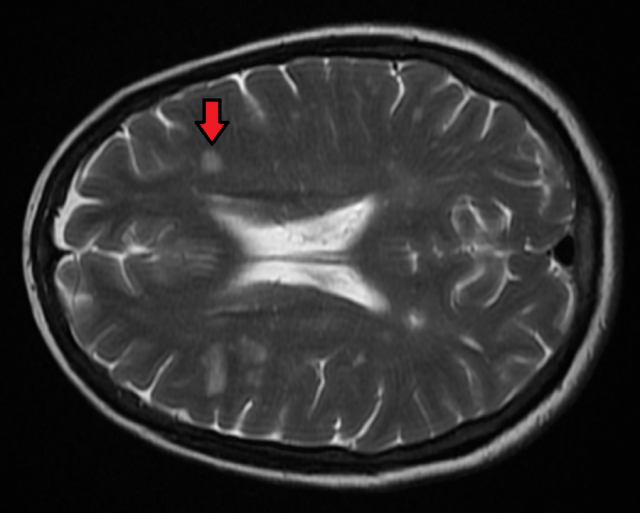
MS brain lesion as seen on an MRI. (credit: James Heilman, MD)

By obliterating the broken immune systems of patients with severe forms of multiple sclerosis, then sowing fresh, defect-free systems with transplanted stem cells, researchers can thwart the degenerative autoimmune disease—but it comes at a price.

In a small phase II trial of 24 MS patients, the treatment halted or reversed the disease in 70 percent of patients for three years after the transplant. Eight patients saw that improvement last for seven and a half years, researchers report in the Lancet. This means that some of those patients went from being wheelchair-bound to walking and being active again. But to reach that success, many suffered through severe side effects, such as life threatening infections and organ damage from toxicity brought on by the aggressive chemotherapy required to annihilate the body’s immune system. One patient died from complications of the treatment, which represents a four percent fatality rate.

Moreover, while the risks may be worthwhile to some patients with rapidly progressing forms of MS—a small percentage of MS patients—the researchers also caution that the trial was small and did not include a control group.

Read 7 remaining paragraphs | Comments

Drug companies continue to raise prices despite public backlash

Pfizer just raised drug prices for a second time this year—and it’s not alone.

(credit: Gatis Gribusts)

Last week, as Vermont Governor Peter Shumlin signed off on the first state law requiring drug companies to justify steep price hikes, Pfizer was in the process of raising the list prices of its drugs by an average of 8.8 percent, according to a Pfizer spokesperson. The price boost follows a similar one in January, which involved raising the list price of more than 100 drugs, some by as much as 20 percent.

Pfizer isn’t alone in this trend. Drug companies including AbbVie, Eli Lilly, Merck, and Bristol-Myers Squibb also continue to steadily raise prices across the board—although, it's happening at “modestly lower” rates than those seen in 2015, as FiercePharma reports.

The march towards ever higher drug costs continues despite strong public outcry. The firestorm has mostly centered on figures such as the executives of Valeant Pharmaceuticals and Martin Shkreli. The former CEO of Turing Pharmaceuticals became notorious for raising the price of a life-saving anti-parasitic drug by more than 5,000 percent as well a running an alleged Ponzi-like scheme. But soaring price increases is an industry-wide phenomenon.

Read 3 remaining paragraphs | Comments

In rodents fed high-fat diets, gut microbes boost hunger, trigger obesity

Bacteria-made acetate signals vagus nerve, sparking hunger hormone, insulin resistance.

(credit: Joanna Servaes)

After several hints that gut microbes may be key players in the obesity epidemic, a new study provides a mechanistic explanation of how the intestinal inhabitants directly induce hunger, insulin resistance, and ultimately obesity in rodents.

After mice and rats were fed a high-fat diet, their gut microbes produced more acetate, a short-chain fatty acid made during bacterial fermentation. That acetate spread throughout the rodents’ bodies and into their brains where it activated the parasympathetic nervous system. This system, largely involving the vagus nerve, controls the body’s unconscious actions, such as digestion, excretion, and sexual arousal. By activating the parasympathetic nervous system, the microbe-made acetate spurred the rodents to produce more insulin, a hormone made by pancreatic β-cells that promotes calorie storage, as well as ghrelin, a hormone involved in hunger. The result was rodents that ate more developed insulin resistance—a precursor to diabetes—and became obese, the researchers report in Nature.

“This generates a positive feedback loop,” the authors conclude—which makes sense for foraging animals, they add. If a foraging animal stumbles upon a calorie-dense food in the wild, it would be advantageous if their gut signaled their brain to keep eating and store some energy, stocking up to survive leaner times. “However, in the setting of chronic exposure to calorically dense, abundant food, this gut microbiota–brain–β-cell axis promotes obesity and its related sequelae of hyperlipidaemia [high levels of lipids in the blood], fatty liver disease and insulin resistance,” the authors write.

Read 7 remaining paragraphs | Comments

A single strain of the plague may be behind 7 centuries of deadly outbreaks

New DNA analysis suggests that one strain of plague can be tracked from 13th century on.

The mass plague grave site in Ellwangen, Germany, which was dated to between 1486 and 1627. (credit: Rainer Weiss)

The fateful arrival of plague bacteria in the Mediterranean during the mid 14th century sparked one of the deadliest pandemics of all of human history, dubbed the Black Death. The pandemic killed up to 50 percent of the European population as it rapidly spread. In the following four centuries, plague outbreaks continued to flare up in pockets across the continent. And in the late 19th century, the plague took hold in the East, sparking the next historic pandemic in China.

For decades, researchers have tried to retrace the plague’s steps. Some have speculated that multiple strains of the bacteria creeped onto the continent—most likely from Asia—igniting new bouts of disease with sometimes different sets of symptoms. The hypothesis follows with the current state of the plague in China, where there are multiple lineages floating around. But a new study casts doubt on the idea of multiple initial strains.

Fresh genetic sequencing data of plague bacteria from victims in Spain, Germany, and Russia suggest that a single wave of the deadly microbes sparked the Black Death as well as the subsequent outbreaks that flared for centuries in Europe and in the 19th century pandemic in China. This single wave also gave rise to plague strains behind some modern outbreaks. The study is the first to make a genetic link between the Black Death and modern plague, the authors report in Cell Host & Microbe.

Read 9 remaining paragraphs | Comments

Here’s why you might not want to make money decisions after a tough work day

Long hours of critical thinking may drain your brain’s resources for mustering willpower.

(credit: LaurMG. )

After a hard day at the office, where you were focused intently on a challenging project, you may consider a choice on the way home: impulsively splurge on a fancy dinner as a reward for that cerebral slog or save that bit of cash as planned—perhaps putting it toward a relaxing vacation next month. Despite any frugal inclinations, your weary noggin may not be able to rally your normal level of willpower, according to a new study in the Proceedings of the National Academy of Sciences.

In the study involving 52 healthy adults, researchers found that six hours of challenging cognitive tasks fatigued a part of participants' brains involved in higher thinking and willpower—the lateral prefrontal cortex (LPFC)—and increased their impulsiveness. The finding suggests that real-life scenarios, such as having a mentally taxing day at work, may have critical but unappreciated impacts on people’s economic decisions. It also may point to the need for more brain-resting periods throughout a workday.

“The number and duration of work breaks could be adapted to avoid any dramatic LPFC dysfunction,” the authors of the paper conclude. And, they note, if employees have control over their own work breaks, they might instinctively avoid this brain drain, as researchers saw in a control group.

Read 7 remaining paragraphs | Comments