Good health insurance plans won’t spare you from hospital bills

Before Obamacare, out-of-pocket costs were rising 6.5% per year— and probably still are.

(credit: Mark Hillary)

Having health insurance can be a comfort, putting your mind at ease that you’ll be covered if you get sick or injured—until you actually have to use it, that is.

Insured Americans are having to shell out more and more to for healthcare, particularly, hospital visits, researchers report this week in the journal JAMA Internal Medicine. From 2009 and 2013—before the biggest provisions of the Affordable Care Act took effect in 2014—people with individual or employer-sponsored health insurances saw a 37 percent rise in out-of-pockets costs for a hospital stay. Average bills jumped from $738 to $1,013. That’s about a 6.5 percent increase each year. However, overall healthcare spending rose just 2.9 percent each year during that time-frame and premiums—the cost to buy insurance—rose by around 5.1 percent annually.

“Every year, people freak out about how high premiums have gotten and how they continue to grow exponentially, but [out-of-pocket costs are] actually growing even faster,” Emily Adrion, first author of the study and a researcher at the Center for Healthcare Outcomes and Policy at the University of Michigan, told Bloomberg.

Read 4 remaining paragraphs | Comments

Experimental Zika vaccines work in mice, protect with one shot

First published animal studies show two common vaccine strategies could do the trick.

(credit: CDC)

As Zika virus outbreaks continue to rage in South and Central America, lapping at US borders, scientists are making significant strides toward an effective vaccine.

Two types of experimental Zika vaccines, a DNA vaccine and an inactivated virus vaccine, were each able to completely protect mice with one dose, researchers report Tuesday in Nature. The animal data—the first to be published for Zika vaccines—follows news last week that the Food and Drug Administration gave two companies the green light to test another Zika DNA vaccine in humans. The companies, not associated with the researchers behind today’s study, reported that they have done similar animal studies with their vaccine, but they didn’t publish the results.

With today’s animal data, researchers are hopeful about the fate of the vaccines. “The protection was striking,” Dan Barouch, a study coauthor and vaccine researcher at Harvard Medical School, said in a press briefing. “Of course we need to be cautious about extrapolating results from mice into humans,” he noted, but the strength of the findings “certainly raise optimism” that we’re on our way to a safe and effective vaccine.

Read 7 remaining paragraphs | Comments

“Nothing’s gone wrong with Theranos… Consumers love it” says investor

Tim Draper, who gave Elizabeth Holmes first million, defends troubled blood testing co.

Theranos CEO and founder Elizabeth Holmes. (credit: Max Morse for TechCrunch)

In recent months, medical testing company Theranos has been slammed by media reports and federal inspections that say its blood testing devices don’t work. Amid the revelations, the company’s president stepped down, Theranos voided or corrected tens of thousands of blood test results, and Walgreens dumped its arrangement. Theranos now faces hefty federal sanctions, criminal charges, and several lawsuits from ex-customers. It has seen its valuation drop from $9 billion to just $800 million.

Still, “nothing’s gone wrong with Theranos,” according to ground-floor investor, Tim Draper.

In a Thursday interview with Bloomberg, Draper accused competitors and others of unfairly drumming up negative publicity and excessive scrutiny on Theranos and its founder and CEO, Elizabeth Holmes. “Theranos is being attacked by the powers that be in big pharma, in [Holmes’] competitors, in the world of medical insurance, the people in government who are going to be very much affected by a really cheap, really effective, wonderful solution,” he said. Those attacks echo “the way Uber was being attacked by the taxi drivers and Bitcoin was attacked by the banks,” he explained.

Read 5 remaining paragraphs | Comments

Here’s how many calories you may burn standing at work versus sitting, strolling

Evidence of health benefits from standing desks still slim, but walking is always good.

(credit: Marco Arment)

With the rise of standing desks, office workers hope to brush off the health risks linked to prolonged sitting, including obesity, cardiovascular disease, diabetes, and early death. But they might do well to walk them off instead, a new study suggests.

In one of the few studies to carefully count the calories people burn while sitting at a desk, standing, or taking a leisurely stroll, researchers found little difference between being plopped down or upright. Standing for an hour might burn off an extra nine calories or so, about the amount in a single gummy bear. Slow walking, on the other hand, incinerated 2.4 to 2.7-fold more calories than standing or sitting, respectively. If office workers fit in an hour of strolling throughout each day—tallying trips to the bathroom, walks to the printer, or strides on a treadmill desk—they could easily burn through an extra 130 calories. That’s a little more than what previous research suggests could help people keep pounds off, the authors report in the Journal of Physical Activity and Health.

“If you’re looking for weight control or just solely at the energy expenditure, standing isn’t that much more beneficial than sitting,” Seth Creasy, an exercise physiologist at the University of Pittsburgh and lead author of the study, told Ars. Of course, calorie burning isn’t the only reason people might choose a standing desk. Being upright could be beneficial for productivity or posture, Creasy said. However, more research is needed to know if those benefits are real because the studies that have been done so far have come up with mixed or inconclusive results.

Read 11 remaining paragraphs | Comments

For men, the importance of safe sex depends on how hot their partner is

Attractiveness, but not risk of an STI, swayed men’s thinking on condom use.

(credit: Muramasa)

When it comes to men making decisions on condom use for casual sex, there may not be more to it than meets the eye.

In a survey of 51 heterosexual men between the ages of 19 and 61 published in BMJ Open, researchers found that men’s intentions to use a condom during casual sex varied based on the perceived attractiveness of their potential partner. Specifically, the more attractive a woman seemed to each participant, the lower their intention to use a condom during sex—even if the woman seemed to have a relatively higher risk of having a sexually transmitted infection.

Though the study was small, the finding backs up several others that have found that perceived hotness of a potential sex partner is a key determinant in people’s decisions on whether to have sex and have safe sex. And together, the studies suggest that discussions about people’s biases on particularly steamy flings could improve sex education.

Read 6 remaining paragraphs | Comments

Googling medical symptoms may no longer convince you that you’re dying

Searches will offer up reliable medical information above standard results.

(credit: Google)

If you ask the Internet what’s wrong with you when you’re not feeling well, it’s bound to break the news that you’ve probably got cancer or perhaps some rare, terminal disease. It doesn’t matter that you just have a mundane, generic symptom. You likely only have a few months left and you should start getting your affairs in order. Sincere condolences, poor Internet user.

With the Web brimming with such bum medical advice—alarming patients and irking doctors worldwide—Google is now rolling out new search tools to try to strip away the medical malarkey or at least shove it down deep in search results.

In the next few days, the Internet giant will be adding in new digital cards that should pop up above common results when you search for terms like “stomach ache” and “skin rash.” The cards are said to contain accurate medical information about common ailments, created with the help of doctors from Harvard Medical School and the Mayo Clinic.

Read 3 remaining paragraphs | Comments

First experimental Zika vaccine gets nod from FDA, moves to human trials

Small safety trial starting within weeks and second vaccine coming in a few months.

(credit: CDC/ James Gathany)

The US Food and Drug Administration on Monday approved the first human trial of an experimental Zika vaccine, according to a joint announcement by the two companies behind the new therapy.

The companies, Inovio Pharmaceuticals, Inc., based in Pennsylvania, and GeneOne Life Science, Inc., based in South Korea, said that their DNA-based vaccine candidate, dubbed GLS-5700, will be given to 40 people in a phase I trail. The trial will start “in the next weeks,” the companies said, and could yield results later this year.

Inovio and GeneOne noted in their announcement that pre-clinical data from animal studies suggested that the vaccine could induce a strong immune response that might protect against mosquito-transmitted Zika. But, like all phase I trials, their upcoming human study will not test how effective the vaccine is at fighting off Zika virus, but rather its safety and appropriate dosage levels. If the DNA-based vaccine is found to be safe, it will then move on to larger trials on efficacy that will take years to complete.

Read 4 remaining paragraphs | Comments

Billion-dollar brain training industry a sham—nothing but placebo, study suggests

Sampling bias and a belief in malleable intelligence may be behind small IQ changes.

(credit: KF)

Who wouldn’t want to be smarter? After all, high intelligence can help you get better grades in school, more promotions at work, fatter pay checks through your career, and a cushier life overall. Those are pretty good outcomes by any measure.

For years, scientific studies suggested that smarts were mostly heritable and fixed through young adulthood—nothing one could willfully boost. But some recent studies hint that a segment of smarts, called fluid intelligence—where you use logic and patterns, rather than knowledge, to analyze and solve novel problems—can improve slightly with memory exercises. The alluring finding quickly gave life to a $1 billion brain training industry. This industry, including companies such as Lumosity, Cogmed, and NeuroNation, has since promised everything from higher IQs to the ability to stay sharp through aging. The industry even boasts that it can help users overcome mental impairments from health conditions, such as attention deficit hyperactivity disorder (ADHD), traumatic brain injury, and the side effects of chemotherapy.

Those claims are clearly overblown and have been roundly criticized by scientists, the media, and federal regulators. Earlier this year, Lumosity agreed to pay $2 million to the Federal Trade Commission over claims of deceptive advertising. The FTC said Lumosity “preyed on consumers’ fears about age-related cognitive decline.” In the settlement, the FTC forbid the company from making any such claims that the training could sharpen consumers’ minds in life-altering ways.

Read 13 remaining paragraphs | Comments

For better recall, try a work out four hours after learning something

Working up a sweat may release molecules that help with memory banking.

To make sure you’ll be able to jog your memory quickly, you might want to go for an actual jog a little after learning something.

Healthy volunteers that exercised four hours after learning patterns had better recall 48 hours later than those that didn’t exercise at all or exercised directly after learning. The delayed exercise may spur the release of molecules that boost the brain’s normal ability to consolidate and bank memories for long-term storage, researchers report in the journal Current Biology. If the finding holds up in further studies, it may suggest that working out a little after cramming could help bulk up your noggin.

For the study, researchers had 72 healthy volunteers spend 40 minutes learning the location of 90 objects on a screen—like a cartoon beach ball on the center right. The researchers immediately tested how well each participant did learning the objects' locations, then split up the participants into three groups. One group went directly into a 35-minute interval training on a stationary bike (with an intensity of up to 80 percent of their maximum heart rate). The second group went into a quiet room and watched nature documentaries until it was time for their four-hour delayed workout. And a third group acted as the control group, which just watched nature documentaries and hung out—but didn’t work out—in the gym.

Read 7 remaining paragraphs | Comments
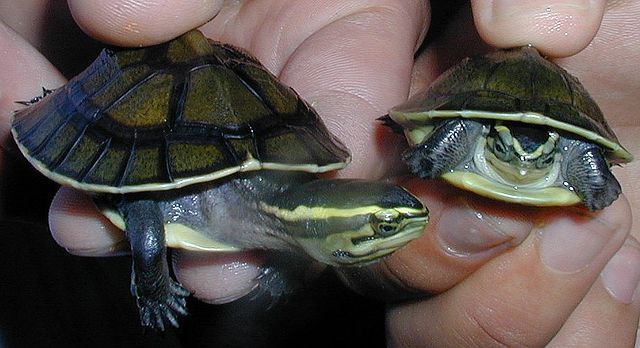
Dogs rule, cats… may cause you to drool, and tiny turtles make kids sick

New CDC report offers reminder of the loads of infectious diseases we can get from pets.

(credit: M. Noth)

The Centers for Disease Control and Prevention is sounding the alarm over a recent uptick in outbreaks of turtle-related infections. Outbreaks in these infections largely involve kids.

Specifically, the wee, shelled reptiles sparked 15 multistate outbreaks of Salmonella infections between 2006 and 2014. According to the CDC's report in this week's edition of Emerging Infectious Diseases, turtles caused a total of 921 illnesses, 156 hospitalizations, and the death of an infant. The median age of a those sickened in the 15 outbreaks was 10.

The agency noted that the outbreaks seem to be increasing since 2006, with eight in 2012 alone. And according to another recent CDC report, there were four additional multistate outbreaks between January 2015 and April 2016, sickening 133 people in 26 states. Forty-one percent of cases in those four outbreaks were kids under the age of five.

Read 5 remaining paragraphs | Comments