Sticking germy fingers in your mouth may give you the upper hand on health

Oral exposure to pathogens early in life may help develop proper immune responses.

(credit: various brennemans)

Kids who got teased for sucking their thumbs or biting their nails may, after all, get the last laugh.

It turns out that repeatedly sticking grimy digits into your pie-hole as a youngster may help strengthen your immune system and prevent the development of allergies later in life, researchers report in the August issue of Pediatrics. The finding is certainly a score for the underdogs of the schoolyard, but it also lends more support to the “hygiene hypothesis.” This decades-old hypothesis generally suggests that exposure to germs and harmless microbes in childhood can help develop a healthy, tolerant immune system—that is, one not prone to autoimmune diseases and hypersensitive responses such as allergies.

“Although we do not suggest that children should be encouraged to take up these oral habits, the findings suggest that thumb-sucking and nail-biting reduce the risk for developing sensitization to common aeroallergens,” the study authors conclude.

Read 8 remaining paragraphs | Comments

The antibiotic apocalypse has been happening for years—we just didn’t notice

“New,” “dreaded” superbug has been around for years, “not a huge cause for concern.”

A cluster of E. coli bacteria. (credit: ARS/USDA)

At this point, alarmist headlines about the end of the antibiotic era may seem a lot like those car alarms that periodically go off on your street: distracting, annoying, and probably nothing worth panicking over. After all, despite years of distressing headlines, drug-resistant superbugs have yet to rain down upon the public, striking the otherwise healthy with deadly, incurable infections.

Yet, the unfortunate reality is that the longstanding challenge of drug resistance is cause for concern and action. Bacteria have been developing resistance to powerful antibiotics ever since the drugs were first introduced in the 1930s. In some cases, bacteria developed widespread resistance in years and sometimes months after a new drug came out. And bacteria are building up ever more extensive immunity thanks to current practices of overusing and misusing the drugs—antibiotics given thoughtlessly for mild illnesses, or used to treat viral infections (which antibiotics don’t fight), or poured into the feed of healthy livestock. Coupled with the sluggish development of new drugs in the past few decades, the public health problem has reached a crisis level.

Right now, drug resistant infections are mainly a threat to those that are already sick and/or in medical facilities. But, if we continue down this path, mundane infections in the otherwise healthy could someday morph into life-threatening ordeals, and simple medical procedures and surgeries may be skipped to avoid risk of infection.

Read 16 remaining paragraphs | Comments

Holmes to remain at Theranos despite federal ban and gross negligence

Baffling disregard for clinical protocols led to lab shutdown and 2yr ban for CEO.

Theranos CEO and founder Elizabeth Holmes. (credit: Max Morse for TechCrunch)

Late last Thursday, blood testing company Theranos announced that the worst possible outcome of its troubled dealings with federal regulators had come to pass: The Centers for Medicare & Medicaid Services (CMS) had issued sanctions that, among other things, would revoke the company’s license to operate its Newark, California laboratory and bar its high-profile CEO and founder Elizabeth Holmes from owning, operating, or directing any lab for at least two years.

The massive blow from the CMS should be no surprise for Theranos; for months, the company had been dogged by reports that its propriety testing device—said to perform hundreds of tests with just drops rather than vials of blood—didn’t work properly. Theranos was forced to void or correct years’ worth of test results and its valuation dropped from $9 billion to $800 million. In the CMS’ 33-page letter to the company informing it of the sanctions, the agency outlined extensive problems at the California lab and the company’s inexplicable failure to fix them. And the company also faces criminal probes from the Department of Justice and the Securities and Exchange Commission over whether it misled investors and regulators, plus at least eight lawsuits from ex-costumers, each seeking class-action status for bogus testing.

Still, last week’s news raises the question of what will happen to the company’s other clinical laboratory in Scottsdale, Arizona, at which 90 percent of the company’s tests are processed. So far, that lab has passed regulatory muster and the company said it will remain open for now. But, if Theranos intends to keep it running, it must split from Holmes before the sanctions take effect September 5.

Read 10 remaining paragraphs | Comments

In time warping study, people unconsciously controlled blood sugar levels

Researchers suggest well-timed placebos may be useful in managing type 2 diabetes.

Ideas can be powerful drugs. If a person is simply convinced that a pill or treatment is going to yield real results, it can—even if that pill or treatment is completely bogus. Those results can be pretty substantial, too. Mental maneuvering, or placebo effect, can improve pilots’ vision, help people lose weight, and even up their IQ by a few points. And, according to a new study, it may also be able to help patients manage a chronic illness.

In an experiment in which researchers duped participants about how much time had passed, the researchers found that participants’ blood sugar levels tracked with perceived time rather than actual time. That is, blood sugar dropped faster when the participants thought more time had passed. The results, published in the Proceedings of the National Academy of Sciences, support the idea that mindsets and psychological processes, like the abstract internal representation of time, can have profound influence over what our bodies do, the authors conclude.

Moreover, it raises the idea of using the mind to help manage certain chronic conditions, particularly type 2 diabetes, which causes periodic and dangerous rises in blood sugar levels. “Official standards for care and treatment of diabetes make no explicit mention of the influence of subjective cognition on diabetic metabolism, but our results indicate otherwise,” the authors argue. They suggest that mindfulness, coping strategies, and trained cognitive styles may prove useful in controlling blood sugar levels in further studies.

Read 5 remaining paragraphs | Comments

Immune system autocorrect feature reverses autoimmune disease in mice

Immunologists take page out of anti-cancer book to make disease-fighting cells.

A human T cell under a scanning electron microscope. (credit: NIAID/NIH)

The human immune system—the powerful, complex network of cells that watches over and defends the body—just got a new weapon: autocorrect.

According to a report in Science, researchers were able to reverse an autoimmune disorder in mice by engineering certain healthy immune cells to weed out faulty ones. The method behind the treatment involves chimeric antigen receptor (CAR) T cells and is identical the method used in an experimental therapy for certain types of leukemias and lymphomas which has so far proven successful in some small human trials. While researchers will need to do much more work to prove that the strategy holds up against autoimmune disorders in humans, the authors argue that its track record of beating cancers is reason to be optimistic.

"Our study effectively opens up the application of this anti-cancer technology to the treatment of a much wider range of diseases, including autoimmunity and transplant rejection," coauthor Michael C. Milone, of the University of Pennsylvania School of Medicine, said in a news release.

Read 6 remaining paragraphs | Comments

To compete in sewage water, Rio Olympians turn to antimicrobial clothes

Latest gear may be no match for virus loads 1.7M times above “hazardous” level.

US Olympic rowers will be wearing Sunderland’s innovative seamless sports apparel at the Rio games this summer. (credit: Philadelphia University)

Today’s technology can do some pretty amazing things. It recently let us get up close and personal with Jupiter and even create low-fat chocolate. But, so far, it’s struggling with a new challenge—allowing athletes to safely play amid raw sewage.

Textile engineers at Philadelphia University announced last week that they’ve developed seamless, light-weight, antimicrobial suits for the US Olympic rowing team. In August, the team will wear the suits as they compete in the summer games in Rio de Janeiro, which is surrounded by water brimming with raw sewage, pollution, drug-resistant bacteria, virus loads up to 1.7 million times the level considered hazardous in the US, and a recent oil slick.

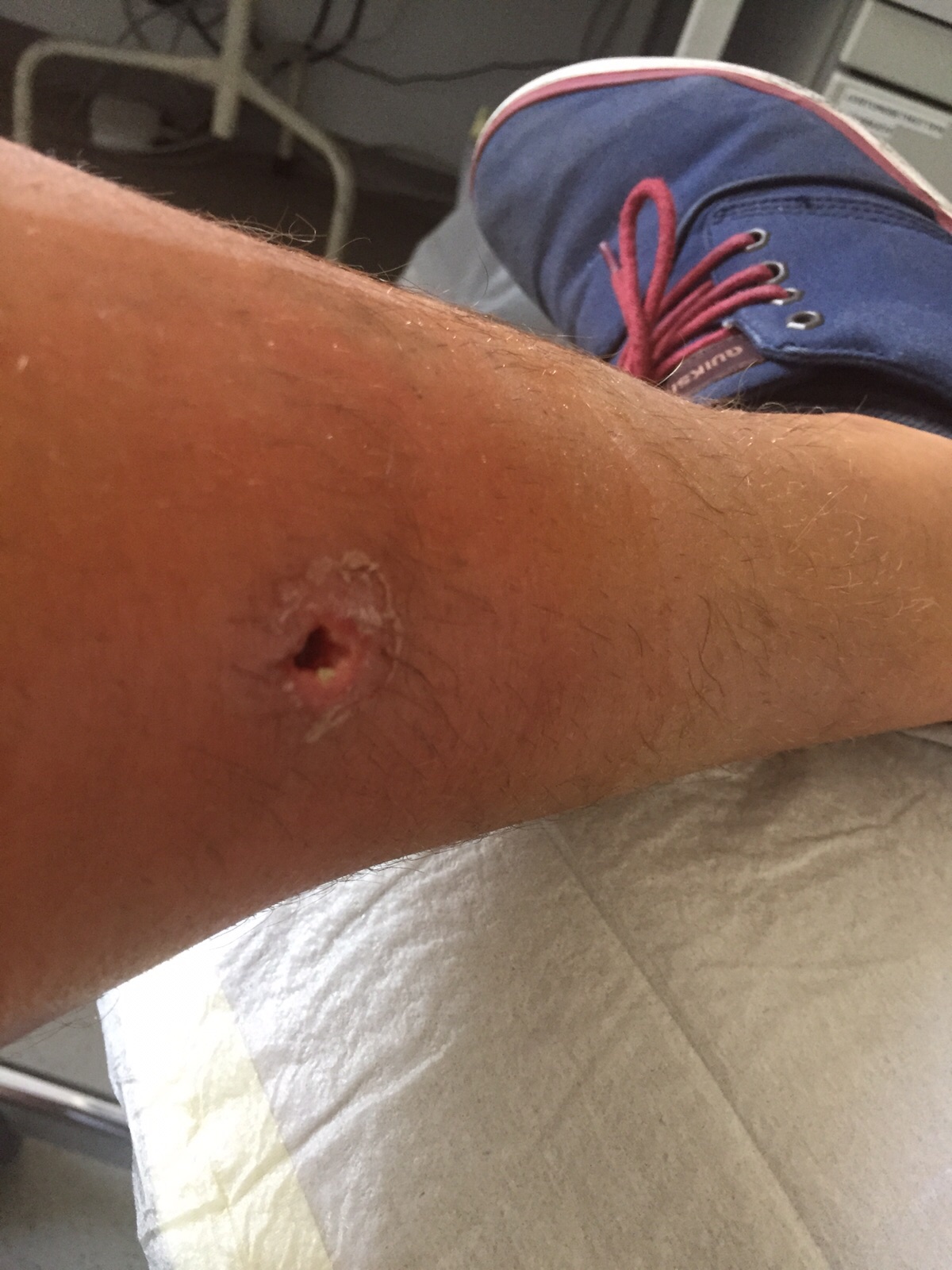
To protect athletes, the new suits contain two layers: one that wicks water away from the skin and another that contains a chemical-based antimicrobial finish. The design is aimed at preventing illnesses, such as the severe drug-resistant, flesh-eating infections German sailor Erik Heil suffered on his legs and hip after racing in a test event in Rio last year.

Read 6 remaining paragraphs | Comments

More flour recalled as the FDA doubles down on cookie dough warning

Ars talked to the agency to get the inside scoop on the risks of licking the bowl.

(credit: Robert S. Donovan)

If you're a kid, few things are better than homemade cookies. Unlike store-bought sweets, you get to gobble up any bits of cookie dough stuck to the bowl and beaters, which can be more exciting than the cookies themselves.

Of course, most adults know you’re not supposed to eat raw dough because the raw eggs in it may contain Salmonella. But now there’s something else to worry about: E. coli in the flour.

On May 31, General Mills recalled 10 million pounds of flour, sold under three brands after an investigation linked the grain to an outbreak of E. coli O121 (you can see the recall information here). On Friday, the company expanded the recall as the Centers for Disease Control and Prevention tallied new cases. So far, the tainted flour has sickened 42 and sent 11 to the hospital. Although many strains of E. coli are harmless, the O121 serotype can lead to symptoms that typically include abdominal pain and diarrhea, often bloody. This E. coli can also even cause severe illness that leads to kidney failure. Young children, the elderly, and people with weakened immune systems are the most at risk of these severe cases.

Read 13 remaining paragraphs | Comments

Stem cells from cattle, placentas, and fat are used in clinics across the US

Researchers uncover hundreds of clinics, many touting potentially dangerous treatments.

(credit: Abraxas3d)

Topping the list of predatory business schemes, direct-to-consumer clinics peddling unproven stem cell therapies may be right up there with payday loans and Shkreli-esque drug pricing. Such clinics can tout dangerous, often exorbitantly priced “treatments.” They frequently target the vulnerable and desperate, including terminal cancer patients, parents of autistic children, and grown children of parents with Alzheimer’s or Parkinson’s disease. And the results can range from placebos to bones in eyelids and scary growths on spinal cords.

We tend to think this kind of quackery only thrives in countries with lax regulations like China, India, or Mexico. The phrase “stem cell tourism” usually evokes a plane trip. But stem cell therapies are unexpectedly flourishing in the US and may only require a short car trip.

In an analysis published this week in Cell Stem Cell, researchers identified a startling 351 businesses, encompassing 570 clinics across the US, that offer stem cell therapies largely unproven and unapproved by the Food and Drug Administration. Without peer-reviewed evidence, these businesses and clinics claim their therapies can treat dozens of diseases, injuries, and cosmetic indications, including joint pain, autism, spinal cord injuries, muscular dystrophy, and breast augmentation. Costs can reach into tens if not hundreds of thousands of dollars for treatments.

Read 6 remaining paragraphs | Comments

People eat healthier when real-life emojis literally point them to produce

In these modern times, fruits and vegetables have to step up their marketing game.

(credit: Masahiro Ihara)

Nearly everyone knows you’re supposed to eat heaping helpings of fruits and vegetables every day. But that doesn’t mean that people actually follow through. In fact, in updated dietary guidelines released in January, the federal government called out nearly everyone for not eating enough produce (as well as eating way too much sugar). But now, researchers have followed up with what may be a simple fix.

In grocery stores, big emojis and arrows on the floor that direct and encourage people to head to the produce section actually got shoppers to buy more produce, researchers report Thursday in the Journal of Nutrition Education and Behavior. Moreover, after analyzing grocery bills, the researchers found that shoppers didn’t up their overall shopping budget to accommodate the fresh additions. In other words, grocery store goers weren’t simply piling on crops to their already full carts, but, rather, they were swapping other grocery items for healthy fruits and vegetables.

The findings suggest that adding the minor signage to more stores could be an easy way to get consumers to eat healthier produce. And if so, it “could trigger a public health shift” in a general population that is largely struggling with weight and dietary problems, lead author Collin Payne, of New Mexico State University, said in a statement.

Read 5 remaining paragraphs | Comments

Most women shave their nether regions for hygiene; doctors facepalm

First nationally representative study reveals ladies’ grooming habits and motivations.

(credit: Johan)

The bushy look is definitely out.

The vast majority of US women—84 percent—engage in some form of pubic grooming, according to the first nationally representative survey on ladyscaping published Wednesday in JAMA Dermatology. Of the private pruners, 62 percent reported going completely bare at least once.

Earlier, smaller-scale studies hinted that such trimming trends would be linked to sexual activity. But, to the study authors’ surprise, hygiene was the most common reason given for nether shearing, cited by 59 percent of groomers. And, while sexy times still dominated the scheduling of said cropping, 40 percent of groomers said they tidy for upcoming trips to their gynecologist.

Read 10 remaining paragraphs | Comments