The man who got the first double hand transplant wishes he hadn’t

The replacement limbs don’t work, but they would be tricky to remove.

(credit: Evan Amos)

Seven years ago, Jeff Kepner underwent the first double hand transplant in the US. It was a risky but exciting surgical feat that offered the possibility of getting the patient most of his normal life back—the life that was taken away in 1999 when sepsis from a strep throat infection led to the amputation of both hands.

But the excitement and possibilities gave way to a grim existence, worse than when he was simply managing with prosthetics, Kepner said.

“From day one I have never been able to use my hands,” he told Time. “I can do absolutely nothing. I sit in my chair all day and wear my TV out.” With the prosthetics, he said, he had about 75 percent functionality. With the transplants, that went down to zero percent.

Read 4 remaining paragraphs | Comments
The case of the vanishing pandemic: Deadly bird flu flies the coop in the US

Scientists puzzled by disappearance, but think lack of vaccination may be key.

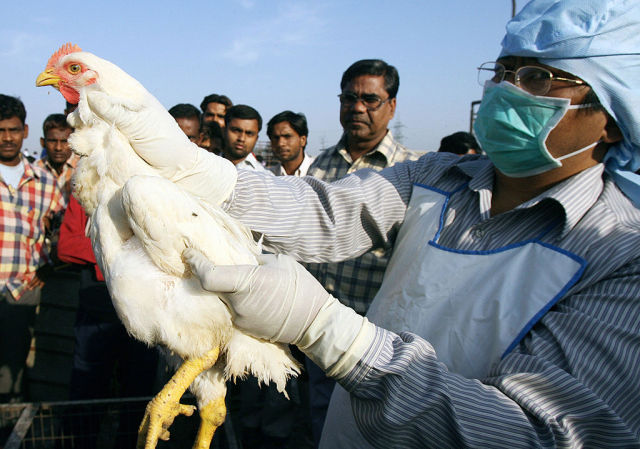
(credit: Getty Images | PRAKASH SINGH)

In November of 2014, a highly pathogenic strain of bird flu from Eurasia called H5N2 landed in North America—in a Canadian turkey farm east of Vancouver, to be exact. From there, the virus quickly spread and mutated into new varieties, including H5N1, fanning fears it would vault to humans and cause a deadly pandemic. By March of 2015, it and its kin had swooped into 15 US states, causing 248 outbreaks in domestic birds and $5 billion worth of damages to poultry operations.

Then, it vanished.

“It’s very good news,” Robert Webster, prominent influenza expert at St. Jude Children’s Research Hospital, told Ars. He and colleagues published surveillance data in the Proceedings of the National Academy of Sciences on Monday that shows the swift and unexpected disappearing act by the noxious germ. But, he added, “it’s a mystery where it went.”

Read 12 remaining paragraphs | Comments
That time a bunch of journalists confused an opinion piece for a study

Pile of neglected research gets passed off as new data by reporters.

OLYMPUS DIGITAL CAMERA (credit: Marlon E)

Drinking alcohol ups your risk of cancer—several kinds of cancer, in fact. The links have been firmly established and reaffirmed over the years with stacks of studies, reviews, and meta-analyses. The National Cancer Institute has had an explainer on the subject since at least 2013.

Yet, the connection remains relatively unknown to consumers.

“We know that nine in 10 people aren’t aware of the link between alcohol and cancer,” Jana Witt, Cancer Research UK’s health information officer, told The Guardian. And the few that are aware of the link may be skeptical of it based on misleading health stories and competing reports on the potential benefits of drinking.

Read 10 remaining paragraphs | Comments

Everyday chemicals may be messing up our microbiomes—but we don’t know

Scientists call for more studies as limited, mixed data hint at insidious harms.

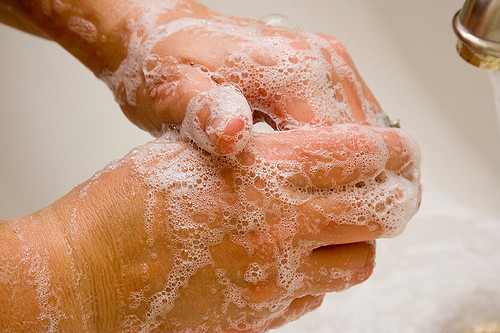
Women washing hands in white sink good suds (credit: Arlington County)

Poke around any bathroom or cleaning cabinet in the US and you’re likely to find a product spiked with an antimicrobial chemical. One of the most common of these, triclosan, has shown up in about 75 percent of antibacterial hand soaps and is easily spotted in a range of other goods, from toys to toothpaste. It has also been found in about 75 percent of Americans’ urine. Yet, despite their omnipresence, these antimicrobials go largely unregulated and scientists don’t know their health effects.

In an opinion piece published Thursday in Science, Alyson Yee and Jack Gilbert, microbiologists from the University of Chicago, call for that to change. They lay out just how little data we have on the chemicals—and some of it even conflicts. Yet, it’s clear that our exposure may begin in the womb and that the chemicals do have the potential to mess up our microbiomes—the communities of microbes in and on us that strongly influence our health. Such microbial disturbances have been linked to wide ranging conditions, from neurological disorders to arthritis, allergies, obesity, and irritable bowel disorder.

As such, scientists should prioritize figuring out if the chemicals that are already all around us, are causing harm, Yee and Gilbert argue.

Read 6 remaining paragraphs | Comments

New brain map more than doubles charted regions of the human noggin

Mix of structure, function, and connectivity data plots cerebral cortex territory.

(credit: Nature Video/Matthew F. Glasser, David C. Van Essen)

Despite the advances of modern medicine, the wrinkled, twisted expanse of the human noodle has been mostly an uncharted frontier, with sparse territories and regions staked off so far. In the past, scientists have merely cordoned off sections based on a single type of brain feature, such as cell structures, brain topography, or identified functions. But now, in a comprehensive analysis of 210 healthy brains published Wednesday in Nature, researchers have merged such data sets and drawn an inclusive map of the mind's provinces.

The newly inked atlas, hatched from the National Institutes of Health’s Human Connectome Project, more than doubles the identified realms of the human brain’s outer shell, the cerebral cortex. This is the dominant part of the human brain, responsible for our minds’ higher functions, such as language, consciousness, information processing, and problem solving. The map depicts 360 cortex areas or 180 symmetrical, paired regions in each hemisphere, of which 83 were known and 97 are new.

While the new map is still a first draft, to be adjusted and honed with more research, the study's authors are hopeful that the cerebral sketch may quicken the pace toward understanding how the mind’s hardware works. Plus, it may provide a guide for neurosurgeons’ scalpels and more detail for researchers examining how the primate brain has evolved.

Read 3 remaining paragraphs | Comments

Norovirus may have crashed GOP convention, sickening 11 staff so far

Health officials are working to confirm the diagnoses and prevent illness spread.

(credit: CDC/microbiologybytes)

Around 11 Californian Republican Party staff members who arrived in Cleveland early to help organize this week's National Convention have fallen ill with what appears to be norovirus infections.

Health officials have reportedly taken fecal samples from the sick and sent them for testing at a lab in Columbus, Ohio. "It looks like the norovirus, but we're not going to say that's definitively what it is," Erie County Health Commissioner Pete Schade told the local newspaper, the Plain Dealer.

The staffers who have fallen ill are essentially being quarantined at their hotel, the Kalahari Resort in Sandusky, Ohio. That facility is almost 60 miles away from the Cleveland arena where the convention is taking place. They have been instructed to avoid the convention until going 24 hours without symptoms.

Read 7 remaining paragraphs | Comments

Arizona man says bum Theranos blood tests led to heart attack, files lawsuit

Tests, now voided by company, showed normal results weeks prior to attack.

(credit: Steve Jurvetson)

There’s yet another unhappy Theranos customer.

In a lawsuit filed Monday in the US District Court in Arizona, an ex-customer alleges that bum blood tests performed by the beleaguered biotech company directly led to him having a heart attack. (A PDF of the lawsuit is available here.) The test results were later voided by the company, independent of any involvement from the plaintiff, identified only as R.C. in the lawsuit.

R.C. joins at least nine other ex-customers suing the company over faulty tests and the company’s lofty but unfulfilled claims. Each lawsuit is seeking class-action status.

Read 9 remaining paragraphs | Comments

CDC reports “surprising” but rare ways to catch Zika in the US

Elderly US traveler with viral load 100,000X the norm may have infected caretaker.

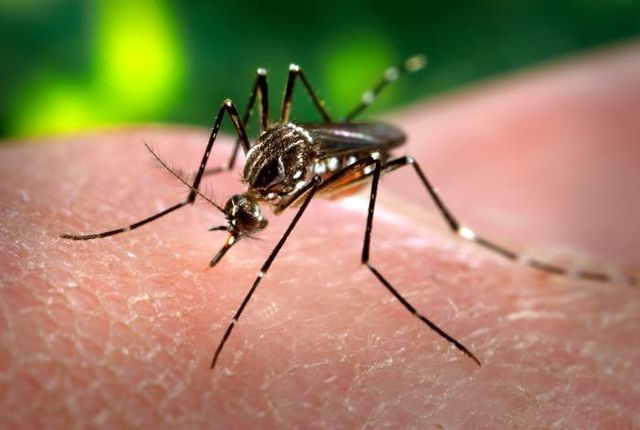
(credit: CDC)

An elderly Utah resident who contracted Zika virus while traveling abroad may have mysteriously passed the virus on to a family caretaker, according to health officials who are investigating the "unique" and "surprising" case.

Officials from the Centers for Disease Control and Prevention confirmed Monday that both the elderly resident, who died in late June, and the caretaker, who has recovered, had tested positive for the virus. Yet, it's unclear how the caretaker became ill; the caretaker hadn’t done either of the two things thought to put one at risk of infection—that is, travel to an area where mosquitoes are transmitting the virus, or have sex with an infected person.

With mosquitoes being the primary transmission route for the virus, the circumstances could suggest that mosquitoes in Utah were responsible for spreading the virus, possibly from the elderly resident. It would mark the first time mosquitoes have been found spreading the virus within the continental US. But that scenario is extremely unlikely, health experts cautioned, because the two types of mosquitoes that commonly spread Zika, Aedes aegypti and Aedes albopictus, aren’t present in the area in which the two Utah residents lived. However, the CDC is now testing local mosquitoes to absolutely rule out this possibility.

Read 7 remaining paragraphs | Comments

Weighty weed debate: New analysis blows away past guesses at joint content

Study arrived at new estimate based on 10,628 marijuana transactions.

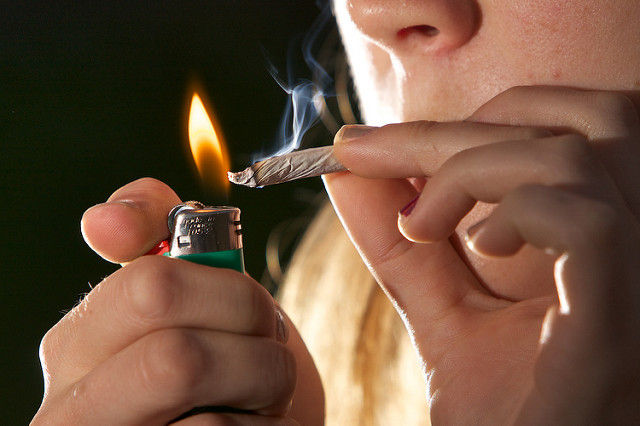
(credit: Chuck Grimmett)

There may finally be some clarity to the long hazy debate on exactly how much marijuana is in an average, pre-rolled joint. The answer, according to two researchers at the University of Pennsylvania, is 0.32 grams.

That number is far lower than some reports, which have been as high as a gram. But the number generally falls within the range of the many estimates that have come before it, which is typically between 0.30 and 0.75 grams.

Nailing down the average amount in a pre-rolled joint may not seem all that important to some, as many users now use vaporizers. But Penn drug policy expert Greg Ridgeway, one of the researchers behind the new estimate, argues it is. "It turns out to be a critical number in estimating how much marijuana is being consumed [nationwide], how much drug-trafficking organizations are putting on the market, and how much states might expect in revenue post-legalization," he said in a news release.

Read 8 remaining paragraphs | Comments

Shkreli gets a year to figure out how to throw his ex-lawyer under the bus

Former pharmaceutical CEO will face trial June 26 for alleged Ponzi-like scheme.

Martin Shkreli, chief executive officer of Turing Pharmaceuticals LLC, exits federal court in New York, US, on Thursday, December 17, 2015. Shkreli was arrested on alleged securities fraud related to Retrophin Inc., a biotech firm he founded in 2011. (credit: Louis Lanzano/Bloomberg via Getty Images)

Today, Martin Shkreli, the reviled former pharmaceutical CEO best known for price-gouging a life-saving drug, running an alleged Ponzi-like scheme, and smirking, had the date for his trial on securities fraud charges set to June 26, 2017 in New York.

Shkreli, 33, has been indicted on eight charges in connection with the alleged Ponzi-like scheme, in which he swindled his former pharmaceutical company, Retrophin, out of $11 million in order to cover and hide losses from two hedge funds he managed. He was arrested back in December along with his former counsel, Evan Greebel. Both have pled not guilty to all charges and Shkreli was released on $5 million bail that he posted with an E-trade account worth $45 million at the time.

Since then, the pair have had their court proceedings delayed after Shkreli fired his legal team and federal prosecutors added additional charges.

Read 5 remaining paragraphs | Comments