New theoretical work suggests women co-opted orgasms for happy endings

Mysterious climax may have once stimulated ovulation, but adapted to new roles.

(credit: Jonathan Keller)

The existence of women’s orgasms has given scientists and philosophers a lot to chew on over the centuries. The pleasurable climax is neither required for reproduction nor particularly easy to achieve during heterosexual intercourse, based on simple mechanics. Yet it inexplicably evolved and persists.

Researchers have come up with a variety of theories to try to explain women’s big ‘O’ mystery. Some hypothesize that it does, in fact, subtly benefit reproductive success. Others put forth the “by-product” theory, which suggests that women experience orgasms only because they share developmental stages with men, in whom orgasms are an explosive adaptation critical for human reproduction.

Now, evolutionary biologists Mihaela Pavličev, of the University of Cincinnati, and Günter Wagner, of Yale, offer an entirely different theory that they argue fits with the evolution of fellow mammals. They suggest that female orgasms used to be the trigger for readying eggs for fertilization but became obsolete and then co-opted to serve primate-specific roles—such as enabling bonding and partner choice—after cyclical egg-releasing evolved in ancestors.

Read 7 remaining paragraphs | Comments
Dentists forgot to study flossing for a century, recommended it anyway

Federal health experts dropped it from health guidelines due to lack of research.

(credit: Brian Brown)

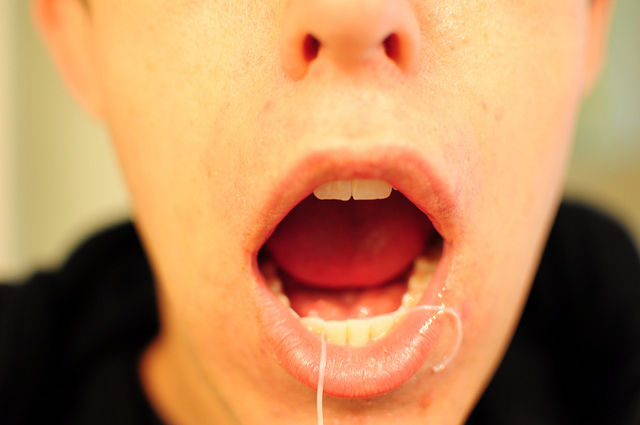
For many, taking the time to floss every day is a bother. But for dentists, taking the time to properly research flossing over the course of a century is apparently even more inconvenient.

Despite being dentist-recommended since the early twentieth century, researchers have yet to conduct sufficient, reliable studies to support the claim that flossing effectively prevents cavities and gum disease.

This stain on the dental profession was cracked wide open last year when the Associated Press asked federal agencies for the data behind its recommendation that Americans floss. After the AP filed Freedom of Information Act requests, the government admitted that it didn’t have adequate data to back the recommendation—something it is required to have by law.

Read 4 remaining paragraphs | Comments

With chance to soothe Theranos’ critics with data, Holmes gives sales pitch

Theranos didn’t say how the new device is better or offer validation data.

(credit: AACC)

Late Monday afternoon, a few thousand clinical chemists packed into a cavernous convention hall in Philadelphia to hear a presentation by Elizabeth Holmes, the embattled CEO and founder of blood testing company Theranos. Her presentation, given in a controversial session of the American Association for Clinical Chemistry’s annual conference, was expected by many to be an opportunity for Holmes to finally reveal data that could back up the company’s lofty claims about its blood testing technology—technology now mired in scandal.

Last month, federal regulators revoked the company’s license to perform those blood tests, saying it posed “immediate jeopardy to patient health and safety.” The company now faces lawsuits from ex-patients and a criminal probe for allegedly misleading investors on claims about its technology's performance. Federal regulators have banned Holmes from owning or operating a lab.

Yesterday’s presentation could have been the data-driven turning point Holmes has been promising. And the conference attendees—experts in clinical testing—gathered anxiously to hear the results.

Read 11 remaining paragraphs | Comments

Elizabeth Holmes is finally presenting Theranos data as company collapses

Presentation at an annual clinical conference has been surrounded by tension and buzz.

Elizabeth Holmes, Theranos CEO and the world's youngest self-made female billionaire, in an interview on September 29, 2015. (Photo by David Orrell/CNBC/NBCU, Photo Bank via Getty Images.) (credit: Getty Images | CNBC)

Amid intense scrutiny, lawsuits, harsh federal sanctions, and criminal probes, Theranos CEO and founder Elizabeth Holmes will finally present data on her struggling company’s blood testing technology.

She will present today at 4:30pm in a special session of the American Association for Clinical Chemistry’s annual conference, being held this year in Philadelphia.

The presentation couldn’t come at a more dire time for the company, which has seen a staggering number of setbacks in recent months. The most prominent of those include federal regulators banning Holmes from the clinical blood testing business for at least two years and shuttering one of the company’s labs. Theranos has seen its valuation drop from $9 billion to around $800 million. Its commercial partner, Walgreens, also backed out of its contract and shut down 40 of the companies' joint “wellness centers.”

Read 5 remaining paragraphs | Comments

Zika outbreak confirmed in Florida, first in continental US

No Zika-positive mosquitoes yet, but transmission may be occurring in tiny area.

(credit: CDC)

On Friday, Florida health officials confirmed the first local Zika outbreak in the continental US. The outbreak so far involves four people believed to be infected by bites from local mosquitoes, and health officials believe that active transmission may be occurring in a one-square-mile-wide area of Miami-Dade County, just north of downtown.

So far, mosquito surveillance has not detected the presence of Zika virus in any mosquitoes in that area—or any other areas. However, the four infected Floridians, residents of Miami-Dade County and bordering Broward County, had not traveled to a Zika-stricken area or recently had sex with an infected or potentially infected person. By ruling out those two routes of transmission—which explain how 1,657 other US residents became infected—officials believe local mosquito transmission is to blame.

Local mosquitoes presumably picked up the virus from returning travelers and passed it on to uninfected residents. So far, Florida has documented 381 cases statewide.

Read 4 remaining paragraphs | Comments

Zika outbreak confirmed in Florida, first in continental US [Updated]

No Zika-positive mosquitoes yet, but 10 new cases confirmed since last week.

(credit: CDC)

Update (8/1/2016): On Monday, Florida Governor Rick Scott announced that 10 new Zika cases have been identified in Miami's small, localized outbreak, bringing the total to 14 cases. All of the new cases, thought to be transmitted by local mosquitoes, appear to have occurred in the same one-square-mile area that officials had previously identified as an area where active transmission may be occurring.

In six of the 10 new cases, the individuals had no symptoms of a Zika infection and were only found during a survey of residents. No mosquitoes surveyed have yet to test positive for carrying Zika virus. Gov. Scott is now calling on the Centers for Disease Control and Prevention to activate emergency response efforts. Also today, the United Kingdom issued a Zika travel advisory for Florida. Our original story on the initial discovery in Florida appears below.

On Friday, Florida health officials confirmed the first local Zika outbreak in the continental US. The outbreak so far involves four people believed to be infected by bites from local mosquitoes, and health officials believe that active transmission may be occurring in a one-square-mile area of Miami-Dade County, just north of downtown.

Read 6 remaining paragraphs | Comments

FDA pauses blood donations in 2 Florida counties with unexplained Zika cases

Four cases don’t appear travel- or sex-related, suggesting local mosquito transmission.

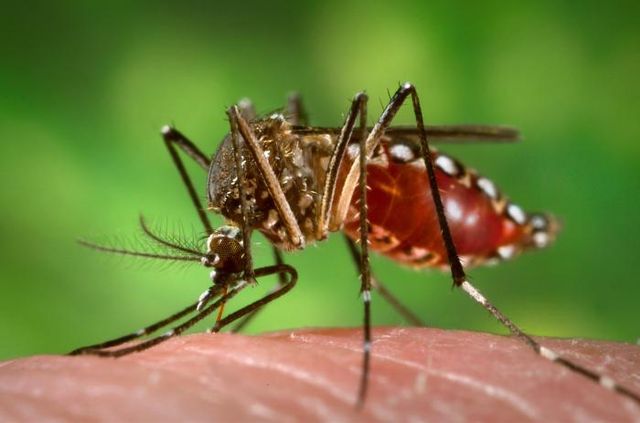
Female Aedes aegypti mosquito as she was in the process of obtaining a "blood meal" (credit: US Department of Health and Human Services)

The US Food and Drug Administration requested Wednesday that Florida’s Miami-Dade County and Broward County temporarily stop accepting blood donations after four people in the area inexplicably came down with Zika infections.

The four cases were not immediately explained by travel to an area experiencing an outbreak of the mosquito-borne virus, nor from sex with an infected person—the two main ways US residents become infected. This has led some health officials to speculate, though not confirm, that local mosquitoes may be transmitting the virus to residents in those areas.

If local transmission is confirmed, the cases would represent the first homegrown outbreak of Zika in the continental US. It would also suggest that Zika infections, which are linked to birth defects in pregnant women but otherwise mild illnesses in adults, may be spreading undetected among Floridians. Thus residents could conceivably donate blood containing infectious viruses without knowing it.

Read 3 remaining paragraphs | Comments

Apollo astronauts dying of heart disease at 4-5X the rate of counterparts

Deep-space radiation damages cardiovascular system in mouse-astronaut model.

(credit: NASA)

Deep-space travel takes a toll on the body—and it’s apparently something you can’t moon-walk off.

Apollo astronauts who have ventured out of the protective magnetosphere of mother Earth appear to be dying of cardiovascular disease at a far higher rate than their counterparts—both those that have stayed grounded and those that only flew in the shielding embrace of low-Earth orbit. Though the data is slim—based on only 77 astronauts total—researchers speculate that potent ionizing radiation in deep space may be to blame. That hypothesis was backed up in follow-up mouse studies that provided evidence that similar radiation exposure led to long-lasting damage to the rodents’ blood vessels. All of the data was published Thursday in the journal Scientific Reports.

The study, while not definitive, may add an extra note of caution to the potential hazards of future attempts to fly to Mars and elsewhere in the cosmos.

Read 9 remaining paragraphs | Comments

Bacteria battling over boogers in your nose may have life-saving antibiotic

Bacteria kills off MRSA and other deadly germs in scramble for best schnoz space.

(credit: quinn norton)

Sorry, kids. You may be doing your best at jamming your finger up your nose, digging tirelessly. But it seems scientists are the ones that have struck gold.

Sifting through the bacteria that inhabit our cavernous snouts, researchers came up with one that produces a new antibiotic—an antibiotic unlike any other bacteria-busting drugs known to modern medicine. That prized chemical nugget can kill off Staphylococcus aureus strains, including the dastardly methicillin resistant kind called MRSA, plus other drug-resistant foes. Though it's still unclear how exactly the new drug slays nasal rivals, scientists are hopeful that the compound will be useful in treating deadly MRSA infections and even clearing out S. aureus from the nose before it has a chance to cause an infection.

“Nobody has found something like this before,” Bernhard Krismer, a bacteriologist at the University of Tübingen in Germany and a lead scientist for the research, said in a press briefing. The drug, along with its bacterial maker, have “a huge impact on the composition of the microbiota,” Krismer added. The full results of the nasal excavation appear in the July 28 issue of Nature.

Read 8 remaining paragraphs | Comments

The normal, boring life of a clone: Dolly’s cloned cohort hits old age

Crop of clones hit age analogous to 70 in human years, nixing early aging concerns.

(credit: Sinclair et al, Nature Communications)

Twenty years ago this month, Dolly the sheep started her life in a laboratory. She quickly gained farm animal fame as the first successfully cloned mammal. Despite her stardom, Dolly’s life was cut short by an unusually early case of osteoarthritis. Some observers thought she aged too quickly. At just six-and-a-half years old, veterinarians put her down. And with her went a lot of optimism about cloning’s potential.

Still, many hopeful scientists hypothesized that her test-tube origins had nothing to do with her tragic fate. And it turns out they were probably right.

Kevin Sinclair, a developmental biologist at the University of Nottingham in England, joined his colleagues in putting 13 other cloned sheep, some in their golden years, through a battery of tests. He and his fellow researchers found that the cloned sheep are not only healthy, but they’re aging completely normally. Four of those sheep were cloned from the exact same batch of cells as Dolly.

Read 3 remaining paragraphs | Comments