Martin Shkreli’s other pharma company files for bankruptcy

After firing indicted CEO, company now fights to keep shares listed on NASDAQ.

Martin Shkreli, chief executive officer of Turing Pharmaceuticals LLC, exits federal court in New York, US, on Thursday, December 17, 2015. Shkreli was arrested on alleged securities fraud related to Retrophin Inc., a biotech firm he founded in 2011. (credit: Louis Lanzano/Bloomberg via Getty Images)

On Tuesday, KaloBios Pharmaceuticals Inc., which recently fired its indicted CEO, Martin Shkreli, filed for Chapter 11 bankruptcy in Delaware.

The South San Francisco-based firm has faced a string of bad news since Shkreli’s December 17 arrest on securities fraud charges. The charges related to an alleged Ponzi-like scheme Shkreli was said to have orchestrated with another of his pharmaceutical companies, Retrophin, as well as two hedge funds he managed. After the arrest, KaloBios fired Shkreli, who pled not guilty to the charges and was released on a $5 million bond.

On December 18, the NASDAQ stock exchange notified KaloBios that it intended to delist the company's shares from the exchange, citing Shkreli’s arrest and the arrest of Evan Greebel, the company’s former outside counsel. Next, the company’s interim CFO, Christopher Thorn, resigned, as did the company’s certifying accountant.

Read 4 remaining paragraphs | Comments

New type of contagious cancer spreading among Tasmanian devils

Infectious tumors may be more common than expected. This is the second in devils.

Contagious cancers were thought to be exceedingly rare—after all, researchers only knew of three kinds in the world. But now, there’s a fourth. And it’s raising some big questions about scientists’ understanding of cancer.

This week, scientists report finding a new type of transmissible tumor in Tasmanian devils, the famous marsupials of the Australian island state. It’s the second type of infectious cancer seen in devils and the fourth type overall. The finding, published in the Proceedings of the National Academy of Sciences, has left the study authors questioning whether infectious cancer cells are more common than expected or if there’s something about Tasmanian devils that makes them uniquely susceptible to catching deadly tumors—or maybe both.

“Regardless,” the authors wrote, more research on these infectious tumors “promises to illuminate important concepts underpinning cancer evolution.”

Read 7 remaining paragraphs | Comments

Liver hormone may be the off-switch for sweet-tooth, cocktail cravings

Hormone therapy now in clinical trials for treating obesity and type 2 diabetes.

Gimmicky diets, flavor fakery, and sham sweets all try to bamboozle the brain out of wanting sugary treats and calorie-packed happy hour drinks. But scientists may have found an all-natural way to simply switch off those corrupting cravings.

When researchers gave mice and monkeys an added dose of a mammalian liver hormone called Fibroblast growth factor 21 (FGF21), both species voluntarily went off sweets, even artificial ones. And mice previously hooked on alcoholic beverages were more content with plain water after the hormone therapy. The results, published in the journal Cell Metabolism, follow a series of studies that suggest FGF21 is a key metabolic regulator that may be helpful in treating obesity and type 2 diabetes. Clinical trials are already underway.

Those previous studies suggested that FGF21, made mostly in the liver but also in fat tissue and the pancreas, can help regulate glucose and lipid metabolism in the body. Many food inputs and hormonal cues, some complex, some simple, can tweak metabolism. Studies suggested that FGF21 gets involved by crossing the blood-brain barrier and grabbing onto a specific complex of proteins on the outside of cells in the central nervous system. By clamping on, the hormone can activate signals within the brain that ultimately alter food intake.

Read 7 remaining paragraphs | Comments

British health experts warn of unstoppable gonorrhea

Drug-resistant variety of STI may spread if doctors use wrong drug therapy.

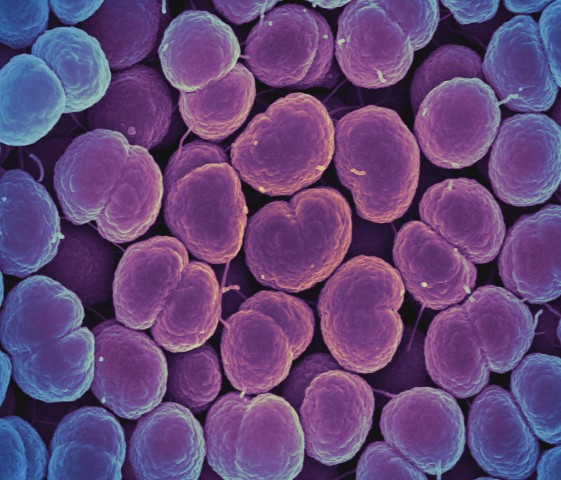
Colorized scanning electron micrograph of Neisseria gonorrhoeae bacteria, which causes gonorrhea. (credit: NIAID)

A highly antibiotic-resistant variety of Neisseria gonorrhoeae, the germ behind gonorrhea, is quickly spreading and may soon become unbeatable, according to Sally Davies, chief medical officer of England, and Chief Pharmaceutical Officer Keith Ridge.

In a letter to the nation’s general practitioners and pharmacies, the pair urged doctors to use the strongest pharmaceutical weapons available to combat the health threat.

"Gonorrhoea has rapidly acquired resistance to new antibiotics, leaving few alternatives to the current recommendations,” the letter stated. "It is therefore extremely important that suboptimal treatment does not occur."

Read 6 remaining paragraphs | Comments

Anti-vaccine Californians are rich, white, but not necessarily highly educated

Health campaigns focusing on scientific data may not help restore herd immunity.

At this point, it’s well documented that affluent, educated white communities are behind the surge in unvaccinated kids—and by extension the increase in vaccine-preventable diseases, including measles and whooping cough (pertussis). But there are few studies that dig into the detailed demographics of those unprotected younglings, leaving health experts at a loss for how to target strategies to combat anti-vaccination myths and fears in the specific groups that need it most.

Some help may come in the form of a new analysis of Californian kindergarteners who obtained personal belief exemptions (PBE) from vaccination between 2007 and 2013. Researchers found, as expected, that those kids were most likely to be white, come from high-income homes, and were frequently enrolled in private school. Although kids in this group tend to have parents with lots of schooling, high-education levels among family did not independently track with the rise in vaccine opt-outs.

“Our results call into question the reported link between high-PBE communities and higher average educational attainment,” the study's authors concluded. These findings, published in the American Journal of Public Health, suggest that sharing more scientific data on vaccine safety and the consequences of vaccine-preventable illnesses may not be enough to combat anti-vaccination trends.

Read 6 remaining paragraphs | Comments

Martin Shkreli’s other pharma company is dramatically collapsing

Following arrest of CEO, KaloBios loses CFO, accountants, is delisted from Nasdaq.

Martin Shkreli, chief executive officer of Turing Pharmaceuticals LLC, exits federal court in New York, US, on Thursday, December 17, 2015. Shkreli was arrested on alleged securities fraud related to Retrophin Inc., a biotech firm he founded in 2011. (credit: Louis Lanzano/Bloomberg via Getty Images)

In a swift set of blows, KaloBios Pharmaceuticals, Inc., a biotech company formerly headed by Turing’s Martin Shkreli, announced that it is being delisted from the Nasdaq stock exchange, and that the company's interim CFO and accounting firm have both resigned.

The series of events follows the company’s Monday announcement that it had fired Shkreli, former CEO and chairman. On December 17, Shkreli was arrested on securities fraud charges relating to another biotech company he headed, Retrophin, as well as two hedge funds he managed. He pled not guilty and was released on a $5 million bond.

In a press release dated Wednesday, KaloBios reported that the Nasdaq informed the company in a letter sent December 18 that it would be delisted from the exchange. The letter cited a number of reasons for the delisting, including Shkreli’s indictment plus the simultaneous indictment of Evan Greebel, the company’s former outside counsel.

Read 4 remaining paragraphs | Comments

Making healthy foods the default menu dupes people into eating better

In theme park experiment, Disney got guinea pig guests to swap fries for fruit.

(credit: USDA)

If you serve it, they will eat it—or at least that seems to be a take-away from a new study on healthy menu options published in an upcoming issue of the Journal of the Association for Consumer Research.

Between 2010 and 2012, the Walt Disney Company experimented with kids' meal menus in 145 restaurants in its Orlando theme park, Walt Disney World. The company swapped traditional sides of fatty fries and sugary sodas with fruit or vegetables and low-fat milk or water. If parents wanted to go with the unhealthy standard fare, they simply had to “opt out” of the fresh meal items. But, according to the data analyzed by health researchers at the University of Colorado, around half of patrons didn’t bother and stuck with the healthy options.

In the time frame, 48 percent of guests were content with the healthier food sides and 66 percent of guests kept the healthier beverage option.

Read 3 remaining paragraphs | Comments

FDA and CDC probe second wave of Chipotle E. coli outbreak

With new E. coli cases, 12 states are now affected. Source still unknown.

(credit: Mike Mozart)

Amid an ongoing E. coli outbreak investigation at Chipotle Mexican Grill, the Food and Drug Administration (FDA) on Tuesday announced that it is joining the effort to investigate what may be a second wave of illnesses linked to the chain restaurant. The new illnesses are caused by the same type of E. coli found in the previous cases—Shiga toxin-producing Escherichia coli O26 (STEC 026)—but with a different, rare genetic variant.

To investigate this second wave, the FDA has combined forces with state and local authorities, plus the Centers for Disease Control and Prevention (CDC), which on Monday first announced an investigation into five cases of the variant E. coli infections. Those cases included one in Kansas, one in North Dakota, and three in Oklahoma. The sickened people from Kansas and North Dakota reportedly ate at the same Chipotle restaurant in Kansas before falling ill. The three sickened in Oklahoma were separate cases, but all three reportedly ate at the same Chipotle, the FDA reported.

The new cases, if confirmed, would bring the new E. coli outbreak numbers to 58 sickened and 12 states affected. The other states linked are California (3 cases), Illinois (1), Maryland (1), Minnesota (2), New York (1), Ohio (3), Oregon (13), Pennsylvania (2), and Washington (27). All of the cases involve some form of the STEC 026 bacteria.

Read 5 remaining paragraphs | Comments

Poverty stunts IQ in the US but not in other developed countries

Country-specific effects may help solve a piece of nature-vs-nurture puzzle.

(credit: Pete/Flickr)

As a child develops, a tug of war between genes and environment settles the issue of the child's intelligence. One theory on how that struggle plays out proposes that among advantaged kids—with the pull of educational resources—DNA largely wins, allowing genetic variation to settle smarts. At the other end of the economic spectrum, the strong arm of poverty drags down genetic potential in the disadvantaged.

But over the years, researchers have gone back and forth on this theory, called the Scarr-Rowe hypothesis. It has held up in some studies, but inexplicably slipped away in others, leaving researchers puzzled over the deciding factors in the nature-vs-nurture battle. Now, researchers think they know why.

In a new meta-analysis of 14 psychology studies from the past few decades, researchers found that the strength of poverty’s pull differed by country, with US poverty providing the only forceful yank among developed nations. The authors, who published the results in Psychological Science, speculate that the wider inequalities in education and medical access in the US may explain poverty’s extra power. The finding could not only resolve the data discrepancies of the past, but it may also lead researchers to a more nuanced understanding of poverty’s effects on IQ and how to thwart them.

Read 8 remaining paragraphs | Comments

Complaints from ex-Theranos employees spur two federal investigations

Alleged protocol breaches and wild inaccuracies in prick-based blood tests reported.

Theranos, Inc., a beleaguered, multi-billion-dollar startup developing blood testing technology, is now under investigation by two federal agencies, according to a report in the Wall Street Journal.

Complaints from former employees sparked the two investigations, one by the Food and Drug Administration and the other by the Centers for Medicare and Medicaid Services (CMS). According to the WSJ, those complaints laid out concerns about breached research protocols as well as severe accuracy problems with the company’s blood tests.

Theranos gained prominence and drew skepticism earlier this year with claims that it could perform a multitude of medical tests with just a few drops of blood. While previous media reports have also raised questions about the accuracy of the fingerprick-based tests, the new report outlines concerns over the only blood test that has so far received FDA approval, a herpes test.

Read 6 remaining paragraphs | Comments