Low-fiber diets mess up gut microbes—and changes can become heritable

In mice, high-fiber diets couldn’t reverse the damage in descendants.

(credit: whologwhy)

“Think of the children!” may one day be a slogan for a health campaign imploring people to eat more fiber.

Doctors and nutrition experts have been harping on the importance of fiber for years, particularly how most people in industrialized countries eat less than the recommended daily dose of 25 to 38 grams. After all, the nutrient, a diverse group of molecules that includes complex carbohydrates, helps keep you “regular.” Perhaps less well-known, fiber helps maintain a healthy, diverse population of gut microbes.

But eating fiber may not just benefit the microbial balance of the eater—it may also benefit that of the eater’s progeny, according to a new study in Nature.

Read 6 remaining paragraphs | Comments

French drug trial turns disastrous, leaving 1 brain dead and 5 hospitalized

Investigation opened on trial involving previously healthy volunteers.

Health Minister Marisol Touraine, pictured, told reporters that she was overwhelmed by the distress of the harmed volunteers. "Their lives have been brutally turned upside down," she said. (credit: Journée Besoin de Gauche)

French authorities opened an investigation on Friday into an early-stage drug trial that went tragically awry, leaving one trial participant brain dead, five hospitalized, and several others with neurological disorders. Of the five hospitalized, three are suspected of having permanent brain damage.

The injured are among a group of otherwise healthy male volunteers participating in a phase I drug trial, which began in June. The trial was testing the safety of an oral medication made by Portuguese drug maker BIAL.

In a statement, BIAL described the drug as a pain medication, specifically an FAAH enzyme inhibitor, but the company provided little other details. Early reports by media suggest that the test drug may be compound BIA 10-2474, which BIAL describes as designed to treat “neurological and psychiatric pathologies.”

Read 6 remaining paragraphs | Comments

Standing desks may boost students’ cognitive function as well as health

Pilot study on high school freshman finds 7-14% better scores after one school year.

Standing desks—most often installed in efforts to improve physical activity and health—may help get your noggin in shape, too, according to a pilot study published in the International Journal of Environmental Research and Public Health.

Following 27 high school freshman over one school year, researchers found that using a standing desk generally improved the kids’ neurocognitive test scores by seven to 14 percent. The tests, given both at the beginning and end of the school year, evaluated cognitive processes such as reasoning and working memory.

“These findings provide the first preliminary evidence on the neurocognitive benefits of standing desks, which to date have focused largely on energy expenditure,” the authors conclude. If the results are backed up in further studies, it could mean that a simple furniture swap to standing desks could lead to a rise in outstanding students.

Read 9 remaining paragraphs | Comments

Florida ditches surgical standards after failing hospital donates to GOP

Doctors are outraged at the change, which affects babies undergoing heart surgery.

(credit: Trisha Fawver)

Children’s heart doctors in Florida are reeling from a recent decision by the state to drop surgical standards for pediatric open heart surgery, CNN reports. To add insult to injury, doctors and medical experts suspect that the decision was purely political.

The decision follows a 2014 medical review and a June 2015 report by CNN, which found that one particular medical facility, St. Mary’s Medical Center and Palm Beach Children’s Hospital, had an abysmal track record for pediatric open-heart surgery—a death rate more than three times the national average. And the two reports found that the facility was failing to meet the now-repealed standards, which include proficiency in performing the surgeries themselves.

The St. Mary’s facility is run by Tenet Healthcare, which coincidentally donated $200,000 to the state’s republicans between 2013 and 2014, including $100,000 to Republican Governor Rick Scott’s political action committee. Those donations were the highest of any Tenet gave to political groups in other states.

Read 6 remaining paragraphs | Comments

Implant to treat opioid addiction gets green light from FDA advisors

Committee hopes approval will help combat deadly epidemic, but concerns linger.

(credit: Braeburn Pharmaceuticals)

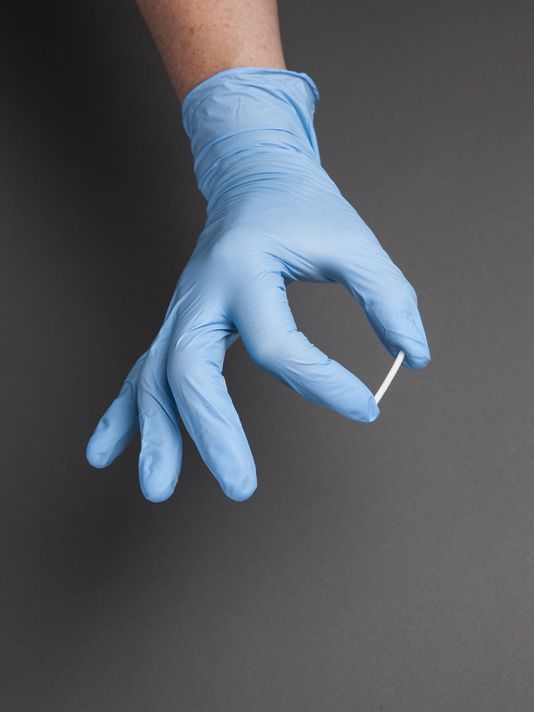
Four tiny, implantable rods that steadily ooze drugs could help some patients kick opioid addictions, an advisory committee for the Food and Drug Administration concluded Tuesday. With a 12 to 5 vote, the committee of medical experts recommended that the regulatory agency approve the implantable device for use—and the agency often follows such advice.

If approved, the treatment would debut amid a national epidemic of addictions and overdoses involving opioids, which includes prescription painkillers and heroin. The committee concluded that the implantable device could offer a safer way to deliver medication-based treatments for addicts, who desperately need better options. However, dissenting members of the committee expressed concern over the device’s safety and hinted that the need to address the addiction epidemic may have clouded the committee’s judgment.

"We all desperately want something to be available," the committee's acting chairwoman Judith Kramer told USA Today after the committee’s Tuesday vote. But, she said, “I’m very concerned about the precedent this sets." Kramer, a professor emerita at Duke University, was one of the five dissenting committee members.

Read 7 remaining paragraphs | Comments

Vice President Joe Biden to lead “moonshot” effort to end cancer

Vague goals so far are to increase resources for research and “break down silos.”

Moonshot Joe. (credit: C-SPAN)

In his final State of the Union address, President Obama announced a “new national effort” to put an end to cancer once and for all—and that effort will be led by Vice President Joe Biden, who last year tragically lost his son Beau to brain cancer at the age of 46.

“It’s personal for me,” Biden wrote in a statement released Tuesday night in conjunction with the President’s address. “But it’s also personal for nearly every American, and millions of people around the world. We all know someone who has had cancer, or is fighting to beat it.”

While the President’s brief remarks about the cancer-busting initiative were vague, Biden revealed in his statement that he has been meeting with researchers, philanthropists, and physicians for months to lay the groundwork for the plan. Last year, Biden personally lobbied for additional federal funding for cancer research. In December, the federal spending bill passed included a $264 million boost to the National Cancer Institute’s budget, which the Vice President praised.

Read 3 remaining paragraphs | Comments

Sperm off-switch may offer men reversible contraceptive

After inventor’s self-test, implantable devices to enter clinical trial this year.

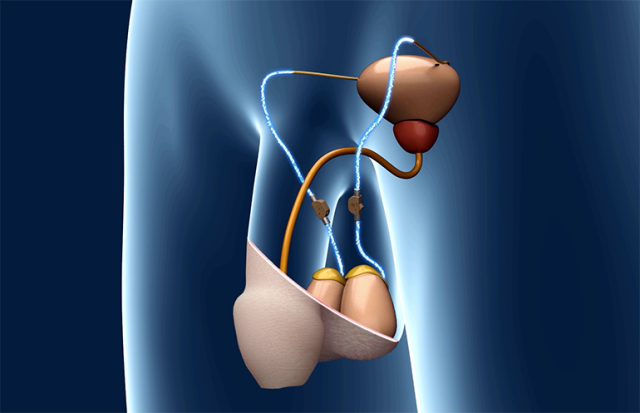
With the flip of two switches, men could one day curb their sperm flow and activate easily reversible birth control, according to ballsy German inventor Clemens Bimek.

Bimek, a carpenter who was frustrated with the lack of male-controlled contraceptives, came up with the idea after watching a television show about anatomy. Determined that his sperm shut-off method would work, the spunky creator patented the idea in 2000 and tested it out on himself (in collaboration with a surgeon) in 2009—and so far so good, he reports. Bimek intends to organize a 25-person clinical trial this year of the method, called the Bimek SLV.

The Bimek SLV works by implanting two devices—shut-off valves—in the scrotum. The valves are each "as small as a gummy bear," according to advertisements, and made of non-magnetic metallic components and a biocompatible polymer already used in medical implants. The devices get attached to the vas deferentia, the two ducts that transfer sperm from the testicles to the urethra. During implantation, each vas deferens is cut and the ends are plugged into the in and out tubes of a valve.

Read 6 remaining paragraphs | Comments
Turing’s Martin Shkreli is worth at least $45 million

Court records reveal E-trade account that disgraced CEO used for $5 million bond.

(credit: Getty Images)

To bail himself out of the slammer after being arrested on charges of securities fraud on December 17, Martin Shkreli put up an E-Trade brokerage account to secure his $5 million bond, court documents revealed. As of January 6, that account had $45 million in assets. Under terms of his current bond, Shkreli cannot sell or trade any of the assets in his E-trade brokerage account.

The revelation is the first glimpse of how much wealth the beleaguered former-CEO has amassed in his short-but-infamous career.

Shkreli, 32, first gained notoriety last fall for ruthlessly hiking the price of a life-saving drug—often used to treat AIDS patients and babies—by more than 5,000 percent. Interest in his assets spiked last month after he was arrested on charges alleging that he orchestrated a Ponzi-like scheme, defrauding hedge fund investors and swindling his former pharmaceutical company, Retrophin, out of millions.

Read 3 remaining paragraphs | Comments

Mammograms every other year for women 50-74, gov’t panel recommends

Panel firms up 2009 stance, but it’s still at odds with other screening advice.

(credit: NASA/Flickr)

A government panel tasked with making recommendations for preventative medical treatments finalized its latest position on breast cancer screening Tuesday: Women with an average risk of the disease will have the best balance of benefits and harms if they get screened once every two years between age 50 and 74. For those aged 40 to 50, screening should be an individual choice based on health and personal values, the panel concluded.

The position by the panel—the US Preventive Services Task Force (USPSTF)—firms up the recommendation it made back in 2009, even though the panel took new data and advanced screening methods into account for its update. Still, the recommendation conflicts with those from other leading health organizations in the US and abroad, highlighting the uncertainty about screening’s benefits and the confusion women face as they manage their health.

In October, the American Cancer Society updated its recommendation. The society suggests that women with an average risk of the disease—that is, no additional risks such as genetic predisposition or breast tissue changes—are best served by getting annual exams starting at age 45 and then transitioning to screens every two years at age 55.

Read 4 remaining paragraphs | Comments

Big names gamble big bucks on blood tests for early cancer detection

Bill Gates, Jeff Bezos, others raise $100 million for tests expected by 2019.

Forget biopsies, ultrasounds, mammograms, pap smears, rectal exams, and other unpleasant cancer screenings—the race is now on for simple, affordable blood tests that can detect all sorts of cancers extremely early.

On Sunday, genetic sequencing company Illumina Inc. announced the start of a new company called Grail, which will join dozens of companies developing such blood tests. Toting big-name investors including Microsoft co-founder Bill Gates and Amazon founder Jeff Bezos, Illumina's high-profile startup raised more than $100 million to get Grail going. The company hopes that Grail’s tests will be on the market by 2019 and cost around $500 a pop.

Though researchers have recently questioned the benefits of early cancer screening—showing in some cases that early detection does not generally save lives—Illumina is confident that the science behind the blood-based screens is at least possible. Illumina Chief Executive Jay Flatley, who will be Grail’s chairman, said Illumina has been working on the tests for about a year and a half. "We've made tremendous progress, which gives us the confidence that we can get to the endpoint that we expect."

Read 5 remaining paragraphs | Comments