Feds sanction health insurance company for erroneously denying coverage

Cigna, being bought by Anthem, is temporarily barred from new Medicare plans.

Cigna Corp. announced Friday that it is temporarily banned from enrolling new customers in its Medicare Advantage and standalone prescription-drug plans following an October audit from the US Centers for Medicare and Medicaid Services (CMS).

In a letter dated January 21, the CMS reported that “widespread and systemic failures” at the insurer resulted in customers being denied medical coverage and prescriptions they rightly had access to. After customers filed grievances about being inappropriately denied services, Cigna failed to properly address those complaints, the CMS said.

The problems at Cigna, which the agency noted has a “long-standing history of non-compliance,” created a “serious threat to the health and safety of Medicare beneficiaries.” Those beneficiaries are people over 65 and young people with disabilities.

Read 2 remaining paragraphs | Comments

New data bucks gun industry claim, finds US majority supports smart guns

In nationally representative survey, ~60% of Americans would buy safer weapons.

(credit: noisemedia/Flickr)

With fingerprint-readers and radio frequency identification, smart guns will only fire in the hands of specific, authorized shooters. Though not new, such technology would undoubtedly help in preventing the tens of thousands of injuries and deaths each year from gun accidents. However, the development and sale of these guns have been jammed amid gun industry claims that few people would buy them.

Now, a group of public health researchers say that those claims are way off target.

In a nationally representative survey, 59 percent of people reported that they were willing to buy a smart gun. Among gun owners, 43 percent said they’d consider one, while 33 percent said they were undecided. The safer, childproof weapons even sparked interest among non-gun owners—nearly two thirds of people who don’t currently own a gun said they’d be interested in buying a smart gun.

Read 8 remaining paragraphs | Comments

California sees boost in vaccination rate ahead of ban on opt-outs

Amid anti-vaccine backlash, state reports 2.5 percent increase in vaccinated kids.

(credit: CDC Global)

As health experts continue to combat vaccine fears and myths with pamphlets and explainers, as politicians rush to install stricter rules on vaccination requirements for school children, and as fiery feuds about the life-saving medicines continue to rage online… something is working—at least in the state of California.

On Tuesday, officials there reported a 2.5 percent increase in vaccination rates of kindergarteners attending public and private schools. For the 2015-2016 school year, 92.9 percent of the state’s more than half a million ankle-biters were up to date on their shots. That’s up from 90.4 percent in 2014 and 90.2 in 2013, the state reported.

The vaccination data tracks shots that prevent diphtheria, tetanus, and pertussis (DTAP); measles, mumps, and rubella (MMR); polio; hepatitis B; and chicken pox.

Read 4 remaining paragraphs | Comments
Poverty may alter the wiring of kids’ brains

Differences relate to emotional controls that link to depression and other disorders.

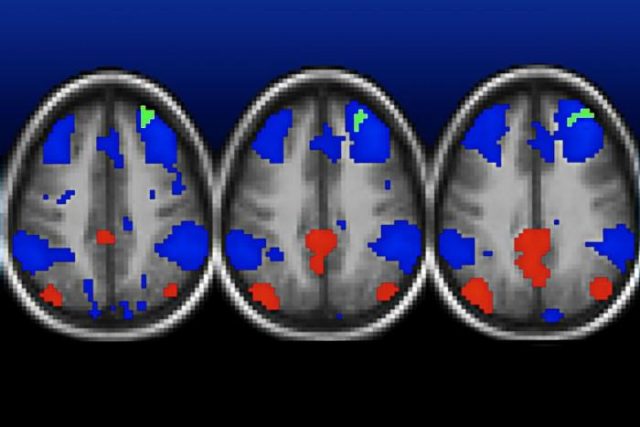
Functional MRI scans show areas in the brains of poor children with normal connectivity highlighted in red and blue, and weakened connectivity shown in green. The areas in green are among several areas -- detailed in other brain scans—where connections are weakened in children raised in poverty. (credit: Deanna Barch)

Growing up poor is known to leave lasting impressions, from squashing IQ potential to increasing risks of depression. Now, as part of an effort to connect the dots between those outcomes and identify the developmental differences behind them, researchers have found that poverty actually seems to change the way the brain wires up.

Compared to kids in higher socioeconomic brackets, impoverished little ones were more likely to have altered functional connections between parts of the brain. Specifically, the changes affected the connections from areas involved in memory and stress responses to those linked to emotional control. The finding, appearing in The American Journal of Psychiatry, suggests that poor kids may have trouble regulating their own emotional responses, which may help explain poverty’s well-established link to depression and other negative mood disorders.

“My take-home message is that poverty gets under the skin,” lead author Deanna Barch, a psychologist and a neuroscientist at Washington University in St. Louis, told Ars. If people weren’t already energized to start addressing poverty and its myriad, deep-seated effects, this should be a fresh call to action, she said.

Read 10 remaining paragraphs | Comments

Living on a top floor may bottom out chance of surviving cardiac arrest

Paramedics lose critical time traveling to and from upper floors of high-rises.

(credit: Michael Coghlan)

Moving on up to that deluxe apartment in the sky might actually increase your chances of moving on down—way down.

Living on or above the third floor of a high-rise significantly lowered the chances of people surviving cardiac arrest that struck at home, researchers report in the Canadian Medical Association Journal. The finding, gleaned from 7,842 cases of cardiac arrest in and around Toronto, suggests that the precious extra moments it takes paramedics and other first responders to get up to patients and get them to the hospital could make the difference between patients living and dying.

“With continuing construction of high-rise buildings, it is important to understand the potential effect of vertical height on patient outcomes after out-of-hospital cardiac arrest,” wrote the authors, led by Ian Drennan, a paramedic and researcher at St. Michael's Hospital in Toronto.

Read 9 remaining paragraphs | Comments

Gluten-free sports diets do nothing, study suggests

In healthy, non-celiac athletes, gluten made no difference in digestion or workouts.

(credit: Marc)

Ditching the notorious complex of proteins known as gluten is a popular diet plan nowadays. Besides people with celiac disease, a severe autoimmune disorder triggered by the proteins, athletes have been particularly smitten with the gluten-free fad. But, according to a recent study, the diet is unlikely to give them the results they expect.

Completely cutting out gluten didn't improve cyclists' workout performance, digestive health, or overall fitness in a short-term, double-blind study, researchers reported in the journal Medicine & Science in Sports & Exercise. “We did not find a beneficial or negative effect of a gluten-free diet,” lead author Dana Lis of the University of Tasmania told The New York Times.

She and her colleagues got the idea to test the effects in athletes after previous studies had reported that gluten-free diets had taken off in the sports world. Many athletes reported thinking that skipping gluten, which is found in wheat and other grains, could improve their digestive health—a common problem for athletes.

Read 6 remaining paragraphs | Comments

Shkreli gets court date delayed after firing lawyers

On their way out, former legal team asked for two-week continuance.

Martin Shkreli, chief executive officer of Turing Pharmaceuticals LLC, exits federal court in New York, US, on Thursday, December 17, 2015. Shkreli was arrested on alleged securities fraud related to Retrophin Inc., a biotech firm he founded in 2011. (credit: Louis Lanzano/Bloomberg via Getty Images)

Martin Shkreli won’t appear in court on Wednesday after all.

After a last-minute plea by his now former legal team, Shkreli will get a two-week delay of his January 20 court hearing while he finds new counsel.

Shkreli, reviled former-CEO of Turing Pharmaceuticals, was charged last month with running a Ponzi-like scheme and defrauding two hedge funds he previously managed and one of the pharmaceutical companies he founded, Retrophin. He has pled not guilty and was released on $5 million bail he posted with a $45-million-dollar E-trade account.

Read 7 remaining paragraphs | Comments

New CDC guidance helps doctors avoid giving antibiotics for colds

Agency and doctors group recommend wait-and-see method and OTC treatments.

(credit: anna gutermuth)

However miserable, common colds and other respiratory afflictions are unlikely to clear up from a round of antibiotics. And it’s about time doctors stop handing out the precious drugs for that purpose, according to a joint guidance by the Centers for Disease Control and Prevention and the American College of Physicians (ACP).

In the new set of guidelines, published in the Annals of Internal Medicine, the ACP and the CDC give doctors a play-by-play for how to dodge requests for antibiotics to treat respiratory infections—the most common reason people go to the doctor—and push alternative, over-the-counter treatments instead.

Unnecessary prescriptions, the two groups argue, can expose swaths of bacteria to antibiotics, providing opportunities for the microbes to develop drug-resistance—a huge public health threat that renders drugs nearly useless against some life-threatening infections. Half of all current antibiotic prescriptions handed out likely fall into the ‘unnecessary’ category, costing more than $3 billion annually, the CDC estimates.

Read 7 remaining paragraphs | Comments

In a brain, dissolvable electronics monitor health and then vanish

The new transient sensors harmlessly melt away after wirelessly transmitting info.

From the folds and crinkles of a living brain, a fleeting fleck of electronics smaller than a grain of rice can wirelessly relay critical health information and then gently fade away.

The transient sensors, which can measure pressure, temperature, pH, motion, flow, and potentially specific biomolecules, stand to permanently improve patient care, researchers said. With a wireless, dissolving sensor, doctors could ditch the old versions that require tethering patients to medical equipment and performing invasive surgery to remove, which adds risks of infections and complications to already vulnerable patients.

Though the first version, reported in Nature, was designed for the brain and tested in the noggins of living rats, the authors think the sensors could be used in many tissues and organs for a variety of patients—from car crash victims with brain injuries to people with diabetes. “Sensors are incredibly important,” chief resident of neurosurgery and study co-author Rory Murphy of Washington University School of Medicine told Ars. But they’ve been a hassle, too.

Read 8 remaining paragraphs | Comments

CDC issues travel advisory for 14 countries with alarming viral outbreaks

Experts scrambling as US sees first birth defect linked to mosquito-spread virus.

(credit: Sanofi Pasteur)

With mounting evidence that the mosquito-spread Zika virus is behind the skyrocketing numbers of severe birth defects in Brazil, the Centers for Disease Control and Prevention late Friday cautioned pregnant women and women planning to become pregnant to postpone travel to a set of Latin American and Caribbean countries and territories experiencing Zika outbreaks.

“Until more is known, and out of an abundance of caution, CDC recommends special precautions,” the agency said. The advisory relates to 14 countries and territories where Zika has newly spread: Brazil, Colombia, El Salvador, French Guiana, Guatemala, Haiti, Honduras, Martinique, Mexico, Panama, Paraguay, Suriname, Venezuela, and the Commonwealth of Puerto Rico.

The warning appears to be the first time the agency has ever recommended pregnant women avoid specific areas due to outbreaks. But health experts at the agency felt the “enhanced precaution” was prudent after new evidence directly linked the virus to four cases of microcephaly, in which babies are born with abnormally small heads and brains. The condition can be fatal.

Read 12 remaining paragraphs | Comments