Traces of Zika found in a man’s semen two months after he was infected

Researchers are still unsure how long virus can linger in infected patients.

This is a transmission electron micrograph (TEM) of Zika virus, which is a member of the family Flaviviridae. Virus particles are 40 nm in diameter, with an outer envelope, and an inner dense core. (credit: CDC)

Two months after a 68-year old British man became sick with Zika virus, traces of the germ lingered in his semen, researchers reported Friday.

The finding suggests that the mosquito-spread virus may unexpectedly hang around in the body for much longer than symptoms appear, which typically only last for about a week. (Though only a quarter or so of people infected with Zika experience any symptoms.) The viral loitering may up the chances of transmission, the authors speculate.

The British man was infected with the virus while traveling to French Polynesia in 2014. Follow-up testing of the man found traces of viral genetic material in his semen 27 days and 62 days after he first reported symptoms of the infection, which included fever, lethargy, and a rash. The findings appeared Friday in Emerging Infectious Diseases.

Read 4 remaining paragraphs | Comments
E-cigs shut down hundreds of immune system genes—regular cigs don’t

People who vape may have weakened defenses against infections.

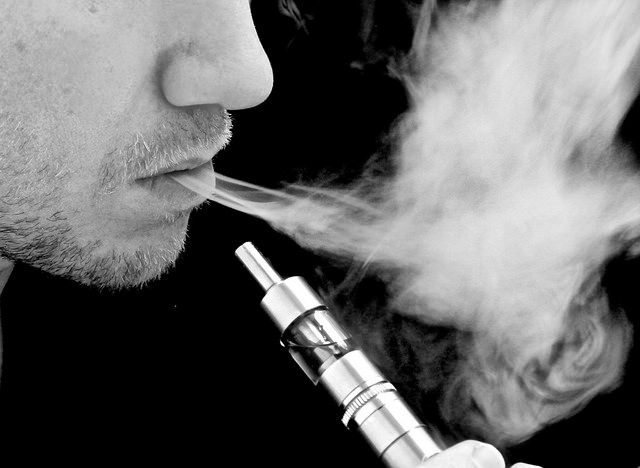
(credit: Ecig Click)

WASHINGTON—It’s widely assumed that swapping cigarette puffing for vapor huffing is better for health—after all, electronic cigarettes that heat up and atomize a liquid concoction can skip all the hazards of combustion and smoke. But researchers are still scrambling to understand the health effects of e-cig use (aka vaping) and to track down the variable and undisclosed components of those vaporized mixtures. The most recent data hints at unexpected health effects unique to e-cig use.

After comparing genetic information swabbed from the noses of smokers, vapers, and non-users of both, researchers found that smoking suppresses the activity of 53 genes involved in the immune system. Vaping also suppressed those 53 immune genes—along with 305 others. The results were presented Friday at the annual conference of the American Association for the Advancement of Science in Washington.

Though research on the significance of that gene suppression is still ongoing, the initial results suggest that e-cig users may have compromised immune responses, making them potentially more vulnerable to infections and diseases.

Read 8 remaining paragraphs | Comments

Potentially deadly drug interactions found mining FDA complaint bin

Researchers find rare but life-threatening interactions among four common drugs.

(credit: ep_jhu)

Mixing prescription drugs is exceedingly common—one in five Americans takes three or more prescription medicines, and one in ten people take five or more. But, every now and then, the results can be unexpectedly harmful—and sometimes deadly. Adverse drug-drug interactions are estimated to put tens of thousands of people in the hospital each year, but they’re difficult to predict and even trickier to track. Only a relatively small number of patients may take a specific, harmful cocktail of drugs, and only a subset of those will have a notable reaction.

To get around the problem, a team of researchers (working with journalists at the The Chicago Tribune) created a computer model to create side-effect profiles for prescription drugs. Then, they mined a massive database of drug-reaction complaints sent to the Food and Drug Administration, as well as 380,000 electronic health records. The results of the analysis so far suggest that four drug combinations—including the combination of the common antibiotic, ceftriaxone, with the over-the-counter heartburn medication, Prevacid (lansoprazole)—may cause a potentially fatal heart rhythm. The findings were published Wednesday in the journal Drug Safety.

The results are only preliminary and need to be backed up with more data. But in lab tests with living cells, researchers found that the combination of lansoprazole and ceftriaxone blocked an electrical channel crucial for a heart beat.

Read 3 remaining paragraphs | Comments

Ancient hook-ups with Neanderthals left lasting effects on our health

The genetic consequences of prehistoric loving are still doing a walk of shame.

Comparison of Modern Human and Neanderthal skulls from the Cleveland Museum of Natural History. (credit: hairymuseummatt)

WASHINGTON—Around 50,000 years ago, anatomically modern humans shacked up with some Neanderthals—and the genetic consequences are still doing a walk of shame through our generations.

The questionable interbreeding left traces of Neanderthal DNA that are linked to mood disorders, mostly depression, as well as tobacco-use disorders, skin conditions, and hypercoagulation (excessive blood clotting), according to a new study published Thursday in Science. The findings lend support to the theory that our past hominin hook-up has had a lasting influence on modern humans’ health. The data also offers hints at genetic adaptations of our ancient ancestors and, potentially, new insights into the diseases they help cause in modern humans, the authors suggest.

Having these traces of Neanderthal DNA doesn’t “doom us” to having these diseases, cautioned John Capra, bioinformaticist at Vanderbilt University and coauthor of the study. The genetic traces linked to disease in modern humans doesn’t mean that Neanderthals were stricken with those diseases either, he added. In fact, some of them could have been advantageous.

Read 7 remaining paragraphs | Comments

Your brain operates differently depending on the time of year

Working memory activity may peak in the fall, while attention tops out in summer.

(credit: Diana/Flickr)

Winter gloom and springtime glee are common seasonal swings. But beyond swaying how you feel, yearly cycles may also shift the way you think, according to a new study in the Proceedings of the National Academy of Sciences.

Comparing the cognitive function of 28 volunteers tested at different points in the year, researchers noted pronounced seasonal patterns in brain region activity. Namely, areas involved in working memory hit peak performance around the autumn equinox, and areas dealing with sustained attention crested around the summer solstice. Though it’s still early in the research to understand the significance of possible annual mental oscillations, the study hints at a previously unappreciated seasonal rhythm of the human brain that could affect learning and behavior.

For the study, researchers led by Pierre Maquet and Gilles Vandewalle at the University of Liège in Belgium recruited 28 healthy volunteers, split evenly by gender and all around 21 years old. To rule out the influence of daily rhythms and environmental factors, the researchers prepared the volunteers for the study by having them stay in the lab for 4.5 days. During this time, participants endured a 42-hour sleep deprivation routine in a dimly lit sound-proof room with no time cues.

Read 5 remaining paragraphs | Comments

New report outlines NFL interference in concussion research

Questions raised over helmet sensors as study links successive blows to brain damage.

The San Francisco 49ers take on the Denver Broncos in action from a 2010 game in London. (credit: Mark Botham)

The National Football League, one of the largest funders of brain research in the country, has subtly worked to influence research efforts and downplay the link between brain disease and the beloved sport, a new report by ESPN's Outside the Lines alleges.

On the surface, the league and its partners appear to altruistically support scientific studies on the effects of hard-hitting sports, such as football, donating more than $100 million to brain research efforts that may not otherwise have been supported. Behind the scenes, however, the organization has tried to funnel the money back to NFL-affiliated scientists and reneged on contributions when researchers came up with discomforting data, the investigation finds.

In light of the funding environment, some brain researchers have compared the NFL’s actions to those of Big Tobacco in the days when the cigarette makers spent millions of dollars to buy off researchers and fund studies that denied links between smoking and serious health effects.

Read 15 remaining paragraphs | Comments

Obama says no need to panic over Zika, requests $1.8 billion

Republicans talk quarantines amid fund request for vaccines, mosquito control.

The White House announced Monday that it is requesting $1.8 billion in emergency funding to respond to and combat the Zika virus, which is currently spreading in more than two dozen countries and territories throughout the Western Hemisphere.

There shouldn’t be a panic on this,” President Barak Obama said in an interview aired Monday on CBS This Morning. “The good news is, this is not like Ebola,” he said. “People don’t die of Zika.” But, he went on to mention the troubling link with Zika infections and birth defects in some babies, namely microcephaly, a condition of shrunken heads and skulls. “There’s enough correlation that we have to take this very seriously,” he said of the risk for pregnant women and women planning to become pregnant.

In its Monday announcement, the White House explained that the requested funds, if approved by Congress, will “accelerate our ability to prevent, detect and respond to the Zika virus and bolster our ability to reduce the potential for future infectious disease outbreaks.”

Read 4 remaining paragraphs | Comments

McDonald’s kale salad has more fat and calories than a double Big Mac

Fast-food salads or not, eating out is bad for your health according to new studies.

(credit: Tim Deering/Flickr)

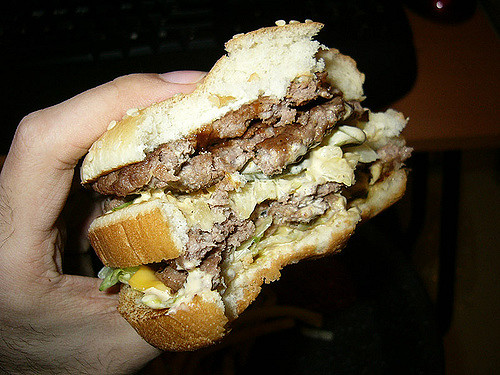
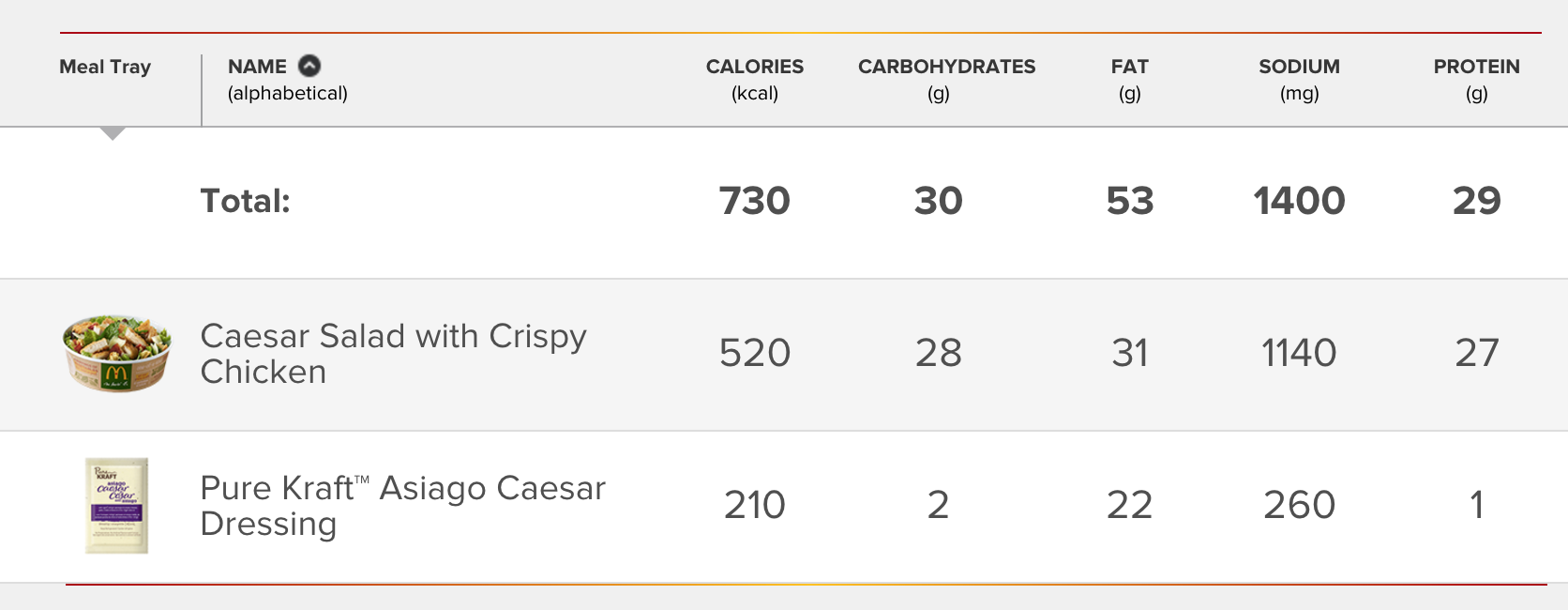
In an effort to offer healthier menu items, McDonald’s has unveiled a new salad with a “nutrient-rich lettuce blend with baby kale,” shaved parmesan, and chicken (grilled or fried). Like many fast-food salads, it may seem like a healthy option at first, but it’s not. The salad, when paired with the restaurant’s Asiago Caesar Dressing, packs more fat, calories, and salt than a double Big Mac—that’s a sandwich with four beef patties.

(credit: McDonald's)

While the nutrition check on a McDonald’s item may not come as a shock, the unhealthy salad option falls into a bigger trend of restaurant meals—fast food or not, eating out is hard on your waistline and health.

(credit: McDonald's)

In one recent study, researchers found that 92 percent of large-chain, local-chain, and mom-and-pop restaurants served meals that exceeded the calorie intake for a healthy meal. The study included 364 meals from restaurants in three cities: Boston, San Francisco, and Little Rock, Arkansas. The meals covered American, Chinese, Greek, Indian, Italian, Japanese, Mexican, Thai, and Vietnamese-style cuisine.

Read 4 remaining paragraphs | Comments

The problem with BPA-free: Alternatives are just as troubling

More data shows that BPS and other BPA replacements also disrupt hormones.

(credit: nerissa's ring)

BPA-free labels, blazoned on baby toys and beverage holders, are supposed to allay fears about the notorious chemical, previously used in sturdy plastics and epoxy resins. After all, bisphenol A (BPA) has been shown to impersonate hormones such as estrogen, and it is associated—though not definitely linked—to a broad range of health problems, including cancers and cardiovascular disease.

But the "BPA-free" label may simply be a meaningless marketing ploy.

A growing number of studies suggest that manufactures are swapping BPA for chemical cousins that have the same troubling activities in humans and animals. In a new study in Endocrinology, for instance, researchers found that a common BPA stand-in, bisphenol S (BPS), has nearly identical hormone-mimicking effects as BPA in zebrafish, a model organism used to study genetics and development. In the study, researchers found that BPS, like BPA, altered nerve cell development, changed the activity level of genes involved in developing the reproductive system, and caused early hatching (the fish equivalent of premature birth).

Read 12 remaining paragraphs | Comments
Greed, lies, and Shkreli’s smug “performance”: Lawmakers go ballistic

Hearing exposes Turing’s lavish spending, while exec says they’re losing money.

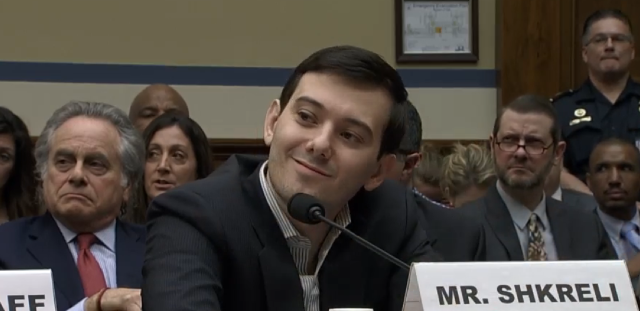
Martin Shkreli, former CEO of Turing, smirked his way through Thursday's Congressional hearing. (credit: CSPAN)

WASHINGTON—After Turing Pharmaceutical raised the price of the decades-old, life-saving drug, Daraprim, from $13.50 a pill to $750 last fall—leaving some patients with $16,000 co-pays—Turing executives handed out six-figure bonuses, spent thousands of dollars on a lavish yacht party, and paid a public relations firm to help them shine their tarnished reputation.

The revelations came amid a Thursday hearing by the House Committee on Oversight and Government Reform, which focused on such high-profile cases of drug price-hikes that the committee argues are helping to fuel the soaring costs of healthcare. The committee, chaired by Rep. Jason Chaffetz (R-Utah), aimed to understand why some drugs’ prices have skyrocketed and figure out how to stop it.

One of the key witnesses they called to testify was Martin Shkreli, Turing’s majority shareholder and former CEO, who was largely responsible for Daraprim’s price hike. Shkreli stepped down as CEO in December, shortly after being indicted on fraud charges for allegedly running a Ponzi-like scheme with two former hedge funds and swindling another former pharmaceutical company, Retrophin, out of millions of dollars. In light of his impending criminal trial, Shkreli said prior to the hearing that he would not answer questions from the lawmakers and would invoke his Fifth Amendment right to avoid self-incrimination. He kept to his word.

Read 21 remaining paragraphs | Comments