Report of lab-made sperm spawns fertility treatment hopes, skepticism

Chinese scientists say they coaxed mouse stem cells into sperm used to produce pups.

(credit: Lisa Roe)

What happens in the testes, stays in the testes. At least, that’s according to frustrated researchers who have spent years trying to understand and recreate the process that generates sperm. But now, in a satisfying data release, a group of Chinese researchers report that they’ve finally cracked that nut.

In the study, published Thursday in Cell Stem Cell, the researchers describe using mouse stem cells to generate rudimentary sperm that was used to fertilize eggs and produce healthy mouse pups. If true, the study could pave the way for the development of human sperm in lab dishes for fertility treatments.

“The results are super-exciting and important,” Jacob Hanna, a stem cell scientist at the Weizmann Institute of Science in Rehovot, Israel, told Nature. However, several other researchers said they were skeptical of the data and anxious to see the results repeated in other researchers’ hands. “You have to be very cautious about the implications of this paper,” Mitinori Saitou of Kyoto University said.

Read 5 remaining paragraphs | Comments

Viral con foils drug-resistant microbes, may nix need for poop transplants

Tricking immune system into fighting nonexistent virus may protect gut microbes.

Vancomycin-resistant enterococci (red) colonizing the small intestine (intestinal epithelial cells are blue and the mucus layer is green) of an antibiotic-treated mouse. (credit: Molecular Cytology Facility at Memorial Sloan Kettering Cancer Center)

When it comes to the human body’s trillions of microbial inhabitants, sorting the good from the bad is critical. Antibiotics are powerful weapons for obliterating nasty, disease-causing germs, but they can also take out microbial chums as collateral damage. The loss of those invisible allies can have long-term, cascading health effects, including opening opportunities for invasions by enemy microbes, such as Clostridium difficile and Vancomycin-resistant Enterococcus faecium (VRE).

Fixing such a culled, out-of-whack microbial community in the human body—a condition called dysbiosis—is hard. Scientists still don’t have a firm hold on the recipe for a “healthy” microbiome, let alone know how to mend one that appears imbalanced. The closest researchers have come to such a feat is with the use of fecal transplants to restore gut communities—essentially a wholesale replacement of a wrecked microbial community with a functional one.

But now researchers may be on to a way to prevent dysbiosis in the first place.

Read 9 remaining paragraphs | Comments

CDC investigates 14 new reports of possible sexual transmission of Zika

The cases suggest infection route more common than expected.

©2009 Thomas van Ardenne (credit: Thomas van Ardenne)

The Centers for Disease Control and Prevention, along with state health departments, is investigating 14 new reports of possible sexual transmission of Zika in the US, the agency announced Tuesday.

All of the cases involve the possible transmission of the virus to a female who hadn’t traveled from a male sexual partner who had recently traveled to an area where Zika was spreading through mosquitoes. While sexual transmission of the virus has been previously reported, the number of newly suspected cases suggests that sexual transmission may be more common than health experts previously expected.

“We were surprised that there was this number,” Dr. Anne Schuchat, the deputy director at the Centers for Disease Control and Prevention, said in an interview with the New York Times. “If a number of them pan out, that’s much more than I was expecting.”

Read 3 remaining paragraphs | Comments

New molecular scissors cut out lingering HIV—maybe once and for all

Alongside current drugs, therapy shows potential to safely help nix infection.

For the approximately 37 million people worldwide who are infected with HIV (human immunodeficiency virus), the newest cocktails of anti-retroviral drugs have come a long way in beating back the retrovirus and keeping an infection in check. Still, those drugs are no cure. While the treatments snarl the viral assembly line and thwart new infectious particles from invading the body’s cells, HIV itself is still there, hunkered in the DNA of a patient’s genome until there’s an opportunity for a comeback—say, when a patient goes off their medication.

As long as there’s lingering HIV, patients must keep taking the drugs, which cause side-effects, make for high prescription bills, and raise the threat of drug resistance. At least, that's the case for now. In a new study, scientists reveal a possible way to literally hack those lurking viruses out of a person's DNA strands.

With a custom enzyme made through coerced evolution, researchers selectively and reliably sliced HIV sequences from a number of cell types: bacteria, human cell lines used in research, in cells collected from patients with HIV infections, and in “humanized” mice with HIV. Though the strategy is early in development—far from clinical use—the data so far points to an effective and safe way to help drug treatments completely finish off HIV infections. This is a “promising strategy for future clinical applications,” the authors report.

Read 9 remaining paragraphs | Comments

Actually, your shit might not stink—if you’re surrounded by your people

Students less offended if they think odors are from classmates rather than rivals.

(credit: aqua.mech)

A rose by any other name would smell as sweet. But a sweaty human by any other college-affiliation than your own might smell far more sour.

In two experiments, researchers found that college students asked to sniff sweaty t-shirts were significantly more disgusted if they thought the funk originated from someone at a rival school rather than their own. The findings, reported Monday in the Proceedings of the National Academy of Sciences, highlight the importance of social groupings in our perceptions. Namely, social groups help make individuals more tolerant of personal pew—improving team work—as well as create perceived barriers to collaboration with non-group members.

“More fundamentally, the studies remind us that groups involve not only a gathering of minds but also of sweaty, smelly, tactile bodies,” the authors conclude. “It is impossible to work with people if you cannot stand their physical presence. Accordingly, understanding of how group life is possible will necessarily remain incomplete without attention to the sensual dimension.”

Read 5 remaining paragraphs | Comments

Homeopathy successfully turns water into a placebo

Shocking analysis finds water is not medicine—and doesn’t have a memory.

(credit: Wonderlane)

After a thorough evaluation of 57 scientific reviews that encompassed 176 studies on 68 illnesses, a panel of health experts has once again concluded that homeopathy is at best a placebo (when it's not being potentially harmful).

Homeopathy, which one of the panel members referred to as a “therapeutic dead-end,” is based on the idea that “like cures like” (a questionable proposition to start with). Thus, its practitioners claim that if you take a substance that causes a sickness or similar symptoms of a sickness, then dilute it—to the point where the result is plain water—you create a cure. There's no mechanism that can possibly explain this, but some tout the idea that water has memory that can retain therapeutic information after dilution has removed every last molecule of the “healing” substance.

These are centuries-old ideas, and we now know they defy basic knowledge of physics, chemistry, and biology. Accordingly, they've long been dismissed by the vast majority of modern scientists and physicians. All that hasn’t stopped homeopathy believers. In 2007, about 3.3 million Americans spent $2.9 billion on the industry. In the UK, the National Health Service picks up a $5.74 million (£4 million) check for two homeopathic hospitals and various water treatments.

Read 5 remaining paragraphs | Comments

Violence-inducing bath salts may be common hidden ingredient in party drug

Ecstasy users surveyed insisted, “I’m not a zombie who eats people’s faces.”

(credit: Leon Landmesser)

Peace, love, unity, respect… and anti-cannibalism. Such a revised credo for ravers may follow a new study that found many ecstasy users are inadvertently ingesting novel psychoactive substances, known as “bath salts,” which in some cases trigger violent behavior.

Of 48 party-going, life-time ecstasy users that provided hair samples, half tested positive for bath salts (synthetic cathinones), researchers reported. Of the 34 people who said on a survey that they believed they had never taken bath salts, 14 (about 41 percent) tested positive for the psychoactive substances.

“While we cannot completely rule out dishonest responses (e.g., underreporting “bath salt” use), our results suggest that many ecstasy users are unintentionally or unknowingly using synthetic cathinones and/or other [novel psychoactive substances],” the authors wrote in the journal Drug and Alcohol Dependence.

Read 5 remaining paragraphs | Comments

Conspiracy theories, wonky rumors, doubts buzz around Zika, hassle WHO

Organization says it needs $56 million to fight infection, misinformation.

With notable gaps in scientists’ understanding of Zika, there have been plenty of pet theories, ridiculous rumors, doubts, and fears to fill the spaces. Among the ideas circulating as the mosquito-born virus continues to spread in the Western hemisphere, rumors have swirled that Zika’s emergence is the making of mad scientists who unleashed genetically engineered mosquitoes or that it's from drinking water “tainted” with a harmless, mosquito-killing insecticide. Another theory says it's a Scrooge-like plot by the one percent to decrease the surplus population.

While the World Health Organization and other experts have quickly smacked down those more far-fetched explanations—usually with responses that include “ridiculous,” “not credible,” and “no scientific basis”—other theories have been a little harder to bat away as scientists await more data. In particular, there’s lingering speculation that the commingling of Zika and dengue viruses may be to blame for Zika’s suspected link to microcephaly—a birth defect that leaves babies with malformed heads and brains. On the other hand, there are persistent rumblings among media and some scientists that the alarming uptick in microcephaly in Brazil, which is currently seeing an explosive outbreak of Zika, may simply be due to poor medical reporting.

Amid the competing chatter and conjecture, the WHO is attempting to coordinate emergency international efforts to fight the virus’ spread, treat those affected, and keep the facts straight. On Wednesday, the organization put out a $56 million plan (PDF) to get it all done—with the largest chunk, $15.4 million, going to communications. As part of those communication efforts, "[n]ews and social media channels will be monitored and analysed to identify audience concerns, knowledge gaps, rumours, and misinformation,” the agency wrote. The rest of the money will go to surveillance, mosquito control, healthcare for the affected, research, and coordination.

Read 8 remaining paragraphs | Comments

Treatment saved ~90% of terminal cancer patients, but it has scary side effects

Scientists cautiously optimistic about reprogramming immune cells to wipe out cancer.

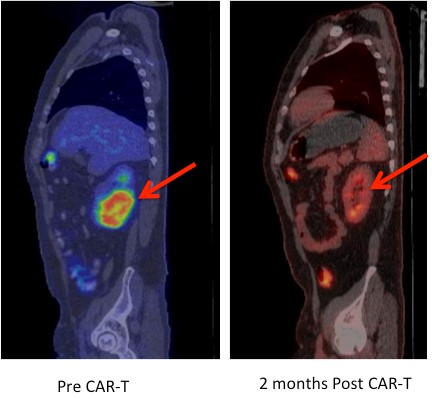
Shrinking of lymphoma after CAR T-cell therapy. Positron emission tomography (PET) images showing large tumor mass in the kidney (red arrow) prior to CAR-T cell therapy that completely regressed on a repeat PET scan performed 2 months after CAR-T cells. (credit: Fred Hutch News Service)

WASHINGTON—Militarizing the body’s natural immune responses so that it can fight off cancerous uprisings has been seen as a promising strategy for years. Now, a sneak peek of data from a small clinical trial suggests that the method may in fact be as useful as doctors hope—but there’s still some serious kinks to work out.

In a trial of 29 people with a deadly form of leukemia—acute lymphoblastic leukemia (ALL)—and no other treatment options, 27 went into remission after scientists plucked some of their immune cells, engineering them to fight cancer, then replaced them. The method was also successful at treating handfuls of patients with Non-Hodgkin lymphoma and chronic lymphocytic leukemia. The preliminary, unpublished findings were reported at the annual meeting of the American Association for the Advancement of Science in Washington.

While the early result suggests the treatment can be effective for these types of cancer, there were severe problems during the trials: several patients suffered extreme, full-body inflammation (cytokine release syndrome) in response to the treatment and needed to be placed in intensive care. Two patients died.

Read 5 remaining paragraphs | Comments

With a few skin cells, scientists can make mini, thinking version of your brain

Tiny ball-shaped noggins may aid research on Zika, autism, new drugs etc.

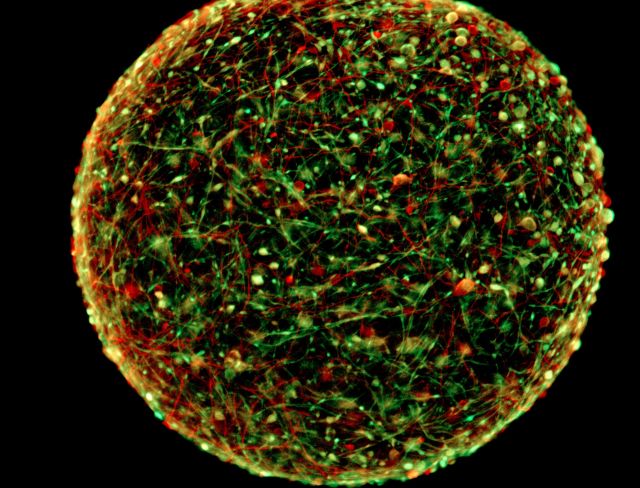
Tiny, rolling balls of brain cells knocking around in a lab may one day help keep you from losing your marbles—among other things.

The small cellular balls act like mini-brains, mimicking aspects of the real thing, including forming noggin-like structures and pulsing with electrical signals like a thinking mind, researchers reported Friday at the annual meeting of the American Association for the Advancement of Science in Washington. The mini-brains, which can be personalized based on whose cells they’re made from, may soon help scientists study a wide variety of diseases and health problems—from autism and Parkinson’s to multiple sclerosis and Alzheimer’s, as well as stroke, brain trauma and infections, such as Zika virus.

“There are a variety of places where a mini brain could be useful,” said Wayne Drevets of Janssen Pharmaceuticals Inc., who was not involved with the research. In some cases, they may offer a cheaper, more ethical, and more realistic model for human health than mice and other animals, he and other researchers said at the conference.

Read 9 remaining paragraphs | Comments