How puberty may stop us from making asinine decisions

Brains may get better at making sage plans rather than suppressing childish urges.

(credit: Moyan Brenn)

The pre-pubescent penchant for shenanigans is undeniable. But how our developing brains grow out of letting us make dopey decisions is still up for debate.

Researchers have speculated that the adolescent brain eventually gets better at shoving down those hankerings to commit acts of stupidity. But now a study on primates suggests that the brain may mature by getting better at forming alternate strategies.

By examining patterns of brain activity in male macaque monkeys before and after puberty, researchers found that their adult brains make smart choices not by suppressing foolish urges but by getting better at forming wise, goal-oriented plans. The findings, published in the Proceedings of the National Academy of Sciences, may provide insight into how to treat patients who struggle with social and mental health problems due to cognitive immaturity, the authors suggest.

Read 7 remaining paragraphs | Comments

Magnetic mind control works in live animals, makes mice happy

Using a magnet, researchers remotely control brain circuitry, alter behavior.

(credit: Windell Oskay)

For a bunch of mind-controlled mice, walking into a magnetic field has never felt sooo good.

The imperceptible force that the genetically tweaked rodents wandered through fired up the reward-related circuits in their brains, likely conjuring the pure pleasure experienced when, for instance, they ate a yummy treat, researchers report Monday in Nature Neuroscience. Of course, this meant that the mice didn’t want to leave that happy magnetic field.

While getting mice to congregate in specific, magnetized areas may be useful for pest control, the experiment demonstrates a much more powerful point: that researchers can remotely control specific brain circuits in living animals with just magnets. The finding paves the way for magnetic mind control to help study the functions and malfunctions of the brain—plus the use of ‘magneto-genetic’ therapies to treat brain disorders, the authors report.

Read 9 remaining paragraphs | Comments

High-fat diets may spur cancer by activating tumor-prone stem cells

Mouse study may explain well-known link between obesity and cancer in humans.

(credit: cyclonebill/Flickr)

Chowing down on a high-fat diet may not only grow your waistline. It may also plump stem cell populations in your gut—cells that are prone to producing tumors.

After about a year of feeding mice a diet of 60 percent fat, researchers found that the rodents had an unusually hefty population of cancer-susceptible intestinal stem cells and cells that act like stem cells. Those cells were supercharged by a protein called PPAR-δ, which can be switched on by the presence of fatty acids in the gut, the researchers reported.

The findings, published in Nature, may explain why epidemiological data in humans has repeatedly linked obesity to boosted risks of cancer, particularly colon cancer. And, it may offer researchers a new target for knocking back the risks of cancer in the obese.

Read 7 remaining paragraphs | Comments
Can Google, with its big data, map and zap the spread of Zika?

Tech giant and researchers hunt for spatial modeling, which could prove key.

Google software engineers John Li and Zora Tung with UNICEF research scientist Manuel Garcia Herranz and UX designer Tanya Bhandari working on the open source data platform. (credit: Google)

A vaccine would be a priceless weapon in the fight against Zika, a virus currently tearing through the Western Hemisphere and linked to devastating birth defects and paralyzing neurological conditions. But a vaccine wouldn’t be everything, of course. If the frustrating wars against measles and polio have proven anything, it’s that eradicating an infectious disease requires relentless public health outreach, surveillance, and containment, as well as medical advances. Indeed, the one and only eradication of an infectious disease of humans—smallpox—was accomplished not just with a vaccine, but tight networks for disease monitoring and strategic vaccination campaigns around disease hotspots—in other words, spatial data and responses.

While Zika is very different from smallpox and scientists are likely to be years away from having a vaccine, the importance of spatial data in stamping out a scourge are the same. And, when it comes to mapping Zika, Google thinks it’s uniquely suited for the task.

Thursday, the tech giant announced that it has assembled a team of volunteer engineers, designers, and data scientists that will use weather, travel, and disease data to map and forecast the spread of the virus. Google hopes that the resulting open source modeling will help governments and public health organizations monitor and anticipate outbreaks in real time so that they can direct resources and responses accordingly.

Read 4 remaining paragraphs | Comments

Gray’s Anatomy may have been largely plagiarized, written by a scoundrel

Researchers rehash whether Gray copied text, stole credit, and was generally rotten.

The history of Gray's famous text may reveal the anatomy of a jerk. (credit: Public Domain)

Gray’s Anatomy is easily recognized worldwide as one of the most revered and influential medical texts of all time. But a closer examination of its medical history turns up tales of a disgraceful birth and hints that its author, Henry Gray, may have been a bit of a fraudster.

Henry Gray, author of Gray's Anatomy. (credit: H. Pollock)

Notes, publications, and diary entries from Gray’s colleagues suggest that the famous author may have plagiarized numerous passages of the text and was pushy, cut-throat, and resented, a new commentary piece in the journal Clinical Anatomy argues. While the allegations are not new, one researcher claims to have fresh data that refutes them, urging a renewed dissection of Gray’s character and actions.

The commentary’s author, Ruth Richardson, a medical historian and visiting scholar at King’s College London, wrote about Gray’s alleged cheating ways in her 2008 book, The Making of Mr. Gray’s Anatomy. But in a 2014 scientific conference, anatomy professor Brion Benninger, of the College of Osteopathic Medicine of the Pacific – Northwest, publicly announced that he and a colleague had carried out a computer analysis of the text and found no such evidence of plagiarism. He said that he intended to publish the analysis. But, in the year since, he has not produced any data.

Read 14 remaining paragraphs | Comments

Scientists pluck genes at the root of gray hairs, unibrows, bushy beards

Data may help evolution, forensic, aesthetic research. Neckbeards still mystery.

(credit: New Line Cinema)

Combing through the hairy genetic data of more than 6,000 people, researchers have teased out ten genes behind various furry features on human heads—unibrows, lush beards, and graying strands alike.

The study, published in Nature Communications, offers the first look at hair heredity beyond balding, color, and curliness. And the results may be useful for forensic analyses, understanding human evolution, as well as for cosmetic purposes.

The study, led by Kaustubh Adhikari at the University College London, plucked hair-feature information and blood samples from 6,630 people in Brazil, Colombia, Chile, Mexico, and Peru. The group had a mix of European, African, and Native American ancestry, providing plenty of genetic variation to untangle. At the blood drawing, the researchers took note of the participants’ hair features, such as eyebrow and beard follicle density, unibrow presence, hair-line shape, and graying. Then they tried to tie those features with genetic patterns from analysis of the blood samples.

Read 3 remaining paragraphs | Comments

Scientists may have found molecular gatekeeper of long-term memory

Dialing up the amount of the molecule strengthens recall, fly study suggests.

(credit: NASA)

For a long-term memory to form in our noggins, a complex chain of cellular events needs to kick into action. It starts with chemical cues set off by a behavior or experience that make their way to specific nerve cells in the brain. Upon arrival to those cells, the chemical signals are ferried from the outer waiting area of the cell to the nucleus—a cell’s command center where the genetic blueprints are kept. In the nucleus, the molecular messenger can persuade the cell to switch on or off genes—which can strengthen nerve connections and, ultimately, lock down a memory for long-term recall.

While those general steps are clear, the details are still a bit fuzzy. For instance, researchers don’t know how exactly the molecular signals get shuttled to the command center, which generally have tight security. But a new study may finally have that answer.

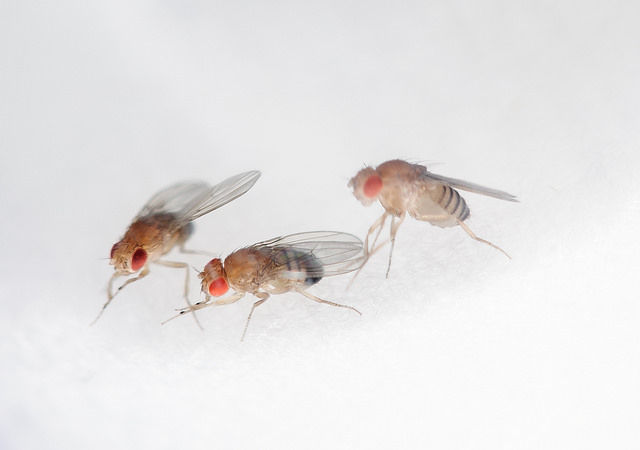
In the tiny minds of fruit flies, a protein called importin-7 acts to shuttle the memory-triggering signal into the nucleus with its top-level clearance to the restricted area, researchers report in the Proceedings of the National Academy of Sciences. Because this step of long-term memory formation seems the same in everything from flies to humans, and humans have their own version of importin-7, the finding could help fill in the details of how our minds form memories, the authors suggest.

Read 7 remaining paragraphs | Comments

Butt procedures, male breast reduction growing slices of plastic surgery

Every 30 min of 2015, a rump was remodeled. Men had 40% of all breast reductions.

(credit: Wikimedia)

For doctors specializing in the nipping and tucking of faces, the latest stats on plastic surgery might be a bit of a bummer.

While sagging cheeks are still a leading motivation for cosmetic surgery, new data (PDF) compiled by the American Society of Plastic Surgeons (ASPS) suggests a subtle tweak in the trends. In 2015, redesigning the derriere—not the face—was the fastest growing area of plastic surgery in the United States, the society found.

Specifically, butt implants and lifts showed the largest uptick in procedures over those done in 2014—both increasing by 36 percent. Backside bulking with fat grafts also rose by 28 percent. And surgeons were clearly working their tails off, performing more than 22,000 tushie operations—about one every 30 minutes over the year.

Read 4 remaining paragraphs | Comments

Pharma’s drug hikes doubled average cost of prescriptions in last decade

Soaring costs of brand name and specialty drugs outpacing inflation, income of elderly.

(credit: Eric Hunsaker)

Trips to the pharmacy are getting more and more expensive. From 2006 to 2013, the average retail cost of a year’s supply of 622 common prescriptions doubled—from about $5,500 to more than $11,000—according to a new report from AARP, a senior citizen advocacy group.

The rising costs are likely to hit senior citizens hardest, the AARP cautioned, noting that the 2013 average cost would come out to about 75 percent of the average Social Security retirement benefit, which is $15,526.

“If these trends continue, more and more Americans will simply be unable to afford the medications that they need to get and stay healthy,” Debra Whitman, AARP’s Chief Public Policy Officer, said in a statement.

Read 6 remaining paragraphs | Comments

In comeback bid, Shkreli’s old company gets OK to buy life-saving drug

Amid outcry, KaloBios may jack the drug’s price and make millions off FDA voucher.

(credit: Glenn Seplak)

After firing the infamous Martin Shkreli as its CEO, filing for bankruptcy, and getting delisted from the NASDAQ stock exchange, KaloBios Pharmaceuticals, Inc. may now be poised for a comeback—thanks to a Shkreli-inspired plan to jack-up the price of a life-saving drug and exploit a federal voucher system.

On Friday, KaloBios’ bankruptcy court in Delaware authorized the pharmaceutical company to enter into a binding deal to buy the worldwide rights to one of only two drugs used to treat Chagas disease, a neglected and life-threatening parasitic infection. With the deal, which was planned by Shkreli prior to his departure, the company plans to raise the price of the drug possibly by 600-fold or more. It will also use the drug’s status as one that treats a neglected tropical disease to earn a voucher from the Food and Drug Administration. Such vouchers allow drug companies to move through the drug-approval process faster, and they could be sold to other pharmaceutical companies for hundreds of millions of dollars.

When KaloBios and Shkreli first revealed the plan late last year, it sparked outcry from public health experts and infectious disease doctors who feared that the new cost would make it difficult for the millions of patients in Central and South America to get the drug. Those fears were put on ice following KaloBios’ series of troubles stemming from Shkreli’s arrest on fraud charges in December, but Friday’s news is likely to reignite concern as the company moves forward as planned.

Read 12 remaining paragraphs | Comments