Hospital will pay $2.2M for letting Dr. Oz show film w/o consent, air death

Deceased’s family learned of footage by inadvertently watching it on TV.

(credit: Wikimedia)

New York Presbyterian Hospital has agreed to a $2.2 million settlement with the federal government over the “egregious disclosure” of patients’ health information, the Department of Health & Human Services announced Thursday. The violations occurred after the hospital gave the ABC reality TV show, “NY Med,” starring Dr. Mehmet Oz, “unfettered access to its healthcare facility.”

“This case sends an important message that OCR [the HHS Office for Civil Rights] will not permit covered entities to compromise their patients’ privacy by allowing news or television crews to film the patients without their authorization,” Jocelyn Samuels, OCR’s Director, said in a statement.

In addition to the hefty settlement, HHS added that it will monitor the hospital for two years to ensure that it is protecting its patients' privacy appropriately.

Read 6 remaining paragraphs | Comments
Your brain’s reaction to celeb pics may create the most secure form of ID

Neurological data on visual processing lets researchers identify people with 100% accuracy

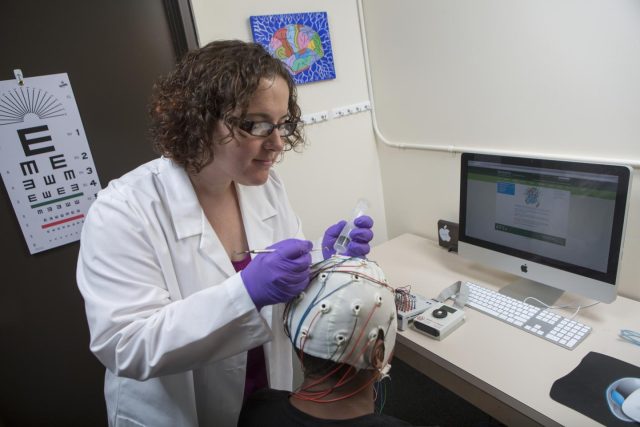
Sarah Laszlo puts an EEG headset on a research participant's head. (credit: Jonathan Cohen/Binghamton University)

While your brain on drugs may be analogous to a fried egg, your brain on Instagram may be like a super-secure form of identification, researchers report in a new study. Fingerprints are so twentieth century. The authors envision future security systems that authenticate or grant access by monitoring a user’s brain while looking at random pictures, such as snapshots of Anne Hathaway or a slice of pizza.

According to the researchers, our brains create unique patterns of neural activity in the first few milliseconds during which we process and react to certain pictures, including images of food, celebrities, and infrequently used words. When the researchers collected and analyzed such patterns from 50 adult participants, ranging in ages from 18 to 43, they were able to create unique brain-based passcodes that identified individuals with 100-percent accuracy and, so far, seem impossible to duplicate.

Study coauthor Sarah Laszlo, a neuroscientist at Binghamton University in New York, told Ars:

Read 10 remaining paragraphs | Comments

Prescription meds get trapped in disturbing pee-to-food-to-pee loop

New irrigation methods mean veggies and fruits serve up used pharmaceuticals.

(credit: Carsten Schertzer)

If you love something, set it free… so the old adage goes. Well, if the things you love are pharmaceuticals, then you're in luck. Through vegetables and fruits, the drugs that we flush down the drain are returning to us—though we’ll ultimately pee them out again. (Love is complicated, after all)

In a randomized, single-blind pilot study, researchers found that anticonvulsive epilepsy drug carbamazepine, which is released in urine, can accumulate in crops irrigated with recycled water—treated sewage—and end up in the urine of produce-eaters not on the drugs. The study, published Tuesday in Environmental Science & Technology, is the first to validate the long-held suspicion that pharmaceuticals may get trapped in infinite pee-to-food-to-pee loops, exposing consumers to drug doses with unknown health effects.

While the amounts of the drug in produce-eater’s pee were four orders of magnitude lower than what is seen in the pee of patients purposefully taking the drugs, researchers speculate that the trace amounts could still have health effects in some people, such as those with a genetic sensitivity to the drugs, pregnant women, children, and those who eat a lot of produce, such as vegetarians. And with the growing practice of reclaiming wastewater for crop irrigation—particularly in places that face water shortages such as California, Israel, and Spain—the produce contamination could become more common and more potent, the authors argue.

Read 8 remaining paragraphs | Comments
Theranos CEO “devastated” by company’s failures, claims ignorance

CEO Elizabeth Holmes takes full responsibility for problems and awaits fed decision.

(credit: NBC TODAY)

Elizabeth Holmes, founder and CEO of blood testing company Theranos, said she was “devastated” by failures at the company’s California laboratory, which have left federal regulators threatening to shut down the lab and ban Holmes from the business of blood testing for at least two years.

In an interview that aired Monday on NBC’s TODAY show, Holmes took full responsibility for the problems, which largely involve inaccurate test results and the hiring of unqualified workers. However, she explained the failures by noting that she was unaware of them.

“I’m the founder and CEO of this company,” she said. “Anything that happens in this company is my responsibility at the end of the day.” But when asked why the laboratory didn’t seem to have protocols to ensure that they were following internal and external quality checks for the medical test results or hiring only employees with the necessary licenses and qualifications to handle those medical tests, Holmes responded, “Probably the most devastating part of this is that I thought we did.”

Read 5 remaining paragraphs | Comments

Baffling genetic glitch creates stuttering mice w/ human-like speech disorder

Researchers hope the stammering rodents help find a cure for the speech problem.

(credit: UK Film Council )

Mice that can stutter like humans may seem pretty striking. But what really renders researchers speechless is the enigmatic genetic glitch that causes stuttering.

Researchers led by Terra D. Barnes of Washington University discovered that their genetically-engineered mice stutter due to DNA defects in a humdrum “housekeeping” gene. This gene codes for a protein that simply places a "routing tag" on certain enzymes that shred cellular trash. The tag ensures that the shredding enzymes end up in chambers called lysosomes, basically the cell’s garbage disposal. It’s a mundane cellular activity, yet mutations in the same process in humans have also been linked to stuttering—a bizarrely specific condition for such a general gene. And, so far, scientists have no idea why the two are linked.

Nevertheless, the engineered mice presented with similar symptoms as humans who stutter. Though mice obviously don’t talk as humans do, they emit ultrasonic and squeaky whistle-like songs that are coded with information. Researchers have already spent plenty of time studying these songs in detail. In particular, they’ve studied the “isolation calls” belted out by newborn mice when their mothers aren’t around.

Read 7 remaining paragraphs | Comments

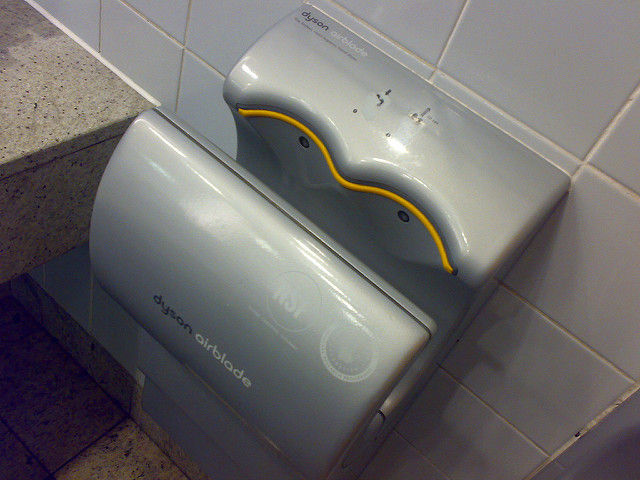
Dyson dryers hurl 60X more viruses—most at kid-face height—than other dryers

Compared with plain paper towels, the jet dryers blow 1,300X as many viral germs.

(credit: Sorosh Tavakoli)

Bathrooms are a prime location for smearing disease-causing microbes all over your hands. Yet, despite societal pressures and prodding signage, a lot of people don’t clean their grimy mitts after a potty break. Some audacious folks just skip the sink all together, while others don’t wash for long enough (experts recommend singing “Happy Birthday” twice in your head) or omit the cleansing soap step. All of those sanitation-slackers threaten to spread disease—particularly in healthcare settings packed with vulnerable patients. But what the latter groups do to dry off their un-cleaned hands may end up setting off a germ bomb.

Researchers have long known that warm hand dryers can launch bacteria into the air—compared to dabbing with paper towels, which unleashes virtually none. But new jet air dryers, made by Dyson, are significantly more problematic—they launch far more viruses into the air, which linger for longer periods of time and reach much farther distances, researchers recently reported in the Journal of Applied Microbiology. This is particularly concerning because viruses, unlike many infectious bacteria, can easily maintain their infectiousness in the air and on surfaces, and just a few viral particles can spark an infection.

“The results of this study suggest that in locations where hygiene and cross-infection considerations are paramount, such as healthcare settings and the food industry, the choice of hand-drying method should be considered carefully,” the authors concluded.

Read 8 remaining paragraphs | Comments

Intestinal worms may be our frenemies: They cultivate bacteria to block diseases

Deworming people with no bowel disease flips their ratio of good to bad microbes.

The human whipworm, a type of helminth that infects the large intestine and ranges from 30 to 50 mm long. (credit: Delorieux for Johann Gottfried Bremser)

One day, curing complex intestinal diseases could be as simple as opening a can of worms.

Researchers have long had hints that parasites called helminths, or intestinal worms, may in some cases help ward off inflammatory bowel diseases (IBD), such as Crohn’s disease—intestinal inflammation that leads to cramps, severe diarrhea, fatigue, and weight loss. However, the worms’ disease-fighting skills had previously wiggled through scientists' grasp.

Now, in a study published Thursday in Science, researchers report that the gut-dwelling worms help avert IBD by bolstering good bacteria in the gut and chucking out inflammation-sparking germs. For mice genetically engineered to have Crohn’s disease, gulping down worm eggs significantly reduced inflammation and signs of disease.

Read 8 remaining paragraphs | Comments

Feds may ban Theranos CEO Elizabeth Holmes from blood-testing biz

Sanctions may go into place within a few months. Appeals almost always fail.

Founder and CEO of Theranos, Elizabeth Holmes, at TEDMED 2014. (credit: TEDMED)

After investigations revealed major problems at its blood-testing lab in California, the high-profile medical startup Theranos is in deep water with the Centers for Medicare and Medicaid Services (CMS). As Ars has reported before, the company faces sanctions, including losing its approval to test human samples.

But, according to a Wednesday report in The Wall Street Journal, the sanctions may also include banning Theranos' CEO and founder, Elizabeth Holmes, and its president, Sunny Balwani, from owning or running any lab for at least two years. The potential ban was mentioned in a letter dated March 18 from the CMS to Theranos. The letter has not been publicly disclosed, but WSJ reporters viewed it.

According to those reporters’ sources, Theranos had 10 days to respond, which it did. The CMS is now looking over its response. If the agency is still displeased with Theranos’ performance, the revocation of its approval to test blood samples and the ban could go into effect within 60 days. Theranos could still appeal the decision, the WSJ noted, but appeals rarely succeed. Between 2001 and the end of 2010, the CMS did not lose a single such case.

Read 3 remaining paragraphs | Comments

CDC confirms Zika causes microcephaly. Birth defect may be “tip of the iceberg”

Data shows virus killing brain cells as researchers find links to more diseases.

(credit: CDC)

After months of speculation and mounting data, the Centers for Disease Control and Prevention officially confirmed Wednesday that the Zika virus does indeed cause microcephaly, a devastating birth defect in which babies are born with small, malformed heads and brains.

Researchers with the agency came to the conclusion after a review of existing data on the virus. There was no single piece of evidence that tipped the scales, the authors note. Rather, the accumulation of data from numerous sources convinced them of the link. Their analysis is published in the New England Journal of Medicine.

“This study marks a turning point in the Zika outbreak,” Tom Frieden, director of the CDC, said in a statement. “We are also launching further studies to determine whether children who have microcephaly born to mothers infected by the Zika virus is the tip of the iceberg of what we could see in damaging effects on the brain and other developmental problems.”

Read 4 remaining paragraphs | Comments

With synthetic nervous system, paralyzed man is first to move again

A brain implant and muscle stimulation allow him to control his hand with his mind.

With a paralyzing spinal cord injury, the biological wiring that hooks up our controlling brains to our useful limbs gets snipped, leading to permanent loss of sensation and control and usually a lifetime of extra health care. Researchers have spent years working to repair those lost connections, allowing paralyzed patients to sip coffee and enjoy a beer with robotic limbs controlled by just their minds.

Now, researchers have gone a step further, allowing a paralyzed person to control his own hand with just his mind.

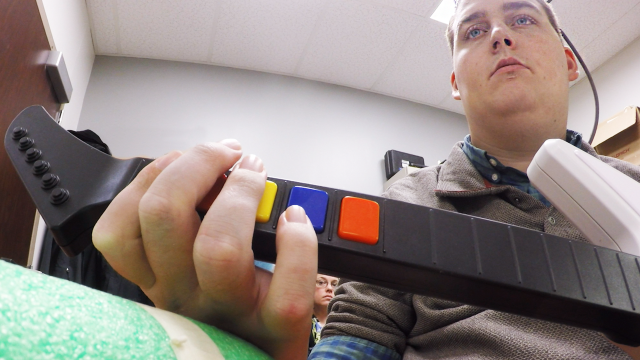
In a study published Wednesday in Nature, researchers report using a “neural bypass” that reconnects a patient’s mental commands for movement to responsive muscles in his limbs, creating somewhat of a synthetic nervous system. The pioneering patient, Ian Burkhart, a 24-year-old man left with quadriplegia after a diving accident almost six years ago, can once again move his hand. In the pilot study he could control movement of individual fingers, grasp big and small objects, swipe a credit card, and play Guitar Hero. The advance may open the door to restorative treatments for paralyzed individuals, allowing them to have independent movement—and lives.

Read 10 remaining paragraphs | Comments