First US penis transplant successfully carried out on Massachusetts man

Doctors are preparing to offer the procedure to wounded veterans.

Thomas Manning, the first man in the US to receive a penis transplant. (credit: Massachusetts General Hospital)

A Boston man who lost most of his penis in a fight with cancer has become the first US patient to receive a penis transplant.

Thomas Manning, 64, a bank courier from Halifax, Massachusetts, received the new organ from a deceased donor in a 15 hour-long operation conducted at Massachusetts General Hospital in Boston on May 8 and 9. The procedure involves doctors hooking up nerves, veins, and arteries between the recipient and donor organ. So far, Manning's doctors are “cautiously optimistic” that he will recover urinary and sexual function in the coming weeks and months.

“It’s uncharted waters for us,” Dr. Curtis L. Cetrulo, a plastic and reconstructive surgeon, told the New York Times. Cetrulo was a leader on the team of seven surgeons, 6 fellows, and more than 30 other health care workers who contributed to Manning’s procedure.

Read 6 remaining paragraphs | Comments

Tummy problems? Just swallow this stomach-repairing origami robot made of meat

Magnetically controlled robot may fix lesions and remove accidentally-eaten batteries.

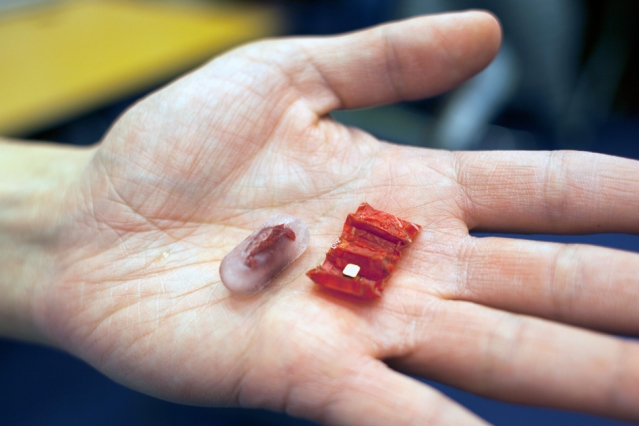
(credit: Melanie Gonick/MIT)

A chunk of meat that bursts open once eaten and unleashes a robot that crawls around inside of your stomach sounds like something from a horror movie. But the real-life stomach-roaming meat robot actually means no harm—on the contrary, it was designed to doctor your stomach troubles from the inside.

On Thursday, researchers at MIT revealed the origami meat robot that they designed to patch stomach wounds, deliver medicine, and remove dangerous foreign objects that patients may have accidentally swallowed. In early simulations with pig esophagus and gut tissue, the robot traveled down to the stomach in an ice capsule that melted along the way. Once there, the robot unfolded and could be steered around the stomach using external magnets. In a demonstration video provided by MIT News, the researchers show that the robot can move a button battery in their simulation stomach. The researchers presented their robot this week at the International Conference on Robotics and Automation.

“It’s really exciting to see our small origami robots doing something with potential important applications to health care,” said Daniela Rus, lead researcher on the study and director of MIT’s Computer Science and Artificial Intelligence Laboratory.

Read 2 remaining paragraphs | Comments

The White House announces $121 million Microbiome Initiative

Project will fund research on microbial communities in humans and environment.

After focusing on cancer, the brain, and personalized medicine, the Obama Administration is now zooming in on the bustling microbial communities within us, on us, and all around us in our built and natural environments.

On Friday, the White House revealed the Microbiome Initiative, a nationwide project to coordinate and fund microbiome research. The federal government is investing $121 million into the program. Several agencies will chip into that number, including NASA, the National Institutes of Health, the Department of Energy, the National Science Foundation, and the US Department of Agriculture. Additionally, more than 100 external organizations will add more money and projects to the pot, including $100 million in funding from the Bill and Melinda Gates Foundation.

The initiative has three main goals: to fund interdisciplinary microbiome research, develop technologies that can be used across different research projects, and support a microbiome research workforce.

The administration announced the initiative in a three-hour event in Washington, DC on Friday, bringing together researchers, agency representatives, politicians, and other funders. Researchers discussed some of the work that the program will support, which included studying ocean microbiomes that might help clean up oil spills, microbiomes on the walls of buildings that might help curb the spread of infectious germs, soil microbiomes that may benefit crop production, and humans' microbes that profoundly impact our health and well-being.

“You can see that there are great things going on,” Martin Blaser, a microbiome researcher at New York University, said at the event.

Such federal initiatives tend to draw mixed reactions from scientists, raising concerns about unsustainable support of specific fields and lack of specific goals and clear leadership. However, in the case of microbiome research, the call for a coordinated, government-led program was spurred by scientists themselves. Last October, a large group of researchers published two papers calling for just such a program.

“Further uncoordinated national microbiome programmes will almost certainly waste research efforts and taxpayers' money,” the authors argued at the time. “Let's transcend national silos and gain universal insights that will benefit all humankind.”

The call follows the end of the NIH’s Human Microbiome Project, which completed its main funding phase in 2012. Since then, many microbiome researchers have felt lost without a coordinated effort to direct the field forward.

“Plague village” may upend what we know about how black death is spread

Famous quarantine in 1665-6 provided perfect conditions to study transmission.

Without a doubt, the bubonic plague has been one of the deadliest and most devastating infectious diseases in all of human history. The bacterial infection—caused by Yersinia pestis—has sparked dozens of outbreaks and three massive pandemics, killing hundreds of millions of people. The Justinian Plague from 541 to 767 is estimated to have killed up to 50 percent of the population at the time and spurred the demise of the Roman Empire. Likewise, the fourteenth century Black Death, which circumnavigated Europe in just a few years, ended up slaughtering as much as 60 percent of the continent’s population.

Yet, despite the indelible mark the dark disease has left on humanity, researchers still aren’t certain how exactly Yersinia sweeps through cities and countries. The highly infectious disease has historically been linked to rodents, in which the bacteria can fester, and rat fleas, which take in and then vomit out the bacteria in subsequent bites. Thus, booming vermin populations have long been assumed to spark and sustain outbreaks. But a fresh analysis of a tiny village in England—made famous for its handling of a plague outbreak from 1665 to 1666—stands to challenge the view.

The Derbyshire village of Eyam, estimated to have a population of around 700 at the time of the outbreak, took the remarkable step of imposing a quarantine on itself—a move almost unheard of at the time. While the villagers aimed to spare neighboring parishes—which they did—the quarantine and the villagers’ detailed death records also provided a perfect opportunity for studying plague transmission dynamics.

In a new analysis of the outbreak, researchers estimate that rodent-to-human transmission accounted for only a quarter of all infections, while human-to-human transmission made up the rest. The finding, published Wednesday in Proceedings of the Royal Society B, adds fuel to a hot debate among academics about how plague spreads. And, more importantly, it has the potential to inform public health responses to modern-day plague outbreaks, which still occur around the world, particularly in Africa and South America (albeit on much smaller scales than historical outbreaks).

“This debate is not just of historical importance but also of contemporary relevance to help deal with this neglected tropical disease, which could someday become a worldwide public health priority again,” the study authors, Lilith Whittles and Xavier Didelot of Imperial College London, concluded.

They arrived at the point by first digging into historic population and death records of Eyam—now known as “plague village.” The researchers looked at factors such as age, wealth, household structure, and gender of the 257 people who died of plague. The deaths, which began after the delivery of flea-infested cloth from London, lasted from September 1665 to October 1666.

Next, the researchers used a stochastic compartmental model and Bayesian analytical methods to recreate the pattern of deaths and trajectory of the outbreak revealed by the records. The model included rodent-to-human transmission and human-to-human transmission, which was estimated to occur within a fixed window of 11 days between exposure, infection, and death. (While there were oral reports that three villagers recovered from the plague, those weren’t recorded in documents so the researchers tossed them out of their main analysis. However, when they did try including them, it didn’t alter their overall findings.)

The researchers found that human-to-human transmission accounted for 75 percent of all infections, with age, wealth, and household structure playing big roles in who got sick. Kids and family members of victims were the groups most affected by the plague. The village’s wealthy were less likely to get the plague, possibly due to less contact with general village folk and vermin.

Plague is known to transmit from person-to-person in bodily fluids and aerosols—formed by coughing, which is generally associated with pneumonic plague. But the researchers speculate that such transmission routes were unlikely, given the historical records of people’s symptoms, which rarely included pneumonia. Instead, the researchers hypothesize that lice and human fleas may have been a main bridge by which Yersinia got around. And the finding makes sense with the spread among lower-class kids, who could easily share head lice while playing.

Though the study looked at just one, isolated, historic outbreak, the authors argue that the “results feed into the long ongoing debate about the role of interhuman transmission through human ectoparasites.”

Proceedings of the Royal Society B, 2016. DOI: 10.1098/rspb.2016.0618  (About DOIs).

The chemicals we off-gas change when we watch something funny or thrilling

One day, air testing over a theater audience could be used to review new movies.

(credit: Wikimedia)

In cartoon worlds, squiggly lines over characters are reserved for the exceptionally smelly. But, in reality, everyone deserves those little squiggles: each of us is constantly emitting a steady stream of gases and microbes, as well as smells. And those gases may be able to reveal more about us than what we last ate (and whether it agreed with us). Our gases may also divulge what we think about movies.

In a study involving 9,500 moviegoers, researchers found that the chemicals that audience members off-gas while viewing a film reproducibly vary depending on the type of scene they’re watching. Specifically, the researchers noted synchronized changes in the amounts of specific gases during funny and thrilling bits of movies. The finding, published in the journal Scientific Reports, provides a whiff of evidence that humans may use volatile chemicals as signals. While much more data is needed to support that hypothesis, the authors speculate that audience emissions may be useful for evaluating whether movies are truly funny or thrilling.

For the study, researchers hooked up a proton transfer reaction mass spectrometer (PTR-MS) to the out-going air vents of a theater during 108 showings of 16 different films, including Buddy, The Hobbit, and Carrie. The PRT-MS measured 100 of the 872 volatile chemicals humans are known to emit, with a detection limit of sub-parts per billion.

Read 4 remaining paragraphs | Comments

CDC secretly sanctioned multiple times for mishandling bioterror pathogens

Meanwhile, the NIH faces leadership shake-up over patient safety concerns in its clinic.

(credit: Wikimedia)

Things aren’t going well for two of the country’s top health agencies—the National Institutes of Health and the Centers for Disease Control and Prevention.

Tuesday, USA Today reported that the CDC has repeatedly faced secret federal sanctions over the mishandling of bioterror pathogens in several of its labs. The report, which came about only after USA Today won a Freedom of Information Act appeal, reveals that the CDC is one of just a handful of facilities that had a lab suspended after serious safety violations were found. The CDC acknowledged after the FOIA appeal that its labs have gotten into trouble with federal regulators six times for unsafely handling bacteria, viruses, and/or toxins that are considered potential bioterror weapons.

The agency refused to reveal the specific labs and most of the bioterror agents involved in the mishaps, citing security reasons and the federal Bioterrorism Act. However, it vaguely described issues such as “sending improperly killed select agent pathogens to entities not approved to receive them” and storing potential bioterror weapons in “un-registered” spaces within CDC labs. The CDC said that one of the incidents involved Japanese encephalitis virus, which can cause deadly brain inflammation. The agency was quick to note that the virus is no longer considered a potential bioterror weapon by the government.

Read 4 remaining paragraphs | Comments

First mouse studies show Zika explode in fetal brain, confirm link to defects

New animal models will help study the devastating infection and test treatments.

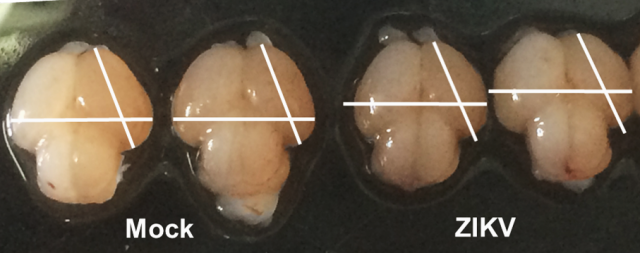
This photo demonstrates the difference in size in Zika virus-infected vs. uninfected fetal mouse brains. (credit: Li, Xu, Ye, and Hong et al./Cell Stem Cell 2016)

Three separate studies released Wednesday present the first batch of mouse model data on what happens when Zika virus infects a pregnant mammal—and the data is as grisly as one might expect.

The three studies were led by research groups in Brazil, the US, and China and back up the grim epidemiological data in humans, which links the virus to miscarriages and birth defects, particularly microcephaly, a defect in which babies are born with small and malformed brains.

Collectively, the new studies highlight that when Zika infects a pregnant mouse, the virus homes in on the developing fetuses, invading the placenta and fetal brains in large numbers. In one of the studies, viral numbers in the placenta were 1,000-fold higher than in maternal blood. Once in fetal brains, the virus specifically attacked developing and mature neurons, triggering cell death, haywire immune responses, and severe brain malformations. In another of the studies, researchers noted that the number of viruses in a fetal brain increased by about 300 percent within three days of invasion. Many of the pups in the studies died in utero, while others were quickly eaten by their mothers after birth—a common mouse response to birthing sickly pups.

Read 9 remaining paragraphs | Comments

Blood THC levels after smoking pot are useless in defining ‘too high to drive’

Better metrics needed as study finds increase in fatal crashes involving weed.

Measuring ‘drunk’ is pretty easy; the more alcohol someone drinks, the more alcohol shows up in that person’s blood and the more impaired that person becomes, falling somewhere on a scale of tipsy to wasted. Measuring ‘high,’ on the other hand, is far hazier—much to the dismay of some states' law enforcement.

Blood tests that try to quantify marijuana use are in fact useless at assessing how impaired a driver is, according to a study by the AAA Foundation for Traffic Safety. In other words, the study found that people with low blood amounts of THC—or delta-9-tetrahydrocannabinol, the main psychoactive component of pot—may still act as if they’re really stoned. On the other hand, some people may have THC measurements off the charts yet still act normally.

The finding is critical because several states have already set legal limits for the amount of THC a person can have in their blood while driving. AAA concluded that such limits are “arbitrary and unsupported by science, which could result in unsafe motorists going free and others being wrongfully convicted for impaired driving.”

Read 8 remaining paragraphs | Comments

Shots of live parasites may be best protection against malaria yet

In promising phase I clinical trial, up to 55 percent were protected for a year.

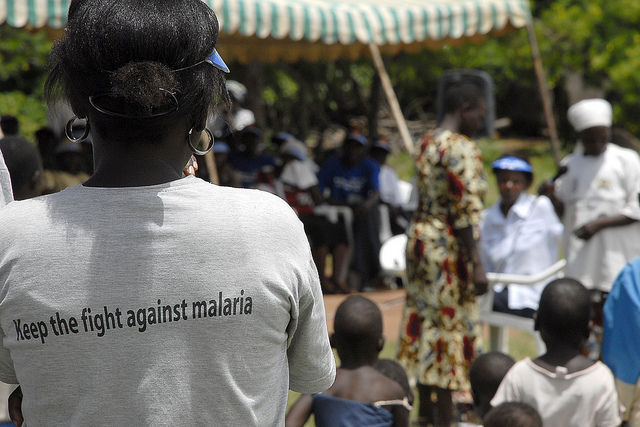
(credit: US Army Africa)

After decades of trying to zap malaria once and for all, researchers are buzzing about a new experimental vaccine against the mosquito-transmitted infection. If results from early trials hold up, the vaccine could one day significantly help slap down malaria’s infectious toll, which hit 214 million documented illnesses and more than 400,000 deaths in 2015 alone.

In a phase I trial—the stage at which scientists test safety and dosage levels in a small number of people—the experimental vaccine spared up to 55 percent of participants from getting sick after they were bitten by malaria-loaded mosquitoes. For some of the test subjects, that protection lasted a year, researchers reported in Nature Medicine.

Those stats may seem like low bars to call a vaccine "promising," but the results actually beat out other vaccine candidates tested so far. Previously, the most well-studied malaria vaccine, called RTS,S, fared even worse in similar tests. It only protected 22 percent of healthy adults subjected to disease-toting mosquitoes, and the protection was tested up to just five months. Nevertheless, RTS,S made it to a phase III trial—the stage at which scientists test efficacy in large numbers of people. In that trial, the vaccine did slightly better, keeping up to 36 percent of kids from getting documented cases of malaria for up to two years. European regulators subsequently approved the use of that vaccine in 2015.

Read 11 remaining paragraphs | Comments

Silver-threaded underwear fights junk funk even after a week of wear

Antimicrobial metal, already in medical and athletic garb, gets in people’s pants.

(credit: Organic Basics)

If the heroes of Tolkien’s books went looking for some undies to go with their mithril armor, they may have sought something similar to a new product touted by Danish fashion company, Organic Basics.

The company has designed “silvered” cotton drawers that protect the groin and bum from being invaded by stinky microbes. The light-weight shields have such potent antimicrobial powers that they can fend of funk even after being worn in battle for a week straight, the designers say.

Silver has long been known to be antimicrobial. The metal sheds ions that pierce through bacterial walls and thrash cellular components, such as DNA and critical proteins. Clothing manufacturers are already adding silver nanoparticles to hospital gowns and athletic wear.

Read 4 remaining paragraphs | Comments