A ZFS developer’s analysis of the good and bad in Apple’s new APFS file system

Encryption options are great, but Apple’s attitude on checksums is still funky.

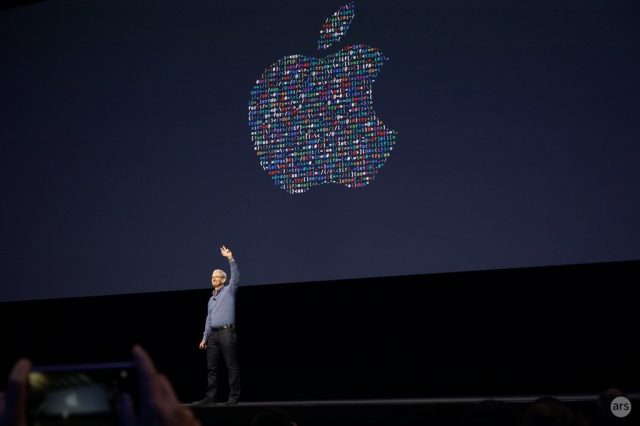
Two hours or so of WWDC keynoting and Tim Cook didn't mention a new file system once? (credit: Andrew Cunningham)

This article was originally published on Adam Leventhal's blog in multiple parts.

Apple announced a new file system that will make its way into all of its OS variants (macOS, tvOS, iOS, watchOS) in the coming years. Media coverage to this point has been mostly breathless elongations of Apple's developer documentation. With a dearth of detail I decided to attend the presentation and Q&A with the APFS team at WWDC. Dominic Giampaolo and Eric Tamura, two members of the APFS team, gave an overview to a packed room; along with other members of the team, they patiently answered questions later in the day. With those data points and some first-hand usage I wanted to provide an overview and analysis both as a user of Apple-ecosystem products and as a long-time operating system and file system developer.

The overview is divided into several sections. I'd encourage you to jump around to topics of interest or skip right to the conclusion (or to the tweet summary). Highest praise goes to encryption; ire to data integrity.

Read 48 remaining paragraphs | Comments

From file-sharing to prison: A Megaupload programmer tells his story

Programmer Andrew Nõmm: “I had to be made an example of as a warning to all IT people.”

Andrus Nõmm is the only Megaupload criminal copyright defendant to have gone to prison. (credit: Toivo Tänavsuu )

Soon after the domain was registered in Hong Kong, the now-defunct Megaupload.com grew into one of the world's most popular file-sharing sites. At its peak, the site engaged nearly 50 million users a day and took up around four percent of the world's Internet traffic. Users uploaded nearly 12 billion files overall.

But the infamy of the site's rise is only matched by the infamy of its fall. In January 2012, US authorities closed down Megaupload.com and the network related to it. The feds arrested seven people and froze $50 million in assets. The FBI claims that the site not only failed to take down illegal material, Megaupload also helped to spread it. Perhaps it was simply a case of brazen arrogance. When the authorities finally raided founder Kim Dotcom's large villa in New Zealand, they found a number of luxury cars (Lamborghini, Maserati, Rolls Royce) with the license plates "God," "Mafia," "Hacker," "Evil," and "Police."

In total, seven men associated with the site were arrested and indicted on 13 charges (including copyright infringement and money laundering). Dotcom remains notably free and has been continually fighting in New Zealand against his extradition to the USA. Others were not as lucky.

Read 107 remaining paragraphs | Comments

Dealmaster: Get a Dell Inspiron 3650 desktop with Core i7 for just $579

Plus deals on smart TVs, routers, gaming consoles, and more.

Greetings, Arsians! Courtesy of our partners at TechBargains, we have a bunch of deals to share today. Of note, we have a bestseller from earlier this month—you can still get the redesigned Dell Inspiron 3650 PC with Core i7 Skylake processor, 16GB of RAM, and an AMD R9 360 GPU for just $579. That's over $300 off its original price of $899, so if you're on the market for a new desktop, this is one you should consider.

Also check out the rest of the deals below.

Featured

Read 8 remaining paragraphs | Comments

Ars’ favorite games of E3: From dueling VR wizards to calm underwater dives

Picking the finest titles from the game industry’s annual hype extravaganza.

Ars Technica's six best games of E3 2016. (video link)

Another E3 is in the books, and it's nearly impossible to distill the dozens and dozens of games on display into a few titles to keep an eye out for—but that won't stop us from trying. These 10 games in particular stood out from the crowded E3 show floor, and each has us excited to try out the full versions after a short taste this past week.

Abzu

Developer: Giant Squid
Publisher: 505 Games
Platforms: PS4, Windows
Expected Release Date: August 4, 2016

Read 46 remaining paragraphs | Comments

Catching up with the guy who stole Half-Life 2’s source code, 10 years later

From Death by Video Game: can you love a game so much you must take its sequel?

(credit: Valve)

At 6am on May 7, 2004, Axel Gembe awoke in the small German town of Schönau im Schwarzwald to find his bed surrounded by police officers bearing automatic weapons.

One officer barked: "Get out of bed. Do not touch the keyboard." Gembe knew why they were there. But, bleary-eyed, he asked anyway.

"You are being charged with hacking into Valve Corporation's network, stealing the video game Half-Life 2 , leaking it onto the Internet, and causing damages in excess of $250 million," came the reply. "Get dressed."

Read 62 remaining paragraphs | Comments
When everything else fails, amateur radio will still be there—and thriving

Ham is now a full-fat fabric that can provide Internet access. Why aren’t you using it?

(credit: Getty Images)

It’s a good time to be technical. Maker communities are thriving around the world, tools and materials to create and adapt are cheaper and more powerful now than ever, and open source hardware, software, and information mean that if you can think it, you can learn how to do it and then make it happen.

For one group of technological explorers, this is more than just a golden age of opportunity: it’s providing the means to save one of the oldest traditions in electronic invention and self-education, one that helped shape the modern world: amateur radio. That matters.

Radio amateurs get a sweet deal, with effectively free access to many gigahertz of the same radio spectrum that companies pay billions for. They’ve earned it. Throughout the history of electronics, they’ve been at the borders of the possible, trying out ideas that commerce or government deem impossible or pointless—and making them work. One example of hundreds: Allied military comms in World War II needed a way to reliably control the radios used by front-line forces, replacing tuning knobs with channel switches. Hams had the answer ready and waiting: quartz crystal oscillators. (That's part of computing history too—you’re probably using about ten of them right now.).

Read 10 remaining paragraphs | Comments

The PlayStation VR launch games: What’s good and what’s bad?

PS VR launches October 13 with over 50 games. We pick out our favourites.

Mark and Sam discussing the PlayStation VR launch games lineup at E3. (video link)

Sony has recruited the fledgling indie studio Impulse Gear to build a game for the company's new PS VR "Aim" controller. After spending some time with Farpoint, it's one of those rare, solid demos that made me seriously contemplate buying an unnecessary accessory. As someone who has grown weary of useless plastic tat cluttering up my living room, that’s no small praise.

You may recall the PS3's Sharp Shooter attachment, which was mostly a shell that players would stick a PlayStation Move wand into to resemble a gun, but this new VR Aim accessory is its own dedicated, wholly moulded piece of kit. As a result, the gun feels really sturdy—and has more comfortable button placement (plus, it now has two analogue sticks, as opposed to the Sharp Shooter's single joystick).

Read 12 remaining paragraphs | Comments

Guest editorial: The DNC hack and dump is what cyberwar looks like

Elections are critical infrastructure that should be hands-off for governments.

Dave Aitel is CEO of Immunity Inc., an offensive security firm that consults for Fortune 500s and government agencies. He is a former "security scientist" for the NSA and a past contractor for DARPA's Cyber Fast Track program. His firm specializes in vulnerability research, penetration testing and network testing tools. His views don't necessarily reflect the opinions of Ars Technica.

What occurred with the recently disclosed breach of the Democratic National Committee servers, and the dumping of stolen data on a WordPress site, is more than an act of cyber espionage or harmless mischief. It meets the definition of an act of cyberwar, and the US government should respond as such.

The claims by “Guccifer 2.0”—that a lone hacker carried out this attack—are not believable. Of course, anything is possible, but the attack looks to be an operation conducted by Russian intelligence services. Had this been a “normal” operation—that is, covert intel gathering by Russia's Foreign Intelligence Service or any other foreign intelligence service (as the Chinese have done in past election seasons)—it would be business as usual. To be honest, the US government would not really be justified in denouncing it, as it does the same thing. But what makes this attack very different—and crosses the line—is the Russian team’s decision to dump the Clinton campaign’s opposition strategy on the public Web, presumably for the dual purpose of both spreading misinformation about the party responsible for the breach and interfering with the Clinton campaign.

Read 4 remaining paragraphs | Comments

From the Wirecutter: The best surge protector for your home electronics

We tested a whole bunch, and you don’t have to spend a lot for the winners.

This post was done in partnership with The Wirecutter, a buyer's guide to the best technology. Read the full article with more details and background information here.

(credit: The Wirecutter)

Surge protectors don't last forever. Like lightbulbs, they need to be replaced every few years when they wear out. Just because your old surge protector passes power to your devices doesn't mean it's still actively protecting them—in fact, you probably need a new one. After assessing more than 30 hours of research, and 32 hours of testing by an electrical engineer, we found that most surge protectors that cost just above $20 will provide adequate protection from surges. Our extensive research and testing showed that more-expensive units didn't provide enough additional benefit to be worth their higher cost. And of the units we tested, our top pick is the 10-outlet Tripp Lite TLP1008TEL, because it stops passing power when it's no longer effective at blocking surges.

Most surge protectors rely on an easily ignored LED indicator to tell you when they've ceased protecting your gear. We picked the TLP1008TEL because when its ability to block surges wears out, it cuts the power off entirely. So long as your devices are energized, you know that surge protection remains in place and have no ambiguity as to when it needs to be replaced.

Read 52 remaining paragraphs | Comments

The XPS 13 DE: Dell continues to build a reliable Linux lineage

You’ll pay a premium for Linux out of the box and a great screen—for some, it’s worth it.

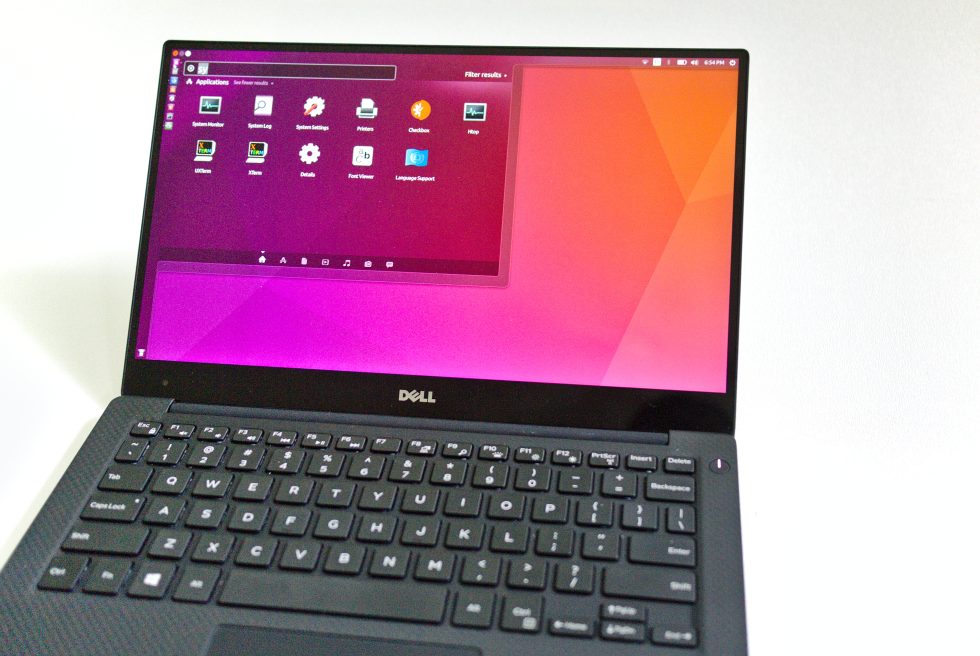
Behold, the latest in Linux out-of-the-box: Dell's XPS 13 Developer's Edition (2016). (credit: Scott Gilbertson)

Hardware that ships with Linux installed isn't as rare as it used to be. System 76, Purism, ZaReason, and others have been cranking out hardware with Linux pre-installed for quite a while now. But while those of us who use Linux may know these companies, there's only one household name that currently ships laptops with Linux installed—Dell.

Dell's Project Sputnik has been dedicating resources to creating a "just works" experience for Dell Ultrabooks running Ubuntu for nearly four years now. Lead developer Barton George, who leads the effort, and other developers have been writing code where necessary (and contributing that code back upstream) and refining the user experience to a point where everything does indeed just work.

The original Dell XPS 13 Developer Edition had a few rough edges. Since that first device, I sat on the sidelines watching as George and Dell polished off those rough edges and tweaked the hardware options to better meet the needs of developers. Over time, the team expanded the available RAM to 16GB, added a matte screen option (albeit only on the low-end model), and slimmed the dimensions down considerably.

Read 30 remaining paragraphs | Comments