The 1970s “gay-cure” experiments written out of scientific history

Bob Heath’s septal region love sparked iffy experiments for schizophrenia, homosexuality.

Robert Heath claimed to have cured homosexuality by implanting electrodes into the pleasure centre of the brain. Robert Colvile reports on one of the forgotten stories of neuroscience for Mosaic.

For the first hour, they just talked. He was nervous; he’d never done this before. She was understanding, reassuring: let’s just lie down on the bed together, she said, and see what happens. Soon, events took their course: they were enjoying themselves so much they could almost forget about the wires leading out of his skull.

The year was 1970, and the man was a 24-year-old psychiatric patient. The woman, 21, was a prostitute from the French Quarter of New Orleans, hired by special permission of the attorney general of Louisiana. And they had just become part of one of the strangest experiments in scientific history: an attempt to use pleasure conditioning to turn a gay man straight.

Read 81 remaining paragraphs | Comments

A fieldtrip to ITER, a work-in-progress that will test fusion’s feasibility

In France, 35 countries invest time, cash, and effort in commercial energy’s future.

Foreground buildings: Contractors Canteen, Changing Rooms, Showers, etc. || Green, Yellow, and Red buildings: Contractors’ Offices || White Building: Canteen and Infirmary for Contractors || Tall building: Assembly Hall || To the right of the Assembly Hall and behind the other buildings: Cryostat Assembly Site (credit: Dave Loschiavo)

ST. PAUL-lez DURANCE, France—Rolling hills and oak woodlands dominate rural Southern France. However, about 35km north of Aix-en-Provence, nature has given way to a team of 1,000 construction workers who are laboring around the clock to build the largest physics experiment that’s never been discussed by Sheldon, Leonard, Raj, and Howard.

Known as ITER, this experimental Tokamak fusion reactor is intended to be the last necessary step to prove the scientific and technological feasibility of fusion as a commercial energy source. It is a collaborative effort of China, the European Union (through Euratom), India, Japan, Korea, Russia, Switzerland (also through Euratom), and the United States. In total, it will include 35 countries.

The scale of this project, in so many dimensions, is nothing short of awe inspiring and humbling. Physically, the main buildings used to assemble and house the Tokamak reactor stand 60m (~200ft) tall and sit in a leveled area of 40 hectares (~100 acres). The entire site, adding the open space and office buildings, measures 180 hectares. Logistically, as a construction project, the ITER team is tracking over 200,000 actions necessary to bring the effort to fruition.

Read 17 remaining paragraphs | Comments

Superpowers mix with office politics in The Regional Office Is Under Attack!

Die Hard, Kill Bill, David Cronenberg collide in a bloodily delightful action novel.

The Regional Office Is Under Attack! is like Die Hard meets Kill Bill, with a smattering of Charlie Kaufman and David Cronenberg. (credit: 20th Century Fox)

Action movies ain't what they used to be. Sure, computer imaging has helped Hollywood create some of the craziest action scenes you could possibly imagine, but when CGI replaces lower-tech tricks like intrigue, strong characters, and good old-fashioned explosions, what's an '80s action nostalgic to do?

Author Manuel Gonzales may have the answer with The Regional Office Is Under Attack!, which I recommend to anyone who would rather get their summer-movie fix on paper—and who hungers for that rare mix of crazy action and phenomenal character introspection.

This review contains a few spoilers, not least of which is the book's title. The Regional Office is a secret organization, disguised as a boutique travel agency, that sends an army of young women superheroes to fight the "forces of darkness," including zombies, alien invaders, and mad scientists.

Read 7 remaining paragraphs | Comments

Zero Time Dilemma Review: Make your final choice

Zero Escape‘s time-travelling visual novel thriller trilogy finishes strong.

Here's your latest masked mystery character.

The Nonary Game is back for the third (and supposedly final) time, bringing the familiar structure and tropes of previous games 999 and Virtue's Last Reward. If you're not familiar with the Nonary Game — or the odd-sounding titles I just mentioned—prepare for some spoilers for Zero Time Dilemma’s predecessors in the Zero Escape franchise.

In fact, "spoilers" are integral to Zero Time Dilemma. As in the previous two games, the mystery is structured as a series of interlocking timelines: branching decision paths that can be accessed and then escaped through the convenient metaphysical explanation of psychological time travel. The plot of Zero Time Dilemma’s visual-novel-meets-adventure-game sees our nine heroes jumping from one untimely end to another—searching for out-of-order clues about why they are where they are.

This time, the "where" is a seemingly abandoned nuclear bunker. A cast of new and returning 20-somethings who are very good at puzzles have been locked inside by Zero, the Jigsaw-like tormentor whose identity changes between games.

Drowning in a sea of exposition

True to the Zero Escape games of yore, circumstance and Zero's rules split the nine characters into three teams, each of which seems to vaguely represent a different point in the franchise.

Read 19 remaining paragraphs | Comments
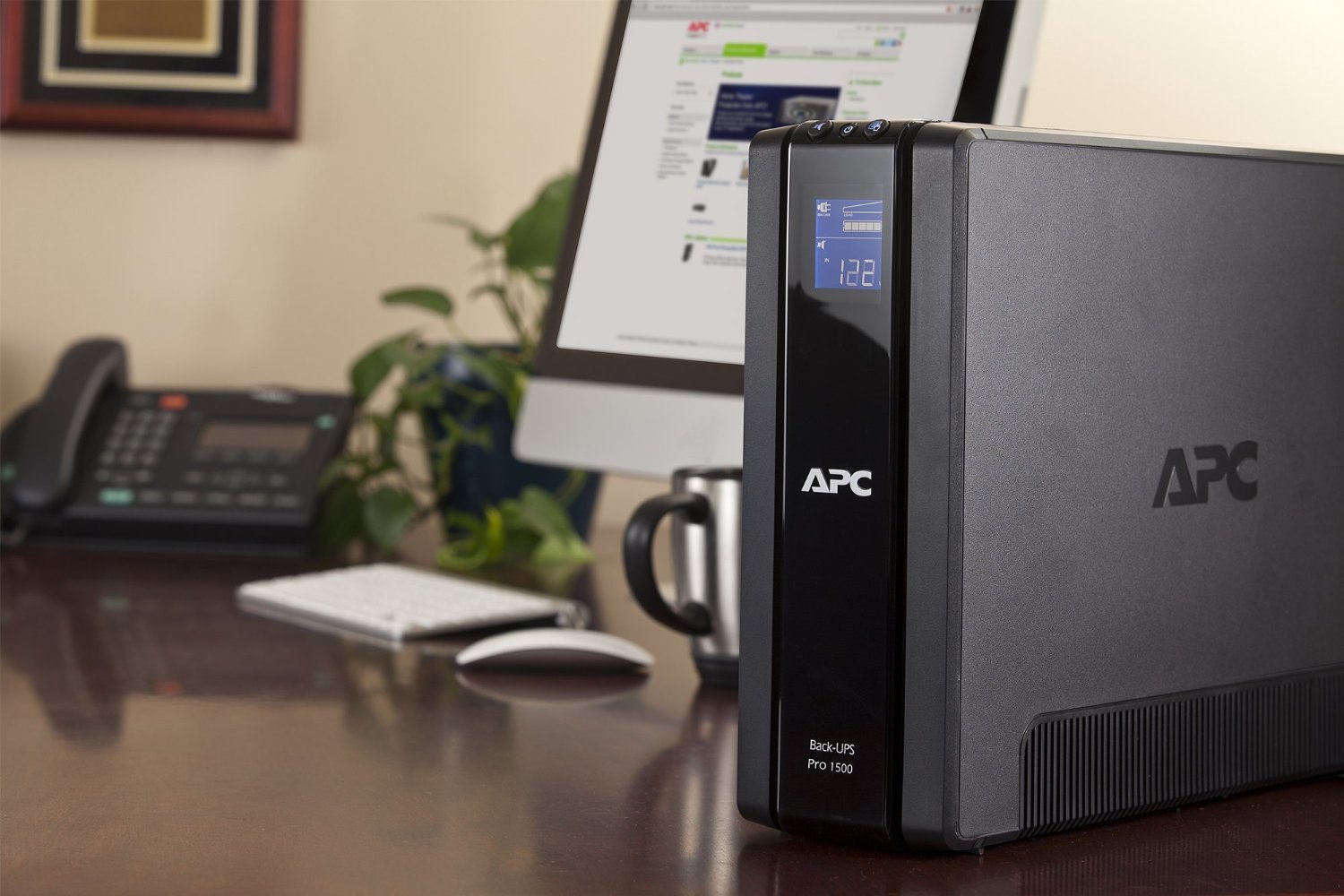
Dealmaster: Get a 1500VA APC UPS battery backup for only $128

And other deals on laptops, gaming consoles, e-readers, and more.

Greetings, Arsians! Courtesy of our partners at TechBargains, we've got a bunch of great deals to share—and a fantastic one on a battery backup. Now you can get an APC 1500VA 10-outlet UPS battery backup for only $128. The backup comes with automatic voltage regulation, an LCD display, energy-saving features, and PowerChute management software. It would be an great addition to anyone's high-performance PC setup, and the best part is that you won't have to shell out a bunch of cash to get it.

Check out the rest of our deals below.

Featured

Read 6 remaining paragraphs | Comments

Terabyte terror: It takes special databases to lasso the Internet of Things

Non-relational databases can help take the pain out of corralling swarms of sensor data.

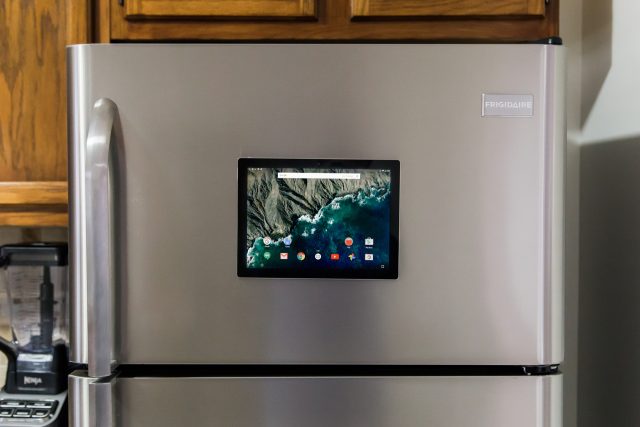
When even your fridge is spewing data, someone needs to manage things. (credit: Ron Amadeo)

If you believe figures from the technology research firm Gartner, there will be 25 billion network-connected devices by 2020. The "Internet of Things" is embedding networked sensors in everyday objects all around us, from our refrigerators to our lights to our gas meters. These sensors collect "telemetry" and route out data to… whoever's collecting it. "Precision agriculture," for instance, uses sensors (on kites or drones) that collect data on plant health based on an analysis of near-infrared light reflected by crops. Sensors can do things like measure soil moisture and chemistry and track micro-climate conditions over time to help farmers decide what, where, and when to plant.

Regardless of what they're used for, IoT sensors produce a massive amount of data. This volume and variety of formats can often defy being corralled by standard relational databases. As such, a slew of nontraditional, NoSQL databases have popped up to help companies tackle that mountain of information.

This is by no means the first time relational databases have ever been used to handle sensor data. Quite the contrary—lots of companies start, and many never leave, the comfort of this familiar, structured world. Others, like Temetra, (which offers utility companies a way to collect and manage meter data) have found themselves pushed out of the world of relational database management systems (RDBMSes) because sensor data suddenly comes streaming at them like a school of piranha.

Read 30 remaining paragraphs | Comments

ZFS: The other new Apple file system that almost was—until it wasn’t

In file systems as in all else, Steve Jobs’ favor was a fickle thing.

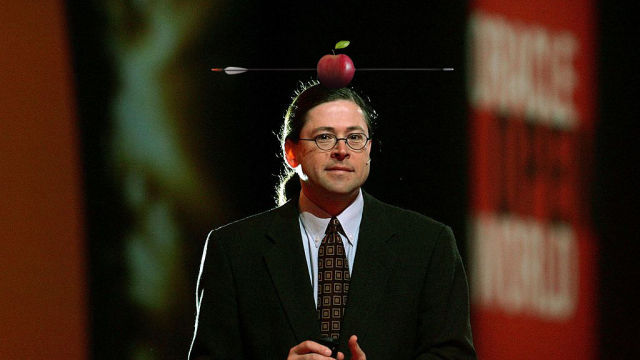
Enlarge / A premature announcement by Sun's then-CEO Jonathan Schwartz might have doomed ZFS on OS X. (credit: Photo by Justin Sullivan / Getty — Edited by Aurich Lawson)

This article was originally published on Adam Leventhal's blog and is reprinted here with his permission.

I attended my first WWDC in 2006 to participate in Apple's launch of its DTrace port to the next version of Mac OS X (Leopard). Apple completed all but the fiddliest finishing touches without help from the DTrace team. Even when Apple did meet with us, we had no idea that it was mere weeks away from the finished product being announced to the world. DTrace was a testament both to Apple's engineering acumen as well as its storied secrecy.

At that same WWDC, Apple announced Time Machine, a product that would record file system versions through time for backup and recovery. How was it doing this? We were energized by the idea that there might be another piece of adopted Solaris technology. When we launched Solaris 10, DTrace shared the marquee with ZFS, a new filesystem that was to become the standard against which other filesystems are compared. Key among the many features of ZFS were snapshots that made it simple to capture the state of a filesystem, send the changes around, recover data, etc. Time Machine looked for all the world like a GUI on ZFS (indeed, the GUI that we had imagined but knew to be well beyond the capabilities of Sun).

Read 20 remaining paragraphs | Comments

Forgotten audio formats: Elcaset

Paying tribute to the lamented, giant-size Japanese cassette Hi-Fi fans love to love.

Back before all-digital music, back before the Digital Compact Cassette, back before even the Digital Audio Tape existed, there was a strange audio device that briefly captured the imagination of Hi-Fi freaks across the world. The Elcaset, as it was called, was an enlarged cassette that started in Japan, wove its hidden, spinning spools around the world, and then finished, appropriately enough, in Finland.

The humble compact cassette was already more than a decade old in 1976, and its pros and cons had by then become fairly clear to most punters. It wasn’t a huge reel-to-reel deck as was used by pro studios and was thus portable by the standards of the day—even though Sony's cassette Walkman was still a few years away.

The compact cassette's sound was generally acceptable for a generation raised on crackly mono Dansette record players. But the small tape size—two sets of stereo tracks squeezed onto a strip of tape just 3.81mm wide—and the slow playback speed of 4.76cm (1⅞ inches) per second rendered the device incapable of really capturing and playing anything near the full sonic range that music ultimately requires. What's more, there was often plenty of hiss that couldn’t easily be masked.

Read 24 remaining paragraphs | Comments

Tokyo Mirage Sessions: #FE: Auto-tuned expression

At times this JRPG feels like it plays itself, but it looks wonderful doing it.

Fighting evil with the power of fashion.

Tokyo Mirage Sessions: #FE — originally billed as Shin Megami Tensei X Fire Emblem —is title with a hidden, obscure meaning for those who’ve followed the odd little Wii U JRPG from announcement to release. TMS, for Tokyo Mirage Sessions, is a play on the pseudo-recognizable "SMT", for Shin Megami Tensei, very gently evoking the core franchise on display here.

After playing a few dozen hours of this massive, 50 to 60 hour quest, however, I particularly like the "#FE" part of the game that hangs off the end of the title. It’s a crouton of a Fire Emblem reference in a game putting nearly all its weight on the Shin Megami Tensei end of the see-saw, but it makes all the difference.

Idolize me

Level design, combat, and setting in SMT are all distinctly influences by Atlus’ post-apocalyptic near-future role-playing games (which makes sense given that Atlus actually developed the thing). As such Tokyo Mirage Sessions is set in the SMT-favorite location of modern-day Tokyo. The game follows a group of young idols—sort of professional celebrity role models—through a dense Japanese culture tour.

Events unfold from the perspective of the aloof and often clueless Itsuki Aoi, but the plot mostly follows in the wake of his best friend and rising star Tsubasa Oribe. Together they, and a growing cast of like-minded performers, get wrapped up in a tale of self-expression, third-person dungeon crawling, and turn-based combat.

Read 25 remaining paragraphs | Comments

Y Combinator’s Xerox Alto: restoring the legendary 1970s GUI computer

Steve Jobs famously saw one and was inspired to create the Lisa, then the Mac.

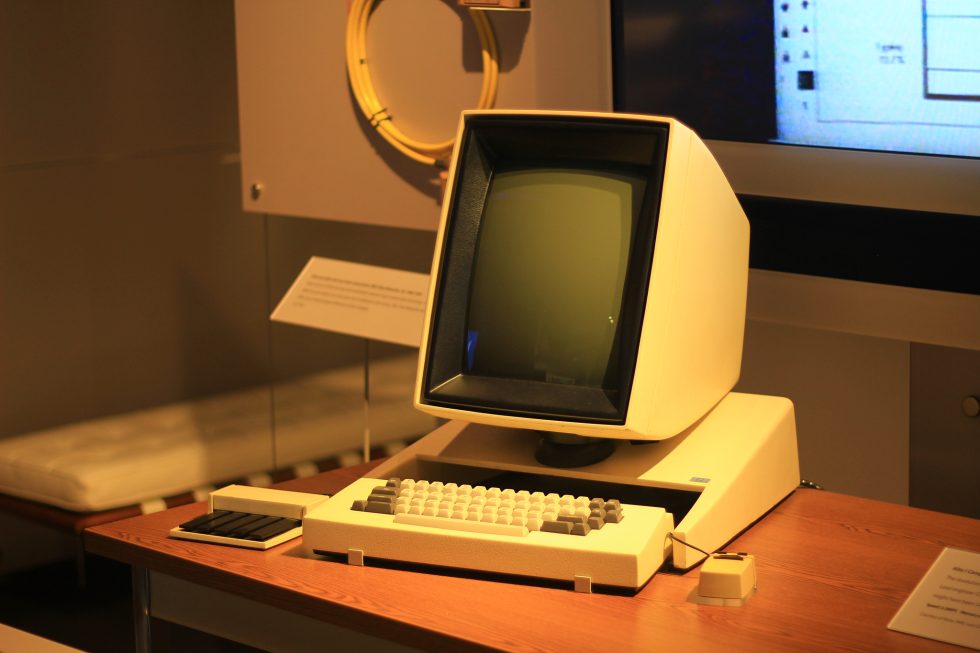
(credit: Michael Hicks)

This article originally appeared on the blog of author Ken Shirriff and is reprinted here with his permission.

Alan Kay recently gave his 1970s Xerox Alto to Y Combinator, and I'm helping with the restoration of this legendary system.

The Alto was the first computer designed around a graphical user interface, and it introduced both Ethernet and the laser printer to the world. The laser printer was invented at Xerox by Gary Starkweather, and networked laser printers were soon in use with the Alto. Y Combinator's Alto is an "Orbit" model with slots for the four boards that drive the laser printer, laboriously rendering 16 rows of pixels at a time.

Read 25 remaining paragraphs | Comments