rsync.net: ZFS Replication to the cloud is finally here—and it’s fast

Even an rsync-lifer admits ZFS replication and rsync.net are making data transfers better.

In mid-August, the first commercially available ZFS cloud replication target became available at rsync.net. Who cares, right? As the service itself states, "If you're not sure what this means, our product is Not For You."

Of course, this product is for someone—and to those would-be users, this really will matter. Fully appreciating the new rsync.net (spoiler alert: it's pretty impressive!) means first having a grasp on basic data transfer technologies. And while ZFS replication techniques are burgeoning today, you must actually begin by examining the technology that ZFS is slowly supplanting.

A love affair with rsync

Revisiting a first love of any kind makes for a romantic trip down memory lane, and that's what revisiting rsync—as in "rsync.net"—feels like for me. It's hard to write an article that's inevitably going to end up trashing the tool, because I've been wildly in love with it for more than 15 years. Andrew Tridgell (of Samba fame) first announced rsync publicly in June of 1996. He used it for three chapters of his PhD thesis three years later, about the time that I discovered and began enthusiastically using it. For what it's worth, the earliest record of my professional involvement with major open source tools—at least that I've discovered—is my activity on the rsync mailing list in the early 2000s.

Read 33 remaining paragraphs | Comments

SyFy’s The Magicians and the dangers of adapting “adult Harry Potter”

Brooding magic-haters, crushing repetition, mystical sex: A formula for TV success?

High fantasy is having something of a moment on television. Game of Thrones is the biggest and most obvious example, but shows like Vampire Diaries, its Originals spin-off, Once Upon a Time, Grimm, and the somehow-still-running Supernatural have made the genre increasingly visible. SyFy’s current bid for a conversation-worthy bite of this apple is its adaptation of The Magicians, Lev Grossman’s New York Times bestselling novel about a young man who attends a magical school and struggles to defeat a world-threatening Big Bad.

If this premise sounds familiar, you wouldn’t be the first person to feel a sense of wizardly déjà vu. The books, especially the first in the trilogy, have been frequently described as “adult Harry Potter,” an assessment that is both understandable and catchy. While that meme-ified judgment of Grossman’s books is seriously reductionist, it’s also a useful way of thinking about just how tricky it’s going to be to get this adaptation right. So before the pilot’s launch on Wednesday night—and ahead of the series’ official January 2016 premiere—we got to the bottom of our “the book is always better” bias one kind of question in mind. What kind of magic are we in for?

The un-Harry Potter

The Magicians is less “adult Harry Potter” than it is an “un-Harry.” In his protagonist Quentin Coldwater, in the magical education Quentin receives, and in the foundational structure of the series, Grossman carefully and meticulously smashes the lovely, sparkly romanticism of the Harry Potter story to pieces. Brakebills, the Magicians universe’s Hogwarts equivalent, is a frustrating and demanding place. Quentin is stuck for endless, mind-numbling hours working on rote memorization in order to master the fickle language of magic in his universe. The book is full of passages like this: “The room was the same, and the days were always, always, always the same: empty, relentless, interminable wastelands of repetition.”

Read 8 remaining paragraphs | Comments

Facebook’s open-sourcing of AI hardware is the start of the deep-learning revolution

Collaboration is key to building the machine-learning boat and getting it afloat.

Enlarge (credit: Facebook)

A few days ago, Facebook open-sourced its artificial intelligence (AI) hardware computing design. Most people don’t know that large companies such as Facebook, Google, and Amazon don’t buy hardware from the usual large computer suppliers like Dell, HP, and IBM but instead design their own hardware based on commodity components. The Facebook website and all its myriad apps and subsystems persist on a cloud infrastructure constructed from tens of thousands of computers designed from scratch by Facebook’s own hardware engineers.

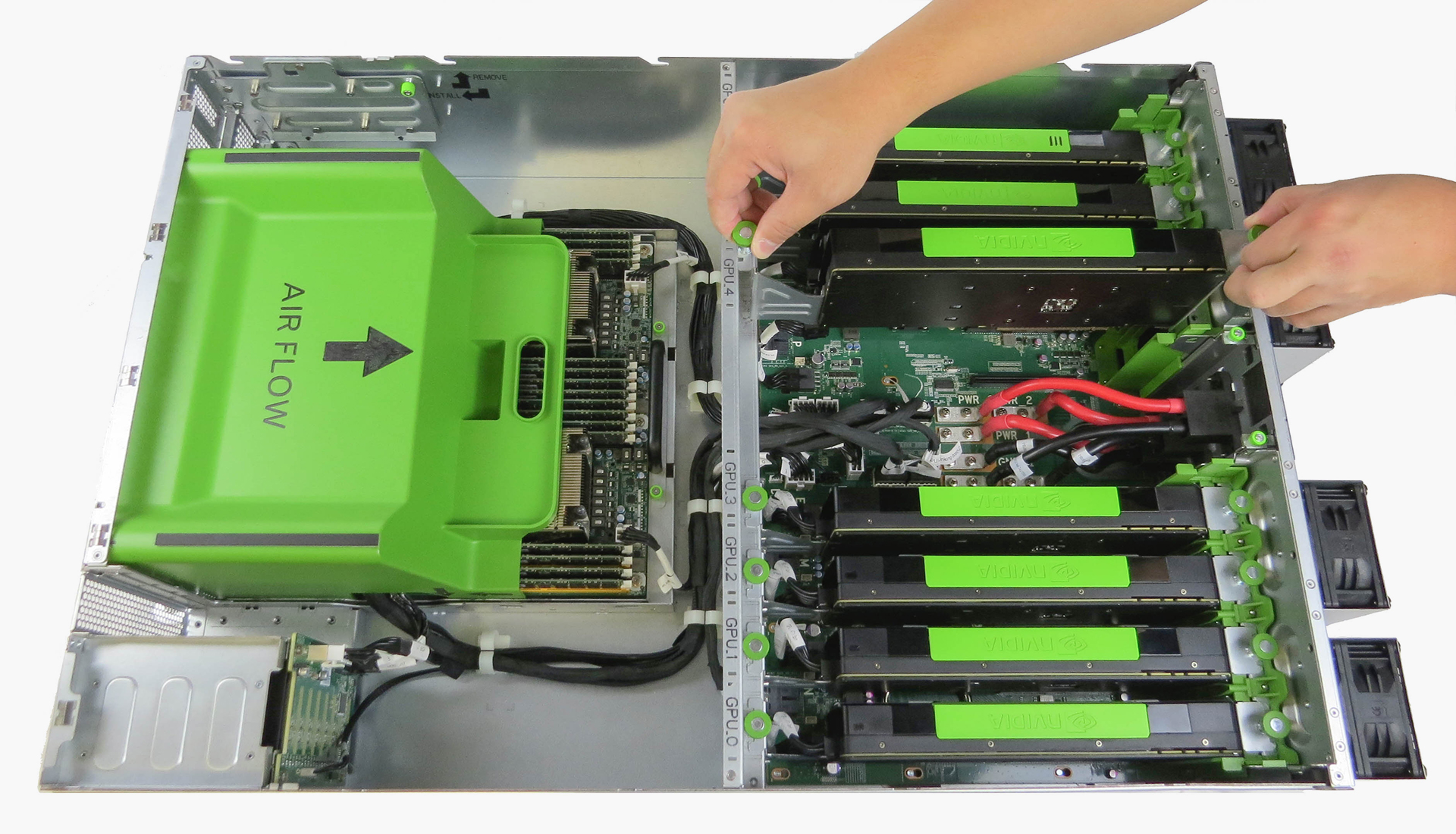
Open-sourcing Facebook’s AI hardware means that deep learning has graduated from the Facebook Artificial Intelligence Research (FAIR) lab into Facebook’s mainstream production systems intended to run apps created by its product development teams. If Facebook software developers are to build deep-learning systems for users, a standard hardware module optimised for fast deep learning execution that fits into and scales with Facebook’s data centres needs to be designed, competitively procured, and deployed. The module, called Big Sur, looks like any rack mounted commodity hardware unit found in any large cloud data centre.

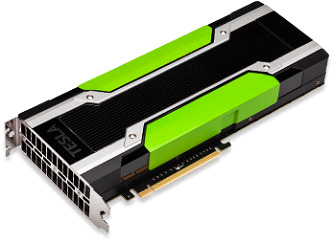
But Big Sur differs from the other data centre hardware modules that serve Facebook’s browser and smartphone newsfeed in one significant way: it is built around the Nvidia Tesla M40 GPU. Up to eight Nvidia Tesla M40 cards like the one pictured to the right can be squeezed into a single Big Sur chassis. Each Nvidia Telsa M40 card has 3072 cores and 12GB of memory.

Read 16 remaining paragraphs | Comments

Dust Bowl returns as an Expedition in Oath of the Gatewatch

The next Magic: The Gathering set will also introduce a new colorless mana symbol.

The release of the next Magic: The Gathering set, Oath of the Gatewatch is fast approaching, and thus spoiler season has officially begun! Ars Technica has a few exclusive cards to show off, starting with a new Expedition—one of the new set of twenty super-rare full-art foil lands.

Dust Bowl, from the Oath of the Gatewatch Expeditions sub-set. (credit: Wizards of the Coast / Florian de Gesincourt)

Dust Bowl was last printed more than fifteen years ago in Mercadian Masques. Wasteland’s little brother has turned up in tournament lists occasionally, and is especially appropriate in the Zendikar block where your opponents have access to all sorts of special lands. Unlike Wasteland, Dust Bowl can be used over and over at the low cost of sacrificing your own basic lands.

Looking closely you’ll see something strange about the mana produced by Dust Bowl: it’s not any of the five cardinal colours, but it’s not the generic mana symbol number either. The difference is obvious if you take a look at the original Dust Bowl card:

Read 4 remaining paragraphs | Comments

Fact-checking the debate on encryption

Recent terror attacks have sparked the debate over encryption and backdoors.

As politicians and counter-terrorism officials search for lessons from the recent attacks in Paris and San Bernardino, California, senior officials have called for limits on technology that sends encrypted messages.

It's a debate that has repeatedly recurred for more than a decade.In the 1990s, the Clinton Administration directed technology companies to store copies of their encryption keys with the government. That would have given the government a "backdoor" to allow law enforcement and intelligence agencies easy access to encrypted communications. That idea was dropped after sharp criticism from technologists and civil liberties advocates.

More recently, intelligence officials in Europe and the United States have asserted that encryption hampers their ability to detect plots and trace perpetrators. But many have questioned whether it would be practical or wise to allow governments widespread power to read encrypted messages.

Read 36 remaining paragraphs | Comments

Dealmaster: Get a Dell 3440×1440 curved monitor and a $250 gift card for $799

And many more Green Monday deals to snatch up!

Greetings, Arsians! Courtesy of our partners at TechBargains, we have a number of exciting Green Monday deals for you! The featured deal today will save you lots of money on a curved Dell monitor: you can get a Dell UltraSharp 34-inch 3440×1440 curved IPS monitor plus a $250 Dell gift card for just $799. The list price of the monitor is $999, so with the gift card included, it's an especially great deal. Don't forget to check out Amazon as well, as it continues to price-match many popular items.

Check out the rest of the laptop, desktop, gaming, and accessory deals we have listed below.

Featured deals

Read 5 remaining paragraphs | Comments

Qubes OS will ship pre-installed on Purism’s security-focused Librem 13 laptop

Snowden “really excited” about security-by-isolation, privacy-respecting Qubes OS.

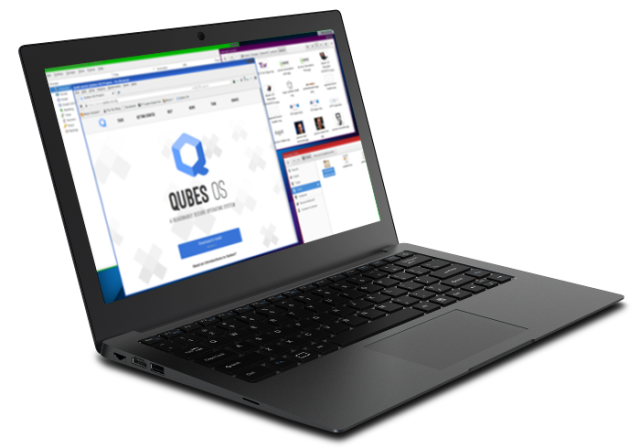
Qubes OS, the security-focused operating system that Edward Snowden said in November he was “really excited” about, announced this week that laptop maker Purism will ship their privacy-focused Librem 13 notebook with Qubes pre-installed.

Built on a security-hardened version of the Xen hypervisor, Qubes protects users by allowing them to partition their digital lives into virtual machines. Rather than focus solely on security by correctness, or hide behind security by obscurity, Qubes implements security by isolation—the OS assumes that the device will eventually be breached, and compartmentalises all of its various subsystems to prevent an attacker from gaining full control of the device. Qubes supports Fedora and Debian Linux VMs, and Windows 7 VMs.

One of the biggest problems with Qubes is that hardware support can be tricky. In order to take full advantage of the OS's many innovative security features, you'll need a CPU that supports virtualisation technology, including both Intel VT-x (or AMD-v) and Intel VT-d (or IOMMU), plus a BIOS with TPM (for Anti-Evil Maid). Running a dozen VMs or more, as many Qubes users do, can be resource-intensive, so plenty of RAM and a fast processor are essential.

Read 18 remaining paragraphs | Comments

A Star Destroyer on your table: Ars reviews all three Star Wars miniatures games

Ars Cardboard reviews the Star Wars miniatures games X-Wing, Armada, & Imperial Assault.

Welcome to Ars Cardboard, our new weekend look at tabletop games! Check out our complete board gaming coverage right here—and let us know what you think.

This week Ars Cardboard dives into miniatures wargaming—but forget stereotypes of tiny Napoleonic soldiers walking across home-crafted terrain. We’re talking about Star Wars miniatures here, from capital ships to TIE fighters to Darth Vader himself. If you’ve ever wanted to command a squad of X-Wings, take control of an Imperial Star Destroyer, or experience a shootout with stormtroopers, the current trio of licensed Star Wars miniatures games from Fantasy Flight have you covered. And with the Force Awakens mere days away, there's never been a better time to dive in.

If you haven’t played a miniatures game before, know that these aren’t quite like traditional board games. Movement takes place not on a board but on a large, flat play surface covered with stylized miniatures that represent squads, fleets, or squadrons. Movement and range calculations are based on physical distance and angles. Miniatures can pack a visceral cool factor—these aren’t just cards or chips on a board—but they can also be intimidating for the new player.

Read 63 remaining paragraphs | Comments
Backslash: Anti-surveillance gadgets for protesters

Two designers create a toolkit for tech-savvy protesters.

A black-and-white bandanna printed with a blocky, digital pattern reminiscent of the common Arabic keffiyeh is one item in the Backslash kit, a package of devices that help protesters stay safe and connected during demonstrations. The bandanna's pattern can store messages that can be revealed with the Backslash app.

When riot police descended on protesters in Ferguson, Missouri, last year sporting assault rifles and armored vehicles, the images sparked an awareness of the military technologies and tactics authorities have adopted over the past decade. Many of these tools have quietly become regular components of day-to-day policing. And just as with social networks and cell phone cameras during the Arab Spring and Occupy Wall Street, they've dramatically—and often invisibly—altered the dynamics of contemporary protest.

Examples are everywhere, from the controversial Long-Range Acoustic Device (LRAD) sound weapons used to disperse crowds to secretive mass surveillance devices, commonly known as stingrays originally developed for the US Navy, which police use to track cell phones, often without a warrant. Earlier this year, police in India began equipping aerial drones with pepper spray cannons to use on crowds of protesters. In August, North Dakota became the first US state to allow the same; a new law drafted by a drone lobbyist permits North Dakota cops to arm drones with pepper spray, tasers, and other “less-than-lethal” weapons.

The FBI has admitted that it flew surveillance planes equipped with high-resolution cameras over the Black Lives Matter protests in Ferguson and Baltimore, Maryland—part of a secret program that has monitored over 30 major cities from the skies using aircraft registered to fake companies. And in New York City, the NYPD has outfitted unmarked white vans with advanced X-ray equipment capable of seeing through walls and even people's clothes.

Read 18 remaining paragraphs | Comments

Dealmaster: Get an Xbox One Elite bundle with wireless controller for $449

Plus a $99 Nexus 7 tablet, a $199 iPad Mini 2 with Retina, and much more.

Hello Arsians! Thanks to our partners at TechBargains, we have another great gaming deal for you today. You can save $50 on an Xbox One Elite console, complete with a 1TB SSD and a wireless controller, and the deal includes a $100 Dell gift card as well. All of that is just $449, which is a steal considering the Elite controllers are sold out everywhere and regularly cost $150 each. Get this deal now for yourself or for someone on your holiday shopping list before it's gone!

We also have a number of laptop, tablet, TV, and gaming deals listed below.

Featured deals

Read 5 remaining paragraphs | Comments