Dealmaster: Get 30 percent off the X1 Carbon and all ThinkPads

Save cash on the businessy line of laptops, plus we’ve got a deal on Star Wars: TFA.

Greetings, Arsians! Courtesy of our partners at TechBargains, the Dealmaster is back with a big bundle of deals for your consideration. Today we're offering 30 percent off the Lenovo X1 Carbon and all ThinkPads. There's also a sweet deal on the 3D Collector's Edition of Star Wars: The Force Awakens.

Laptop and desktop computers

For more computer deals, visit the TechBargains site.

Read 6 remaining paragraphs | Comments

Fedora 24 review: The year’s best Linux distro is puzzlingly hard to recommend

Even for a great update, rollout trouble reminds us release cycles can mar a distro.

Enlarge (credit: Fedora Magazine)

Fedora 24 is very near the best Linux distro release I've used, and certainly the best release I have tested this year. Considering 2016 has welcomed new offerings like Mint 18 and Ubuntu 16.04 LTS, that says a great deal about the Fedora project's latest work. But like many Fedora releases before it, even Fedora 24 got off to a rocky start.

Longtime Fedora users are more than likely conservative when it comes to system upgrades. And historically, new Fedora releases tend to be rough around the edges. Wise Fedora followers tend to be patient and give a new release a couple of months for the kinks to work out and the updates to flow in. Usually, such a timing cushion also means all the latest packages in RPM Fusion have been updated as well. With that kind of precedent, being the first to jump on a Fedora upgrade—which comes every eight or so months—can be risky.

Patience does typically reward you with a really great Linux distro, though. And far more valuable than updated apps, waiting means you can skip catastrophic bugs like the one that completely broke Fedora 24 on Skylake systems after a kernel update. Fedora 24 shipped with Linux kernel 4.5 and managed to miss kernel 4.6 by about two weeks, which is a shame because no less than Linus Torvalds himself called kernel 4.6 "a fairly big release - more commits than we've had in a while." In other words, perhaps Fedora should have waited a few weeks to ship.

Read 37 remaining paragraphs | Comments

Dealmaster: Save on PCs, consoles, and monitors at Dell’s Labor Day sale

Plus a bunch of other deals on laptops, smart home products, and more.

Greetings, Arsians! Courtesy of our partners at TechBargains, we have many great deals to share that are part of Dell's Early Labor Day sale. Now you can get an XPS Core i7 desktop for $685, a $100 gift card on a PlayStation 4 Call of Duty bundle, and nearly $100 off a Dell UltraSharp monitor plus a $75 gift card. Those are just some of the steals going on during the sale, so be sure to check them all out.

Take a look at the full list of deals below.

Dell Early Labor Day Sale

Read 7 remaining paragraphs | Comments

From The Wirecutter: The best uninterruptible power supply (UPS)

We’ve got good picks for keeping a computer or two running when the power dies.

We picked the CyberPower CP685AVR as our winner. (credit: Michael Hession)

This post was done in partnership with The Wirecutter, a buyer’s guide to the best things for your home. Read the full article with more details and background information here.

After researching more than two dozen models, interviewing experts, and having an electrical engineer test our top candidates, we found that the CyberPower CP685AVR is the best uninterruptible power supply (UPS) for people who want to keep a home network running during a blackout of an hour or less. It’s easy to set up, it has some of the most positive user reviews in its class, and it’s the most affordable unit we found. We also like the APC BE650G1 Back-UPS, if it’s available for less. But if you need to power more than a modem and a Wi-Fi router or if you need to stay online longer, the APC BR1000G Back-UPS Pro is a better choice, with more than twice the power for less than twice the price.

The CyberPower CP685AVR will cover the basics for most people during short blackouts. In our tests it provided enough power to keep the average cable or DSL modem and Wi-Fi router running for an hour, which means you can stay online to pass the time while the lights are off—or, in a real emergency, keep your digital phone service powered so you can reach the outside world. The size of an overgrown surge protector, the CP685AVR is small enough to hide in the same corner as your networking gear, and because it has surge protection built in, you’ll have one less thing to buy. Although you could easily spend more on a UPS, you really have no reason to if you need only basic, non-critical protection and a limited amount of power.

Read 41 remaining paragraphs | Comments

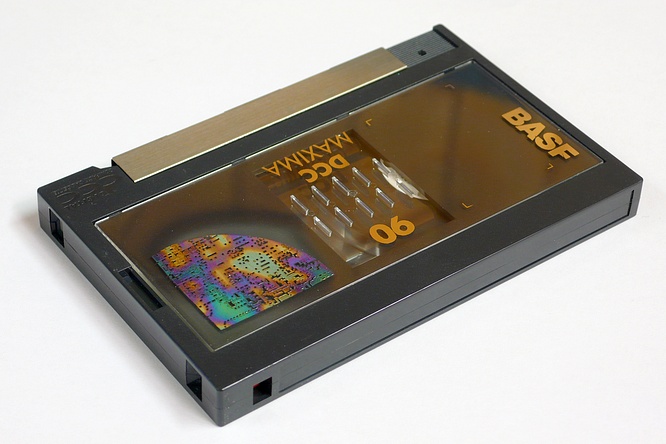
Forgotten audio formats: Digital compact cassette

A story of digitalization, Britpop, naughty ads, and, ultimately, better beer.

Enlarge (credit: Deepsonic)

The rise and fall of the digital compact cassette remains a salutary lesson for tech titans—it shows how you can get nearly everything right, and yet still fail badly. Like Britpop, whose 1993-1996 heyday parallels DCC’s short life, the format rose with much hype, a few boasts, and a cheeky advert or two...

...only to fall due to a perfect storm of marketing machinations, tight-fisted PRs, and shiny new rivals.

In one way at least, DCC was a very brave move—in the preceding decade, Dutch conglomerate Philips had successfully launched the billion-selling CD format, plus CD-ROMs, and the beginning of CD-I. Of course, all this had been done in conjunction with Japanese Sony. Yet for its digital cassette venture Philips abruptly decided to abandon Sony and entered a completely new alliance with an up-and-coming Japanese firm: the Kadoma-based Matsushita (the Japanese giant that is now known as Panasonic).

Read 31 remaining paragraphs | Comments

Twilight Imperium, a board game with meal breaks

Master of Orion meets space lions, on your table, for eight hours.

Enlarge (credit: Fantasy Flight)

Welcome to Ars Cardboard, our weekend look at tabletop games! Check out our complete board gaming coverage at cardboard.arstechnica.com—and let us know what you think.

A bewildered American, trying to get his head around a game that regularly ends in a draw despite taking five days to finish, once called cricket “the only sport that incorporates meal breaks.” But the comment could also apply to the game many consider the white whale of board gaming: Twilight Imperium.

“Twimp,” as my group calls it, has 300 plastic ship miniatures, more than 400 cards, and thousands of cardboard counters. It comes in a box you could bury the family pet in; its rulebook runs to 44 pages. Expansions each contain more new material than most midsize standalone games, while an online subculture argues about which fishing tackle box provides the most aesthetically pleasing storage solution for the components. Fully expanded, eight players can go for—well, 11.5 hours is as long as we’ve gone, but others like to stretch the festivities over two days.

Read 38 remaining paragraphs | Comments

Dealmaster: Get a Dell Inspiron 3650 desktop with Skylake CPU for $579

Plus 30 percent off PC accessories from Amazon and more.

Greetings, Arsians! Courtesy of our partners at TechBargains, we have a bunch of great deals to share today. You can now get a Dell Inspiron 3650 desktop, complete with a Core i7 Skylake processor, AMD R9 360 GPU, 16GB of RAM, and a 2TB hard drive for just $579. That's a steal on a desktop computer that typically costs over $900. To go along with that deal, Amazon's daily deal will save you 30 percent off PC accessories, components, and more.

Check out the full list of deals below.

Featured

Read 7 remaining paragraphs | Comments

Your teeth are probably better than an Olympian’s

Many Olympic athletes have dental problems—but getting care isn’t always easy.

(credit: Christian Petersen / Gett Images)

It’s not often that you can say you’re in better shape than an Olympic athlete. But an American adult is half as likely as an Olympian to have cavities, based on data from the CDC and from a 2013 study of athletes competing in the 2012 London Olympics. And three-quarters of these Olympians had gingivitis.

Of course, the demands of Olympic-level training set these athletes apart from the rest of us. Thirty percent of the athletes studied had taken a blow to the mouth, jaw, or face. And the average person doesn’t need an Olympic marathoner’s high-carb diet or sports drinks, which can contribute to tooth decay and other problems.

Professor Ian Needleman, who co-authored the 2013 study, explained in an interview with Ars the additional risk factors that Olympic athletes face. Needleman, of the Centre for Oral Health and Performance at the UCL Eastman Dental Institute in London, noted that “there’s good evidence that during high-intensity training, immunity is challenged.” Prolonged training also leads to dehydration in the mouth, he said, “and we have very good data showing that dehydration reduces saliva’s protection” against tooth decay, dental erosion, and gum disease.

Read 13 remaining paragraphs | Comments

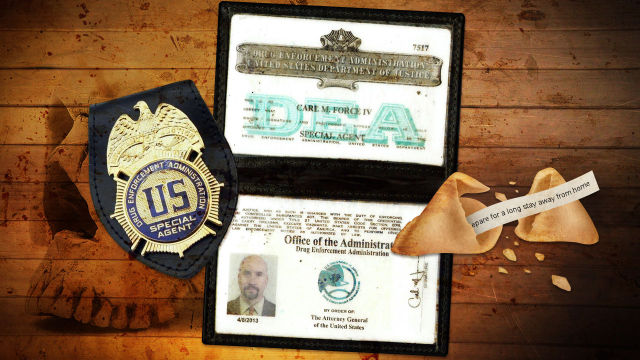
Stealing bitcoins with badges: How Silk Road’s dirty cops got caught

Ross Ulbricht’s screwup led to DEA agent’s arrest, who revealed another rogue agent.

(credit: Aurich Lawson)

DEA Special Agent Carl Force wanted his money—real cash, not just numbers on a screen—and he wanted it fast.

It was October 2013, and Force had spent the past couple of years working on a Baltimore-based task force investigating the darknet's biggest drug site, Silk Road. During that time, he'd also carefully cultivated several lucrative side projects all connected to Bitcoin, the digital currency Force was convinced would make him rich.

One of those schemes had been ripping off the man who ran Silk Road, "Dread Pirate Roberts." That plan was now falling apart. As it turns out, the largest online drug market in history had been run by a 29-year-old named Ross Ulbricht, who wasn’t as safe behind his screen as he imagined he was. Ulbricht had been arrested earlier that month in the San Francisco Public Library by federal agents who had their guns drawn.

Read 116 remaining paragraphs | Comments

Abzû review: A digital sightseeing tour of an underwater realm

Abzû is a beautiful audio-visual treat light on challenge but big on wonder.

It takes a while to adjust to life down here, in the murk and swill of Abzû's underwater palaces. The world feels fundamentally different when your movements are slowed and made heavy by water resistance. And then, as a kind of compensation perhaps, you are given the freedom of flight: upwards and downwards you soar in slow-mo, through the teeming fish. You play as an adept diver, with strong legs, fat flippers, and a head-mounted torch but, even so, it's hard to shake the sense that you are an interloper in a foreign realm. Your get-up cannot disguise the fact that your body was not made for a place like this. You are not welcome here.

It takes time to adjust to Abzû in other ways too. This is a fashionably chic independent game, with no ugly and intrusive HUD elements to spoil your view of its watery domain. But it bucks many other expected contemporary game-design conventions too. There's no map, for example, and no blinking mission-marker drawing you toward your next objective. There are, in fact, few objectives at all, at least in the usual video game sense. There's no health bar, no experience points, nor ways to level up your character's abilities. A single button is used to interact with the world, one catch-all interface used to free shoals of fish from meshes of imprisoning fronds, or to send orbiting mechanical devices to cut a window through the coral, or to loose a shark from some collapsed masonry.

While, much later, there are dangers in the form of unexploded mines which will go off if you drift too close, it's not possible to die in Abzû. At worst you get an electric shock that sends you tumbling through the water for a few seconds until you recover and rediscover your bearings. No, this is a wistful, thoughtful kind of a game: a digital sightseeing tour of an underwater realm, which allows you to marvel at the watery vistas and swim eye-to-eye with great whales. Like Flower and Journey, two contemplative PlayStation games on which Abzû’s creator Matt Nava has previously worked, this is a game about experience rather than challenge, about the journey rather than the destination.

At times Abzû has the ambiance of a magical Disneyland ride, an on-rails tour through vivid scenes where, each time through, you're free to pick out new details and wonders. The feeling of enchantment is compounded by Grammy-nominated composer Austin Wintory's stirring soundtrack, which calls to mind Disney's 1940 film Fantasia, which famously blended animated imagery with classical music. As you drift into and out of jet streams, through billowing curtains of seaweed, and over old bones licked white by the salt, the violins rise and fall to match your movements. As you breach the water alongside a display team of dolphins, a choir provides triumphant accompaniment. Reach the deepest parts of the sea and the soundtrack retreats, leaving nothing but the deep grumble of the tides, and the low popping of swaying bubbles leaked from the seabed. Abzû’s soundtrack, both musical and natural, is exemplary.

Read 7 remaining paragraphs | Comments