Mathematics meets music

Three researchers attempt to bring some rigor to the math of melody.

The annual meeting of the American Association for the Advancement of Science wrapped up last week in Washington, DC. One particularly enjoyable and informative highlight was a session on Mathematics and Music, which presented some work in progress by three prominent researchers in this area.

Noam Elkies of Harvard University presented the first talk, titled “The Entropy of Music: How Many Possible Pieces of Music Are There?” He illustrated his points with virtuosic turns on a keyboard. His basic idea was to apply concepts similar to those used in statistical mechanics and information theory to approach the question posed in his title. Elkies addressed how much a piece of music needs to change before it is a different piece, rather than a variation on the original. He also talked about how much information remains when the redundancy of repeated themes in a piece is accounted for.

Elkies did not address the problem of musical semantics in enough depth to make a compelling case that his statistical approach could generate real insight. But his lecture ended with an impressive performance, from memory, of a piece made from a baroque-style repeating arpeggiation where the root of the chord changed from measure to measure based not on a conventional harmonic progression, but on the digits of π. The result was an intriguingly disorienting congress of order with randomness, evoking something like an inebriated Buxtehude.

Read 11 remaining paragraphs | Comments

Dealmaster: Get a Newegg Premier membership and $100 gift card for just $90

Plus deals on desktops, tablets, smart TVs, and more.

Greetings, Arsians! Courtesy of our partners at TechBargains, we have a ton of new deals to share with you. One of the best comes from Groupon for Newegg—you can now get a one-year Newegg Premier membership for just $90. The membership includes free shipping and returns from the electronics site, access to special deals, and a $100 Newegg gift card. A typical 12-month Premier membership costs $49, but with this deal, you get that membership and $100 to spend at Newegg for under $100.

Also check out the rest of the laptop, TV, and accessories deals below.

Featured

Read 8 remaining paragraphs | Comments

Video: How one team created a virtual reality documentary

On the Brink of Famine, filmed in South Sudan, will be distributed on Facebook 360.

Video shot/edited by Nathan Fitch. (video link)

Managing civil war, excruciating heat, and a ton of GoPro cameras—these were just a few of the challenges of shooting a virtual reality documentary in South Sudan.

When we first spoke to Marcelle Hopkins about her film, On the Brink of Famine, in July 2015, she and her team were in a furious pre-production scramble of choosing gear, finalizing plans, and tweaking budgets. Ultimately, the team decided to shoot on GoPro 3+ cameras, using two special rigs (Hero 360 & Freedom 360) to hold multiple GoPros in the correct orientations needed for immersive coverage.

Read 4 remaining paragraphs | Comments

2016 Geneva Motor Show: Supercars, concepts… and cars you can actually afford

Bugatti Chiron leads the new car launches, but there’s interesting mainstream tech too.

You might think the Volkswagen group would be wise to keep a low profile at the moment, in the wake of the devastating diesel engine emissions scandal that has yet to play out to its conclusion. But no, the news from the Geneva motor show is dominated by VW group in the shape of its new hypercar, the Bugatti Chiron.

The replacement for the remarkable but frankly absurd Veyron is all the more remarkable, not least for managing to get built at all in a time when VW has pledged to restrict itself to essential, core activities. It’s remarkable, too, in that it takes virtually every Veyron metric and bests it.

Bugatti Chiron

The Chiron is (slightly) longer and wider, significantly taller, and about 150kg heavier than the Veyron, despite weight-saving measures including the use of a full carbon composite structure, a carbon intake manifold and engine cover, titanium brake callipers, and a titanium exhaust system.

Read 23 remaining paragraphs | Comments

Dark Souls 3: Cowards and newcomers need not apply

FromSoftware and Miyazaki weave together the best bits from Souls and Bloodborne.

People can’t seem to get enough punishment. That’s what the 10-million-plus sales of the Dark Souls series and Bloodborne say, anyway.

But as Dark Souls III's April 12 release date nears (or March 24 if you're lucky enough to live in Japan), questions remain. As much as fans may consider each of the Souls games to be unique crystalline ornaments of tense action role-playing, all four are roundly similar. And as Ars found out at Gamescom last year, Dark Souls III is going much the same way. That's not necessarily a bad thing, of course—after all, these are fine games with a large and enthusiastic fan base—but I wonder if there's something, anything, in Dark Souls III that might attract those who haven't already got a taste for developer FromSoftware's work.

Even before I get into the game—the first four hours of which I played—the creaky facial models, the obscure expositional cut-scenes, and the '90s-grade UI are strikingly familiar. As too are the visuals, which bear the murky style of the earlier Dark Souls games, albeit with some of the visual sheen and sharpness seen in Bloodborne. What seals the deal, though, is the 30 minutes I spend trying to kill the first boss, during which I feel the familiar despair-tinged stress bubble of a good Dark Souls fight fill to bursting before the inevitable happens and the game, in blood red writing, says "You Died."

Read 13 remaining paragraphs | Comments

Dealmaster: Snag a Dell XPS 13 laptop with a Core i5 processor for $765

And a bunch of other electronics deals to consider.

Greetings, Arsians! Courtesy of our partners at TechBargains, we have a number of deals to share with you to close out February. One of the best ones is on a premium Dell notebook—now you can get a Dell XPS 13, featuring an Intel Core i5 processor, 1080p InfinityEdge display, and 128GB SSD for just $764.99. This MacBook Air-like laptop regularly starts at $999, so now's the time to grab it while a few hundred bucks are shaved off the price tag.

Be sure to check out the rest of the deals below as well.

Featured

Read 4 remaining paragraphs | Comments

Life in Technicolor—One month wearing EnChroma’s color blindness-fixing glasses

By blocking wavelengths, glasses create a new world complete with grass, traffic lights.

"Roses are red, the water is... purplish?" (credit: Nathan Mattise)

Like all of the scattered recollections I can access from the earliest years of my life, the memory is fuzzy. It’s more a cluster of blurry snapshots unified by a jumble of vague feelings. There is box of crayons, a wooden sailboat floating across the page, and a teacher’s loaded question.

“Why is the ocean purple?”

In this moment, there’s confusion, embarrassment, and about as much self-doubt as this barely self-aware first grader is capable of.

Read 63 remaining paragraphs | Comments

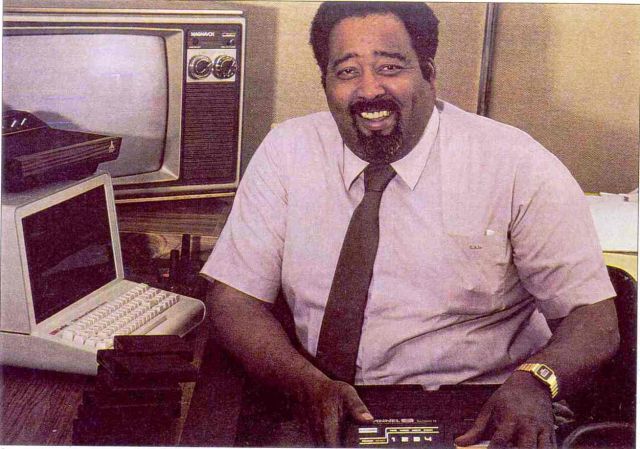
You wouldn’t be able to pause your video games today without Jerry Lawson

Lawson was a pioneering black engineer back when it was even harder in Silicon Valley.

You've gotta step away from the crowd and go do your own thing. You find a ground, cover it, it's brand new, you're on your own—you're an explorer. That's about what it's going to be like. Explore new vistas, new avenues, new ways—not relying on everyone else's way to tell you which way to go, and how to go, and what you should be doing.

—Jerry Lawson, from an interview with Vintage Computing and Gaming in 2009

Though you may not know his name, Jerry Lawson helped lay the groundwork for all modern gaming consoles. As chief hardware engineer for Fairchild Semiconductor’s game division in the 1970s, Lawson was largely responsible for the Fairchild Channel F—the first console to include its own microchip and the first to use cartridges.

Lawson was also black. And as this Black History Month winds down, it’s worth reflecting on his achievements because Lawson succeeded in Silicon Valley at a time when opportunities for black engineers and inventors were severely limited (even more so than today). As The New York Times once put it, “He was among only a handful of black engineers in the world of electronics in general and electronic gaming in particular.”

Early days

Jerry Lawson was born on December 1, 1940 and grew up in the Jamaica, Queens area of New York City. His father was a longshoreman who loved to read science books; his mother was passionately committed to ensuring her son received a good public school education. She went so far as to visit schools to interview the principal and teachers. If she didn’t like what she heard, her son was going to a different school.

Read 23 remaining paragraphs | Comments

Most software already has a “golden key” backdoor—it’s called auto update

Software updates are just another term for cryptographic single-points-of-failure.

(credit: martinak15)

Leif Ryge is an artist, hacker, and journalist living in Berlin. He used to tweet as @wiretapped but is on hiatus until Twitter stops suspending Tor users' accounts.

In 2014 when The Washington Post Editorial Board wrote "with all their wizardry, perhaps Apple and Google could invent a kind of secure golden key they would retain and use only when a court has approved a search warrant," the Internet ridiculed them. Many people painstakingly explained that even if there were somehow wide agreement about who would be the "right" people and governments to hold such an all-powerful capability, it would ultimately be impossible to ensure that such power wouldn't fall in to the "wrong" hands.

Yet, here is a sad joke that happens to describe the reality we presently live in:

Read 18 remaining paragraphs | Comments

Op-ed: The international politics of VPN regulation

Repressive nations are pursuing increasingly diverse strategies for curbing VPN use.

That middle part is under a lot of potential fire. (credit: Riseup.net)

Ramon Lobato is senior research fellow at Swinburne University of Technology in Australia. His book Geoblocking and Global Video Culture, coedited with James Meese, has recently been published by Institute of Network Cultures (free PDF). Thanks to Hadi Sohrabi, Jinying Li, and other contributors to the book for their insights on VPN regulation.

As info security expert Bruce Schneier and his Berkman Centre for Internet and Society colleagues pointed out in a report last week, there are now about 865 encryption-related products available globally. From free and paid VPNs to voice encryption tools, this market stretches far beyond the borders of the United States. Today, the encryption economy includes no fewer than 55 different countries across Europe, Latin America, the Asia-Pacific, and the Caribbean.

The sprawling ecology of software development creates an obvious problem for governments and security agencies seeking to monitor or contain privacy software. Free software and other distributed projects typically exist “on multiple servers, in multiple countries, simultaneously,” and companies selling anonymization software can relocate across borders with relative ease.

Read 12 remaining paragraphs | Comments