
Hyundai wows New York with Genesis “New York” Concept

Hyundai’s upmarket brand flexes design muscle at the New York International Auto Show.

Hyundai unveiled a gorgeous new concept car at the New York International Auto Show this week, the Genesis “New York" Concept. It not only hints at future design direction; it will also result in a real car within the next 18 months, according to Hyundai insiders.

Sized in between typical D-segment and E-segment cars (3-series and 5-series BMW sedans, for example), the New York is decidedly not a moonshot that dares to redefine design. Rather, its proportions and form factor follow the well-understood "three-box" convention (a hood, a cabin, and a trunk). But, as with anything worthwhile, the devil’s in the details and we think Hyundai’s beaten the devil.

Hyundai is spinning off its Genesis cars into a new brand—think Nissan/Infiniti, Honda/Acura, or Toyota/Lexus. The Genesis brand currently has but one car production car, the G90, and is aiming for BMW’s M division with its own N division. Judging by the New York Concept, the competition should be on alert.

Read 11 remaining paragraphs | Comments

AI in healthcare: Fascinating tech, but is it actually saving lives?

Computers excel at finding a signal in the noise, but we’re still wary of AI doctors.

In an unassuming two-story Victorian town house in Bristol, people are being filmed, monitored, and tracked 24/7. Invisible sensors constantly keep a watchful eye they go about their business. But what these folks lose in privacy could be our collective gain in life expectancy—that is, if the long-term data bears out.

Pivotal to the £15-million (~$21M) Sensor Platform for Healthcare in a Residential Environment (SPHERE) project, this house has been invisibly fitted with dozens of cameras and sensors while its occupants are asked to don wearable devices. The aim is to research how health is related to everyday lifestyle and living conditions over time.

The smart home observes everything, from how long the occupants slouch in front of the TV to their activity sitting or walking or exercising. The house captures such information and can contextualize it against each other. It takes note of how much and how frequently they eat and drink and which appliances are being used. It even records when occupants sleep and keeps track of temperatures around the house.

Read 41 remaining paragraphs | Comments
Dealmaster: Get a 55-inch Samsung 4K Smart 3D HDTV for $1,250

Plus, here’s where you can preorder Playstation VR bundles now.

Greetings, Arsians! Courtesy of our partners at TechBargains, we have a bunch of new deals this week. The featured deal includes the best price we've seen for a high-end TV since last year's Black Friday. Now you can get a 55-inch Samsung SUHD 4K Smart 3D HDTV for just $1,250. This model features Samsung's Nano Crystal technology which offers beautifully vibrant colors, optimized contrast for extreme crispness, and a quad-core processor. There's also a 65-inch version on our list for just $1,799.

Check out the rest of the deals below, including where you can preorder Playstation VR bundles.

Featured

Read 6 remaining paragraphs | Comments
Nokia Ozo: A 360° 3D VR camera out to populate the barren content desert

The $60,000 Ozo has eight 2K cameras capable of outputting 1Gbps of video.

(credit: Andrew Williams)

With the Oculus Rift, HTC Vive, and PlayStation VR all due for release before the end of the year, there's no doubt 2016 is the year of virtual reality. And yet, with such a focus on headset hardware, it's easy to forget that there's a whole world of software and content needed to make VR work. Enter Nokia.

Now freed from the cut-throat mobile market, the Finnish company is hoping to kickstart VR content creation with the Ozo, a high-quality VR camera with eight camera sensors and eight microphones spread across a not-quite-sphere. It outputs 360-degree 3D video and surround audio through a single cable, bypassing all the issues faced when trying to get the same effect from a DIY assemblage of GoPro or Red cameras.

Before you get your credit card out, ready to be the first VR YouTuber with 10 million subs, there's one caveat we must point out: the Nokia Ozo costs an eye-watering €55,000 (£43,000, $60,000). This is most definitely a professional tool, not merely something to help with shooting interminable holiday panoramas.

Read 29 remaining paragraphs | Comments

Company claims its brain-zapping headphones will make you a better athlete

Halo says its $549 tDCS headset can boost sports, but lacks peer-reviewed science.

Will the future of doping involve zapping your brain with electrical current? If one believes what San Francisco-based company Halo Neuroscience is claiming, it might well be so.

The firm manufactures devices for transcranial direct stimulation (tCDS)—namely the usage of low-current electrical pulses to fire up certain areas of the brain. The practice is thought to bolster specific neurons and create additional neural connections, improving some cognitive abilities—such as memory, concentration, and learning skills.

Halo’s first product Halo Sport, released last month, focuses specifically on boosting sport performances by delivering 2.0mA pulses to athletes’ motor cortex, a brain area in charge of movements and coordination. The wearable looks essentially like a pair of headphones, but if you look at the underside of the headband you'll see that it's lined with spiky foam-clad electrodes. According to Halo, if an athlete wears them while training, their neurons will react much faster, maximising each session’s gains.

Read 6 remaining paragraphs | Comments

Audio-Technica’s valve headphone amp makes any pair of cans sound awesome

$6,000 amp offers huge range of 120Ω, 82Ω, 33Ω and 0.1Ω outputs for true audiophiles.

(credit: Andrew Williams)

Headphone amps are usually pretty simple things. You get an input or two on the back, a headphone input on the front, and a volume knob. That's all you really need, particularly if you're not looking for one with a dedicated DAC (digital-to-analogue converter).

The Audio-Technica AT-HA5050H, which gets bonus points for sounding like an awesome website that we all know and love, is well beyond the curve. Far from being just ready for so-called "high-res" audio and expensive headphones, it's an amp that can satisfy those with headphone collections valued at more than a London flat deposit, provided you're willing to fork over a cool £3,500 (MSRP $6,000) to buy one. And that's only if you manage to find one in stock at all—the unit I looked at was apparently the only one in the UK at the time.

The AT-HA5050H is a headphone amp that assumes you have good knowledge of how headphones work, that you know about impedance, and that you know about the difference between a DSD audio file—that's Direct Stream Digital, the format used by Super Audio CDs that stores audio at a 2.8224MHz sampling rate—and a "normal" one.

Read 14 remaining paragraphs | Comments

How a simple SIM card helps farmers navigate changing climates and markets

India’s GreenSIM initiative exposes rural farmers to tech and essential real-time info.

Farmers harvest peanuts in the village of Addakal, India. (credit: ICRISAT)

A handful of years ago, Chandrakala Kongala, a farmer in the rural village of Kommireddipalli in the southern Indian state of Telangana, faced a devastating problem. In one fell swoop, an unanticipated downpour had ravaged her peanut crop.

Farming wasn’t a leisurely pursuit for Kongala; it was her livelihood. Living in a remote area with limited access to transportation, she was ineligible to enter the mainstream job market. If the crops failed, she’d be left with no source of income.

During the following growing seasons, Kongala was flourishing. She was cultivating a variety of crops, at times harvesting earlier than anticipated. Eventually, she came to own a one-acre farm yielding hundreds of pounds of crops per harvest (her rice yield, for example, has jumped from 120 to 165 pounds). By spring of this year, she was earning 20,000 to 30,000 rupees per season ($300 to $450)—a lavish sum in a community of farmers subsisting on one to two dollars a day.

Read 26 remaining paragraphs | Comments

Take it from a pro, Street Fighter 5’s changes are for the greater good

One Guinness Worlds Record-holding champ believes the community needs SFV to succeed.

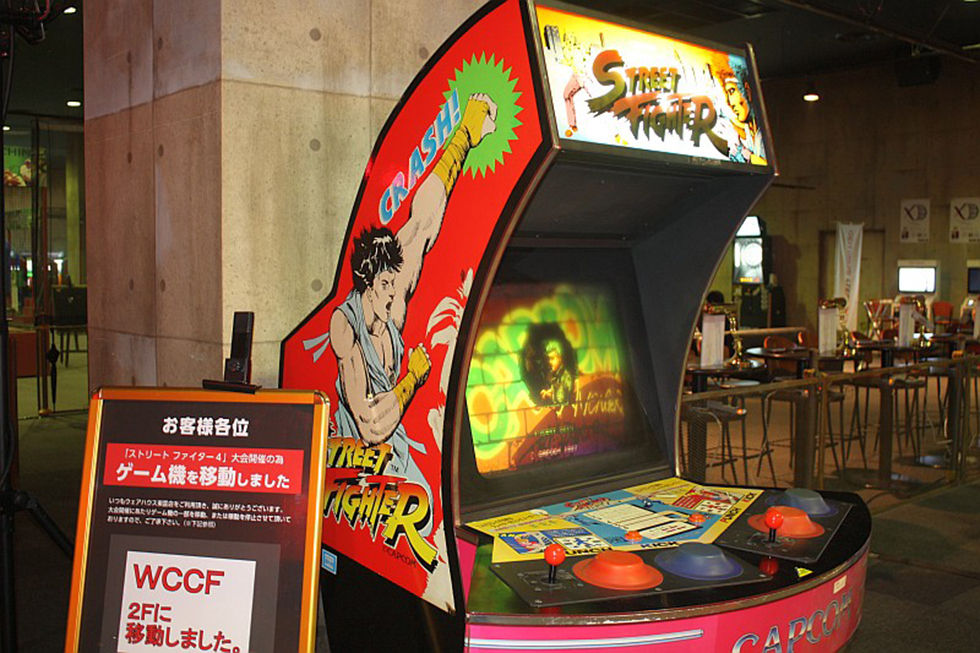
1987's Street Fighter wasn't the first fighting game—see the likes of Yie Ar Kung Fu and Karate Champ—but it remains the most influential. With three levels of attack speed and strength for punches and kicks mapped to six buttons (replacing an earlier version with pressure-sensitive pads), along with three special attacks that required a specific combination of button presses and joystick movements, Street Fighter was far more complex that its trivial title implied.

Street Fighter II improved on its predecessor to that point that it was almost unrecognisable. Eight playable characters. Hugely improved graphics. And a combo system that—while fabled to have come about by accident, rather than by design—resulted in huge depth. For children of the '90s, huddling round a coveted cabinet in a local chippy, mini-cab station, arcade, or wherever else one would randomly turn up, Street Fighter was a rite of passage.

Many of those children, myself included, went on to enter tournaments. A lucky few became superstars. Others became heroes. Despite its ups and down—particularly when it comes to female participants—the fighting game community that evolved out of Street Fighter is thriving. 2015's Evo tournament, arguably the largest fighting game tournament in the world with a prize pot of over $300,000 (£200,000), was watched by just under four million people. The most popular game in the tournament? Ultra Street Fighter IV, which drew more 250,000 viewers on Twitch during the momentous final between Momochi and Gamerbee. Sure, Evo might ostensibly be about more than just Street Fighter thanks to having games like Super Smash Bros. Melee and Killer Instinct on its roster, but to the average joe who might not know his high kick from his Hadouken, Street Fighter is Evo.

Read 10 remaining paragraphs | Comments

Domino’s is trialling an autonomous pizza delivery robot

Battery-powered pizzabot has 12-mile range; customers access pizza with a code.

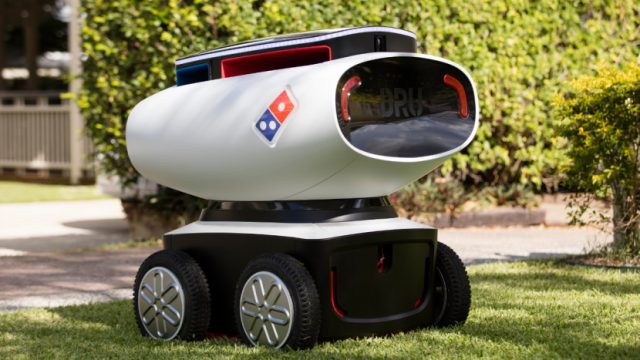
Pizza delivery boys and girls, beware! Pizza giant Domino’s has unveiled an autonomous pizza delivery robot that is being trialled in New Zealand.

On Friday the company unveiled the Domino’s Robotic Unit (DRU), and announced that the bot had already carried out its first successful pizza delivery on March 8. “DRU is an autonomous delivery vehicle and is set to take the world by storm,” the company wrote in a statement on its website.

The vehicle’s development started in 2015 and was pushed towards commercialisation by Domino’s Australia-based skunkworks DLab. According to a promotional video (embedded below), DRU uses software developed by the Australian military contractor Marathon, which manufactures autonomous robots with obstacle-avoidance capabilities.

Read 7 remaining paragraphs | Comments

Hitman “Intro Pack” review: They just won’t stay dead

A slim cut of levels might just enhance a game meant to be played over and over again.


The latest Hitman game—the first to actually bear the unadorned title of Hitman—is set to release episodically throughout the rest of the year. The opening salvo includes just three levels, two of which basically play prologue to the standout Paris map, for $15. Add to that another $10 for each of the next six episodes à la carte. Alternatively, you could just land "The Full Experience" for a sensible $60.

Normally I wouldn't bother to explain how to buy a game while reviewing it, but in this case I'll make an exception. That’s both because Square Enix has done an exceptionally poor job of communicating how to purchase the game and because understanding how Hitman is packaged is key to understanding what makes it work. And it actually works rather well.

Read 16 remaining paragraphs | Comments