Dealmaster: Get a Dell Inspiron 15 7000 with 4K touchscreen for $799

Plus extra deals on desktops, notebooks, cameras, and more.

Greetings, Arsians! Courtesy of our partners at TechBargains, we have a great deal on a nice laptop to share. Right now, you can get a Dell Inspiron 15 7000 notebook, featuring a 4K UltraTouch display, Intel Skylake processor, and a 256GB SSD, for just $799. This 2-in-1 laptop typically goes for $1,089, so this incredible price is worth taking advantage of before it's gone for good.

Also check out the rest of the deals we have on desktops, cameras, and more below.

Featured

Read 6 remaining paragraphs | Comments

Watch the world’s first 360° VR surgery live stream on Thursday

VR operations: it’s all about stitch ‘em up, not shoot ’em up.

On May 22 2014, Mr Shafi Ahmed, consultant general colorectal, and laparoscopic surgeon at Barts NHS trust was in the news for bringing his craft a good deal closer to the gaze of his medical students.

By donning Google Glass as he removed tumours from the liver and bowel of a 78-year-old British man, he allowed 13,000 trainees and clinicians to witness a surgeon’s eye view of the procedure as it happened.

Now, the streaming surgeon is going live again. The Royal London hospital's operating theatre—with the surgery at centre stage—will be available for all to see live in virtual reality at lunchtime on Thursday, April 14.

Read 45 remaining paragraphs | Comments

Underwriters Labs refuses to share new IoT cybersecurity standard

“Too many unhealthy products will pass the bare-minimum certification process.”

UL, the 122-year-old safety standards organisation whose various marks (UL, ENEC, etc.) certify minimum safety standards in fields as diverse as electrical wiring, cleaning products, and even dietary supplements, is now tackling the cybersecurity of Internet of Things (IoT) devices with its new UL 2900 certification. But there's a problem: UL's refusal to share the text of the new standard leaves some experts wondering if UL knows what they're doing.

When Ars requested a copy of the UL 2900 docs to take a closer look at the standard, UL (formerly known as Underwriters Laboratories) declined, indicating that if we wished to purchase a copy—retail price, around £600/$800 for the full set—we were welcome to do so. Independent security researchers are also, we must assume, welcome to become UL retail customers.

"It's very concerning," Brian Knopf of I Am The Cavalry, a group of security researchers focused on public safety issues, told Ars. "Without transparency, the research community cannot help improve or audit the standards." As Ars has previously reported, Knopf is leading an effort to develop a five-star cybersecurity rating system for IoT devices.

Read 20 remaining paragraphs | Comments

How The Division drinks DayZ’s milkshake

For compelling PvP, just reverse-engineer an indie darling of the survival genre.

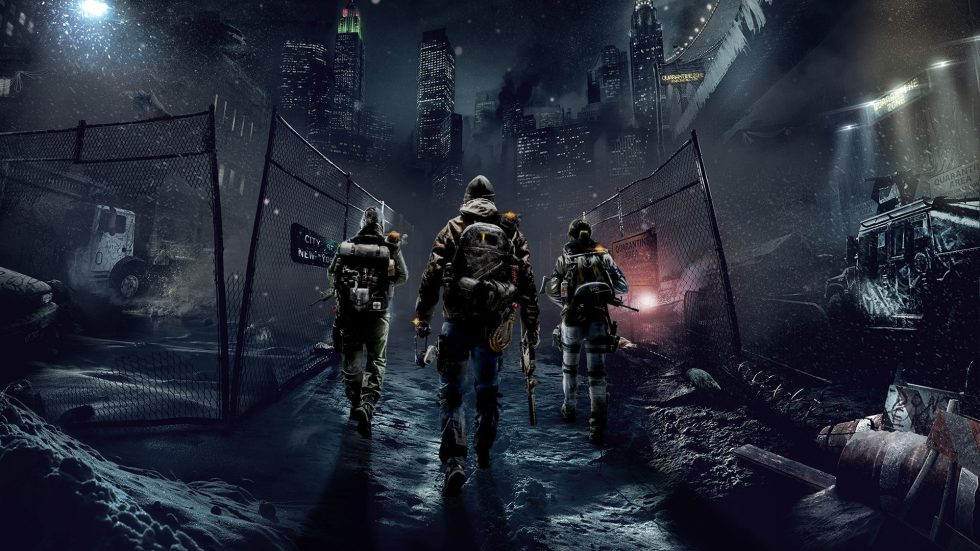
I don't have access to Ubisoft's many bank accounts, but Tom Clancy's The Division looks like the most expensive game the publisher has made by some distance. The Clancy brand alone represents decades' worth of investment, the production values are phenomenal, and a long marketing campaign was rewarded with the best first-week sales of any new franchise ever. These financial reference points are important because they tell us something about The Division: it is a blockbuster designed for the mass-market or, to use industry terminology, an exemplary "triple-A" title.

Working on a game like this is a dream opportunity for many developers, and like any project it comes with restrictions. When you're designing for a mainstream audience, rather than designing a game you hope will find an audience, aspects like how challenging it is are the subject of obsessive tweaking. A mainstream game wants a smooth learning curve with just enough friction, avoiding extremes that could either frustrate or bore the player.

One could argue that The Division is aiming at a player who doesn't exist—the "average" player—and so there is no perfect balance, just the best possible compromise. The developers nevertheless control the numbers at the heart of The Division's gunplay, and post-launch have and will continue to tweak aspects of the game that the player base has trouble with.

Read 24 remaining paragraphs | Comments

Master of Orion: In Early Access, no one can hear you scream

20 years later, Wargaming is bringing back Master of Orion—but… why?

13 years since the last Master of Orion, and 20 since the last good Master of Orion, we're met with an interesting proposition. Wargaming, the studio behind the inexplicably popular World of Tanks, is funding a reboot of the spacefaring strategy series, which was once a leader of the 4X genre, and the very reason the eXplore, eXpand, eXploit, eXterminate moniker was coined in the first place.

While there was a lull in the number of space-based 4X games being released around a decade ago—and the awful Master of Orion 3 has to take much of the blame for that—the genre has seen a huge resurgence in recent years. Galactic Civilizations, Endless Universe, Civilization: Beyond Earth, Sins of a Solar Empire—the list stretches beyond the bounds of the known universe (maybe).

So why bring Master of Orion back? The genre is doing just fine without it, and even with a tarnished record from the third game, the original is still remembered fondly. Surely bringing MOO back is just an exercise in slapping a name on any old 4x game, throwing money at some big-name voice actors, and calling it a day?

Read 24 remaining paragraphs | Comments

From MUD to MMOG: The making of RuneScape

Where many MMOGs faltered, RuneScape and its legions of fans have endured for 15 years.

When he was a boy, growing up in Nottingham, England, Andrew Gower couldn't afford to buy all of the video games he wanted to play. Rather than mope, he rallied. A wunderkind programmer, Gower created his own versions of the most popular games, pieced together from clues printed in text and image in the pages of video game magazines. Gower's take on Lemmings—the 1991 Amiga game that was developed by DMA Design six years before the studio made Grand Theft Auto—was his masterwork. "I was proud of that game," he says. "It was the first [computer game] I’d made that didn't look like it had been put together by a kid."

Gower would grow up to become, along with his brothers Paul and Ian, the co-founders of Jagex Games Studio and creators of its flagship title RuneScape. It's one of the longest-running massively-multiplayer online games (MMOG), in which players quest together across the Internet in a fantasy world that, like Facebook, continues to rumble and function even when an individual logs off.

Launched in 2001, the earliest version of the game looked rather like a fantasy-themed version of The Sims. Characters were viewed from a divine camera, looking down on the action from an isometric perspective. RuneScape takes place in the world of Gielinor, where gods roam among men. The game eschews a linear storyline, allowing players to set their own goals and objectives. Now in its third iteration (the basic game was superseded by a new version in both 2004 and 2013, each of which upgraded its graphics and overhauled the underlying code base), RuneScape has reached an enviable milestone in the fickle world of MMOs: 15 years old.

Read 15 remaining paragraphs | Comments

Aboard HMS Cavalier, where Wargaming is battling to shape the future of VR films

World of Tanks maker is doing great work preserving the HMS Cavalier.

Sometimes promotion for a videogame can go too far, becoming overwrought and vastly inflating the value of what it is promoting. Other times it can be subtle, unique, maybe even truly interesting, and draw in a new audience that might not have otherwise have cared. Then there's the Wargaming approach, which seems to be: "make something that doesn't promote any of our games, purely because we can."

Thus, Virtually Inside Warships was born: a virtual, 360-degree video tour of the HMS Cavalier, made with virtual reality headsets in mind, but the kind of thing you can just as easily watch on a smartphone, tablet, or even (with some cumbersome mouse-swiping) your browser. It is a complex technical undertaking, requiring much preparation, technical know-how, and traditional documentary-making chops—and, if you didn't already know ahead of time, there's almost no indication that it was made by a gaming company.

This isn't uncharted territory for the Minsk-based studio, which is best known for developing the game World of Tanks. Its first VR outing was Virtually Inside Tanks, and it followed that with a 360-degree 1941 battle re-enactment, a neat proof-of-concept for where the studio wants its VR ambitions to end up. But Virtually Inside Warships sees a number of improvements to the technology used, including a far more experienced production team, and a level of ambition I've yet to see in any VR or 360-degree film to date.

Read 36 remaining paragraphs | Comments

Dealmaster: Get a Dell Inspiron 3000 desktop with Core i7 processor for $579

Plus additional deals on games, TVs, laptops, and more.

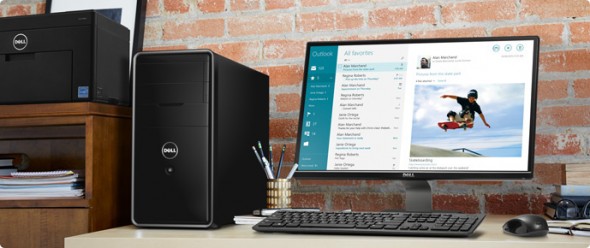
Greetings, Arsians! Courtesy of our partners at TechBargains, we have a bunch of good deals to close out the work week. Now you can get a Dell Inspiron 3000 desktop with Core i7 processor and 16GB of RAM for only $579. This is a powerful desktop that can easily carry you through doing work, playing games, watching movies, and more with its high-power processor, 2TB hard drive, and Intel HD GPU. Grab it now while the price is incredibly low!

Check out the rest of our deals below on games, laptops, TVs, and more.

Featured

Read 6 remaining paragraphs | Comments

Overwatch has its sights set on e-sports, but it’s too much fun for that

Blizzard’s grand FPS-MOBA experiment hits open beta in May, and you’ll love it.

A few months ago, Blizzard launched a closed beta for its upcoming shooter Overwatch—and I've been engrossed in the PC version ever since. For all its faults—and there are many faults—it's hard not be impressed with not just how much fun Overwatch is, but how Blizzard's managed to successfully combine a solid first-person shooter along the same lines as Team Fortress 2 with the mechanics of a modern MOBA (Multiplayer Online Battle Arena) like its own Heroes of the Storm and Riot's League of Legends.

That Blizzard's managed to create a compelling online experience comes as little surprise. This is, after all, the same studio that kept millions upon millions of players hooked to World of Warcraft for over a decade, and created Hearthstone, one of the most popular online collectible card games. With Overwatch, it has its sights set not just on creating the most popular online shooter, but one that can take on MOBAs on their home turf: the e-sports arena.

It's been hard to picture Overwatch as a crowd-pleasing, e-sports giant as I've sat alone in my bedroom moaning about what a bully Bastion (a transforming battle robot character) is to others over a clip-on voice mic. But now, sat with a team playing a huge multiplayer game at an event in London's Soho, and struggling against an unfair number of turrets from the opposition, Blizzard's e-sports vision is a little clearer.

Read 11 remaining paragraphs | Comments

The virtual worlds that keep us coming back to the HTC Vive

Eight launch games to check out on your simulated holodeck.

Typically, the excitement for a new game hardware launch is tempered by a lineup of rushed, undercooked games. Devs throw all kinds of stuff at the wall while coming to grips with new hardware—and that’s only worse when it looks like the system hinges on a “gimmick,” like the Wii or the Kinect.

That said, the HTC Vive has one of the most diverse and satisfying selections of launch software we've ever seen. Sure, the selection of more than 100 games listed with “VR Support” on Steam includes plenty of instantly forgettable clunkers, nearly unplayable experiments, and demos that need another coat of polish. But after trying our hands at dozens of VR titles in recent weeks, we can heartily recommend all eight of these games that really highlight the appealing new kinds of experiences that are possible with full, room-scale virtual reality and accurate head and hand-tracking.

These are the games that have kept us eagerly coming back to the Vive's simulated holodeck again and again on the review hardware, and we'll keep coming back to these games in the weeks to come. And if you're looking for compelling non-gaming content, check out our fuller write-up of the magic of 3D painting in Tilt Brush.

Read 56 remaining paragraphs | Comments