Dealmaster: Save a ton on a Samsung 40-inch 4K Smart TV, and more

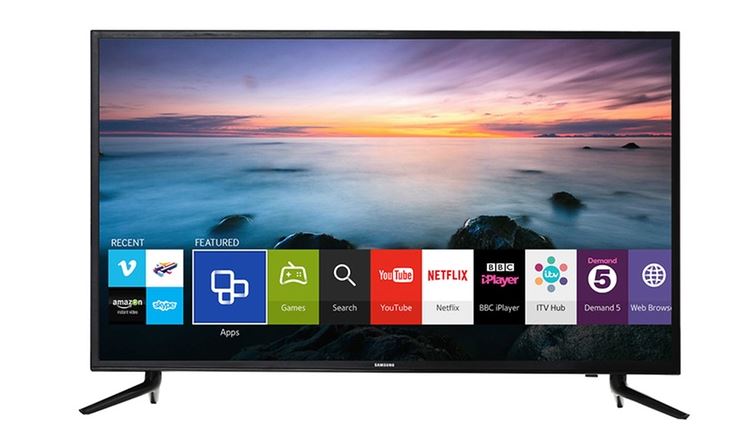
New Groupon users can get the TV for just $386.99.

Greetings, Arsians! Courtesy of our partners at TechBargains, we have a fresh batch of deals for your consideration. The top item today is a 40-inch Samsung 4K Smart TV. New Groupon users can get it for $386.99, while existing Groupon bargain hunters will have to settle for $408.99. With a list price of $999.99, either deal is a good one.

Check out the rest of the deals below, including savings on laptops, home theater, and more.
Laptop & Desktop Computers

Read 5 remaining paragraphs | Comments

Ubuntu 16.04 proves even an LTS release can live at Linux’s bleeding edge

Canoncial to offer 5 years of support, but Snap packages mean latest features factor in.

A disappointing trend has become clear to Linux users in recent years. Whenever Canonical offers a new Ubuntu Long Term Support (LTS) release, it tends to be conservative in nature. (See our Ubuntu 14.04 review, which earned a "Missing the boat on big changes" headline.) Apparently no one wants to try to support a brand new, potentially buggy piece of code for half a decade.

The last few Ubuntu releases haven't been LTS rollouts, yet Vivid Vervet (15.04) and Wily Werewolf (15.10) also short-changed users in the way of new features. So when Canonical officially released the latest Ubuntu LTS version (Ubuntu 16.04 or Xenial Xerus) this spring, similar expectations loomed. Frankly, this could potentially be the most boring Ubuntu release to date.

Thankfully, perception hasn't matched reality this time around for Ubuntu users. Ubuntu 16.04 is in fact the most exciting release Canonical has put out in recent memory. And after using it for the last few weeks, this may even be the best release Canonical has presented to date.

Read 42 remaining paragraphs | Comments

Listen up: James West forever changed the way we hear the world

Now in his 80s, the legendary inventor still pursues research and fights for education.

We hear the world in a much different way thanks to James West. (credit: Johns Hopkins University)

If you’ve ever used a cellphone, hearing aid, or baby monitor, listened to live or recorded music, or recorded anything yourself, you’re indebted to James West.

West is the co-inventor of the electret microphone used in all of those devices and more. It’s estimated that over 90 percent of the microphones in use today are electret mics, and more than 2 billion of these devices are produced worldwide every year. The electret microphone’s usefulness is matched only by its longevity. While it has been refined over the years, the basic technology is virtually identical to what West and Gerhard Sessler invented at Bell Labs in the early 1960s.

A peek at the typical electret microphone preamp circuit. (credit: Wikimedia )

Today, this invention's success is only matched by legacy of its inventor. After his groundbreaking work, West went on to become an internationally-recognized electrical engineer. He holds more than 40 US and over 200 international patents. He has been inducted into the National Inventors Hall of Fame and the National Academy of Engineering. His many awards include the Acoustical Society of America’s Gold Medal, the George Stibitz Trophy from AT&T, the Benjamin Franklin Medical Award in Electrical Engineering, and the US National Medal of Technology and Innovation.

Read 26 remaining paragraphs | Comments

Are smartphones “de-evolutionizing” humanity?

Video: the conflicted lives of cell phone owners.

Produced by Nathan Fitch. (video link)

On any given day in New York City, you can see people using their cell phones to take selfies on the Staten Island Ferry, read books on the L train, or hail an Uber car. Like everywhere else in the world, everyone in New York's got a phone.

But when we spent a recent afternoon in Washington Square Park, asking people about their cell phone use, they all had critical things to say. People mediate their lives through Instagram; there's too much texting instead of real talking; sidewalk denizens routinely crash into scaffolding and other pedestrians when staring at their screens.

Read 2 remaining paragraphs | Comments

Lavie Tidhar’s novel Central Station is a mosaic of posthuman problems

Review: Novel offers a realistically weird picture of life on a far-future space station.

Detail from the cover of Central Station, by Lavie Tidhar. (credit: Sarah Anne Langton)

The scope of Lavie Tidhar's new novel Central Station may be galactic, but each of its many, many co-existing layers of reality are connected by one locale: the ever-present space port of Central Station, an unimaginably massive building that joins the human past on Earth to its rapidly evolving future. Trying to summarize Central Station is like trying to summarize an entire season of a soap opera, except there are no heroes or villains, and, you know, the plot's mysterious baby scandal is about who engineered him in the vat and to what purpose. Adding to the drama is the Conversation: an inescapable, interconnected network that touches (almost) all people throughout the space-time continuum.

Central Station grew out of 13 linked short stories, some previously published and some new, which is what grants World Fantasy Award-winning author Tidhar such a broad canvas. His interwoven mix of human and non-human lives is full of characters crashing into the world and sending out ripples like stones thrown into a pond.

Is the main thrust that prodigal son Boris Aharon Chong has returned to Central Station, with an alien parasite in tow, to face the family, woman, and otherworldly child he abandoned in different ways? (In the cast list at the back of the book, Boris Chong is described as having “issues”—an understatement.) Is the central plot the forbidden battlefield romance between Isobel Chow and a robotnik named Motl, a being that stopped being human as we understand it long ago? Is the story the machination of the Oracle, Ruth Cohen, and the rag-and-bone man Ibrahim, who are all joined with non-human, digital, sentient life forms called Others? What of techno-vampire Carmel and her romance with the least technologically capable human in the story, the node-less and thus data-less Achimwene Haile Selassie Jones? And what's up with the manufactured boys Kranki and Ismail anyway?

Read 6 remaining paragraphs | Comments

From XCOM to golems—cardboard games with digital brains

Three designers talk about the pros—and cons—of tech-powered tabletop titles.

Board gaming is in the midst of a creative “golden age.” But while games thrive on innovation, a paradoxically conservative streak runs through the hobby when it comes to the most fundamental technological shift of the 21st century: the rise of the smartphone.

While publishers have pushed out digital adaptations of hit games like Catan, Carcassonne, and Ticket to Ride, this is generally a one-way movement; few digital apps and tools are used in physical board games. But there are exceptions.

One of the first high-profile attempts at an analog-digital hybrid was XCOM: The Board Game. Released in 2015, the game offers a cooperative, multiplayer reimagining of the revered video game series that tasks players with repelling an alien invasion of the Earth. Created by Canadian designer Eric Lang, it uses a smartphone app to coordinate the aliens’ sinister plans to enslave the planet.

Read 34 remaining paragraphs | Comments

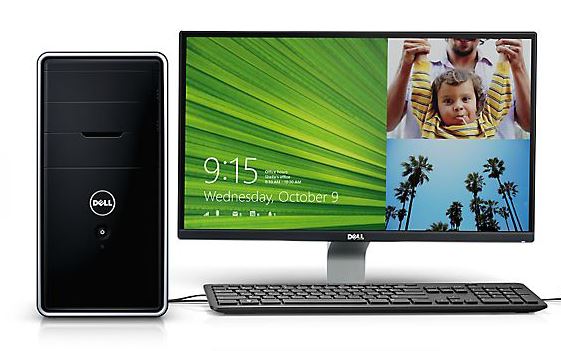
Dealmaster: Get a Core i7-powered Dell Inspiron 3000 desktop for $559

Plus deals on iPads, laptops, smart TVs, and more.

Greetings, Arsians! Courtesy of our partners at TechBargains, we have a number of great deals to share with you today. First and foremost, we have a deal on a powerful Core i7-powered desktop: now you can get the Dell Inspiron 3000 PC with 16GB of RAM and a 2TB HDD for just $559. That's a steal of a price, especially for a desktop with a good amount of memory and storage to carry you through nearly any task. Now's the time to upgrade if you've been thinking about getting a new desktop.

Check out the rest of the deals we have on tablets, notebooks, smart TVs, and more below.

Featured

Read 6 remaining paragraphs | Comments

Death by GPS

Why do we follow digital maps into dodgy places?

One early morning in March 2011, Albert Chretien and his wife, Rita, loaded their Chevrolet Astro van and drove away from their home in Penticton, British Columbia. Their destination was Las Vegas, where Albert planned to attend a trade show. They crossed the border and, somewhere in northern Oregon, they picked up Interstate 84.

The straightest route would be to take I-84 to Twin Falls, Idaho, near the Nevada border, and then follow US Route 93 all the way to Vegas. Although US 93 would take them through Jackpot, Nevada, the town near the Idaho state line where they planned to spend the first night, they looked at a roadmap and decided to exit I-84 before that junction. They would choose a scenic road less traveled, Idaho State Highway 51, which heads due south away from the I-84 corridor, crossing the border several miles to the west. The Chretiens figured there had to be a turnoff from Idaho 51 that would lead them east to US 93.

Albert and Rita had known each other since high school. During their thirty-eight years of marriage, they had rarely been apart. They even worked together, managing their own small excavation business. A few days before the trip, Albert had purchased a Magellan GPS unit for the van. They had not yet asked it for directions, but their plan wasn’t panning out. As the day went on and the shadows grew longer, they were not finding an eastward passage. They decided it was time to consult the Magellan. Checking their roadmap, they determined the nearest town was Mountain City, Nevada, so they entered it as the destination into their GPS unit. The directions led them onto a small dirt road near an Idaho ghost town and eventually to a confusing three-way crossroads. They chose the one that seemed to point in the direction they wanted to go. And here their troubles began.

Read 47 remaining paragraphs | Comments

Eurocops get new cyber powers to hunt down terrorists, criminals

Rules give legal certainty to unit tackling online terrorist propaganda, extremism.

(credit: [puamelia])

Europe’s police agency Europol has been given enhanced cyber powers to track down terrorists and other criminals.

The new governance rules were approved by the European Parliament’s civil liberties committee on Thursday by a massive majority. MEPs claimed that the new powers come with strong data protection safeguards and democratic oversight.

Last November, the draft rules were given the green light by the European Union's 28 member states. Now the panel's politicos have overwhelmingly thrown their weight behind the measures, by 40 votes to three, with two abstentions.

Read 6 remaining paragraphs | Comments

The leap second: Because our clocks are more accurate than the Earth

The Earth’s lurches are erratic, so we don’t even know when the next one is needed.

(credit: Toni Verdú Carbó)

We've recently been treated to that extra day in February that reminds us that 2016 is a leap year. Introduced by Julius Caesar, the leap day is necessary because the orbital year is not exactly equal to the 365 days of our calendar year. Without the adjustment, this year’s spring-like Christmas would eventually become routine even without climate change. After a few more generations, the snows of July would give way again to sweltering afternoons. Given enough time, the seasons would march across the calendar.

In order for the months to retain their traditional characters, the leap day is inserted every four years (with some exceptions). It keeps the calendar in sync with our expectations for the seasons.

But throwing an occasional day at the problem isn't enough. Just as a watch requires periodic adjustments to keep it in agreement with the real time, we need to make occasional tweaks to our global watch. But what is this global watch, and what is the “real” time that it needs to agree with?

Read 26 remaining paragraphs | Comments