Dealmaster: Dell Inspiron 15 5000 laptop with Skylake CPU for just $529

Plus preorders for the PlayStation 4 Pro, gaming savings, and more.

Greetings, Arsians! Courtesy of our partners at TechBargains, we have a ton of new deals for you. Of note are amazing savings on a high-powered Dell laptop; now you can get a Dell Inspiron 15 5000 with a Skylake Core i7 processor, an AMD GPU, and Windows 7/10 Pro for just $529. That's one of the lowest prices we've seen on a laptop like this, so grab it while you can.

Also, check out the rest of the list for a link to preorder the PlayStation 4 Pro and other deals on smart TVs, desktops, and more.

Featured

Read 6 remaining paragraphs | Comments
Exclusive: Our Thai prison interview with an alleged top advisor to Silk Road

Is Roger Thomas Clark really the notorious “Variety Jones”?

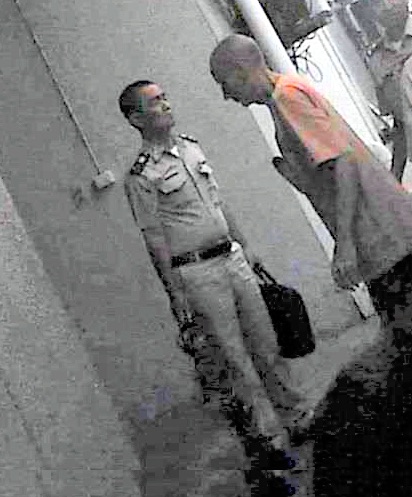
BANGKOK, Thailand—Few people were watching when the prison truck doors swung open at Ratchada Criminal Court to reveal a 55-year-old Canadian inmate. But there he was: Roger Thomas Clark, the man accused of being “Variety Jones,” notorious dope dealer and top advisor to Silk Road founder Ross “Dread Pirate Roberts” Ulbricht.

Clark did the perp-walk, shuffling unchained and unnoticed past the Bangkok press brigade, which was focused that day on the trial of an accused Spanish murderer. Accompanied by a lone Thai corrections officer in a sand-coloured uniform, Clark was led to the eighth floor and was greeted by his team of lawyers and interpreters.

Clark was here to battle extradition to America and a possible life sentence on charges of narcotics conspiracy and conspiracy to commit money laundering. But face-to-face, whether in a Thai court or a prison, Clark appeared unfazed by the powerful forces seeking him for a trial on the other side of the planet.

Read 23 remaining paragraphs | Comments
Inside Eve: Online’s propaganda machine—from Photoshop to DDoS

As the virtual war intensifies, so too do attacks on players in the real world.

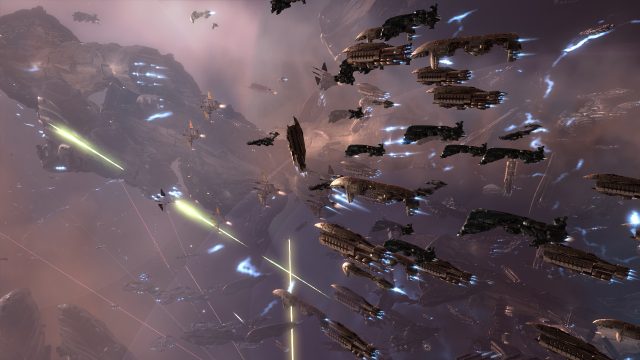
On June 30, 2016, a costly battle took place in Eve: Online. An alliance of players calling themselves the Imperium—assisted by allies in the game's low security region—destroyed four Titan-class ships (the game's largest and most expensive), and inflicted damage worth half a trillion of the in-game currency (ISK) on their enemies in the Money Badger Coalition (MBC). This battle was one of the largest since the so-called Bloodbath of B-R5RB in 2014, which resulted in losses of 11 trillion ISK—worth roughly $300,000 (£228,000) in real-world money.

The Imperium’s recent assault on the MBC is hardly a left-field event; Eve players blast the hell out of each other on an almost daily basis. But this battle was special; it took place just days after the MBC declared that they had won once and for all the game's latest large-scale war, with forum posts, fan sites, and Facebook feeds featuring links showing how the Imperium and its allies had been driven back across Eve's map of space. The MBC was gleeful in its declaration of victory in the months-long struggle it had taken to calling "World War Bee;" it was over and MBC had won.

"Our goal was to dismantle the CFC coalition [a looser collection of groups accounting for over 40,000 players, including the Imperium]," says Killah Bee, a fleet commander in Pandemic Legion, which is part of the MBC. "We dismantled the coalition—the only thing left is the Imperium, the others have left—and we freed the north [territories]. That's what we set out to do."

Read 30 remaining paragraphs | Comments

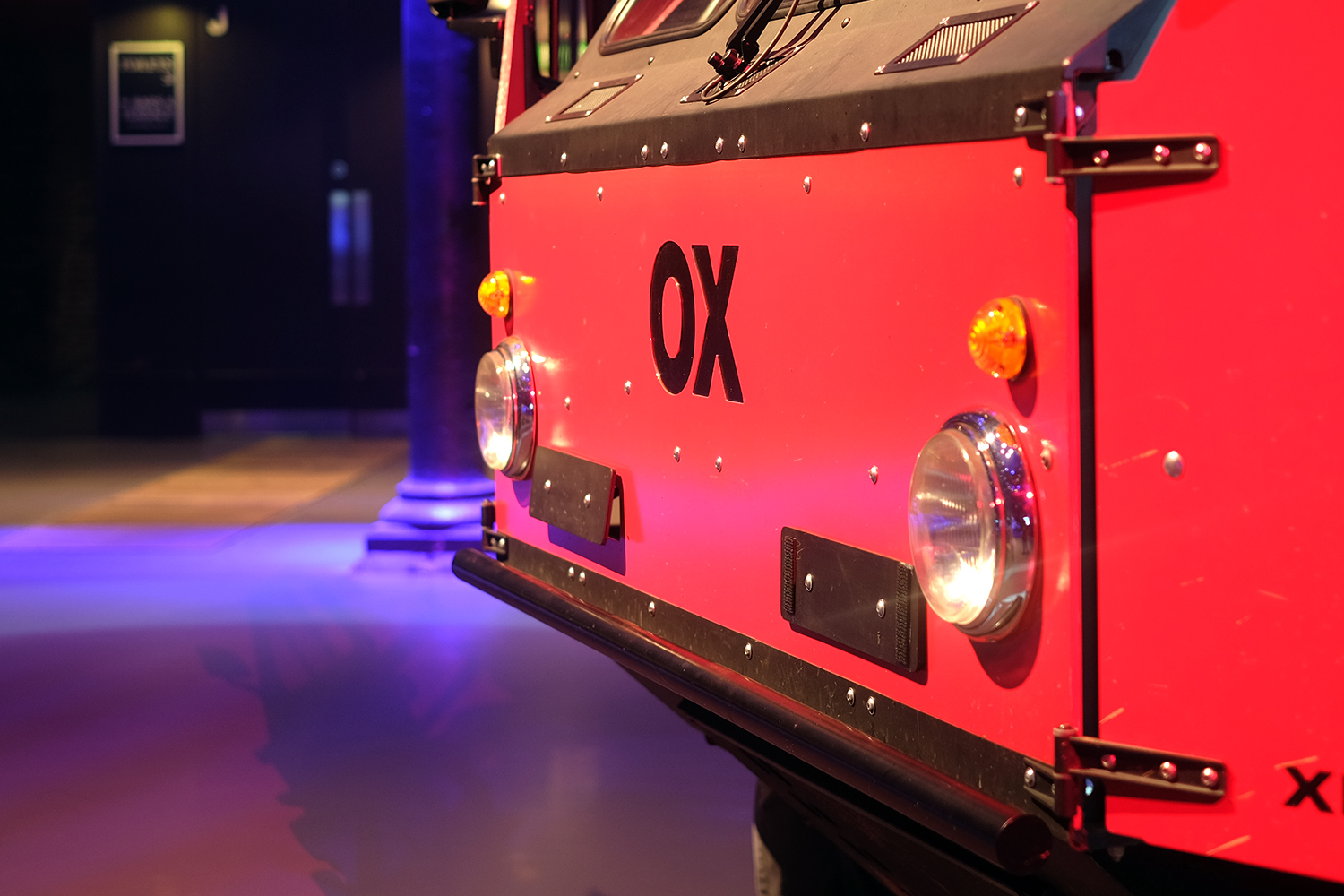
Ox: The flat-pack off-road truck which could revolutionize African transport

A plywood truck for developing countries that can be assembled in just 12 hours.

Enlarge (credit: Andrew Williams)

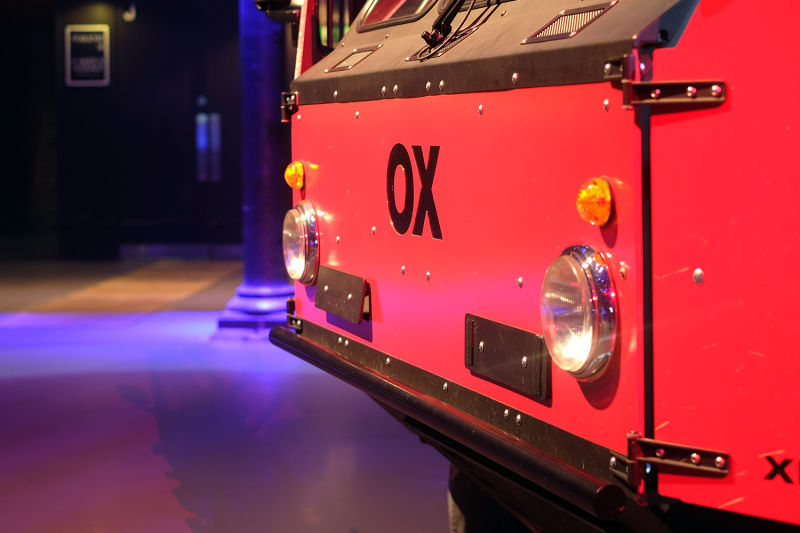
Gordon Murray spent decades designing F1 cars. Later, he turned his hand to roadgoing supercars as one of the lead designers behind the iconic McLaren F1 and Mercedes-Benz SLR McLaren. More recently, he reimagined the city car. While not in production, the T27 is a tiny electric car for one rider—think G-Wiz, but slightly less embarrassing. Now, Murray is trying something rather different again in the form of the Ox, a flat-pack truck that can handle the roughest of terrain, and drive through one metre of water.

And yes, you read that right, the truck comes flat-packed.

Not available in IKEA

The Ox isn't the sort of thing you pick up in Ikea though. It's intended for developing countries, primarily those in Africa, where access to reliable, affordable transport is difficult. And while the Ox isn't not meant the likes of you or I, its design is ingenious.

Read 23 remaining paragraphs | Comments
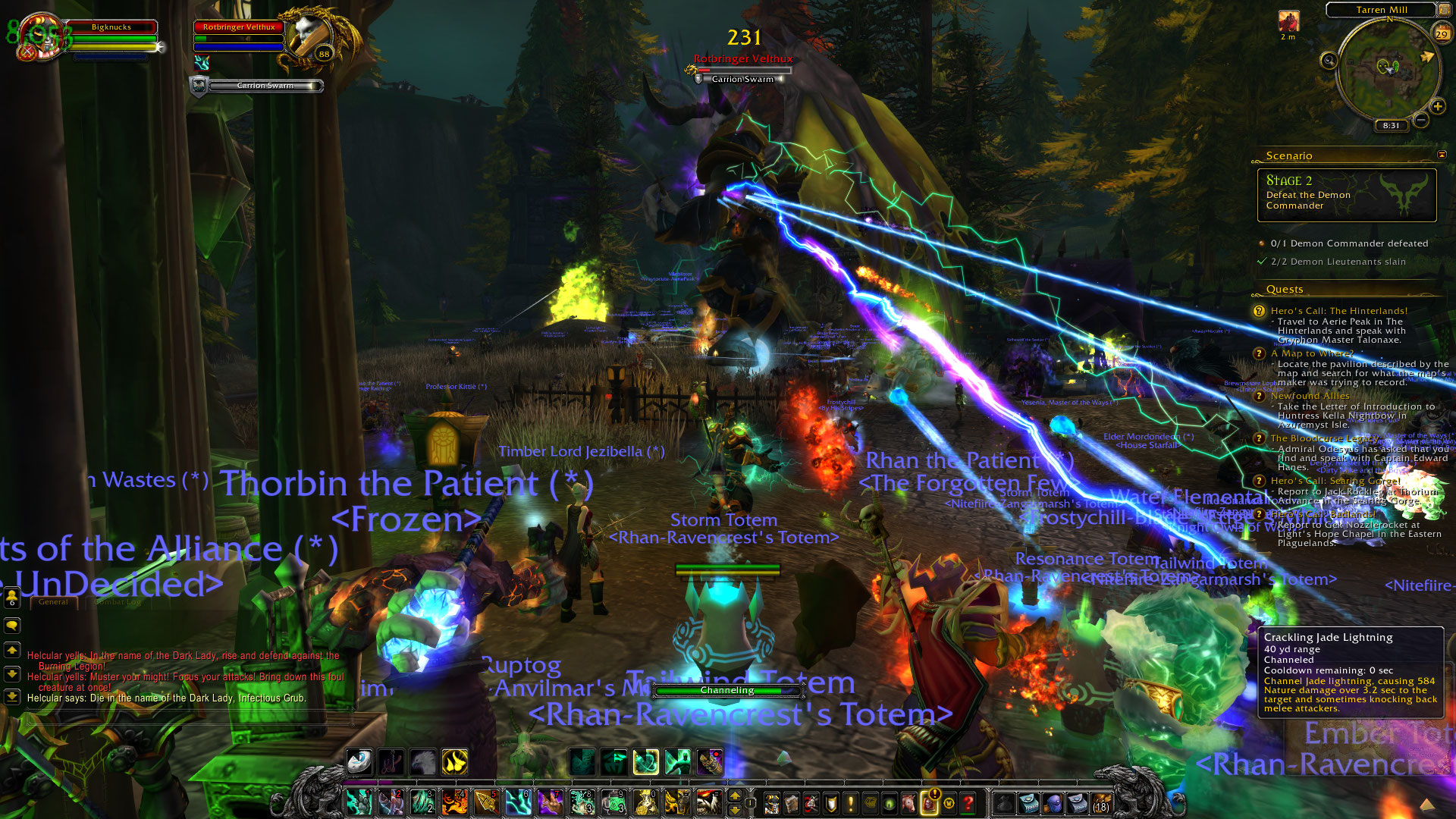
Revisiting the World of Warcraft, nine years after I left

Ahead of Legion, our reporter takes in nearly a decade of changes to Azeroth

Enlarge / Hey guys, it's been a while. So, uh... what did I miss?

It’s still a little hard to believe that World of Warcraft has been around long enough for people to be nostalgic about “the good old days.” At this point, WoW has been around for longer than what's sure to be a sizable chunk of its player base has been alive. We're talking 11 years of clicking tiny icons on bars, watching spells cool down, and saving up enough gold to buy a shiny new mount that's totally better than your other, functionally identical mount.

The newest expansion, Legion, is definitely an attempt to feed on that nostalgia. Familiar faces and locations return from throughout the game's tenure as the premier MMO on the block. That seems perfectly targeted at players like me. It's been nine years since I last played World of Warcraft, back in my halcyon high school days of 2007 when I had plenty of time to sink into the game's first expansion, The Burning Crusade.

So, as I set out to review the nostalgia-tinted Legion (how does one review something on this scale?), I felt I should see what two-presidential-terms’-worth of updates and expansions had already done to the game I knew and loved. What changed? What stayed the same? What did “Hearthstone” mean before it was a collectible card game? This is my tale of Rip van Winkle culture shock experienced in revisiting a virtual place I haven’t lived for years.

Read 21 remaining paragraphs | Comments
The challenge of keeping Olympic wheelchair rugby players cool

For Team USA, ice vests and foot cooling are useful… in theory.

Enlarge / USA V France the 2016 IWRF Rio Qualifiers (credit: Luc Percival for FFH / IWRF)

Overheating is a problem for many athletes, but wheelchair athletes can face an even more extreme version of this challenge. Many of these athletes compete with spinal cord injuries and therefore “are unable to sweat and control their blood flow below the level of their lesion,” said Katy Griggs, who researches the thermoregulatory responses of wheelchair athletes. The ways that these Paralympians “can cool themselves by external sources are important,” she told Ars.

Due to these difficulties with thermal regulation, Team USA wheelchair rugby players (all but two of whom have spinal cord injuries) jokingly refer to themselves as “reptiles.” But their efforts to cool themselves during the 2016 Paralympic Games, beginning this week in Rio de Janeiro, are deadly serious.

Trainers generally pay close attention to athlete temperatures and the possibility of heat illness, but they have to be extra vigilant when it comes to wheelchair athletes because self-monitoring can be more difficult. For instance, wheelchair users can’t always see the color and amount of their own urine, making it more difficult to use it as a gauge to hydration. (And to be more alert to dehydration or overhydration, Team USA staff now use refractometers to measure the gravity in urine.)

Read 14 remaining paragraphs | Comments

The cars of Ars

Ars’ Staff wax rhapsodic about their vehicles.

It's Labor Day here in the US, and that means the Orbiting HQ is closed until Tuesday. While we take a welcome day off, we thought you might enjoy a look at some of the whips, rides, cruisers, and other forms of transport we've called our own. Some are our current cars, some are our favorite cars from the past, and, in some cases, our least favorites. One might even be a bicycle. But they're ours.

It's too hard to pick a favorite


Like Eric Bangeman, my first car was also a VW Beetle, which taught me about lift-off oversteer and why you should never buy a car from a friend. But I today I shall neither dwell on the VW nor the Mk.2 VW Golf Driver that followed it. Instead, I'm going to focus on my favorite cars past and present.

First up is my 1996 Ford Ka. This was Ford's subcompact, sold around the world, but not in the US. Powered by an ancient 1.3L crossflow engine, it was truly a budget model, and mine—an ex-rental car—was particularly underspecced. I used to joke it was the clubsport model (that will mean more to Porschephiles than anyone else, I think). Wind up windows. A tape deck that only had two buttons: play and fast-forward. My Ka even lacked the power steering common to most of the line, which meant 4.2 turns lock-to-lock. But the feedback of the road beneath the front tires was sublime.

Read 49 remaining paragraphs | Comments

Underground Airlines is one of the bleakest alternate histories ever

It’s 2016, but there was no Civil War, and slavery exists alongside the Internet.

Enlarge (credit: Detail from the cover of Underground Airlines)

Most alternate histories reverse just a few big historical events. They show us how bad things would be if the Nazis won World War II or the South won the Civil War. Though Ben H. Winters’ new novel Underground Airlines treads familiar territory in this respect, few alt histories are as complex and horrifying as it is.

Underground Airlines is set in a 2016 where slavery is still legal in part of the United States. In this reality, Abraham Lincoln was assassinated in 1861, and the Civil War never happened. Instead, a compromise was struck. To this day, four Southern states (the “Hard Four”) still keep human beings as property.

The book’s main character, who mostly goes by Victor, is an African-American who works as a “soul-stealer”—basically, he’s a bounty hunter who returns escaped slaves to the Hard Four. He works for the Federal Marshals, and he’s the kind of manipulative, coldly efficient monster that often populates films noir. But as he remembers his own experiences as a slave in the South, he starts to question what he does.

Read 9 remaining paragraphs | Comments

Revenge porn, social media, and tech take center stage at Edinburgh Fringe Festival

Sick of the Fringe performers hope to inspire new ideas on health research.

Enlarge (credit: Awakening/Getty Images)

As feathers settle at the end of yet another Edinburgh Fringe Festival, this year's event—celebrating its 69th birthday—showed that, despite its staunch old age, material at the fest is increasingly relevant to contemporary discourses on social media, research, science, and technology.

These topics underpinned many of the performances at the Edinburgh Fringe Festival. One such example was The Sick of The Fringe conceived by artist, performer, and Wellcome Trust engagement fellow Brian Lobel.

He explained the rationale behind the show to Ars: "As a performer in Edinburgh for the last eight summers, I found myself frustrated by the lack of nuanced conversation, particularly about issues of health, the body, trauma, illness, and disability." He added:

Read 15 remaining paragraphs | Comments

Building a new Tor that can resist next-generation state surveillance

Tor is an imperfect privacy platform. Ars meets the researchers trying to replace it.

Since Edward Snowden stepped into the limelight from a hotel room in Hong Kong three years ago, use of the Tor anonymity network has grown massively. Journalists and activists have embraced the anonymity the network provides as a way to evade the mass surveillance under which we all now live, while citizens in countries with restrictive Internet censorship, like Turkey or Saudi Arabia, have turned to Tor in order to circumvent national firewalls. Law enforcement has been less enthusiastic, worrying that online anonymity also enables criminal activity.

Tor's growth in users has not gone unnoticed, and today the network first dubbed "The Onion Router" is under constant strain from those wishing to identify anonymous Web users. The NSA and GCHQ have been studying Tor for a decade, looking for ways to penetrate online anonymity, at least according to these Snowden docs. In 2014, the US government paid Carnegie Mellon University to run a series of poisoned Tor relays to de-anonymise Tor users. A 2015 research paper outlined an attack effective, under certain circumstances, at decloaking Tor hidden services (now rebranded as "onion services"). Most recently, 110 poisoned Tor hidden service directories were discovered probing .onion sites for vulnerabilities, most likely in an attempt to de-anonymise both the servers and their visitors.

Cracks are beginning to show; a 2013 analysis by researchers at the US Naval Research Laboratory (NRL), who helped develop Tor in the first place, concluded that "80 percent of all types of users may be de-anonymised by a relatively moderate Tor-relay adversary within six months."

Read 62 remaining paragraphs | Comments