Only two kinds of sexual arrangements are possible among social animals

Survey of nearly 300 species reveals that evolution favors very few mating systems.

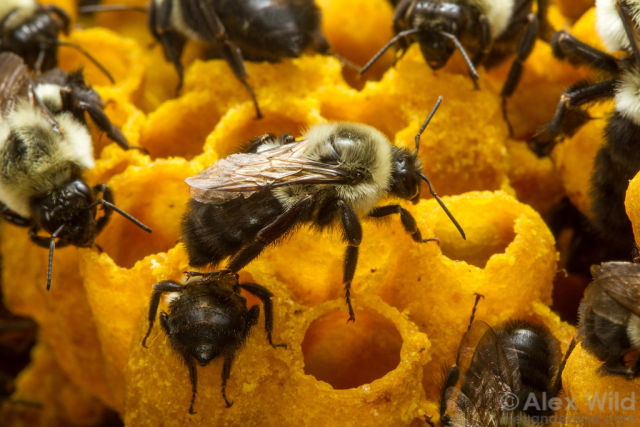
Bees work with nectar over their wax honey pots in a laboratory colony of Bombus impatiens. University of Texas, Austin, Texas, USA. (credit: Alexander Wild)

It would seem that almost every possible mating arrangement exists in the animal kingdom, from lions with their prides and ants with their colonies, to cheating birds and monogamous voles. But new research reveals that social animals have only two basic options when it comes to reproduction. They can be monogynous like ants, with only one female who mates; or they can be polygynous like chimps, with many females who mate. Depending on which evolutionary trajectory the animals follow, their population size will either grow into the millions or remain relatively small.

How many breeders?

A group of zoologists write about this finding in a new paper published in Royal Society Open Science. They analyzed 293 different social species, including reptiles, birds, insects, and mammals, and asked two simple questions about each one: How many females live in each group of these animals; and how many of those females are "breeders," capable of reproduction? Study co-author Eileen Lacey, a biologist at University of California-Berkeley, told Ars by phone that it was surprisingly hard to find this data. "In all the studies of social animals, very few people reported critical information like how many individuals are breeding versus not," she said. Nevertheless, she and her colleagues gathered enough data to perform a statistical analysis of the relationship between number of breeders and female population size.

"The proportion of breeders in societies with more than one reproductive female appeared to be dependent upon the total number of females in the group; when societies with multiple breeding females from all taxa (ants, wasps, mammals, birds) were pooled, we found that the proportion of breeders decreased significantly with the total number of females in the group," the researchers wrote in their paper.

Read 12 remaining paragraphs | Comments

Stats show that Eurovision song tempos may reflect economic inequality

Faster tempo may be an expression of stress felt in troubled countries.

In this scatter plot, you can see the correlation between higher GINI coefficient, which measures economic inequality, and higher BPM (as determined by a free BPM analyzer called MixMeister). (credit: Eric Michael Johnson)

People who tuned in to the Eurovision finals this weekend may have noticed an odd trend. The often dance-friendly song contest was packed with ballads this year. Things felt a little subdued, despite the tear-away sparkle dress from Croatia and the Russian singer who climbed a wall that looked like it was exploding. Could it be that the year's political and economic turmoil somehow affected the tempo of Eurovision songs? We decided to find out.

The question of whether the speed of a given Eurovision song reflects internal problems in that country comes down to a simple numbers game. Beats per minute (BPM) is a measurement of tempo, and there are several available programs for analyzing BPM. For this test, we used the free Mac software called MixMeister and uploaded the 43 songs on the Eurovision 2016 double CD set in order to get a BPM value for each track. This data was then placed in a scatterplot on Excel along with the United Nations Gini Index for that country. The Gini Index is a measure of a country’s level of inequality. The higher a given Gini score, the greater the gap between rich and poor. Multiple analyses have shown that high Gini scores are correlated with increased social and political instability.

As the scatter plot above shows, there is a positive correlation between a song’s BPM (the x-axis going across) and the competing country’s Gini Index (the y-axis going up). While it isn’t the case for every country, on average the tempo of the song was faster when the level of inequality was higher in that country. Using Graph Pad’s Prism 7 statistical software, a student’s T-Test showed that this was a highly significant result with a p-value of 0.0001 and a t-value of 24.9838. (Scientific studies consider a statistical result to be “significant,” or less likely to be the result of a random error, if the p-value is below 0.05. Likewise, the further a t-value is from zero, the more likely it is that you can reject the “null” hypothesis that there is no significant difference.) In other words, this analysis shows that there is a strong positive correlation that is highly statistically significant.

Read 6 remaining paragraphs | Comments
Software solves the mystery of a 2,500 year-old poem by Sappho

Science illuminates the dark night when the Greek poet looked to the heavens, lonely for her lover.

Fragments of Sappho's poetry, though not "Midnight Poem," transcribed in the second century BCE. (credit: Bodleian Library, Oxford)

The poet Sappho was so celebrated in the ancient world that the Roman Empire was still producing statues and paintings of her centuries after her death. Her work—mostly love poems to women—was organized into nine books in the famous library at Alexandria, yet we know almost nothing about her life, except that she lived on the Greek island of Lesbos. She remains famous to the present day, even though only a few fragments of her poetry have survived. One of these fragments, called "Midnight Poem," was written in the mid-sixth century BCE to an absent lover. Due to tantalizing hints in the poem, scholars have long debated when it was written. Now, thanks to software used to simulate night skies in planetariums, scientists have figured it out.

"Midnight Poem" still conjures up a powerful image of loneliness. Here is Julia Dubnoff's translation from the original Aeolic Greek:

The moon is set. And the Pleiades.
It’s the middle of the night.
Time passes.
But I sleep alone.

What has tantalized scholars about this poem is the highly specific reference to the celestial object Pleiades, an open star cluster, also known as the Seven Sisters for its seven brightest stars. Located in the constellation Taurus, and known throughout the ancient world, the Pleiades would have been instantly recognizable to Sappho's readers. The question is, at what time of year would the moon and Pleiades have set before midnight?

Read 5 remaining paragraphs | Comments

Underwater discovery reveals 14,550 year-old Florida mastodon hunters

Proof that humans arrived in the Americas by boat—and lived among megafauna for millennia.

The key to uncovering America's ancient past lies underwater. In the waning centuries of the last Ice Age, many of the favorite hunting grounds and camps of early Americans were flooded with waters unlocked from the melting polar ice. But now, thanks to SCUBA-diving archaeologists, a clear picture is emerging of the peoples who came to the Americas by boat—thousands of years before the Clovis peoples (who became the ancestors of today's Native Americans). In a deep sinkhole beneath Aucilla River in Florida, some of the most intriguing evidence to date for these pre-Clovis peoples has been carefully excavated—using specialized underwater exploration rigs. Scientists have discovered an incredibly rare 14,550 year-old hunting site, complete with stone tools, a slaughtered mastodon, and hints of canine companions who might have helped with the hunt.

Called the Page-Ladson site, the sinkhole is one of only a handful of pre-Clovis sites ever discovered, and it dates to roughly the same time period as similar sites such as the Paisley Caves in Oregon and Monte Verde, Chile. It’s also the oldest evidence of human occupation ever found in the US southeast, and it offers solid proof that humans lived throughout the Americas nearly 15,000 years ago, long before the Bering Land Bridge was ice-free. This adds further evidence to the idea that these people’s ancestors arrived by boat from the coasts of Asia, likely after thousands of years of migratory wandering.

Another crucial piece of evidence from Page-Ladson has to do with the slaughtered mastodon. It’s not clear whether humans killed the mastodon or simply scavenged a dead body, but markings on the bones and tusks show clear signs of butchery with the stone tools preserved at the site. Careful analysis of the sediment layers in the lakebed revealed that the sinkhole was once a pond, likely a popular watering hole for migrating mastodons—and the hunter-gatherer humans who followed the herds. As the researchers put it, these humans were fairly sophisticated hunters, memorizing the seasonal terrain of their prey and possibly even enlisting the help of dogs.

Read 5 remaining paragraphs | Comments

At last, a sci-fi movie that accurately captures the horrors of dating

Review: The Lobster is about a future where singles are punished by a fate worse than death.

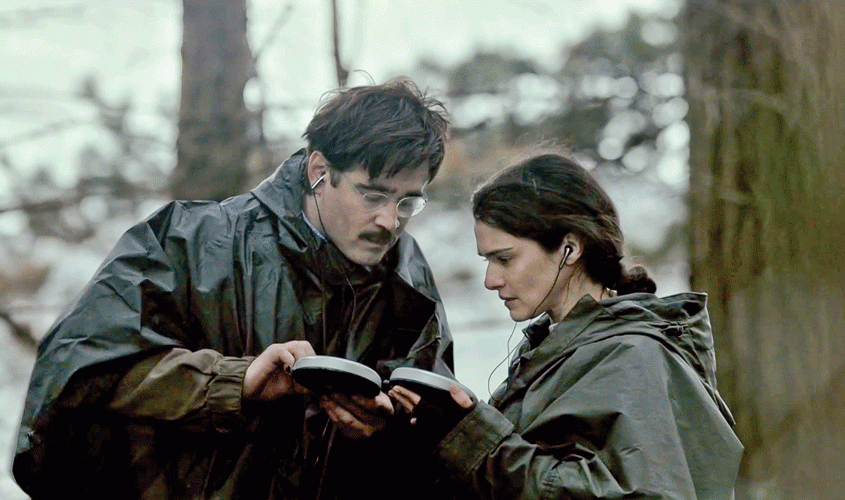
In The Lobster, a bleak comedy set in a future Ireland, the world is being run by what can only be described as an authoritarian dating service. Anyone who is single for more than 45 days is turned into an animal. To help the good citizens of the world remain human, there are terrifying “hotels” where singles go to be reeducated, their arms bound and movements restricted, as they learn why it’s wrong to be alone—and are given the opportunity to meet eligible mates. Despite its fantastical premise, The Lobster nails the often dark emotional reality of dating life in our world.

Colin Farrell plays David, a sad, awkward man whose wife has just left him. Radiating discomfort and kind of blank desperation, he arrives at the hotel with a fluffy dog who turns out to be his brother. The hotel owner recites the rules to him—masturbation is forbidden, and residents can earn extra days of singlehood if they manage to shoot runaways who have fled into the forest. She also requires him to choose which animal he’ll become. Looking uneasily at his brother/dog, David says he’d like to be a lobster “because they have blue blood” and live for a very long time. Somehow, this sums up everything about David—weird and bug-eyed, but with skin made of armor and very sharp claws.

As he undergoes anti-singles conditioning and endures terrible dance parties, David forms shaky friendships with two of his fellow inmates/romance-seekers, the confused and angry John C. Reilly and tragic widower Ben Whishaw. The acting here is superbly understated, with everyone walking a razor’s edge between pathos and comedy.

Released last year in the UK, The Lobster became a critical hit and is finally making its way to the States this weekend. It's the first English-language offering from Greek writer-director Yorgos Lanthimos, who is known for his reality-bending movies Dogtooth and Alps, about troubled human relationships.

One of the clever tropes of The Lobster is that everyone seems to believe that people are “suited” for each other if they have the same ailments. David is near-sighted, so he has to find someone with glasses or contacts. Whishaw falls for a girl who gets nosebleeds. so he smashes his face until he gets nosebleeds too. This arbitrary notion of what makes two people a good fit is uncomfortably familiar for anyone who has ticked boxes on an online dating profile, hoping to find the perfect match in a database populated by random attributes like “body type” and “favorite music.”

David’s efforts to hook up are bumbling and funny at first, but eventually land him in a situation that is so horrific he has no choice but to risk death to flee the hotel. In the forest, surrounded by an odd range of animals we presume are all former singles, he meets a group of subversives called the Loners. Led by an angry pro-singles activist (a seriously scary Léa Seydoux), the group swears off all forms of physical affection and plans sneak attacks on couples. In one memorable scene, they go on a mission to break up couples, holding them at gunpoint in their homes and forcing them to question their love for one another.

Among the Loners is Rachel Weisz, who is terrific as the unnamed woman whose social awkwardness and prickly savagery match David’s own. The two are immediately drawn to each other, sneaking away from the Loners to make out—and make plans for a shaky, seemingly impossible future. Can they really have a genuine romance in a world where the government mandates love and subversives try to smash it? Is it even possible for people to form an authentic emotional connection when they’re under such tremendous social pressure? Like all the questions raised by this flick, these are things we should be asking ourselves, about our own lives. Though it starts out as satire, The Lobster eventually punches you in the gut so hard that you’ll be freaked out for a long time afterwards.

How two determined scientists built a world-class lab out of Radio Shack parts

In her book Lab Girl, Hope Jahren tells a scientific coming-of-age story.

Hope Jahren and Bill Hagopian in their lab, where they created many one-of-a-kind instruments to study plants and the deep geological history of Earth's atmosphere. (credit: Jahren Lab)

Hope Jahren's memoir about becoming a biogeoscientist—someone who studies the deep geological history of plant life on Earth—is the year's biggest surprise bestseller. Humbly titled Lab Girl, it's the story of how Jahren escaped a working class town she not-so-fondly calls a "shithole" to become a young scientist in the high-tech labs of UC Berkeley and Georgia Tech. It's also a fascinating introduction to the ways plants survive, even though they can never flee from danger. But most of all, it's a crazy adventure about two broke geeks, Jahren and her lab technician Bill Hagopian, who somehow scrape together enough cash and spare parts to build lab instruments unlike anything the scientific world had ever seen. You won't be able to put this book down, and that's a quality one rarely finds in a nonfiction book about science.

Radio Shack lab

Jahren and Hagopian met when she was a graduate student helping to run a class where he was an undergrad learning about field work. Out of all the students in the class, Hagopian's work was the most meticulous—but he also sprinkled his lab notes with weird jokes that only Jahren found amusing. They became fast friends, and when she got her first job as an assistant professor at Georgia Tech, she offered him a job as lab technician. Paying Hagopian a near-poverty-level salary took up most of her grant money from the National Science Foundation. So the two spent several years living on cheap pizza, Ensure, and candy bars, saving all their money to build up the Jahren Lab. Their goal is to simulate atmospheres from Earth's past, and then grow plants inside those atmospheres to understand how life forms survive dramatic changes in the molecular composition of the air they breathe. This is obviously relevant to the current carbon loading in our atmosphere, but it also helps scientists understand what our planet was like hundreds of millions of years ago, when carbon and oxygen levels were quite different from those today.

In Lab Girl, Jahren describes her early years perfecting a technique to blow glass bubbles full of alien atmospheres, while Hagopian lives out of his van and designs sophisticated growth chambers. Without much money, the two are left scrounging up parts to use in their lab from the recycling bins of other labs—and from Radio Shack, of course. Speaking to Ars by phone from her current lab at the University of Hawaii, Jahren said, "When we can't get a controller from a catalogue, we go to Radio Shack. We love Radio Shack. Being able to jerryrig things is super satisfying." Getting to scientific conferences to present their work was even more challenging. In one memorable scene, Jahren and Hagopian "borrow" the lab van from Georgia Tech and drive across the country to San Francisco for the annual meeting of the American Geophysical Union. They had so little money that all their meals for several days came from an icebox full of lunch meat. It all backfired when one of their graduate students crashed the van and the slightly rancid contents of the icebox flew everywhere. Still, Jahren managed to clean up and make it to San Francisco in time—only to be yelled at by one of her colleagues that her hypotheses are just plain wrong.

Read 8 remaining paragraphs | Comments
Bay Area Ars readers: Join us TONIGHT 5/18 to talk about high-tech surveillance and cops

At Ars Technica Live #2, our guest is UC Davis law professor Elizabeth Joh.

If you're in the Bay Area this fine evening, we'd love for you to join us for the filming of our second episode of Ars Technica Live, a monthly interview series with fascinating people who work at the intersection of tech, science, and culture. We're meeting tonight, May 18, in Oakland, California, from 7 to 9pm for a discussion with law professor Elizabeth Joh about technology, surveillance, and law enforcement.

Filmed before a live audience in Oakland tiki bar Longitude (347 14th St., Oakland, California), each episode of Ars Technica Live is a speculative, informal conversation between your fine hosts Annalee Newitz and Cyrus Farivar and an invited guest. The audience—that would be you—is also invited to join the conversation and ask questions. These aren’t soundbyte setups; they are deep cuts from the frontiers of research and creativity.

This month's event is about the legal and ethical implications of how police use surveillance technology. Guest Elizabeth Joh is a UC Davis law professor who has done extensive research on how police use surveillance technology, including body cams. She's also interested in DNA databases.

Read 3 remaining paragraphs | Comments

3,000-year-old female mummy was covered in hidden tattoos

Evidence suggests tattoos are a very ancient form of human decoration.

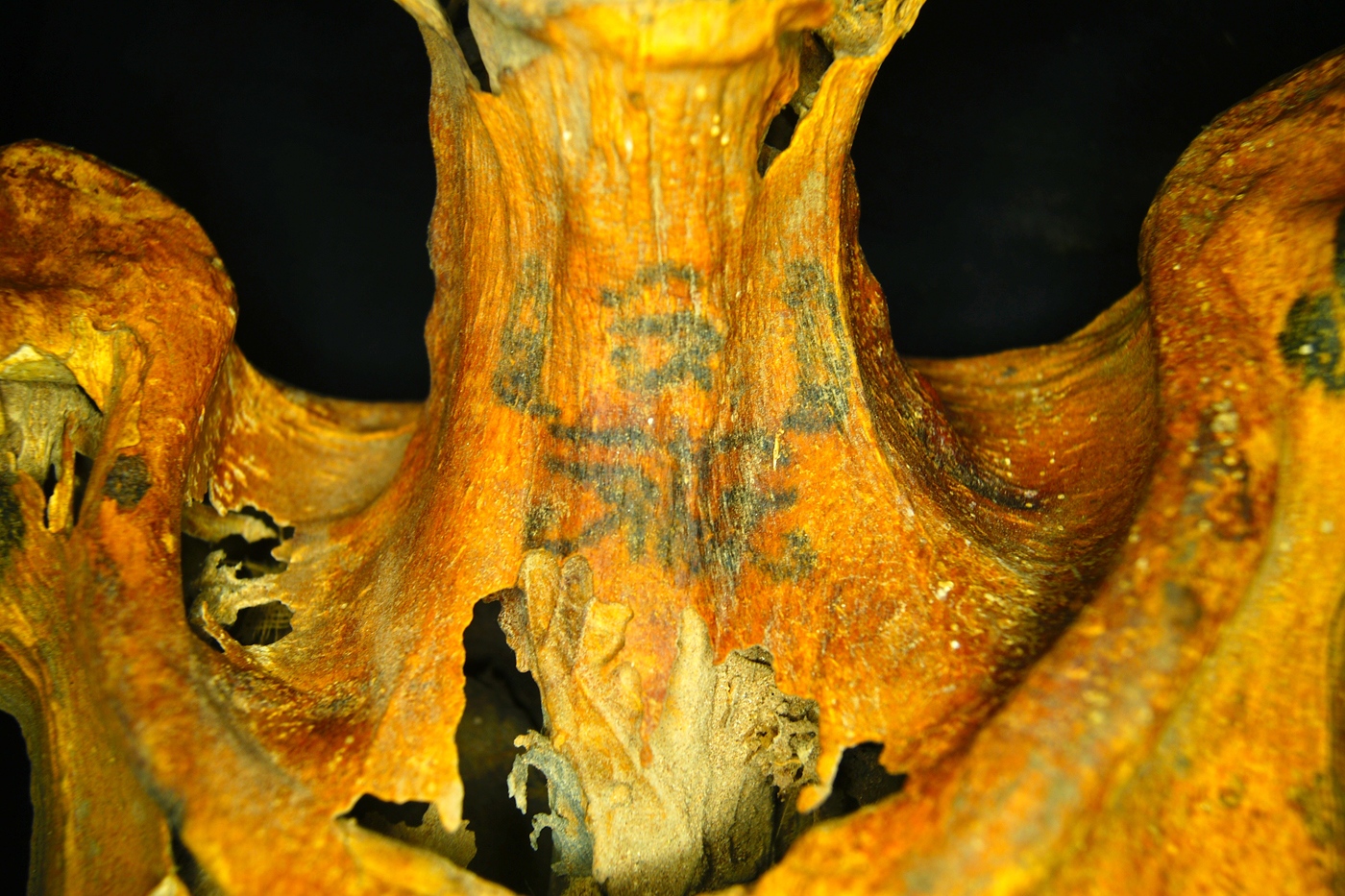
Covered in more than 30 tattoos of flowers, animals, and sacred symbols, this 3,000-year-old mummy is one of the most unusual that archaeologist Anne Austin has ever seen. Though other mummies have been found with abstract markings like dots tattooed on their skin, no one had ever seen figurative drawings like these. Austin and her colleagues were stunned. The mummy, found in a village called Deir el-Medina, was once a woman who proudly inked sacred wadjet eyes on her neck, shoulders, and back, lotus blossoms on her hips, and cows on her arm. Her village was home to artisans who worked in the nearby Valley of the Kings, where they would have carved elaborate sculptures and inscriptions for pharaohs and gods.

It's not clear what the tattoos meant nor why this particular woman had so many of them. But Austin speculates that they had religious significance, particularly the eyes and the cows, which may have been a reference to the goddess Hathor. "Any angle that you look at this woman, you see a pair of divine eyes looking back at you," she told Nature after presenting her work at the American Association of Physical Anthropologists. She first discovered the tattoos when she saw the eye and baboons clearly visible on the mummy's neck. Suspecting there might be more, she used infrared imaging to see ink that had penetrated the woman's skin but was no longer visible due to dark resins used for mummification. This is the same technique that scientists used to discover the tattoos on the body of Ötzi the Iceman, a 5,300-year-old body that was accidentally preserved in ice for thousands of years. Ötzi had more than 60 tattoos created with ash that were entirely abstract, mostly horizontal lines on parts of his body where joint swelling suggests that he would have been suffering pain.

When Austin used infrared imaging, she was able to find many tattoos that were previously hidden. The tattoos on the woman's back became visible, and Austin and her colleagues used image reconstruction software to correct distortions that were introduced when the mummy's skin shrank over time. Once the tattoos were stretched, she could clearly see the two cows on the woman's arm and many other images. Some of the tattoos, she says, were in places where it would have been extremely painful to be tattooed, especially because the process would have been very slow in ancient times. They were also clearly created by someone else, since many were on the woman's back. These facts suggest the tattoos may have had deep cultural significance. There is also evidence that some of the tattoos were faded, so the woman was probably getting new ink for many years as older tattoos faded.

Read 1 remaining paragraphs | Comments

As fires rage, emergency responders rely on familiar apps to save lives

Handful of custom apps mixed in the with likes of Periscope, Skype, and Basecamp.

Fires rage in Fort McMurray, Alberta, on May 1. (credit: jasonwoodhead23)

Right now, wildfires are raging in Canada, forcing the evacuation of Fort McMurray, the nation's largest northern city. More than 80,000 people have fled Fort McMurray as the rest of the world watched horrific videos of long lines of cars struggling through thick smoke while threatened by encroaching walls of fire. What we don't see in the video feeds is how emergency responders are using a range of technologies to contain the situation. But the core theme in emergency response isn’t having the latest tools or the coolest toy. It's about using what works for the greatest number of people, often on a shoestring budget.

Assessing the scene

When disaster strikes—fire, flood, storms, or quakes—first responders are dispatched to go places most people are fleeing. The locations of key infrastructure like fire hydrants are all mapped in advance, but instead of relying on bulky hardcopy binders from the Fire Marshall’s office, modern responders often check custom maps on their smartphones to see where to hook into local infrastructure or digital databases to identify hazards.

Even while firefighters charge into a burning building, someone on their team is hanging back to call in to disaster centers with an update on front-line conditions. A major part of effective disaster response is getting a verified assessment of the scene from a skilled professional, so the people responsible for making decisions can figure out what to do next. Today, a simple smartphone loaded with basic consumer apps like Periscope or Skype can show the office exactly what responders are facing.

Read 15 remaining paragraphs | Comments

These rare Indian records survived over a century and are now online

Nearly 1,500 recordings from 1900-1940 are now free through the British Museum.

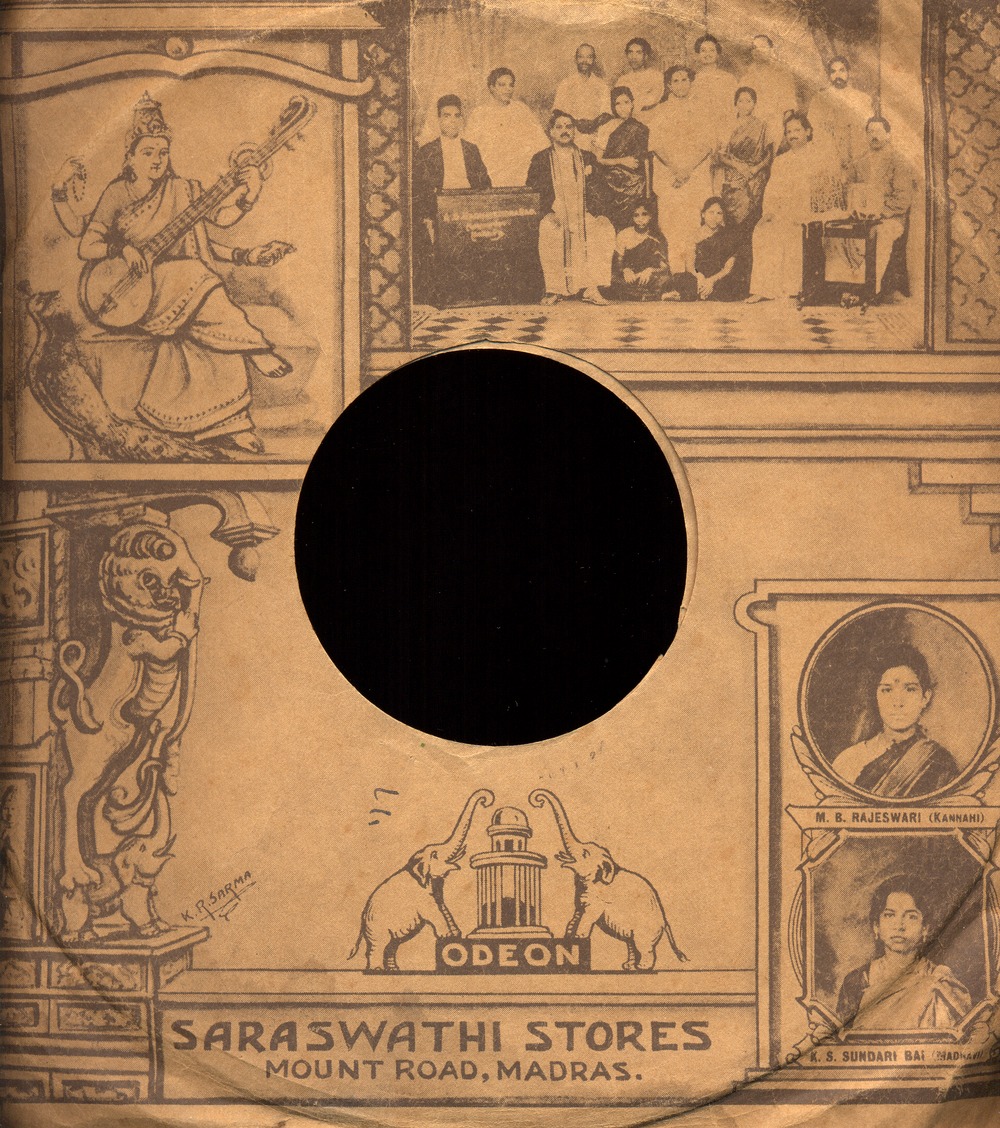
Over the crackle of an old record, you can hear a woman singing in Urdu. Though listening to her is as easy as clicking a few buttons on the British Library website, her voice comes to you across vast distances in space and time. Sometime in the early 20th century, engineers recorded the voice of a woman called Malkajan for the German company Odeon, which pressed shellac discs for Indian record collectors in the 1910s and 30s. Now her work is part of a series of recordings called The Odeon Collection, digitized by Mumbai record collector Suresh Chandvankar with help from a grant from the British Library. There are over 1400 recordings in the collection, and all are free to the listening public. If you love music and history, it's easy to get lost in the riches of this easily accessible digital archive.

Chandvankar explains the collection:

Odeon label shellac discs were issued in India in two phases: during 1912-16; and during 1932-38. During the first phase, Odeon's first Indian recordings were made in late 1906 on a grand tour that took the engineers from Calcutta to Benares, then on to Lucknow, Cawnpore, Delhi, Amritsar, Lahore, Bombay and finally back to Calcutta. In all, they recorded some 700 titles, which were duly shipped back to Berlin for processing and manufacture in what was then the established worldwide pattern. Disc records manufactured and pressed in Germany were shipped back to India by 1908... Because of the diversity of language and cultural taste, Odeon's engineers recorded a great deal of regional music for local consumption.

In the second phase, the Odeon disc manufacturing company operated during 1932-38. Its operations were mainly from Mumbai and Madras and the company produced over 2,000 titles in north and south Indian music. At this time, radio and film songs had just entered the entertainment era. Disc manufacturing and distribution activity continued until the outbreak of World War II. Because of the embargo imposed on German goods, the company had to wind up their business in India, leaving behind hundreds of titles. The musical genre recorded on these discs include drama songs, speeches, folk music, classical music, drama sets, skits and plays, vocal and instrumental music.

What he's describing is a treasure trove of Indian musical culture, from a period when folk songs and traditional music were giving way to the pop music that pervades so many Bollywood movies. Odeon records allowed Indians to enjoy everything from classical music to contemporary comedy from all over the country. And now, over a century after many of these recordings were made, we have a chance to hear what the Indian music industry was like in its infancy.

Read 1 remaining paragraphs | Comments