Octopuses may indeed be your new overlords

The tentacle boom is an unexpected outcome of climate change in the oceans.

A giant pacific octopus shows its colors at the Monterey Bay Aquarium. (credit: Monterey Bay Aquarium)

Over the past 60 years, the population of cephalopods—octopuses, squids, and cuttlefish—has been steadily growing. This is particularly remarkable because many types of marine life have been dying out as carbon levels in the oceans rise, making the water more acidic. So even as numbers of crabs, sea stars, and coral reefs are shrinking, the tentacled creatures of the deep are thriving.

Writing in Current Biology, a large group of marine biologists describe how they discovered this trend. Looking at the past 61 years of fisheries data from all major oceans, they examined numbers of cephalopods that are bycatch, or accidentally caught along with target fish. Using these numbers as a proxy for cephalopod populations as a whole, they discovered a steady increase over the decades, across all cephalopod species. The question is why.

The researchers say it's likely a function of a cephalopod's ability to adapt quickly. "These ecologically and commercially important invertebrates may have benefited from a changing ocean environment," they write. Most cephalopods have very short lifespans and are able to change their behavior very quickly during their lifespans. Indeed, octopuses are tool-users who can learn quickly, leading to many daring escapes from tanks in labs as well as brilliant forms of camouflage at the bottom of the ocean. All these characteristics add up to a set of species who can change on the fly, as their environments are transformed.

Read 2 remaining paragraphs | Comments

Want to make existential threats boring? X-Men Apocalypse shows you how

Review: Fiery, intense moments are undermined by a predictable plot.

The best way to approach X-Men: Apocalypse is to think of it as an actual series of comics—some of the individual books are incredible, and other ones are absolutely meh. Translated into movie terms, that means you'll flip from a scene of holy-shit awesomepants to a subplot where you know exactly what's about to happen because it's so grindingly obvious. Whether the movie as a whole works for you depends on your investment in these characters and how much filler you're willing to endure to reach those transcendent moments that genuinely shine with a sense of wonder and fascination.

Apocalypse is the third in the latest X-Men trilogy, finishing off a timeline that took us back to the origins of the X-Men in the 1960s with First Class, went all timey-wimey in Days of Future Past, and has now landed solidly in the 1980s, complete with bad hair and new-wave music. Directed by Bryan Singer, who helmed two of the original X-Men movies as well as Days of Future Past, it's a perfectly competent action movie with a few dazzling effects. Singer has continued the trilogy's theme of history affecting the future by picking Apocalypse as his lead villain. Possibly the very first mutant on Earth, Apocalypse is virtually immortal and was last seen ruling over ancient Egypt, sucking the powers out of mutants using a weird slab of glowing rock. A series of superpowered shenanigans left him buried in rubble for thousands of years, only to be resurrected by cultists who want him to rule the world again with his extremely old-school values.

Great characters, and missed opportunities

As Apocalypse gathers his new gang of mutant buddies and plots to destroy everything in a way that is unbelievably predictable, we're treated to little pyrotechnic snippets of mutant life after the events of Days of Future Past. If you recall, that movie ended with Mystique revealing herself to the world in an intense "coming out" moment for all mutantkind. Now everyone knows about mutants, and the classes at Professor X's school are growing ever larger. Xavier has just recruited Jean Gray (a terrific Sophie Turner, taking a break from playing Sansa Stark), as well as Cyclops, who doesn't quite have control of his burning eyes yet. The relationships that bloom in the first trilogy are just getting started here. Be on the lookout for the first meeting between Jean and Wolverine, who have a very "it's complicated" relationship in the comics that's gracefully evoked here.

Read 6 remaining paragraphs | Comments

Surveillance technology has advanced far beyond the laws that govern it

Ars Technica Live #2: Law professor Elizabeth Joh predicts the future of high-tech policing.

Ars Technica Live #2: Surveillance, with guest Elizabeth Joh. Filmed by Chris Schodt/Edited by Jennifer Hahn. (video link)

Last week, we filmed our second episode of Ars Technica Live in Oakland, California, and we had a tremendously interesting conversation with UC Davis law professor Elizabeth Joh, who researches surveillance technology and policing. Right out of the gate, Joh made it clear that the problem isn't surveillance per se—governments "need surveillance," she said, to figure out what its citizens require in terms of benefits, help, and security. The problem is when this surveillance becomes invasive, and the government inhibits freedom of expression and punishes unconventional behavior. How do we balance the need for surveillance and the need for free expression and privacy in a democratic society?

Joh talked a lot about the future legal landscape we're creating with cutting-edge technologies like self-driving cars, facial recognition, and body cams. When you're talking about law and policy, the issue is always that adoption of devices like body cams tends to precede careful thought about what rules will govern them. After the Ferguson protests, for example, police departments started using body cams as an accountability measure. But there are no federal guidelines for how cops will use these cams. Will they be able to turn them off whenever they want? Who has access to the data they collect? Can they use facial recognition in body cams? All of these questions remain unanswered, yet body cams are in widespread use across the US.

Read 5 remaining paragraphs | Comments

“Unprecedented” discovery of mysterious structures created by Neanderthals

Rock designs suggest a complex social structure and ritual behavior.

Inside Bruniquel Cave, where scientists have discovered an elaborate stone structure created by Neanderthals more than 175 thousand years ago. (credit: Etienne Fabre / SSAC)

176,500 years ago, long before modern humans left Africa for the Eurasian continent, a band of Neanderthals conducted an elaborate ritual deep inside Bruniquel Cave in a region we know today as southern France. The Neanderthal group wrested hundreds of stalagmites from the floor of the cave to build elaborate circular structures, their work illuminated only by firelight. Discovered by archaeologists in the 1990s, the cave system is so large that many of its great treasures are hidden far from its entrance, which suggests it was thoroughly explored and probably inhabited for some period of time. This new part of the cave, analyzed only recently, adds to our understanding of Neanderthal social life.

The Neanderthal structure was mostly undisturbed for tens of thousands of years with the exception of a few hibernating bears. Recounting their discovery in Nature, a group of archaeologists say there is no question that the structures were created deliberately by humans, especially because there is evidence that the stalagmites were wrenched from the cave floor and stacked in circular patterns. Burn marks on the roughly 400 stones show that fires were built inside the structure, and one area contains burned bones. The bones could mean that this was a feasting place, but its difficult-to-reach location and the nature of the design suggest a more symbolic use. Based on the burn patterns, it seems that the structures themselves were designed to light on fire, creating what would have appeared to be circles of flaming stone in the otherwise pitch-black cave.

The stalagmite structures in Bruniquel Cave are curved lines and circles built from layered stalagmites, some of which were hollowed out. Burn marks reveal that fires were lit inside the stalagmite structures, creating what were probably burning circles of stone. The orange spots represent the heated zones, and the red spot (structure B) represents a char concentration (mainly burnt bone fragments) on the ground.

There is little evidence of human activity in the space other than the unusual structures, which don't resemble any of the art or funeral rites associated with more recent Neanderthal dwellings we've discovered. Most Neanderthal sites are from the past 50 thousand years, and these contain paintings, ochre for body decoration, and graves full of flowers. Some contain complex tools made after contact with modern humans from Africa, and it's often difficult to say whether they were made by Neanderthals, Homo sapiens, or some combination of the two. After all, there was a roughly 10,000 year period when Neanderthals and Homo sapiens co-existed in Europe, and we know they formed families and had children together.

Read 3 remaining paragraphs | Comments

An artist is growing a hand out of human stem cells

An open source biotech project that you might build in your garage one day.

It all started because Amy Karle wanted to grow her own exoskeleton. But after experimenting with 3D printing bones during an artist residency program through Autodesk's Pier 9 workshop in San Francisco, she set her sights on something a little smaller and more intimate. She decided to grow a human hand.

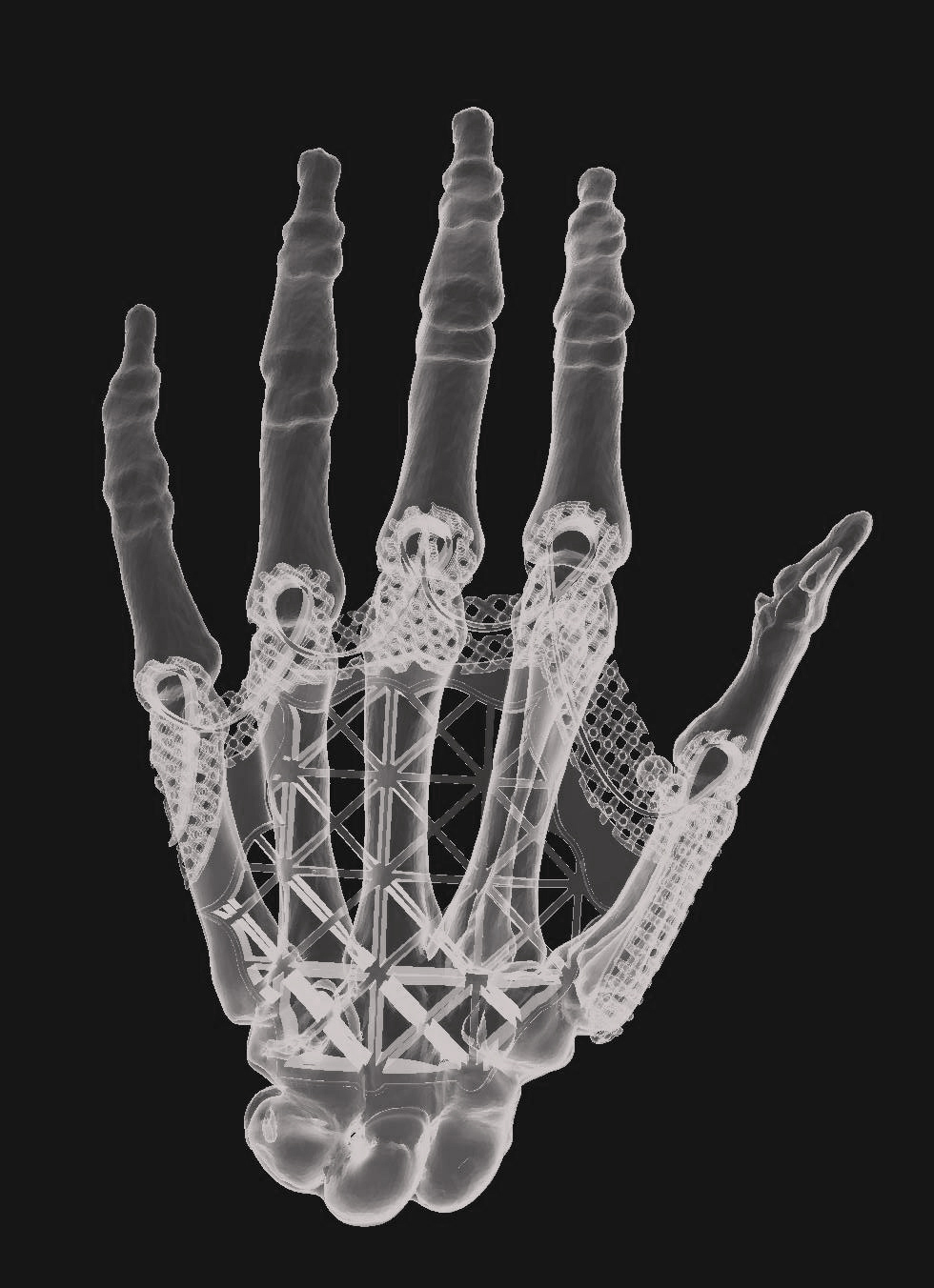
Karle has a lot of experience with human limbs because she volunteers with a nonprofit group that 3D prints prosthetic arms for children and makes its designs available for free. She also works on medical instruments, and told Ars that she's fascinated by objects that go inside the body, as well as how parts of our bodies can live outside us. With her new project "Regenerative Reliquary," currently on display at the Pier 9 space in San Francisco, she's brought all her obsessions together to create an actual hand grown from human stem cells on a 3D printed trellis.

Working with bioscientist Chris Venter in Pier 9's Bio/Nano Lab and Autodesk materials scientist John Vericella, Karle designed a bone trellis in CAD based on the dimensions of her own hand. This trellis, which looks like a cross between a skeleton and a piece of jewelry, is made from pegda, a hydrogel used as a cellular growth medium in petri dishes and elsewhere. Its structure is modeled on the trabecular structure of the spongy microlattices within bone that make it flexible. For several weeks, she and her collaborators worked on 3D printing a pegda trellis on the Ember printer that would hold together inside a bioreactor where cells could grow. In the gallery above, you can see the hand inside a bioreactor, as well as what the trellis looks like under magnification. Next, she needed a cell line to grow on the trellis. Karle told Ars that she'd hoped at first to harvest her own stem cells, or to use cancer cells from a mouse. But both of those options raised safety issues, so she and the scientists settled for using human mesenchymal stem cells, extracted from bone marrow (of course you can order human stem cells online). Currently, Karle is culturing the cells, and the next step in her project will be to grow them on the hand trellis. Once the project is complete, Karle will post instructions on how to build your own hand on the DiY site Instructables.

Read 1 remaining paragraphs | Comments

This 5,000-year-old recipe for beer actually sounds pretty tasty

This also explains one reason why barley cultivation made its way to ancient Eastern China.

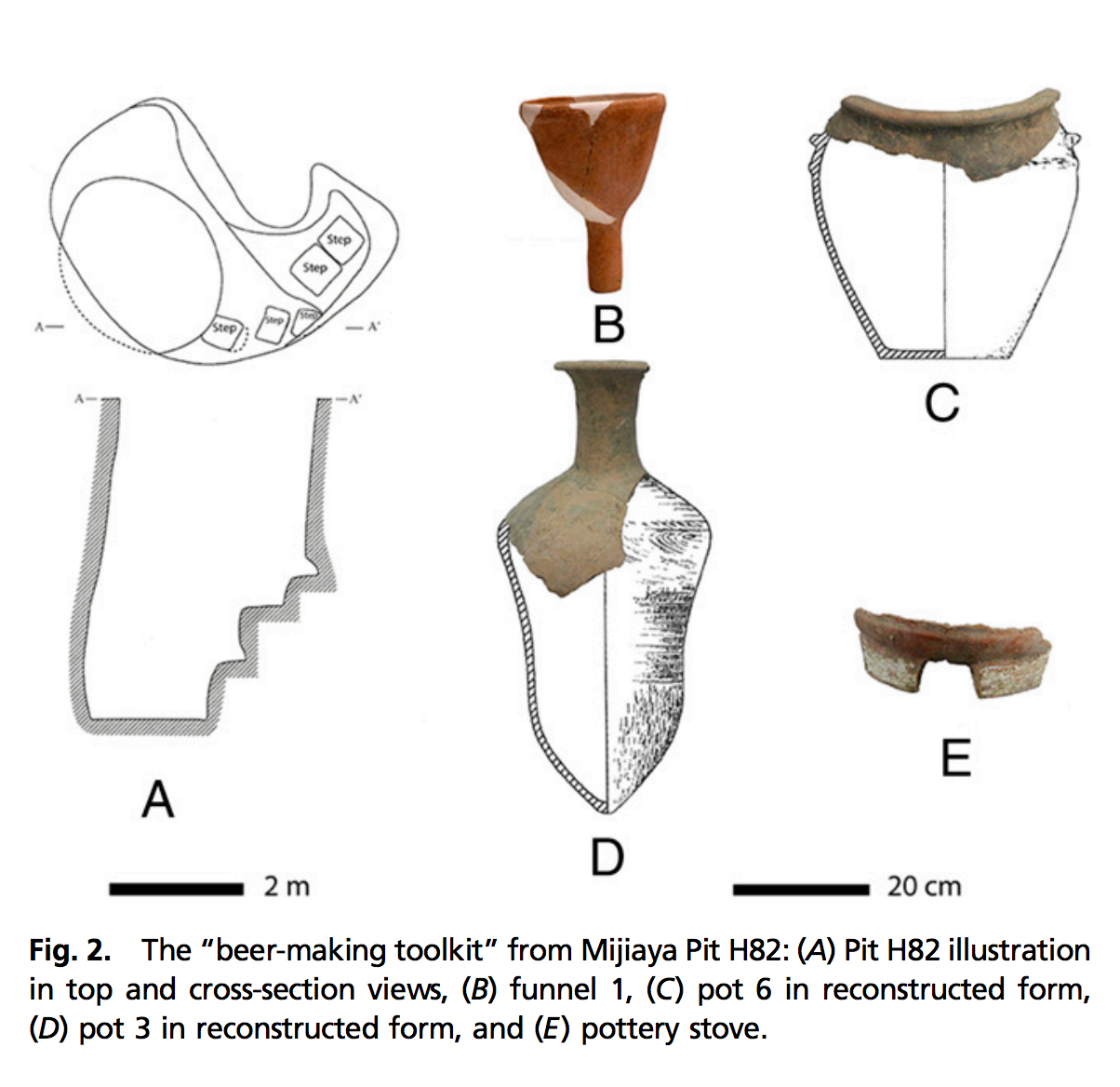
5,000 years ago on a terraced slope above the Chan River in Shaanxi Province, China, some enterprising villagers built two sophisticated beer brewing kits. Part of the Mijiaya site, once the location of a thriving civilization, both kits were housed in pits sunk 2 to 3 meters into the ground, lined with rock, and accessed by stairs. One is fitted with a small shelf, and both have ceramic ovens for brewing in wide-mouthed pots that once held boiled barley. Archaeologists found other telltale beer-brewing tools (all covered in an ancient yellow residue), including funnels for filtration and amphorae, or cocoon-shaped containers, for fermentation. After careful analysis of plant and chemical remains on the inside of these storage containers, the scientists reported in Proceedings of the National Academy of Sciences that they had a pretty good idea of what kinds of ingredients went into this ancient beer.

Most of these ingredients will sound familiar to beer lovers. The scientists found traces of broomcorn millet, barley, Triticeae (wheat), and Job’s tears (a grain plant often called Chinese pearl barley, though it is not actually barley), plus small amounts of snake gourd root and lily (both are tubers often used in Chinese medicine), as well as yam. It's possible that the yam was added to enhance what was probably already a slightly sweet brew due to the barley. What impressed the archaeologists was that people living 5,000 years ago during the Neolithic Yangshao period had already mastered a pretty sophisticated system for brewing, including temperature regulation. This finding pre-dates by thousands of years the earliest writing about fermenting beer, which comes from Shang Dynasty manuscripts circa 1240-1046 BCE.

In their article, the researchers write that all the evidence they examined indicates that "the Yangshao people brewed a mixed beer with specialized tools and knowledge of temperature control. Our data show that the Yangshao people developed a complicated fermentation method by malting and mashing different starchy plants." This discovery may also shed light on a longstanding mystery about how barley came to Eastern China from Western Eurasia. By the time of the Han Dynasty, roughly 200 BCE, barley was already a popular crop. But what would have motivated early farmers to bring this grain all the way across the Central Plains? Apparently, it was for partying, not for eating. Write the archaeologists:

Read 2 remaining paragraphs | Comments

Star Trek Beyond trailer gives us a good look at our new bad guy

We’ve got shiny ships, aliens with oddly geometric lines on their faces, and an intense crash landing.

Daddy issues < badass motorcycles in the new Star Trek Beyond trailer.

 The second Star Trek Beyond trailer dropped this weekend, and it gives us a much better sense of what our heroes will be dealing with in this flick. For those who haven't been paying attention, the premise of the new movie is pretty simple: New bad guy Krall (Idris Elba, unrecognizable under spinyface makeup) wrecks the Enterprise with a seriously badass weapon; everybody is marooned on a planet; and there are motorcycles. Given that the movie was directed by Justin Lin of Fast and the Furious fame, you can bet that the action scenes are deluxe and the motorcycles look great.

Star Trek Beyond was co-written by comedian Simon Pegg, who plays Scotty, and the snippets of dialogue we get in this trailer are pretty hit-or-miss. All the daddy issues confessions we get at the beginning of the trailer are just awkward and feel like warmed-over crap from the first movie. But there are a couple of funny one-liners, and I like the repartee between Spock and Bones. But is this the Trek movie you've really been waiting for? Many fans felt like Star Trek Into Darkness was, shall we say, less than great. So there's nowhere to go but up.

The movie is out in the States on July 22. See you there.

Read on Ars Technica | Comments

Imzy is a community platform where people pay each other for being nice

Maybe money can solve the social problems that plague sites like Reddit?

(credit: Nan Palmero)

Imzy is trying to be everything you want out of Internet community, minus the awfulness. Founded by a group of ex-Reddit employees, including Dan McComas and Jessica Moreno, the company has raised $3 million in investments, partnered with Lena Dunham and Dan Harmon's online communities, and attracted tens of thousands of users in closed beta. They did it based on one promise: they would not be like Reddit. What exactly that means depends on what you hated about Reddit in the first place.

For people like Dunham—whose email list known as Lenny Letter already has its own verified group in the new community—Imzy means being free from a lot of the harassment and trolling that haunts other platforms. Imzy CEO McComas told Ars via phone that part of the company's strategy is inviting a wide range of groups including Lenny Letter and Black Girls Talking to be part of Imzy from the start. "We're trying to get diverse groups to work with us now, because [as the company grows] you're only as diverse as your private beta. People tend to bring in people like themselves," he said. "If we waited a couple of years to address this, it would be too late. We would already have a cultural norm and that's tough to change." Essentially, Imzy is hedging against developing a community that would embrace groups like Reddit's racist r/CoonTown or the pro-rape subreddit r/rapingwomen. McComas added that a big part of their strategy is to pay community moderators—they have two working full time on staff already. "At Reddit, there was one staffer per 20 million unique visitors. We think we need a higher ratio of staff to community members,"

But as McComas admits, creating good policies around community and diversity don't really rake in the dough. That's why the backbone of Imzy is going to be their tipping and payment system. Currently the beta allows users to tip moderators and other community members, but in the long term the idea would be for each community to figure out how it wants to use its payment system. Comedian Dan Harmon, creator of the cult hit Community, has an Imzy group called Harmontown where members can pay $5 per month to listen in while Harmon tapes his weekly podcast. Imzy gets a cut of those payments. In the longer term, with Imzy providing a variety of tools for buying and selling, groups might form around selling clothing, games, or art. Imagine joining a group devoted to homebrew telescopes, and meeting people there who would sell you their latest kits, to your exact specifications. For Imzy, that's the goal.

Read 2 remaining paragraphs | Comments

Star Trek teaser trailer for the new series promises “new crews”

Make of that what you will.

Here it is, the logo you've been waiting for.

Today at the Upfronts, where networks tease shows coming next season, CBS offered a shiny glimpse of the worlds where its new <i>Star Trek</i> series will take us in January 2017. All we see here is the new logo for the show—the first new <i>Trek</i> series in over a decade—and a few VFX shots of cool planets. It almost has the feel of the Doctor Who credits sequence, with its kinetic ride through spacetime.

So what do we know about this series? Basically, nothing. This trailer does confirm that we'll have "new crews," which was something many had suspected but had not yet been confirmed. So don't expect the Seven of Nine spinoff we were all hoping for. One of the items that's omitted in that list of new things is "ships," so it's possible we'll be getting another Enterprise crew from a previously unexplored time period. Though this trailer is kind of weaksauce, you have to be somewhat forgiving, since the show hasn't even started shooting yet.

The good news is that Nicholas Meyer (who wrote and directed Wrath of Khan) is in the writing room, and smartypants Bryan Fuller (Hannibal, Pushing Daisies) is the showrunner. The bad news is that the show's pilot will air on CBS, but all subsequent episodes will only be available on CBS streaming.

Read on Ars Technica | Comments

Turns out fire-hardened spears aren’t as badass as we thought

Scientists find that we still have a lot to learn about pointed sticks.

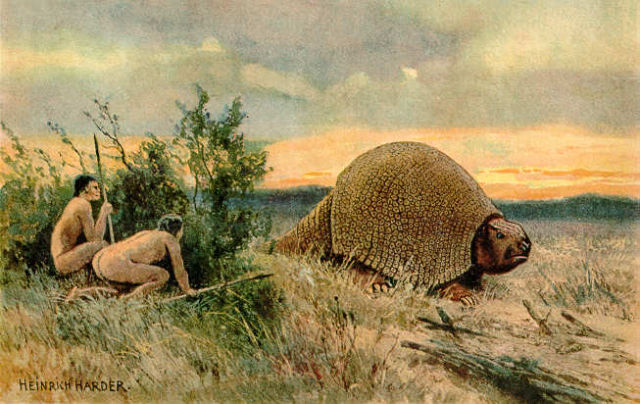
You'd better have a big stick if you're naked with a glyptodont. (credit: Heinrich Harder)

One of the iconic weapons of the Paleolithic is the fire-hardened spear, its wooden tip carbonized by fire to a wicked point. Unfortunately, it turns out that our hunter ancestors were wrong about fire-hardening. Yes, the charring can make wood slightly harder, but it becomes so much more brittle and weak that there's little overall improvement of the weapon. After experimenting with their own fire-hardened spears, a group of British biomechanics researchers now believe our ancestors used fire not so much to make a more deadly weapon but to speed up the process of cutting wood into a point.

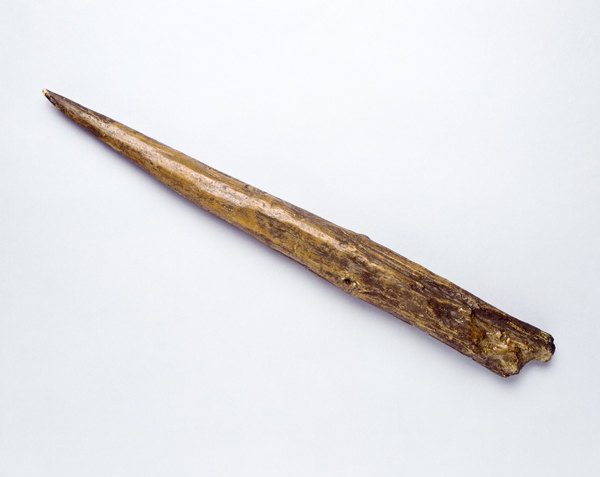
The Clacton Spear is the tip of a 450,000-year-old fire-hardened spear discovered in England. (credit: The Trustees of the Natural History Museum, London.)

The oldest spear ever discovered, the Clacton spear (named after the region in England where it was discovered), dates back 450,000 years. Made by some unidentified ancestors of modern humans, its sharp wooden point was snapped off and buried in soil. There it was sealed away from the elements and preserved far longer than wood ordinarily can be. When the Clacton spear was discovered in the early twentieth century, archaeologists noticed that its tip had been fire-hardened, using a technique that some hunter gatherer groups still use. It has long been believed that the practice of heating a pointed spear tip in the fire was a way of making it sharper and harder. But a new paper published in Royal Society Biology Letters suggests otherwise.

Two bioscientists at the University of Hull, Roland Ennos and Tak Lok Chan, decided to find out for themselves whether fire really makes spears harder. So they harvested 20 rods from local hazel trees and spent weeks abusing them inside machines of very precise, codified destruction. First, each rod was divided in half. One half dried naturally over two weeks in the laboratory, and the other half were given a simulated fire-hardening treatment with an experimental rig known technically as a "disposable barbecue."

Read 5 remaining paragraphs | Comments