Apple announces new IOT app called Home

Now you can tell Siri to stay home and cook dinner, and she will.

Apple launched HomeKit two years ago during the crazy early years of home automation. At that time, it was tough to add devices to your smart home suite due to incompatibility and lack of security. Today at Apple WWDC, Craig Federighi announced that Apple has an app called Home that integrates with an enormous range of devices, including cameras and door locks. He said that Apple has partnered with "every major maker of home accessories," as well as home builders in the US and China. The home builders bit was particularly interesting, as it means Apple is working to integrate Home into the physical structure of buildings, so "you can move in and just start controlling your home." Imagine shopping for a house and having to worry about whether it's compatible with Apple or Android.

The big IOT news at WWDC this year was the Home app, though. It fully integrates HomeKit into all your iOS devices as well as AppleTV. You can see Home right on your iOS home screen, and when you launch it you'll see all your accessories, no matter who made them. Federighi showed the audience how easy it is to tap the lights accessory and turn on or dim the lights.

You can also control several accessories at once by creating a "scene." For example, your Good Night Scene might lock the door, close the shades, turn down the heat, and turn off all the lights. If you want to feel like you're waking up in a science fiction movie, use Siri to activate a scene. "Siri, good morning!" you can say as you wake up, and Home will automatically start your coffee pot and turn on your local NPR radio station for the morning news. You can also set up geofences so that movement outside or in a particular area of the house will trigger a scene. When your car rolls up your driveway, for example, it could automatically open the garage door and turn on the kitchen lights.

Read 1 remaining paragraphs | Comments
Video: The right way to kill a drone

Some of these techniques may not be strictly legal.

In this video by Jennifer Hahn, we explore all the right (and wrong) ways to rid the world of drones. (video link)

So you want to kill a drone. Maybe your neighbors are flying their machines over your backyard or zooming past your windows. Maybe you're on stage giving a talk about implementing SSL and you're being dive-bombed by drone cam. Heck, maybe you want to destroy your own drone just to watch it die. We understand, and that's why Ars' intrepid video editor Jennifer Hahn has made this helpful guide to drone destruction.

In Utah, state representatives are already considering a bill that would allow cops to shoot down drones. In most states, it's unclear whether it's lawful to shoot down a drone that doesn't belong to you. Just to be on the safe side, we advise putting the shotguns away for now. There are far better anti-drone weapons out there, like drone jammers that use directed RF signals to cut off communication between the drone and its controller. Or you can use another drone, equipped with a net, to yank the offending drone out of the sky. Of course, you can also go low tech. One person killed a drone with medieval weapons, while another used a simple t-shirt whip.

Read 1 remaining paragraphs | Comments

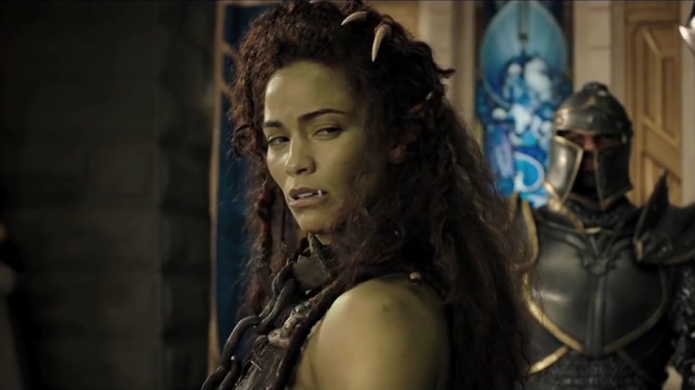
The Warcraft movie is ill-conceived propaganda for the Alliance

Review: The characters are about as complex as the ones in the original games.

I'm not too proud to confess that I love watching vaguely humanoid creatures smash each other with hammers and broadswords. I mean, that's what's best in life. So here's some good news about Warcraft, the new movie based on the PC games: it delivers quite a bit of orc-on-orc action, particularly in the giant hammer department. The gryphons are good, too. But in spite of the action, you're left wanting more. That's because this movie lacks compelling characters whose adventures we actually care about.

The plot of Warcraft is needlessly complicated, though it all boils down to orcs fighting humans. Orc warlock leader Gul'dan has brought the Horde together to flee Draenor, the orc homeworld, because he's trashed the environment with evil fel magic. The Horde is preparing to head through a giant portal to the human world of Azeroth and take over. Meanwhile, the humans have never seen orcs before and are not crazy about orc colonial tactics, which involve the aforementioned hammers, as well as general burning and killing. All the battle scenes are genuinely fun, and it's entertaining as hell to watch the humans figuring out how to exploit orc weaknesses in one-on-one combat.

Too many cooks

Instead of telling a relatively straightforward story of the clash between two worlds pitted against each other by dark magic, Warcraft zooms from land to land, character to character, delivering a stew of a tale that suffers from way too many ingredients. There's the drama of Anduin, a great warrior whose son has finally reached soldiering age, who struggles to overcome the fear his son will die just like his wife did. There's Garona, the half-orc slave girl, torn between the world of the noble Horde and the vaguely democratic Alliance. Then there's Khadgar, a young sorcerer questioning his powers, whose mentor Medivh is sworn to protect Azeroth but is stricken by a mysterious ailment. And NO I'M NOT EVEN DONE, because then there's Durotan, a good orc leader who questions Gul'dan's fel-infused power-mongering. And there are also Orgrim and Draka, who secretly support Durotan's rebellion against Gul'dan.

Read 4 remaining paragraphs | Comments

Movie written by algorithm turns out to be hilarious and intense

From the archives: Ars talks to the filmmakers who collaborated with an AI for Sunspring.

Sunspring, a short science fiction movie written entirely by AI, debuted exclusively on Ars in June 2016. (video link)

Ars is excited to be hosting this online debut of Sunspring, a short science fiction film that's not entirely what it seems. It's about three people living in a weird future, possibly on a space station, probably in a love triangle. You know it's the future because H (played with neurotic gravity by Silicon Valley's Thomas Middleditch) is wearing a shiny gold jacket, H2 (Elisabeth Gray) is playing with computers, and C (Humphrey Ker) announces that he has to "go to the skull" before sticking his face into a bunch of green lights. It sounds like your typical sci-fi B-movie, complete with an incoherent plot. Except Sunspring isn't the product of Hollywood hacks—it was written entirely by an AI. To be specific, it was authored by a recurrent neural network called long short-term memory, or LSTM for short. At least, that's what we'd call it. The AI named itself Benjamin.

Knowing that an AI wrote Sunspring makes the movie more fun to watch, especially once you know how the cast and crew put it together. Director Oscar Sharp made the movie for Sci-Fi London, an annual film festival that includes the 48-Hour Film Challenge, where contestants are given a set of prompts (mostly props and lines) that have to appear in a movie they make over the next two days. Sharp's longtime collaborator, Ross Goodwin, is an AI researcher at New York University, and he supplied the movie's AI writer, initially called Jetson. As the cast gathered around a tiny printer, Benjamin spat out the screenplay, complete with almost impossible stage directions like "He is standing in the stars and sitting on the floor." Then Sharp randomly assigned roles to the actors in the room. "As soon as we had a read-through, everyone around the table was laughing their heads off with delight," Sharp told Ars. The actors interpreted the lines as they read, adding tone and body language, and the results are what you see in the movie. Somehow, a slightly garbled series of sentences became a tale of romance and murder, set in a dark future world. It even has its own musical interlude (performed by Andrew and Tiger), with a pop song Benjamin composed after learning from a corpus of 30,000 other pop songs.

Read 10 remaining paragraphs | Comments

Bay Area: Join us TONIGHT, 6/15, to discuss tech solutions to Internet harassment

Ars Live guest Sarah Jeong will discuss the worst parts of the Internet that aren’t spam.

If you're in the Bay Area tonight, June 15, join Ars editors Annalee Newitz and Cyrus Farivar for the filming of our third episode of Ars Technica Live, a monthly interview series with fascinating people who work at the intersection of tech, science, and culture. Our guest tonight at Oakland's legendary Longitude bar is journalist Sarah Jeong, who will discuss online harassment and what technologists can do about it. Doors are at 7pm and the discussion starts at 7:30.

Filmed before a live audience in Oakland tiki bar Longitude (located on 347 14th Street), each episode of Ars Technica Live is a speculative, informal conversation between your fine hosts Annalee Newitz and Cyrus Farivar and an invited guest. The audience—that would be you—is also invited to join the conversation and ask questions. These aren’t soundbyte setups; they are deep cuts from the frontiers of research and creativity.

This month's event is about online harassment, trolling, and cleaning up Internet garbage. Guest Sarah Jeong is a Poynter Fellow in Journalism at Yale and the author of the book The Internet of Garbage. She writes for magazines and newspapers about the overlap between policy, tech, and the law.

Read 3 remaining paragraphs | Comments

British people are getting laid a lot–just not in Britain

British sexual habit studies reveal vacation hookups are part of a risky health pattern.

British people have been going to Italy to hook up for more than a century. (credit: A Room with a View)

Vacation flings are the stuff of bad romance movies and unhappy trips to the clinic, but now they are also the subject of two studies published in a British Medical Journal publication called Sexually Transmitted Infections. Two groups of researchers analyzed surveys of what British people do when they travel abroad and found that sex is high on the list.

One study, authored by population health researcher Clare Tanton and her colleagues, was an examination of 12,530 people who took part in the British National Survey of Sexual Attitudes and Lifestyles between 2010 and 2012. The group was composed of people from 16-74 years old, who reported having at least one sexual partner in the past five years. Out of this group, 9.2 percent of men and 5.3 percent of women said they found one or more new sexual partners while outside England. And out of those groups, according to Tanton and her colleagues, there was a lot of "disassortative sexual mixing," meaning cross-nationality intermingling.

In total, 72 percent of men said their overseas hookups were with non-UK residents, while 58 percent of women said the same. Interestingly, the study states that "men were less likely than women to report having partners from the Middle East/North Africa (2.4 percent vs 5.7 percent)." People who had sex with non-UK residents were also less likely to identify themselves by ticking the box for "White (British)" on the survey form.

Read 5 remaining paragraphs | Comments

With this cast, Pacific Rim 2 is poised to rule the world

More kaiju, more giant robots, more EVERYTHING.

Kaiju vs. jaeger total badass action mania freakout OMG this is the greatest seriously I watched this video like twenty times.

Let's savor all the things. First, the Pacific Rim 2 movie is actually happening, after a year of swirling rumors. And now it's being cast, with John Boyega (Finn from Star Wars: The Force Awakens) joining the team as the son of Stacker Pentecost (Idris Elba). That means Mako Maki has a brother! Will she be drifting with Boyega's character? We have no idea, because no details of the story have been released yet, but shooting starts late this year. In fact, Pacific Rim director Guillermo del Toro has even hinted that he's at work on a script for the third movie in the franchise.

Said del Toro in a statement about Boyega's casting: "I am very proud and happy to welcome John into a fantastic sandbox. The Pacific Rim universe will be reinforced with him as a leading man as it continues to be a multicultural, multi-layered world. ‘The World saving the world’ was our goal and I couldn’t think of a better man for the job." Fans of the original movie loved the way it developed complex, heart-breaking characters while never scrimping on the kaiju vs. jaeger action. Universal will release the sequel everywhere except China—but given that the first film was huge in that country, there will likely be a local distributor. Indeed, Pacific Rim's success was largely due to the global market. It was a film that translated well across every continent, and it made most of its money overseas.

Though del Toro will be working as a producer of the new film, the director will be award-winning screenwriter Steven S. DeKnight, known for helming several of the Spartacus series for Starz and for his work on Daredevil and Buffy the Vampire Slayer. DeKnight has also written for several comics, and he has a flair for combining white-hot action with meaty stories. The movie couldn't be in better hands.

Read 1 remaining paragraphs | Comments

How World War II scientists invented a data-driven approach to fighting fascism

The F-scale personality test measured authoritarianism in US citizens.

Nazi soldiers invade Warsaw.

If you've ever taken a personality test, it was probably in a lifestyle magazine ("What kind of adventurer are you? Take this quiz to find out!") or maybe at the behest of a friend who's a Meyers-Briggs believer. But these fluffy diversions have a serious, often dark history. In fact, one of the earliest personality tests was developed during World War II to determine who might become an authoritarian and join the Nazi movement.

In 1943, three psychology professors at the University of California at Berkeley were struggling to understand the most horrific European genocide in a generation. As the war raged overseas, Daniel Levinson, Nevitt Sanford, and Else Frenkel-Brunswik decided to use the greatest power at their disposal—scientific rationality—to stop fascism from ever rising again. They did it by inventing a personality test eventually named the F-scale, which they believed could identify potential authoritarians. This wasn't some plot to weed out bad guys. The researchers wanted to understand why some people are seduced by political figures like Adolf Hitler, and they had a very idealistic plan to improve education so that young people would become more skeptical of Hitler's us-or-them politics.

The rise of personality testing

As they cooked up a research plan, the Berkeley group borrowed ideas from a somewhat checkered tradition in psychology that held that personalities could be broken down into discrete character traits. In the late nineteenth century, pseudoscientists like Francis Galton, best known for popularizing the idea of eugenics, believed that human "character" could be measured the same way "the temper of a dog can be tested." This idea gained traction, and the first personality tests were developed by the US Army during World War I so millions of soldiers could be tested for vulnerability to "shell shock," an early term for post-traumatic stress.

Read 25 remaining paragraphs | Comments

Where do dogs come from? Genetic evidence offers a new origin story

Widely separated groups in Europe and Asia adopted dogs around the same time.

Such DNA. Paleogenetic. Wow. Very archaeological evidence. (credit: Doge)

Dogs were some of the first animals that humans domesticated. These furry pals were living with people for thousands of years before we invented agriculture and started keeping other animals like goats and pigs. Though we have archaeological evidence of dog bones within human communities dating back 15,000 years, scientists still aren't sure where humans began the process of converting wild wolves into snuggly companions. Now, a new study suggests that dogs were domesticated twice—once in Europe and once in Asia, probably around the same time.

A large group of researchers with expertise in everything from archaeology to paleogenetics has collaborated on a paper in Science explaining how it reached this conclusion. The group began by sequencing DNA from ancient and modern dogs to measure genetic drift. The linchpin of the study was a well-preserved bone from a dog that lived 4,800 years ago in Ireland, roughly around the time that Stonehenge was being constructed. By comparing this dog's DNA with that of more than 600 modern dogs and snippets of DNA from other ancient dogs, the team could determine that this Western dog belonged to a genetic group that diverged from Asian dogs between 14,000 and 6,400 years ago.

Evolutionary biologist Greger Larson told Science's David Grimm, "I was like, ‘Holy shit!’ We never saw this split before because we didn’t have enough samples."

Read 5 remaining paragraphs | Comments

The 100 best stories from Radium Age sci-fi, which ruled the early 20th century

The Radium Age, 1904-1933, popularized stories about mutants, robots, ESP, and dystopia.

You've probably heard of science fiction's Golden Age, that incredible period in the 1940s and '50s when masters of the genre like Isaac Asimov, Robert Heinlein, Andre Norton, and Jack Vance were in their primes. But the early 20th century was an even weirder and more fantastic time for science fiction, when the genre was still in flux and the atomic bomb hadn't yet transformed our ideas about the future forever. Sci-fi historian and editor Joshua Glenn has just finished a multi-year project to bring what he calls the Radium Age back into the public eye. He has brought ten Radium Age classics back into print through his indie press HiLo Books, and he has written a number of fascinating guides to the great books of that era. Now, with his definitive list of the 100 best stories and novels of the Radium Age (1904-33), he's bringing the project to a close. But the journey for you, dear reader, is just beginning.

I've always been intrigued by the excavation of forgotten sci-fi, which is why I asked Glenn to write some of his first essays about Radium Age books several years ago for io9. "With Radium Age sci-fi, I wanted to surface and read all the best novels from that overlooked era and then introduce the era to others—so at first, I figured that writing a series for io9 would suffice," he told Ars via e-mail. "But once I realized that some of the best sci-fi from the 1904-33 period had fallen into utter obscurity, I felt compelled to start an imprint and reissue 10 of the titles that seemed most worthy of resurrecting." Now that other publishers have started releasing some of the novels on his best-of list, it seems that Glenn was on the cutting edge of a cultural revival of futuristic tales that are a century old. What's incredible about looking back on the Radium Age is that you realize so many of the science fiction themes we think of as solidly contemporary—from post-humans and the singularity, to zombie-populated dystopias—actually got their start way back in the early 1900s.

Describing some of these themes, Glenn told Ars:

Read 4 remaining paragraphs | Comments