Croatian cake pirates threatened with lawsuits

If you have Disney characters on your confections, you will be sued.

(credit: Vianey Campos)

As Harlan Ellison once said about Disney, "Nobody fucks with The Mouse." Even if you live in Zagreb, Croatia, the long hand of The Mouse can reach in and change your birthday party plans. That's what several bakers in Zagreb discovered when they received cease-and-desist letters warning them to stop making cakes featuring popular Disney characters from Star Wars, Frozen, and more.

According to Croatian paper Jutarnji, the letters came from a law firm representing the Zagreb chain Fun Cake Factory, which has an exclusive license to make Disney-themed cakes via its partnership with British confectioner Finsbury Food GroupAna Marcelić, a local Zagreb confectioner who received one of the cease-and-desist letters, told the paper it would be a "huge loss" for her financially and difficult to explain to customers requesting Disney-themed cakes.

Apparently Disney has been cracking down on copyright infringing cakes lately. In September of last year, the company hired a law firm to sue Michigan baker Wilson's Wild Cake Creations for making cakes that featured images of "Darth Vader and son." Julie Triedman notes in American Lawyer that Disney and LucasFilm called for the "seizure of 'any molds, screens, patterns, plates, negatives, machinery or equipment used for making' the offending images." The owners of Wilson's Wild Cake Creations filed for bankruptcy in October. That situation wasn't new. Way back in 1992, Disney threatened two Singapore bakeries with lawsuits unless they stopped making cakes based on Mickey Mouse and Donald Duck.

Read 2 remaining paragraphs | Comments

How Twitter quietly banned hate speech last year

Company now emphasizes safety and free expression rather than lack of censorship.

Seven years ago, Twitter began its rise to prominence by billing itself as a space where people could speak freely because nobody was censored. The company's rules enshrined this ideal, promising "we do not actively monitor and will not censor user content, except in limited circumstances." But in 2015 all of that changed.

There were changes in Twitter's rules here and there before 2015, usually to make it easier for the company to ban people engaging in spam and fraud. But as more high-profile Twitter users began to experience abuse and harassment firsthand, the company began to reverse its earlier policies.

Writing for Motherboard, legal analyst Sarah Jeong offers a short history of how Twitter's rules changed over the year. Without ever touching the language in its rules page, Twitter began to add links out to other documents that explained the "limited circumstances" that could lead to censorship.

Read 7 remaining paragraphs | Comments

A group of mysterious humans left these tools in Indonesia over 118,000 years ago

Possibly related to the Homo floresiensis “Hobbits,” they likely got to Indonesia before Homo sapiens.

A few of the hundreds of stone tools that researchers found at the Talepu excavation in Sulawesi, Indonesia. Camera lens cap is included for size comparison. (credit: Erick Setiabudi)

Over 118,000 years ago, on the island of Sulawesi in Indonesia, a group of humans settled down and made a home. The only evidence of their existence is a large collection of stone tools, carefully crafted, preserved in the sediment at the edge of a river. A group of archaeologists recently spent several years excavating in the area and dating what remains they found. Astonishingly, their work suggests that humans may have arrived on this island as early as 195,000 years ago. And it's extremely unlikely they were Homo sapiens.

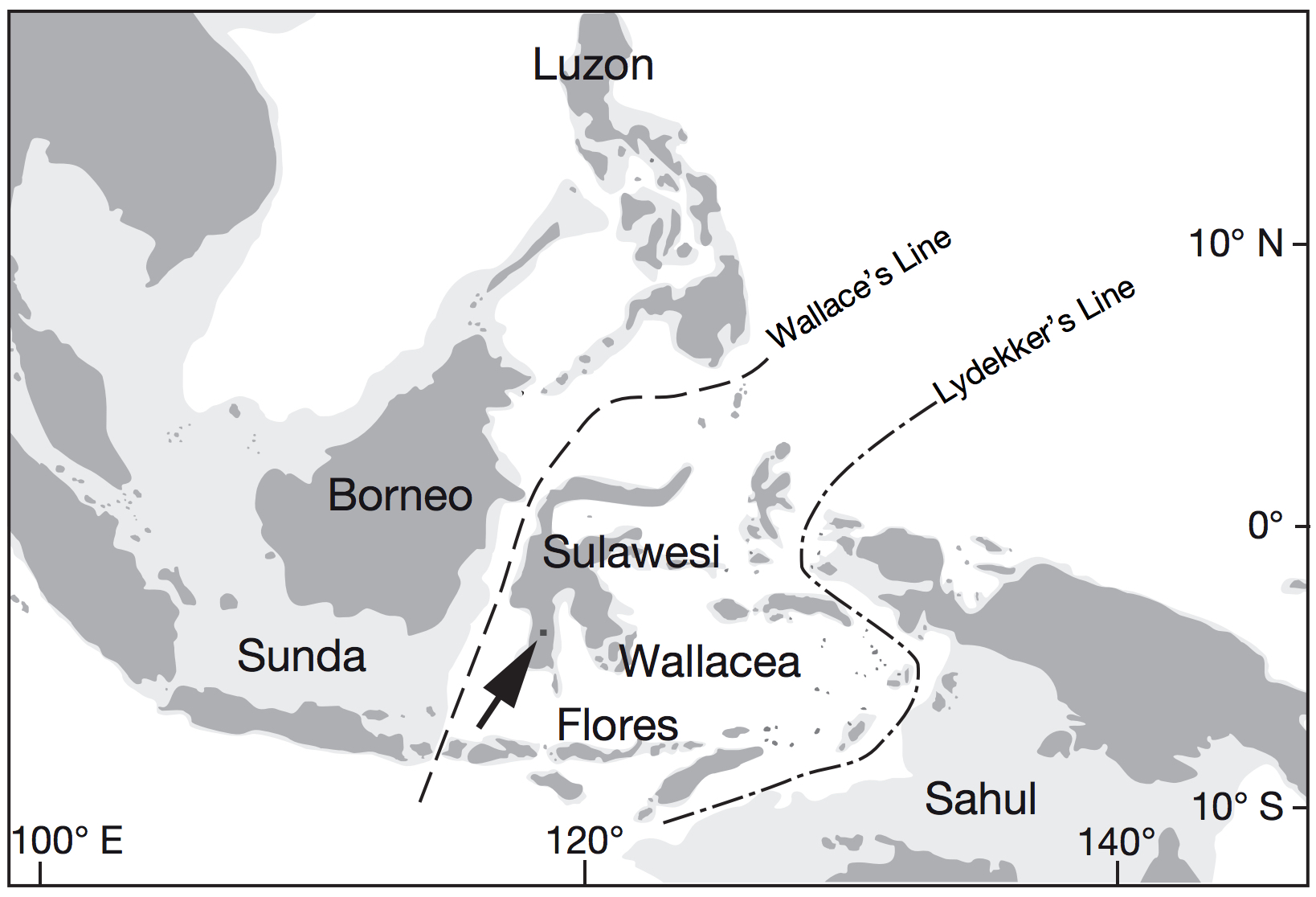
Sulawesi is part of the Indonesian island chain that forms a gentle curve in the waters between Southeast Asia, the Philippines, and Australia. But at the time these early humans were arriving during the Pleistocene, Australia and New Guinea were one continent, called Sahul, and many of the Indonesian islands were connected by land. Sea levels were often much lower than today due to glaciation, which locks water up into polar ice. Previous research has shown that early human groups crossed over to the islands during this time, before Homo sapiens evolved. Indeed, Sulawesi's neighboring island Flores was home to the recently discovered Homo floresiensis, or Hobbit people, a group of unusually small hominins who arrived on the island roughly 1 million years ago.

The researchers published their findings this week in Nature, detailing the stone tools they found and explaining how they determined their age. The tools were typical of hominins during the Pleistocene, which is to say they were simple stone slivers called flakes made from banging one rock against another to produce small, sharp-edged pieces that could be used as knives, scrapers, weapons, and more. "There is patterning in the flaking techniques," write the researchers, but "there is little evidence that the stoneworkers were creating tools of specific form." So these were general purpose tools.

Read 6 remaining paragraphs | Comments

When drones attack other drones

Drone uses a net gun to capture other drones in mid-flight, and there’s video.

See what it's like to be stalked and captured by a drone, from the point of view of a drone.

When drones go bad, what can you do? Shooting them down could be dangerous, especially if they have explosives on board. So why not pit drone against drone? That's the reasoning behind this drone catcher, created by a team at Michigan Tech University.

Using drones against each other isn't a new idea, and there's a whole cottage industry devoted to tech that stops drones. But Michigan Tech roboticist Mo Rastgaar and his students took on this new design as a "pet project." Rastgaar got the idea to make a drone catcher two years ago, when he learned that snipers were protecting the crowd from renegade drones during the World Cup. There had to be a better solution. So Rastgaar and his students gave the drone catcher a net gun, which allows it to capture another drone in mid-air and carry it away.

The group took only two months to develop the project, Rastgaar told Ars via e-mail. "We started this project in fall 2014, and by January 2015 we had the system," he said. "The video goes back to early 2015. So with some limited extra time we had, we developed this system as a proof of concept. Everything in the system, such as net size, net range, and hunter drone specifications, can be modified to meet the specific demands based on the different scenarios."

Read 1 remaining paragraphs | Comments

Google actually seems to have a plan for VR

It ranges from cheap VR rigs to manipulating the atom.

Google has quietly been building up its virtual reality offerings with Cardboard and its Spotlight Stories app for watching 360 video. And now it appears that the company will have a dedicated VR division headed by VP Clay Bavor, who previously worked on Cardboard and headed up the Gmail and Drive apps. What could this mean for Google's immersive media future?

In the short term, not much. The Wall Street Journal reports that Bavor's main task will be to lead a team that's producing a version of Android for VR. Bavor's previous experience is with running apps, and right now Cardboard and Spotlight Stories will probably continue to be the main consumer apps available. Cardboard is currently the VR system Google is best known for, especially since its cheap, DIY hardware provides a nice rejoinder to Oculus' headset, whose price tag took many by surprise last week. That said, Spotlight Stories was a revelation at Google I/O last year, especially because Justin Lin's short film Help—about an alien monster loose in the subway—looked explosively awesome in the app.

What's going to be more interesting is Google's take on augmented reality. Though Glass has become an object lesson in how not to launch products, the idea behind the technology is still promising. We want a virtual overlay on reality, whether as a map guide or game, and so far only Microsoft's HoloLens has come close to delivering on that. But Google is the lead investor in mystery company Magic Leap, which is supposed to give us the ultimate augmented reality experience any year (or decade) now.

Read 2 remaining paragraphs | Comments
Scientists discover 2,100-year-old stash of “fine plucked” tea

Tea is hundreds of years older than we thought and reveals an ancient trade route.

Chunks of ancient tea are on the left, and the tomb where they were excavated near Xi'an is on the right. (credit: Houyuan Lu)

Researchers in China have positively identified a block of ancient vegetable matter as tiny tea buds that were lovingly tucked away in Han Yangling Mausoleum, a sumptuous tomb north of Xi'an. The city Xi'an was once known as Chang'an, seat of power for the Han Dynasty, and stood as the easternmost stop on the vast trade routes known today as the Silk Road. Previously, the oldest physical evidence of tea came from roughly 1,000 years ago. Coupled with another ancient block of tea found in western Tibet's Gurgyam Cemetery, this new discovery reveals that the Han Chinese were already trading with Tibetans in 200 BCE, trekking across the Tibetan Plateau to deliver the luxurious, tasty drink.

Though the tea was excavated over a decade ago, it wasn't until recently that researchers had access to tests that could determine whether the vegetable matter was in fact tea. By untangling the chemical components of the leaves, including their caffeine content, the researchers were able to verify that both blocks of leaves, from China and Tibet, were tea. In fact, they even figured out what kind of tea it probably was. In Nature Scientific Reports, they write:

The sample contains a mixture of tea, barley (Hordeum vulgare, Poaceae) and other plants. Therefore, it is likely that tea buds and/or leaves were consumed in a form similar to traditionally-prepared butter tea, in which tea is mixed with salt, tsampa (roasted barley flour) and/or ginger in the cold mountain areas of central Asia. Of course, methods of brewing and consuming tea varied from culture to culture along the Silk Road.

We also know the tea was what people today would call "fine plucked" or "Emperor's Tea," because it consisted only of the plant's buds with a few small leaves. These parts of the plant are considered the most valuable and are used to make especially high-grade tea.

Read 4 remaining paragraphs | Comments

For the second time in human history, we are witnessing a new geological epoch

Welcome to the Anthropocene.

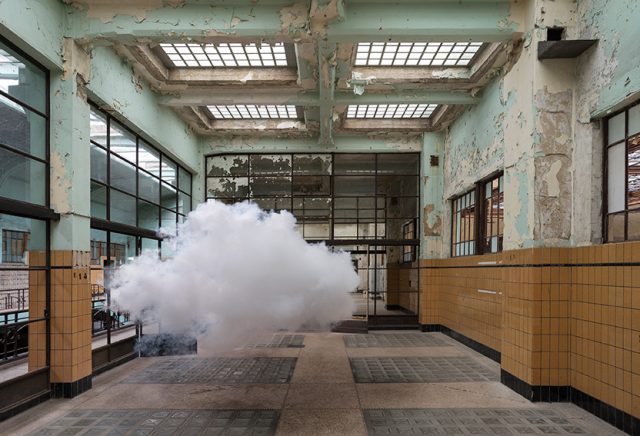
Artist Berndnaut Smilde imagines strange new climates of the Anthropocene by suspending clouds in the middle of rooms. (credit: Berndnaut Smilde)

11,700 years ago, the Earth suffered a catastrophic climate change. As the ice age ended, sea levels rose by 120 meters, the days grew warmer, and many kinds of plant and animal life died out. But one animal began to thrive more than ever before. Homo sapiens, which had already spread to every continent except Antarctica, came up with a new survival strategy. Today, we call it farming.

Thanks in part to that innovation, humans survived to witness the dramatic transition from the Pleistocene epoch to the Holocene—it was the first such geological transition in almost 2 million years. But now geologists say we're witnessing another transition, as we move from the Holocene into an epoch called the Anthropocene. Here's what that means.

Remember the Holocene

At the dawn of the Holocene 11,700 years ago, humans lived in nomadic groups, often returning to the same campsites year after year but always on the move. Still, there is evidence that they were dabbling with gardening opportunistically, perhaps leaving seeds behind at favorite campsites to encourage the growth of grain.

Read 20 remaining paragraphs | Comments

Sharpen your swords because we know when Game of Thrones starts

Yes it’s really happening!

Do not mess with the Queen of Dragons. (credit: HBO)

You know that feeling when you fly on the back of a wild dragon who has rescued you from an angry mob, and then it lands in a remote area full of another angry mob, but you still feel badass because of the aforementioned dragon and your uncanny ability to walk through fire unscathed? Well, that's how we feel right now, because there's an official air date for the premiere episode of Game of Thrones' sixth season.

Prepare to glue your face to the monitor of your choice on April 24, when HBO kicks off a season that promises to be pretty intense. First of all, Bran is back—so you can expect some serious magic and warging. Then there is the dragon situation I've already discussed. Plus Arya is still in assassin high school, there is family drama in King's Landing, and Brienne of Tarth is definitely going to cut somebody with her sword soon. Oh yeah, plus winter is seriously coming for real now, and Jon Snow is playing Schrödinger's cat until we find out for sure whether he's dead or alive.

With season six, we'll also leave the George R.R. Martin books behind. Martin is still finishing up The Winds of Winter, though it's set to publish this year. That's right—the book this season is based on hasn't actually come out yet. The author has been sharing his plans with the producers of Game of Thrones, so there will be some crossover. But for now at least, your friends who have read the books can't threaten you with spoilers.

Read on Ars Technica | Comments

There’s almost no evidence that cancer screening saves lives, say researchers

A misunderstanding of mortality rates has led to false optimism.

This is just as awkward as it looks. (credit: Selenia Dimension)

In a bracing op-ed published yesterday in the British Medical Journal, researchers questioned the idea that cancer screening "saves lives" as many PSAs for these services promise. Cancer researcher Vinay Prasad and his colleagues warn that cancer screening has "never been shown" to affect general mortality rates, arguing that patients are being over-screened and often misdiagnosed.

The problem they highlight is a common one in the medical field: statistics on how cancer screening affects mortality rates have been widely misunderstood and misreported. Prasad and his colleagues explain that studies show cancer screening can lower mortality rates for people who already have specific diseases such as lung cancer, but the general mortality rate has remained unchanged since the advent of common tests for breast cancer, colon cancer, neuroblastoma, and prostate cancer. In other words, screening may be slightly improving mortality rates for people who have a disease, but screening is not improving mortality overall. As the researchers put it in their op-ed, people are "simply...trading one type of death for another." More simply: even if you're screened for cancer, your risk of dying every year remains the same.

This wouldn't be cause for concern if it weren't for the fact that cancer screening is expensive for both patients and the healthcare industry. On top of that, screening can itself cause health problems. False positives, which are common, can lead to extreme anxiety, unnecessary treatments, and even death.

Read 6 remaining paragraphs | Comments

Op-ed: This is why people hate Airbnb

Even a company worth billions can jump the shark.

OMG no way. (credit: CNBC)

In the wake of New Year's weekend, the news seemed inevitable. Some high school kids faked their identities on Airbnb, rented a nice couple's house in Oakland, California, and absolutely trashed the place during a giant party. It was yet another dark tale about the company, which seems poised to overtake Uber in the contest to become the most successful service that generates reams of bad publicity.

Objectively speaking, Airbnb's business is booming. Valued at $25.5 billion, it raised $1.5 billion in investments over the summer, followed by another $100 million in November. In March of last year, the company's future prospects brightened considerably when the Hawaii Supreme Court ruled that online travel companies like Airbnb are not responsible for paying hotel occupancy taxes. In May, the company reported that it had almost a million guests per night. And yet its public image keeps taking a beating.

Some of Airbnb's troubles began when the company decided to intervene in San Francisco municipal politics. In October, Airbnb spent $8 million to post what many observers called "passive aggressive" ads in bus shelters all over San Francisco. "Dear Public Library System," one read. "We hope you use some of the $12 million in hotel taxes to keep the library open later. Love, Airbnb." Read another: "Dear Public Works, Please use some of the $12 million in hotel taxes to install more electric vehicle charging stations. Love, Airbnb." The references were to Airbnb caving to pressure from San Francisco to charge a 14 percent hotel tax to its guests (the same tax that people pay at San Francisco hotels). But the goal of the campaign was to defeat Proposition F, which would have made it unlawful for people to rent out their properties for more than 75 days consecutively per year. Dubbed "the Airbnb law," F was eventually defeated. But even people who thought F was a bad idea were still revolted by the tone-deaf propaganda campaign, which portrayed Airbnb as some kind of do-gooder pal of local city government when in fact they'd fought to avoid paying municipal taxes.

Read 8 remaining paragraphs | Comments